
She called it “the spin cycle.”
Every argument followed the same script. She’d bring up something that hurt her. He’d get defensive. She’d push harder. He’d shut down completely. Then she’d spiral into panic, crying and apologizing for things she didn’t do.
By the end, the original issue was gone. She felt crazy. He felt attacked. And nothing changed.
This wasn’t a story about a villain and a victim. It was a story about two people trapped in a pattern neither one could see. A pattern rooted not in cruelty, but in something much deeper. Their attachment wiring.
Your Brain on Love: Why Attachment Makes You Vulnerable
Most people think of emotional manipulation as something a “bad person” does to a “good person.” But the science tells a different story. Much of what looks like manipulation in intimate relationships is actually driven by attachment fear. The desperate, primal fear of losing your connection to someone you love.
Dr. Sue Johnson, the creator of Emotionally Focused Therapy (EFT), puts it simply. Love is not just a feeling. It’s a survival mechanism. Your brain treats your romantic partner the way a child’s brain treats a parent. As a source of safety in a dangerous world.
When that safety is threatened, your brain panics. And panicking brains don’t fight fair.
The Three Attachment Styles
Psychiatrist Amir Levine and psychologist Rachel Heller identified three core attachment styles that shape how you behave in relationships:
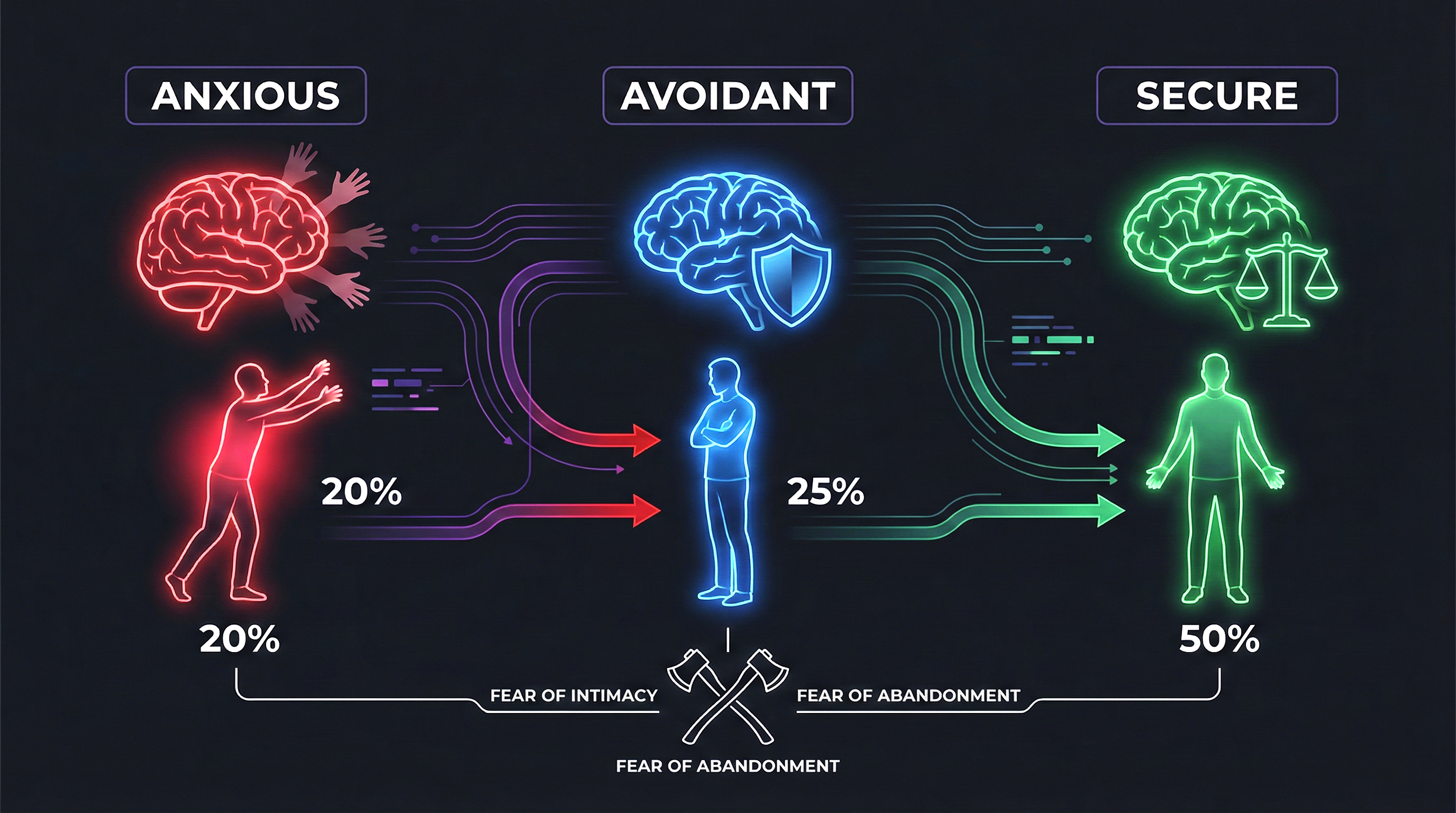
- Anxious. You crave closeness and worry constantly about whether your partner really loves you. When things feel uncertain, you reach harder. You call more. You push for reassurance. To an outsider, this can look “clingy” or “controlling.”
- Avoidant. Intimacy makes you uncomfortable. When conflict arises, your instinct is to shut down, pull away, or go silent. You need space to feel safe. To your partner, this can look cold, punishing, or manipulative.
- Secure. You’re comfortable with closeness and can handle conflict without losing your sense of self. You don’t chase and you don’t flee. About 50% of people fall into this category.
Here’s the problem. Anxious and avoidant people are magnetically drawn to each other. There’s a whole science behind why anxious and avoidant partners keep attracting each other. And when they pair up, they create the perfect conditions for a toxic cycle.
| Attachment Style | Core Fear | Under Stress | Partner Sees It As |
|---|---|---|---|
| Anxious | Abandonment | Pursues, demands, escalates | Controlling, needy, manipulative |
| Avoidant | Engulfment | Withdraws, shuts down, stonewalls | Cold, punishing, dismissive |
| Secure | Neither extreme | Communicates directly, stays calm | Stable, trustworthy, grounded |
Recommended read: Attached by Amir Levine and Rachel Heller. The essential guide to understanding how your attachment style shapes your love life and why certain relationships feel impossible to leave.
The Toxic Dance: How Good People Get Trapped
Dr. Sue Johnson calls it the “Demon Dialogue.” It’s the destructive communication loop that takes over when attachment fears get triggered. And it’s shockingly predictable.
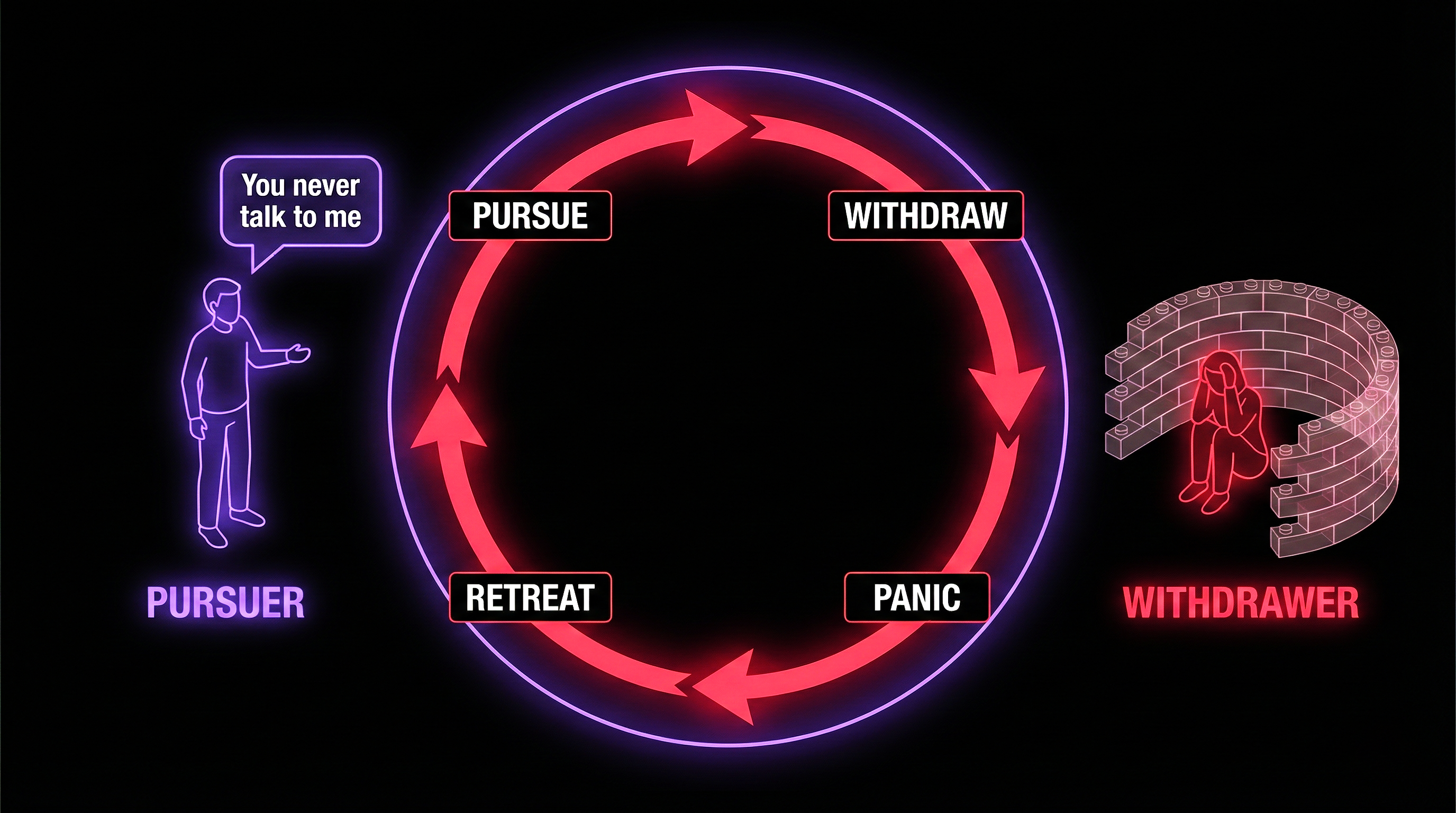
Here’s how it works. One partner feels disconnected and reaches out. Maybe with a complaint, a question, or a bid for attention. The other partner feels overwhelmed or criticized. So they pull away. The first partner panics and pushes harder. The second partner retreats further. Around and around they go.
Neither person is the villain. Both are terrified.
The Protest Polka
Johnson named one of the most common Demon Dialogues the “Protest Polka.” It’s the pattern where one partner protests the other’s distance, while the distant partner protests the other’s intensity.
It looks like this:
- She says: “You never talk to me. You don’t care.”
- He hears: “You’re failing. You’re not enough.”
- He shuts down and goes silent.
- She hears: “You don’t matter. I don’t want you.”
- She escalates. Maybe yelling. Maybe crying. Maybe threats.
- He retreats further. Maybe leaving the room. Maybe the silent treatment.
Johnson explains what’s really happening underneath the surface:
“The more I pursue, the more you withdraw. The more you withdraw, the more desperate I become. We are both trapped in pain and isolation.” - Dr. Sue Johnson
The scary part? This cycle is self-reinforcing. Every round makes both partners more insecure. The anxious partner becomes more hyper-vigilant. The avoidant partner builds higher walls. Over time, what started as a normal attachment response turns into something that looks and feels like emotional abuse.
When Fear Becomes Manipulation
Here’s where it gets complicated. Some of the behaviors that emerge from this cycle genuinely are manipulative. Even if the person doing them doesn’t intend to be.
- The silent treatment isn’t just “needing space.” When it’s used to punish, it’s a form of emotional control. Therapist Steve Becker calls it “a technique of torture” because it withholds the basic human need for recognition.
- Backing someone into an emotional corner. One partner provokes the other until they explode, then says “See? You’re the one with the problem.” The original issue vanishes. Author Adelyn Birch writes: “Your emotional reactions to manipulation are not the problem. The manipulation is the problem.”
- Gaslighting. Telling your partner that something didn’t happen, that they’re remembering wrong, or that they’re “too sensitive.” Over time, this erodes their ability to trust their own perception. These are some of the same dark psychology tactics people use to control others.
The crucial distinction is this. In a toxic cycle, both partners may use these tactics at different moments. That doesn’t mean both are equally responsible. But it does mean the cycle itself is the enemy, not just one person.
Recommended read: Hold Me Tight by Dr. Sue Johnson. The book that changed couples therapy forever. Learn how to identify your Demon Dialogue and rebuild emotional safety with your partner.
The Wounds That Won’t Heal: Attachment Injuries
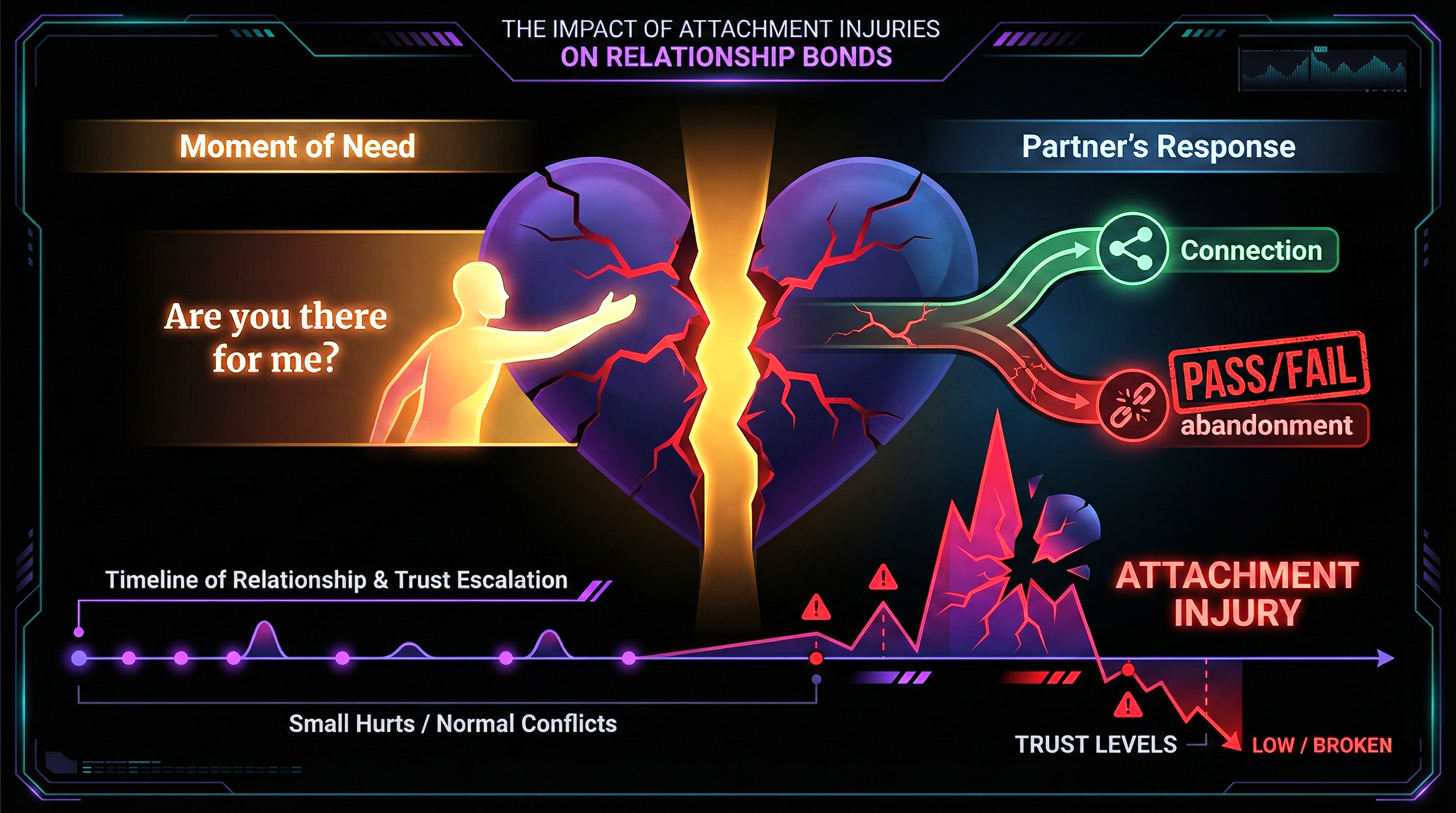
Not all relationship hurts are equal. Some moments are so painful that they reshape the entire relationship. Dr. Johnson calls these “attachment injuries.” They happen when one partner desperately needs the other and the other isn’t there.
These aren’t small disagreements. They’re pass-or-fail moments that answer the deepest question in any relationship: “Are you there for me when I need you most?”
Johnson shares the story of a woman named Vera whose husband Ted froze during her cancer treatment. He couldn’t handle the emotions, so he shut down. One night, Vera broke down crying and told him she couldn’t go on. Ted said nothing. Did nothing. But when Vera’s sister arrived and started crying, Ted leapt up to comfort her. He held the sister. He whispered reassurances.
Not Vera. Never Vera.
That single moment did more damage than months of difficult treatment. Because it answered the question in the worst possible way. “Your comfort wasn’t for me.”
Why These Wounds Fester
Attachment injuries don’t heal on their own. The researchers explain why:
- They’re survival-level events. Your brain treats emotional abandonment by a partner the same way it treats physical danger. The memory gets seared in.
- They distort everything after. Once you’ve been abandoned in a moment of need, you filter every future interaction through that lens. Even neutral behavior looks suspicious.
- They create self-fulfilling prophecies. The injured partner becomes hypervigilant. The injuring partner gets defensive. Each reaction confirms the other’s worst fears.
Carol Tavris and Elliot Aronson, authors of Mistakes Were Made (But Not by Me), explain the self-justification trap that follows. When someone hurts their partner, they reduce the cognitive dissonance by minimizing the harm. “It wasn’t that bad.” “She’s overreacting.” “I was under a lot of stress.”
Meanwhile, the hurt partner does the opposite. They amplify the injury because it threatens their entire sense of safety. The gap between these two perspectives grows wider with each passing day.
“Perpetrators are motivated to reduce their moral culpability; victims are motivated to maximize their moral blamelessness.” - Carol Tavris and Elliot Aronson
This is why couples who never resolve attachment injuries end up in one of two places. Either a cold, distant relationship where both people are emotionally checked out. Or an escalating war where every small disagreement reignites the original wound.
Breaking the Cycle: What Actually Works
The good news? Toxic cycles are not life sentences. But fixing them takes more than “better communication.” You need to address the attachment fears underneath the behavior.
Here are the steps that actually work, according to the research:
-
Name the cycle, not the person. Stop saying “You always…” and start saying “Here’s our pattern again.” Dr. Stan Tatkin, author of Wired for Love, teaches couples to see themselves as a team fighting a shared enemy. The cycle is the enemy. Not your partner.
-
Identify your attachment style. Knowing whether you’re anxious, avoidant, or secure changes everything. It helps you understand why you react the way you do. And it helps you predict what your partner needs in moments of stress.
-
Find the raw spot. Johnson describes raw spots as hypersensitivities formed by past relationships where attachment needs were ignored or dismissed. Maybe your father was emotionally absent. Maybe an ex cheated. These old wounds create hair-trigger reactions in current relationships. Finding your raw spot lets you separate past pain from present reality.
-
Stay emotionally present when your partner is hurting. This is the hardest one. When your partner tells you that you’ve caused them pain, every instinct screams at you to defend yourself. But defending yourself in that moment confirms their fear that you can’t be trusted with their feelings. Instead, try to hear the attachment need underneath the complaint.
-
Seek professional help. Emotionally Focused Therapy has a 70-75% success rate for distressed couples. It works by helping partners identify their negative cycle, access the deeper emotions driving it, and create new patterns of emotional engagement.
Recommended read: Wired for Love by Stan Tatkin. A neuroscience-based guide to understanding your partner’s brain and building a secure, lasting bond.
Warning Signs That This Isn’t Just a “Bad Cycle”
Not every toxic relationship is a fixable attachment issue. Some situations involve deliberate, repeated manipulation. Birch identifies clear warning signs:
- Your partner denies reality so consistently that you’ve started doubting your own memory
- You feel like you need a tape recorder just to prove what was said
- You’ve become reclusive and withdrawn from friends and family
- You apologize constantly for things you didn’t do
- The relationship has changed who you are in ways you don’t recognize
If these describe your situation, the issue may go beyond an attachment mismatch. You may be dealing with a covert narcissist or a pattern of deliberate emotional abuse. In that case, the priority is your safety, not fixing the cycle.
Recommended read: 30 Covert Emotional Manipulation Tactics by Adelyn Birch. A direct, no-nonsense guide that names every tactic manipulators use in personal relationships, so you can recognize them before they take root.
The Question That Changes Everything
Every couple stuck in a toxic cycle is really asking the same question. It’s not “Why do we keep fighting?” It’s not “Who’s right and who’s wrong?”
The real question is the one Dr. Sue Johnson says lives at the heart of every love relationship:
“Are you there for me?”
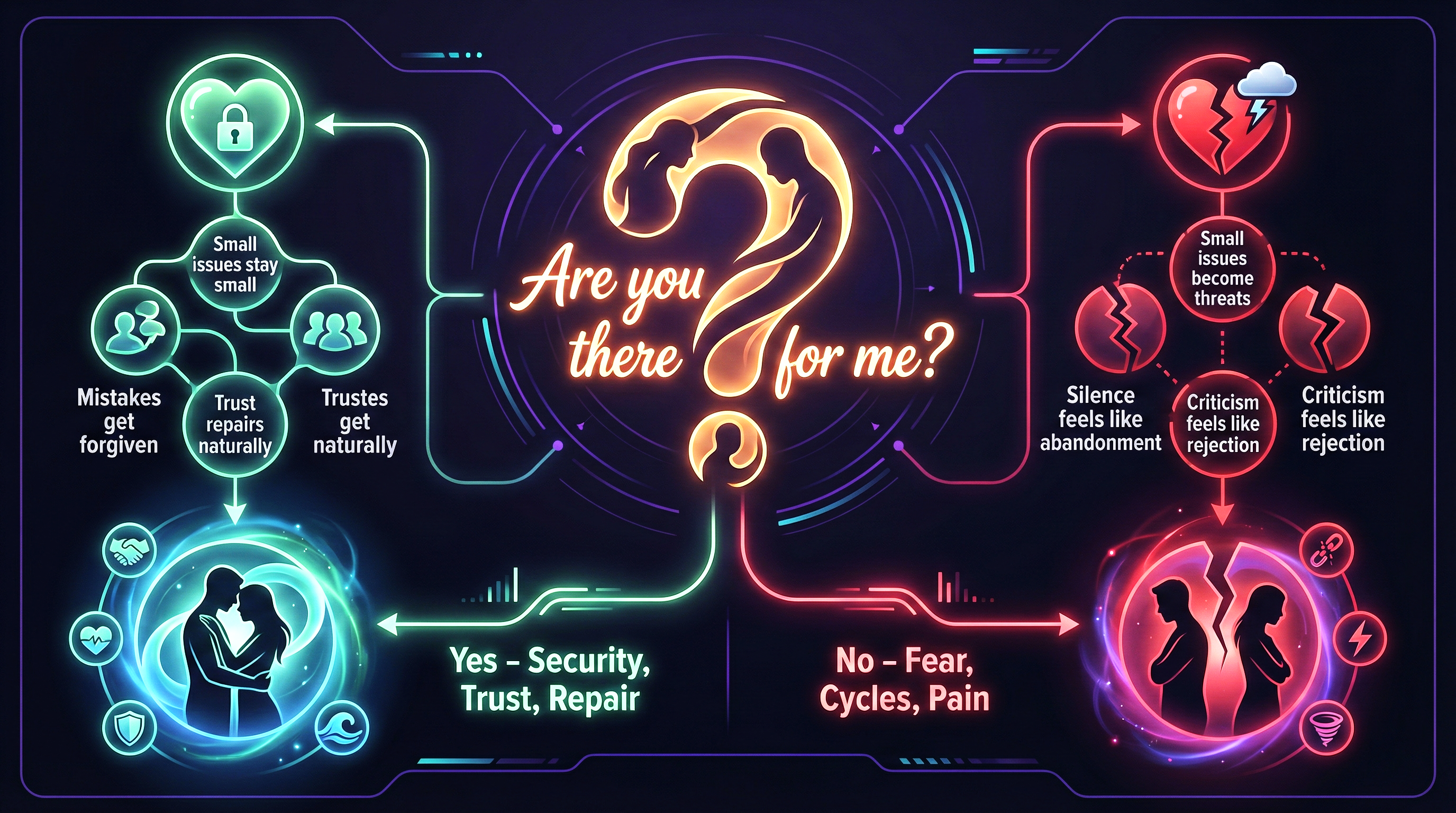
That’s it. When the answer feels like yes, you can handle almost anything. Disagreements stay small. Mistakes get forgiven. Trust repairs itself naturally.
When the answer feels like no, everything breaks. Small issues become existential threats. Every silence feels like abandonment. Every criticism feels like rejection.
The path out of a toxic cycle doesn’t start with changing your partner. It starts with understanding what both of you are really fighting about. Underneath the shouting and the silence, underneath the blame and the withdrawal, there are two people asking the same terrified question.
And the only answer that heals is showing up.