
You’ve had the argument a hundred times. You bring up something that bothered you. Somehow, by the end of the conversation, you’re the one apologizing.
You can’t explain how it keeps happening. You just know that every time you try to stand up for yourself, you end up feeling guilty, confused, and exhausted. And the original issue? It vanishes. It never gets resolved.
That’s not a coincidence. It’s a pattern. And it has a name.
Covert emotional manipulation is a set of psychological tactics designed to control how you think, feel, and behave. These tactics don’t leave bruises. They don’t raise their voice. They work by slowly dismantling your sense of reality until you can’t trust your own mind.
Here’s how they work. And more importantly, how to spot them before they take hold.
The Playbook: How Manipulators Gain Control
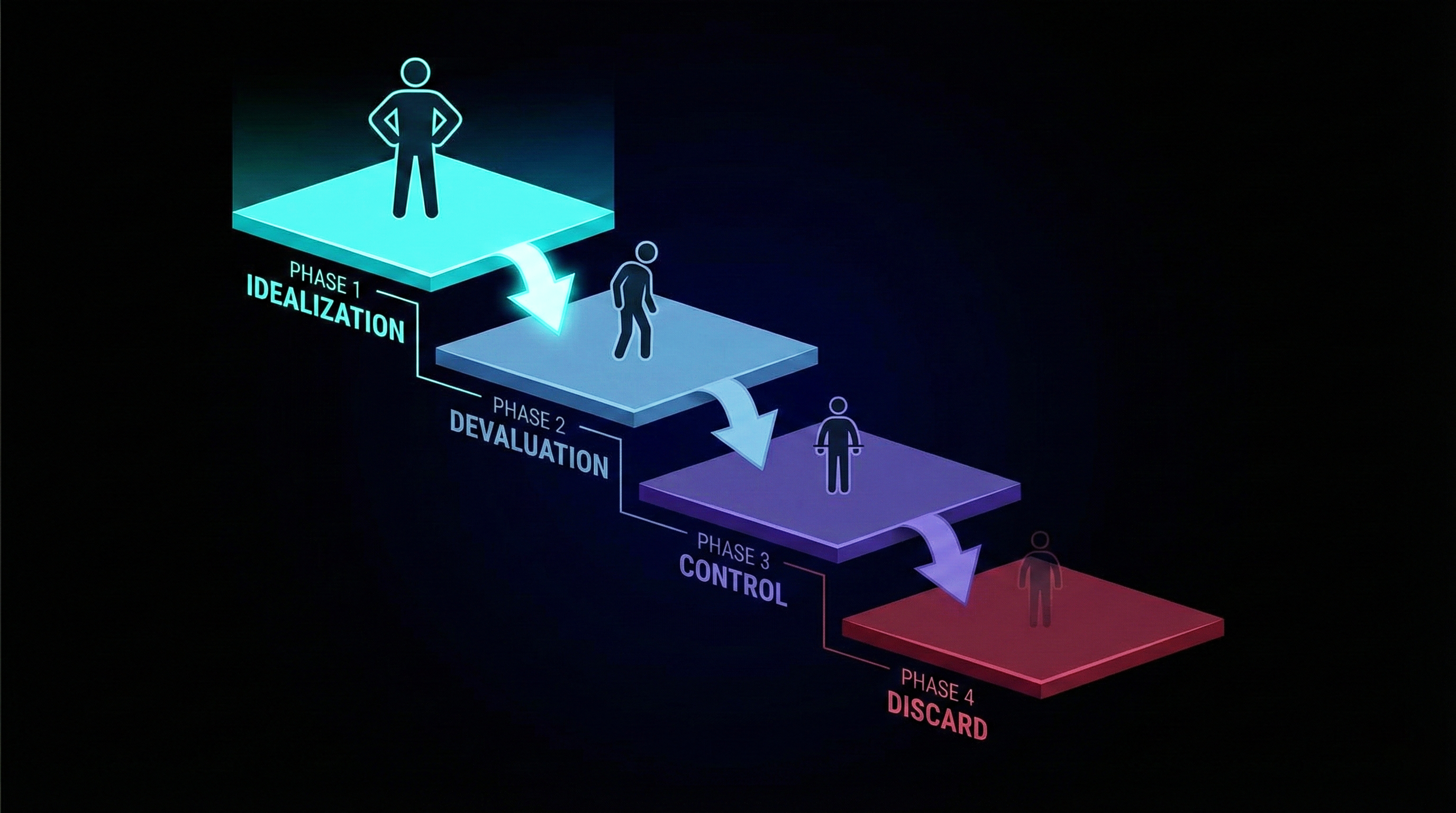
Manipulation isn’t random. It follows a predictable sequence. Researcher and author Adelyn Birch studied dozens of manipulation tactics used in personal relationships. She found that they all share one thing in common. They target your perception of reality.
Here’s the general playbook:
- Phase 1: Idealization. The manipulator showers you with attention, praise, and affection. You feel special. This builds trust and emotional dependency.
- Phase 2: Devaluation. Once you’re attached, the manipulator begins chipping away at your confidence. Small criticisms. Subtle put-downs. Just enough to keep you off balance.
- Phase 3: Control. With your self-esteem weakened and your reality distorted, the manipulator can steer your behavior. You start walking on eggshells. You change yourself to avoid conflict.
- Phase 4: Discard or recycle. The manipulator either leaves (once they’ve gotten what they want) or pulls you back in with another round of idealization. The cycle repeats.
The scariest part? Most victims don’t realize it’s happening until they’re deep in Phase 3. This cycle is especially common with covert narcissists, who disguise the idealization phase as genuine affection.
“Covert emotional manipulation methodically wears down your self-worth and damages your trust in your own perceptions.” - Adelyn Birch
Recommended read: 30 Covert Emotional Manipulation Tactics by Adelyn Birch. A short but powerful guide that names every tactic manipulators use in relationships.
The 7 Tactics That Mess With Your Head
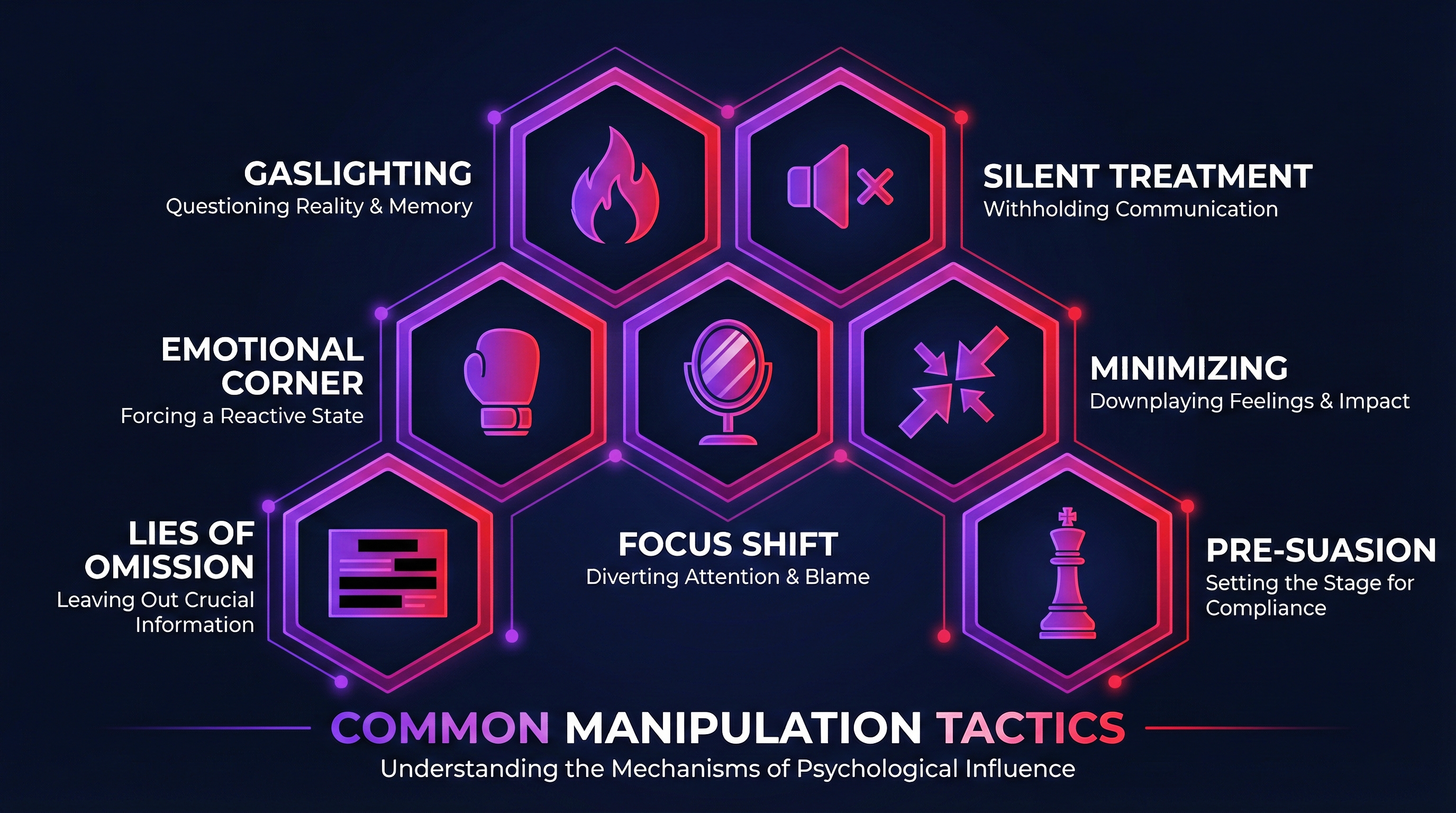
Not all manipulation looks the same. Some tactics are loud and obvious. But the most dangerous ones are quiet, invisible, and designed to make you blame yourself.
1. Gaslighting
Gaslighting is the big one. It’s when someone denies your reality so consistently that you start questioning your own sanity.
It sounds like:
- “That never happened. Are you crazy?”
- “You’re imagining things.”
- “I never said that. You always have a bad memory.”
Birch explains that gaslighting rarely starts big. It begins with small denials and grows over time. Eventually, you stop trusting your own perceptions. And when that happens, you start relying on the manipulator to tell you what’s real.
That’s the whole point.
2. The Silent Treatment
The silent treatment goes way beyond someone needing space. It’s a deliberate refusal to acknowledge your existence as punishment.
Therapist Steve Becker calls it “a technique of torture” and writes that “human beings need, on the most basic level, recognition of their existence. The withholding of this recognition, especially if protracted, can have soul-warping consequences on personality.”
It works because the pain of being ignored is unbearable. You’ll do almost anything to make it stop. Which is exactly what the manipulator is counting on.
3. Backing You Into an Emotional Corner
Here’s how this one plays out. You confront the manipulator about something they did. Instead of addressing the issue, they deflect, provoke, and push your buttons until you have an emotional reaction.
Then they say: “See? You’re unstable. You have an anger problem.”
The original issue disappears. Now the focus is on your “overreaction.” You feel ashamed. You vow to keep your emotions in check next time. But suppressing your frustration only makes it easier for them to trigger you again.
As Birch puts it: “Your emotional reactions to manipulation are not the problem. The manipulation is the problem.” In intimate relationships, this tactic fuels the psychology of emotional manipulation that keeps people trapped in toxic cycles.
4. Shifting the Focus
You bring up a legitimate concern. Maybe you suspect they’re lying about something. Instead of addressing it, they flip the script.
“I can’t believe you’d even think that about me. This is your insecurity talking.”
Now you’re defending yourself instead of getting answers. The original concern never gets discussed. Over time, you learn not to ask questions at all.
5. Minimizing
You confront them about something they did wrong. Their response? “You’re making a big deal out of nothing.”
Minimizing is the manipulator’s way of telling you that your feelings don’t matter. It convinces you that your reactions are disproportionate. And it guarantees they’ll repeat the behavior. After all, why change something that “isn’t a big deal”?
6. Lying (Especially by Omission)
All manipulators lie. But the most skilled ones don’t use big, obvious lies. They lie by leaving things out.
Lies of omission are one of the most effective forms of deception because you never know what you don’t know. They’ll share 90% of the truth and withhold the 10% that changes everything.
Birch notes that many lies work simply because “we can’t believe that someone we trust would look us in the eye and tell us such a brazen, bald-faced lie.” We give people we love the benefit of the doubt. Manipulators exploit that trust relentlessly.
7. Pre-Suasion and Priming
This tactic is more subtle. Psychologist Robert Cialdini calls it pre-suasion. It’s the art of setting up a situation before the actual request so that you’re more likely to comply.
A manipulator might casually mention how “other people” have let them down before asking you for a favor. Or they might create a mood of guilt before making a demand. The request itself seems reasonable. But the setup is what made you say yes.
Cialdini’s research shows that “mental elements don’t just fire when ready, they fire when readied.” Manipulators don’t just ask for what they want. They prime your mind to give it to them.
| Tactic | What It Sounds Like | What It Does to You |
|---|---|---|
| Gaslighting | ”That never happened.” | Makes you doubt your memory and sanity |
| Silent Treatment | [Complete silence] | Makes you desperate to restore connection |
| Emotional Corner | ”You’re overreacting again.” | Makes you suppress your legitimate feelings |
| Shifting Focus | ”This is your insecurity.” | Prevents real issues from being addressed |
| Minimizing | ”It’s not a big deal.” | Invalidates your emotions |
| Lying by Omission | [Strategically withheld truth] | Keeps you in the dark while feeling informed |
| Pre-Suasion | ”Everyone else has let me down…” | Primes you to comply before you realize it |
Recommended read: Influence by Robert Cialdini. The classic guide to understanding the psychology of persuasion and how compliance tactics work on all of us.
How to Read Between the Lines
Words lie. Bodies don’t. At least, not as easily.
Former FBI counterintelligence agent Joe Navarro spent 25 years reading people’s nonverbal behavior. His key insight? Forget about trying to catch liars. Instead, watch for comfort and discomfort.
Here’s what that looks like in practice:
- Comfortable people display open body language. Tilted heads. Relaxed shoulders. Genuine smiles that reach the eyes.
- Uncomfortable people show stress cues. Lip compression. Self-touching (rubbing the neck, touching the face). Crossed arms or closed postures.
- Mismatches are the biggest tell. Someone says “I’m happy for you” while their jaw tightens and their arms cross. The words say one thing. The body says another. Trust the body.
Navarro is careful to point out that no single behavior proves deception. He writes that even the best human lie detectors “seldom are right more than 60 percent of the time.” But patterns of discomfort, especially when they appear right after specific topics or questions, are worth paying attention to.
Former FBI agent Jack Schafer adds another layer with the primacy effect. This is the idea that the first information you receive about someone shapes how you see everything that follows.
Schafer describes using this in interrogations. Before his partner returned to the room, he’d tell the suspect: “My partner is a human lie detector. He knows when someone is lying.” When the partner then gave a skeptical look to the suspect’s denial, the suspect confessed on the spot.
This same principle works in everyday life. If someone tells you “Watch out for Sarah, she’s not trustworthy” before you meet Sarah, you’ll filter everything Sarah does through that label. Even if Sarah is perfectly fine, you’ll interpret neutral behavior as suspicious.
Manipulators use the primacy effect all the time. They poison the well before you’ve had a chance to form your own opinion.
Recommended read: The Like Switch by Jack Schafer. An ex-FBI agent’s guide to reading people and understanding the hidden signals that shape first impressions.

How to Protect Yourself
Knowing the tactics is half the battle. The other half is building defenses. Here’s where to start.
-
Name the tactic out loud. When someone gaslights you, say (even if just to yourself): “That’s gaslighting.” Naming it breaks its power. It moves the experience from a vague feeling of confusion to a concrete, identifiable behavior.
-
Keep a record. If you feel like you need a tape recorder to prove what someone said, that’s a warning sign. Start keeping notes. Write down what was said, when, and how it made you feel. Manipulators thrive in ambiguity. Written records destroy that advantage.
-
Watch for the body, not just the words. Navarro’s research shows that comfort and discomfort cues are more reliable than trying to spot specific “tells.” If someone’s words don’t match their body language, pay more attention to the body.
-
Be skeptical of your own first impressions. The primacy effect is real and powerful. If someone frames another person negatively before you’ve met them, pause. Recognize that your perception may be shaped by that frame, not by reality.
-
Guard your emotional reactions. When a conversation suddenly shifts from the topic at hand to your “overreaction,” recognize the play. The manipulator wants you off balance. Take a breath. Don’t take the bait. Return to the original subject.
-
Build a reality-check network. Talk to trusted friends or a therapist about what’s happening. Manipulators isolate their victims. Having outside perspectives you trust is one of the strongest defenses against reality distortion.
Recommended read: What Every BODY Is Saying by Joe Navarro. The FBI’s guide to reading nonverbal behavior. Essential for anyone who wants to see what people are really thinking.

The Uncomfortable Truth
Here’s the thing nobody wants to hear. You’ve probably been manipulated before. Maybe you’re being manipulated right now. And you’ve probably used some of these tactics yourself without realizing it.
David McRaney, author of You Are Not So Smart, writes extensively about how our brains are wired to deceive ourselves and others. We confabulate. We rationalize. We see what we expect to see thanks to confirmation bias.
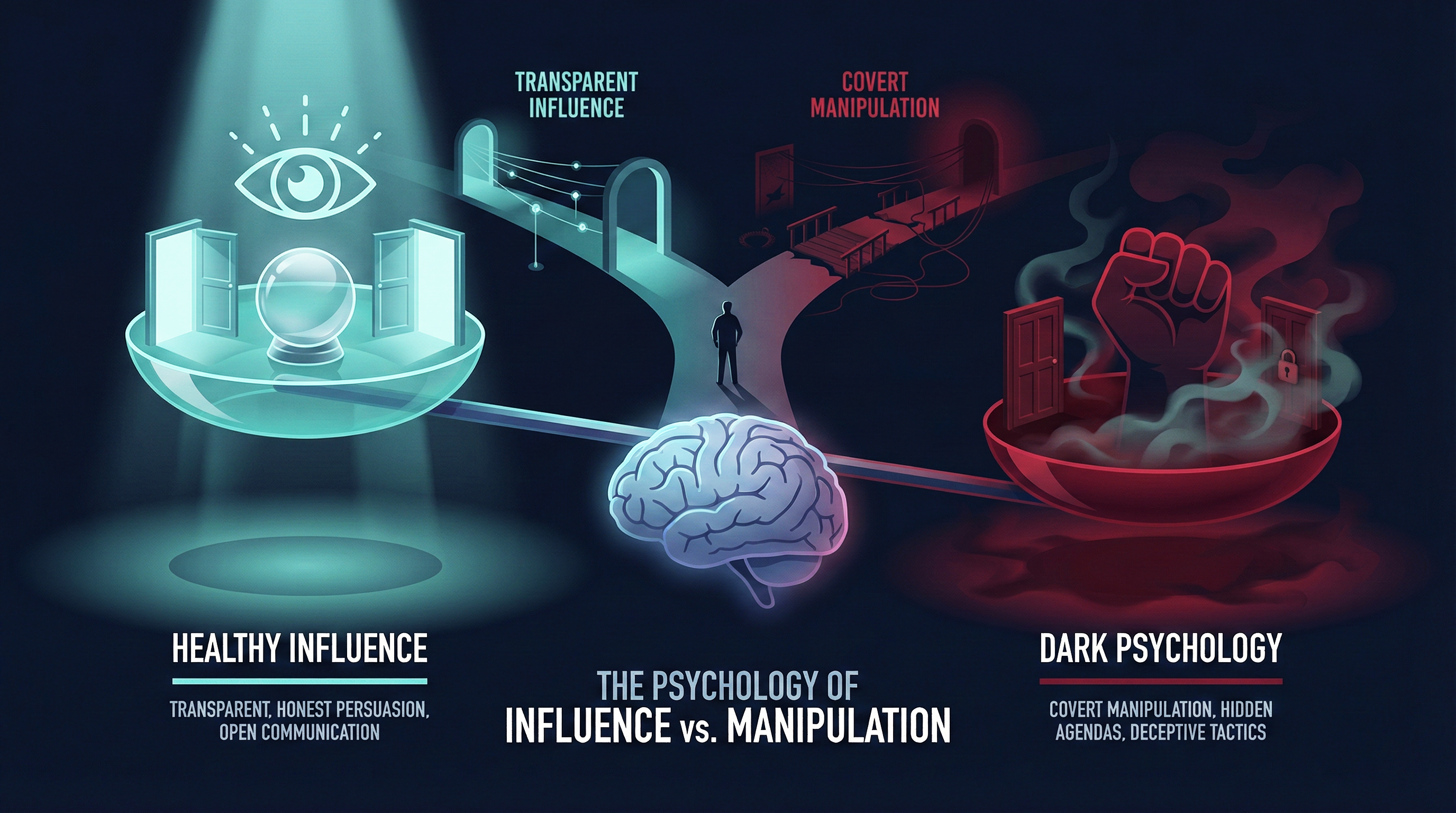
The difference between everyday influence and dark psychology is intent. Healthy influence is transparent. You know someone is persuading you and you can choose to say no. Dark psychology operates in the shadows. It works specifically because you don’t see it happening.
The best defense isn’t paranoia. It’s education. Once you can name the tactic, you can see it. Once you can see it, it loses most of its power.
Your feelings are not the problem. Your perceptions are not broken. And if someone is working overtime to convince you otherwise, that tells you everything you need to know.