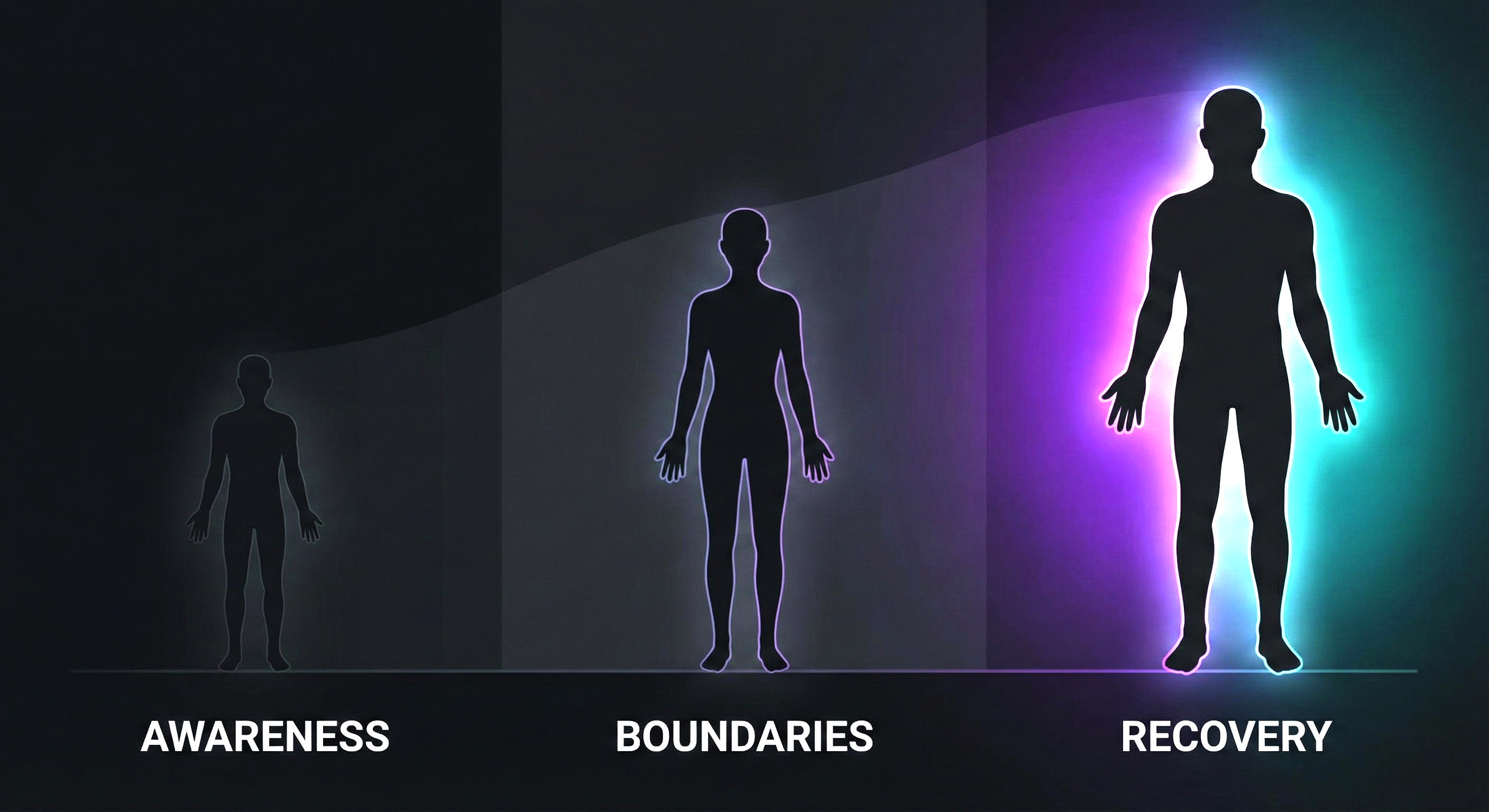

You know that friend who always seems to have it worse than everyone else? The partner who’s quiet and sweet in public, but somehow leaves you feeling confused and drained after every conversation?
They’re not just “sensitive.” They might be a covert narcissist.
Most people picture narcissists as loud, flashy, and full of themselves. But the most dangerous narcissists don’t look anything like that. They hide behind a mask of humility. And that’s exactly what makes them so hard to spot.
The Two Faces of Narcissism
When you hear the word “narcissist,” you probably think of someone who can’t stop talking about themselves. Someone who demands attention and brags nonstop. That’s the overt narcissist. They’re easy to identify.
But there’s another type that flies under the radar. The covert narcissist (also called the “vulnerable narcissist”) looks nothing like what you’d expect. They seem shy, modest, and even self-deprecating.
Don’t let that fool you. According to therapist Vanessa Reiser, covert narcissists “try to hide their selfish manipulations and go incognito.” They may present as poets, volunteers, or the quiet neighbor next door. On the outside, they seem meek. On the inside, they believe they’re better than everyone around them.
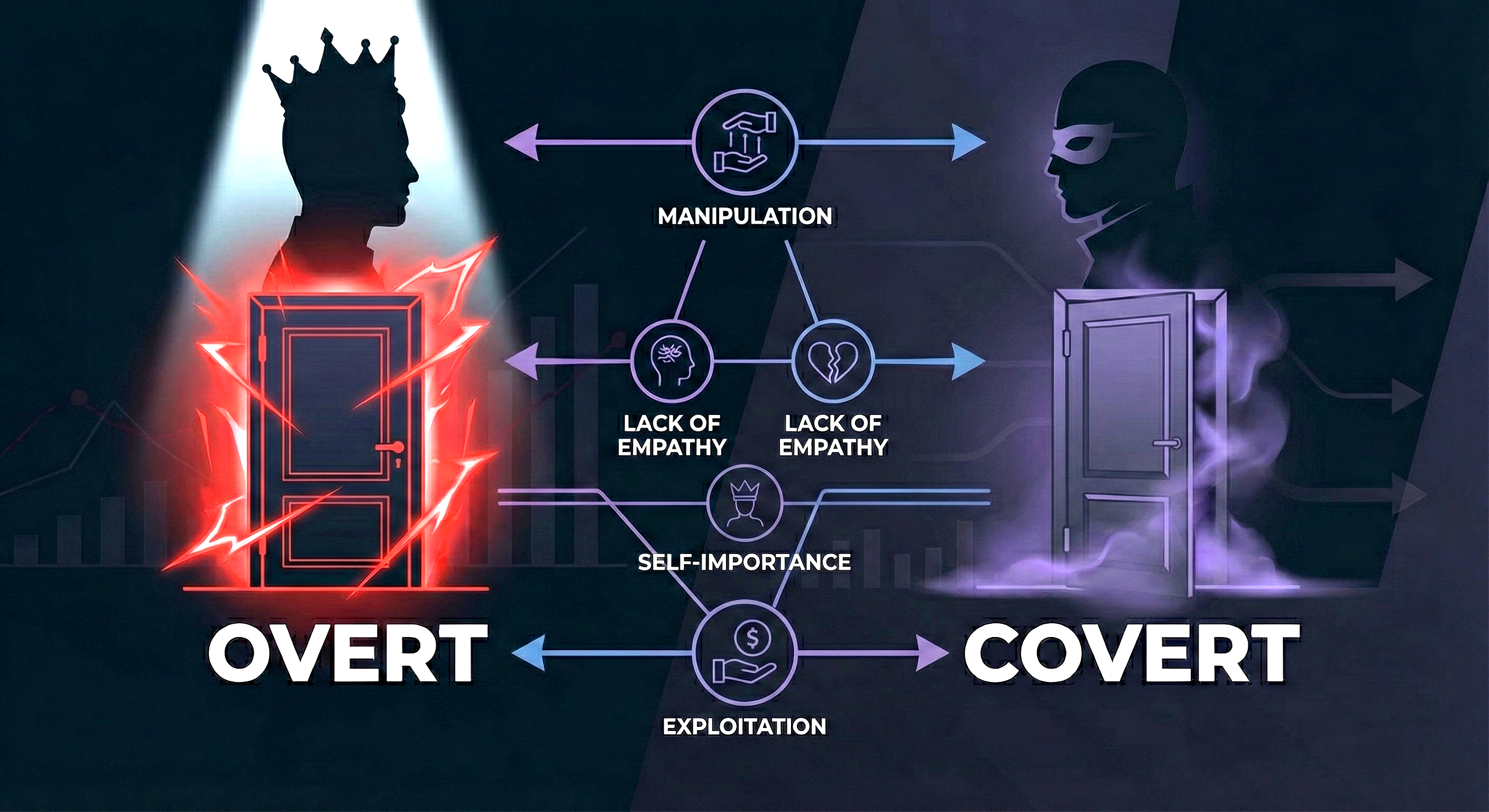
Here’s how the two types compare:
| Trait | Overt Narcissist | Covert Narcissist |
|---|---|---|
| Personality | Loud, charming, grandiose | Quiet, shy, self-deprecating |
| Attention-seeking | Direct and obvious | Through victimhood and guilt |
| Manipulation style | Intimidation and dominance | Passive aggression and guilt trips |
| Response to criticism | Rage and confrontation | Withdrawal, silent treatment, sulking |
| How they see themselves | Openly superior | Secretly superior |
| Hardest red flag to spot | Entitlement | Chronic victimhood |
The overt narcissist hits you over the head with their ego. The covert narcissist slips in through the back door. Both want the same thing: control.
Recommended read: It’s Not You by Ramani Durvasula PhD. The definitive guide to identifying narcissistic people and healing from their impact on your life.
The Warning Signs You Shouldn’t Ignore
Covert narcissists are masters of disguise. But there are patterns that give them away. Here are the signs of a covert narcissist that most people miss.
They Always Play the Victim
This is the biggest tell. Covert narcissists position themselves as the victim in every situation. Nothing is ever their fault. They use your sympathy as a weapon to control you.
As author Martha Stout wrote:
“I am sure that if the devil existed, he would want us to feel very sorry for him.” - Martha Stout
When a covert narcissist tells you a sad story, pay attention. Are they always the victim and never the one who did something wrong? That’s a pattern, not bad luck.
They Give Backhanded Compliments
These sound like praise but leave you feeling terrible. Things like:
- “You look great in that dress. It really hides your problem areas.”
- “I love how you don’t care what people think of your cooking.”
- “You’re so brave for wearing that.”
Adelyn Birch calls these “indirect insults.” They’re designed to chip away at your confidence while the narcissist maintains plausible deniability. If you call them out, they’ll say you’re being too sensitive.
They Use the Silent Treatment as Punishment
Everyone needs space after an argument sometimes. But covert narcissists weaponize silence. They go quiet to punish you, train you to chase them, and keep you focused on their emotions instead of your own.
Reiser explains that the silent treatment serves a specific purpose. It grooms you to “come crawling back,” which maintains their preferred power dynamic.
They Invalidate Your Feelings
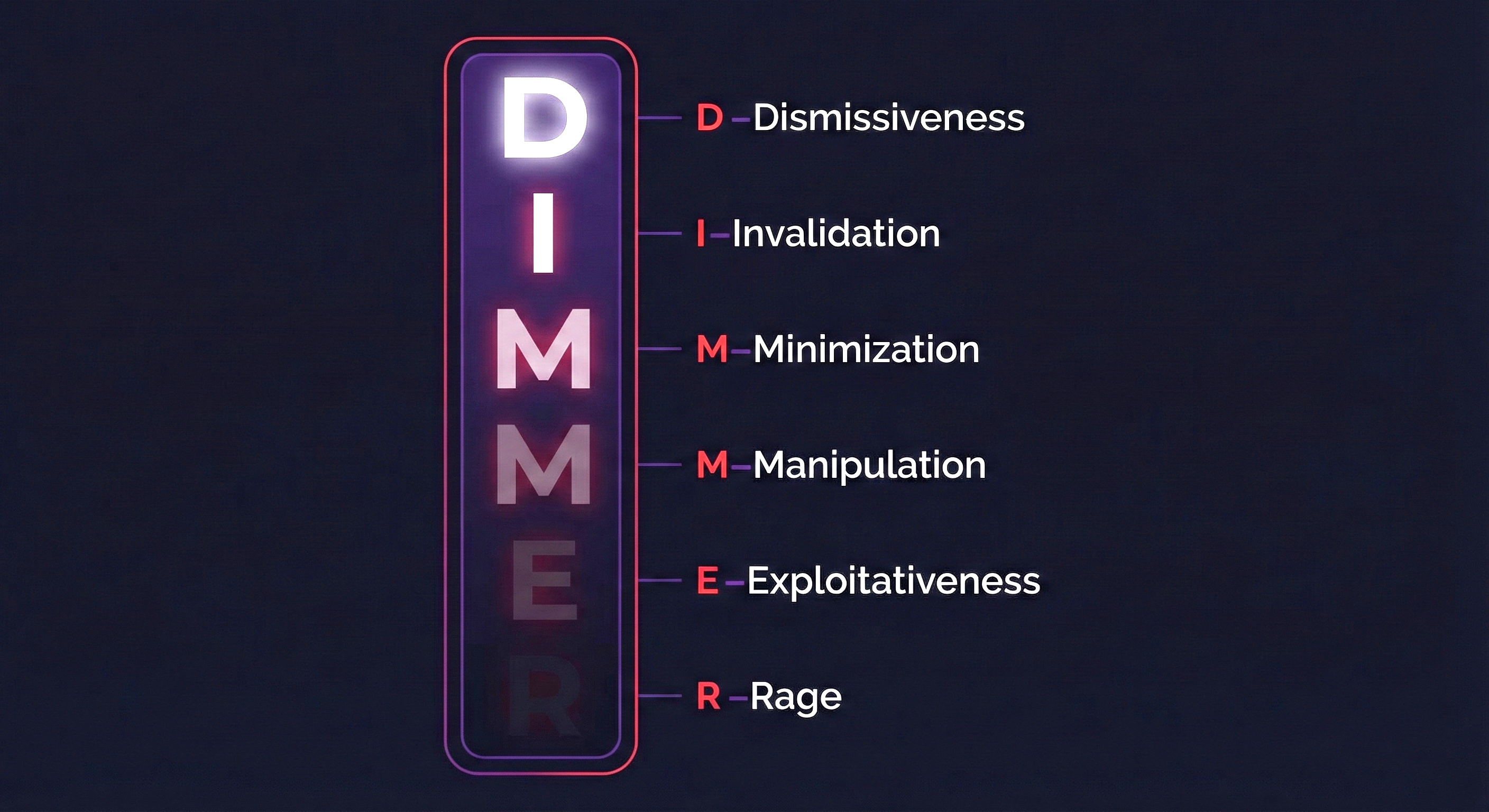
This is where covert narcissism gets really destructive. Dr. Ramani Durvasula uses the acronym DIMMER to describe what narcissistic relationships do to you:
- Dismissiveness: your concerns are brushed off
- Invalidation: your needs are shamed and denied
- Minimization: your experiences are played down
- Manipulation: your emotions are used against you
- Exploitativeness: your vulnerabilities are taken advantage of
- Rage: their anger is used to silence you
Over time, this pattern dims your sense of self. You stop trusting your own feelings. You start wondering if you’re the problem.
They Project Their Worst Traits Onto You
Projection is when someone accuses you of the exact thing they’re doing. If a covert narcissist is lying, they’ll accuse you of being dishonest. If they’re cheating, they’ll question your loyalty.
Reiser puts it bluntly: “The narcissist’s accusations are confessions.” Pay attention to what they accuse you of. It tells you what they’re actually doing.
How Covert Narcissists Take Control
Spotting the signs is one thing. Understanding how covert narcissists gain and keep control is another. Many of their methods overlap with dark psychology tactics people use to control others. Their tactics are subtle, deliberate, and devastatingly effective.
Gaslighting, the Centerpiece
Gaslighting is the foundation of narcissistic abuse. It’s a pattern of making you doubt your own memory, perception, and sanity. Common gaslighting phrases include:
- “That never happened.”
- “You’re being way too sensitive.”
- “I never said that. You must have a memory problem.”
- “It was just a joke.”
- “Everyone thinks you’re wrong.”
Durvasula calls gaslighting “a centerpiece of narcissistic abuse.” It works because you trust the person doing it. They use that trust to dismantle your reality, one conversation at a time.
Isolation, Cutting You Off
Covert narcissists slowly separate you from the people who care about you. They’ll make subtle comments about your friends. They’ll pick fights before family events. They’ll make you feel guilty for spending time with anyone else.
The goal is twofold. First, they want all your energy for themselves. Second, they want fewer witnesses to the abuse. If you’re wondering why it’s so hard to walk away from this kind of treatment, the psychology of emotional manipulation in toxic relationships explains a lot.
Future-Faking, Dangling the Carrot
Future-faking is when a narcissist makes big promises they never intend to keep. They’ll talk about the house you’ll buy together, the trip you’ll take, the life you’ll build. These promises keep you hooked and waiting.
But the goalposts keep moving. The promises never materialize. And if you bring it up, you’re “nagging” or “ungrateful.”
Recommended read: Narcissistic Abuse by Vanessa Reiser. A therapist’s comprehensive guide to the five stages of narcissistic abuse and how to safely disengage.

How to Protect Yourself
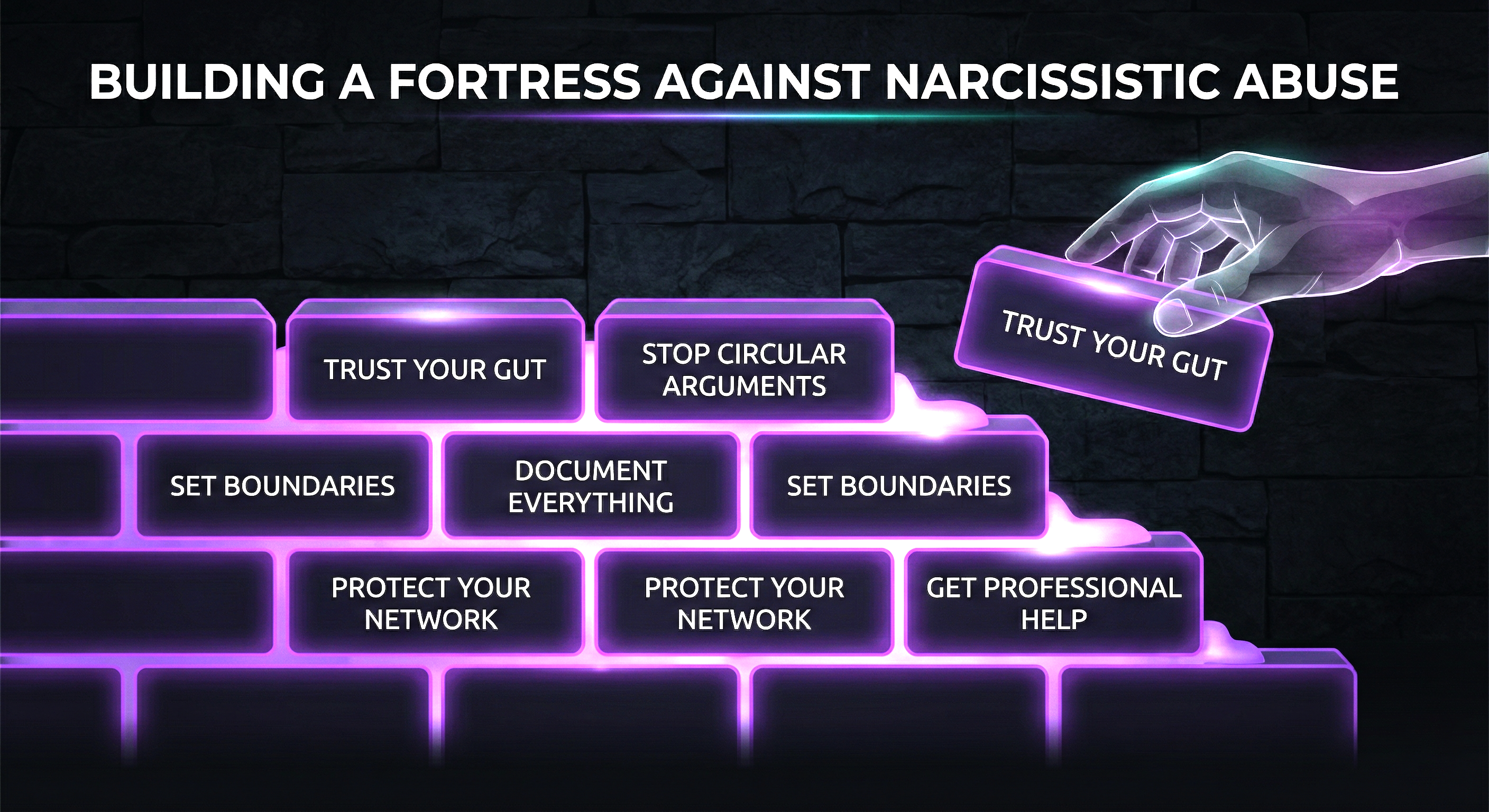
If you recognize these signs in someone close to you, here’s what you can do. These aren’t easy steps. But they work.
-
Trust your gut. If something feels off, it probably is. Covert narcissists are skilled at making you doubt your instincts. But your body keeps score. Pay attention to how you feel after spending time with this person. Confusion, exhaustion, and self-doubt are red flags.
-
Stop engaging in circular arguments. Narcissists love to argue in circles. They use word salad (a jumble of accusations and random topics) to confuse you and drain your energy. You don’t have to participate. “I’m not discussing this right now” is a complete sentence.
-
Document everything. Keep a journal of conversations and incidents. When someone is actively gaslighting you, your own written records become your anchor to reality.
-
Set boundaries and enforce them. Narcissists will test every boundary you set. The key is consistency. A boundary without consequences is just a suggestion.
-
Protect your support network. Don’t let anyone isolate you from the people who care about you. If your partner, friend, or family member is making it harder to maintain other relationships, that’s a major warning sign.
-
Get professional help. A therapist who understands narcissistic abuse can help you see patterns you might be too close to recognize. Avoid couples therapy with a narcissist, though. Reiser warns that they “glean information from the sessions and use it against you.”
Recommended read: 30 Covert Emotional Manipulation Tactics by Adelyn Birch. A concise breakdown of the specific manipulation tactics used in personal relationships, so you can spot them in real time.
Your Instincts Were Right All Along
Here’s the thing about covert narcissists. They’re really good at making you feel crazy. They make you question your memory, your feelings, and your worth. That’s by design.
But if you found this article because something in your life feels wrong, trust that feeling. You’re not imagining things. You’re not being too sensitive. And you’re definitely not the problem.
Dr. Durvasula puts it clearly: “Narcissistic people make you feel small so they can feel safe.” Their behavior isn’t about you. It never was.
Recovery from narcissistic abuse takes time. It means rebuilding trust in yourself, reconnecting with people who truly care about you, and learning to recognize the patterns so you never get trapped again. It also helps to understand why anxious and avoidant partners keep attracting each other, since narcissistic dynamics often exploit those same attachment wounds.
The fact that you’re looking for answers? That’s already the first step. Most people who are in a covert narcissist’s grip don’t even know it yet. You do.
That changes everything.