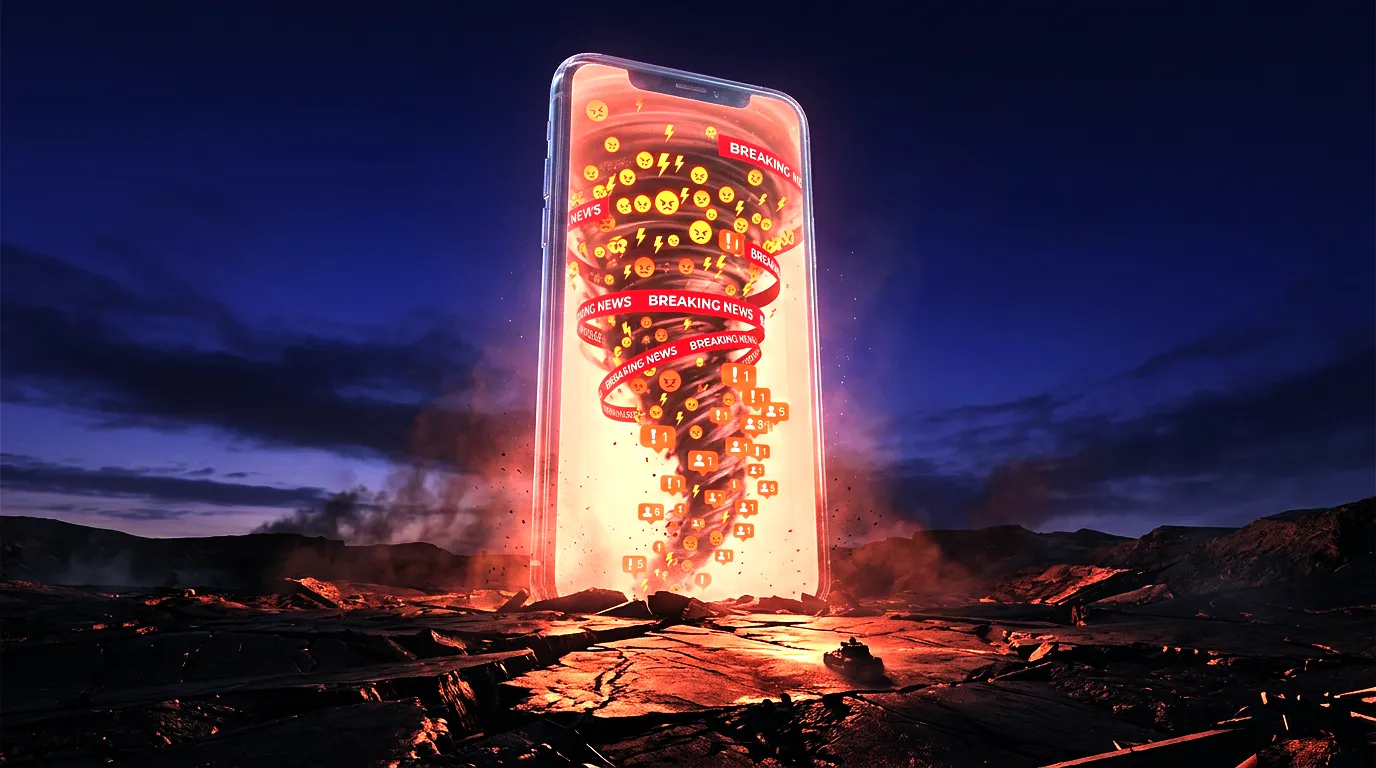
You already know scrolling political news makes you feel terrible. But you probably don’t know how much damage it’s actually doing.
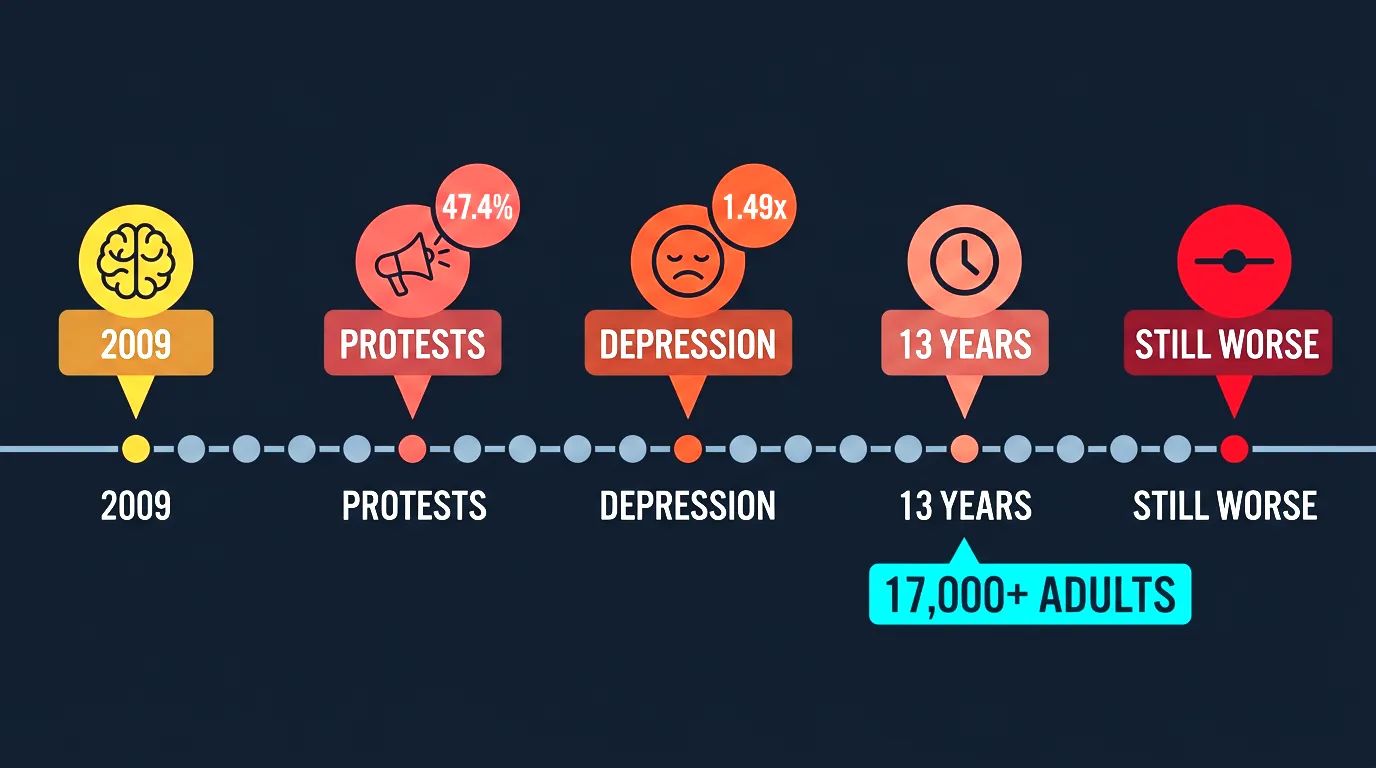
A massive new study published in Nature Medicine tracked over 17,000 adults across 15 years and 23 separate time points.[1] The results are hard to ignore. People who spent two or more hours a day on political social media during periods of unrest had significantly higher rates of depression. And the people who got into political arguments with family and friends? Their depression risk stayed elevated for over 13 years.
This isn’t about being too sensitive. It’s about what your brain does when you feed it a constant stream of conflict. And social media is the delivery system.
What a 15 Year Study Found About Political Stress and Social Media
The study, led by researchers in Hong Kong, followed a large population-based cohort from 2009 to 2024.[1] Participants were assessed at 23 different time points before, during, and after two major political protests. The 2014 Occupy Central movement and the 2019 social unrest.
Here’s what the data showed:
- During the 2019 unrest, 47.4% of adults spent one or more hours per day consuming politics-related content on social media[1]
- Only heavy social media use, two or more hours daily, was positively associated with depression[1]
- 32.4% of participants reported interpersonal conflicts during the 2019 protests, up from 6% to 10% in non-protest years[1]
- Those conflicts were linked to depression with an odds ratio of 1.49, persisting over 13 years[1]
An earlier study from the same cohort, published in The Lancet, found that probable depression affected 11.2% of participants during the 2019 unrest. That’s compared to just 1.9% during the 2009 to 2014 baseline period.[2] Suspected PTSD hit 12.8%.[2]
| Measure | Baseline (2009-2014) | After Occupy Central (2017) | During 2019 Unrest |
|---|---|---|---|
| Probable depression | 1.9% | 6.5% | 11.2% |
| Suspected PTSD | Not measured | Not measured | 12.8% |
| Interpersonal conflict | 6-10% | 11.6-27.5% | 32.4% |
| Heavy social media use (1+ hr/day) | Low | Moderate | 47.4% |
The numbers tell a clear story. Political unrest pushes more people onto social media. More time on social media during unrest leads to more depression. And the interpersonal conflicts that erupt around politics leave scars that last over a decade.
Recommended read: The Chaos Machine by Max Fisher. A deep investigation into how social media algorithms amplify conflict and destabilize communities worldwide.
How Doomscrolling Rewires Your Brain for Anxiety
The reason political social media hits so hard comes down to neuroscience. Your brain treats every angry tweet and outrage-bait headline as a potential threat. And it responds accordingly.
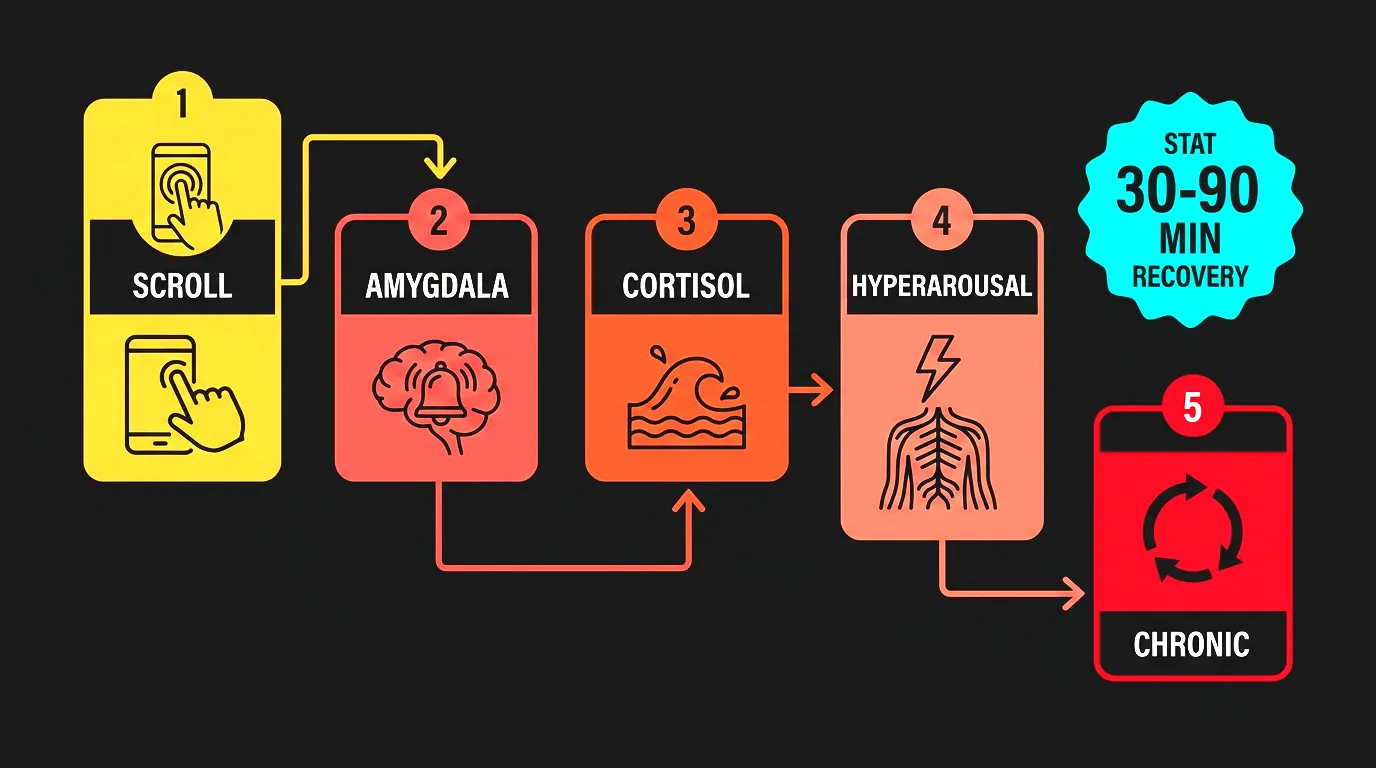
When you see something threatening, your amygdala fires up. That’s your brain’s built-in alarm system.[3] It triggers the hypothalamic-pituitary-adrenal axis, which floods your body with cortisol, the stress hormone. This is the same system that kept your ancestors alive when they spotted a predator.
The problem? Your brain can’t tell the difference between a real physical threat and a political post that makes you furious.
What Happens During a Doomscrolling Session
Here’s what happens inside your body while you scroll:
- Your amygdala detects a “threat” in a political post
- Cortisol floods your system within minutes[3]
- Your heart rate increases and your muscles tense
- It takes 30 to 90 minutes to return to baseline after viewing stressful media[3]
- Before you recover, you scroll to the next threatening post
- The cycle repeats, keeping you in a chronic state of hyperarousal
Research has linked high daily screen time with elevated cortisol levels and poor sleep quality, especially in adults prone to anxiety.[3] A 2024 study of 800 adults found that doomscrolling evokes greater levels of existential anxiety and fosters pessimism about human nature.[4]
Psychologist Joseph Trunzo captures it well:
“Doomscrolling feeds anxiety and depression because it feeds this sense that everything is wrong with the world, that everything is falling apart, and we’re all doomed.” - Joseph Trunzo, Ph.D.
Over time, this chronic stress exposure literally changes your brain. Prolonged cortisol exposure has been shown to enhance amygdala-hippocampal connectivity, making your brain more reactive to future threats.[5] In other words, doomscrolling doesn’t just make you feel bad in the moment. It trains your brain to feel worse about everything, faster.
This is similar to how apps hijack your dopamine system to keep you engaged. The difference is that political content targets your threat system instead of your reward system. Same manipulation, different brain circuit.
Why Political Content Is Uniquely Toxic on Social Media
Not all social media use is equally harmful. Watching cooking videos or chatting with friends doesn’t trigger the same response. Political content is different because it combines several psychological pressure points at once.
It Ties Into Your Identity
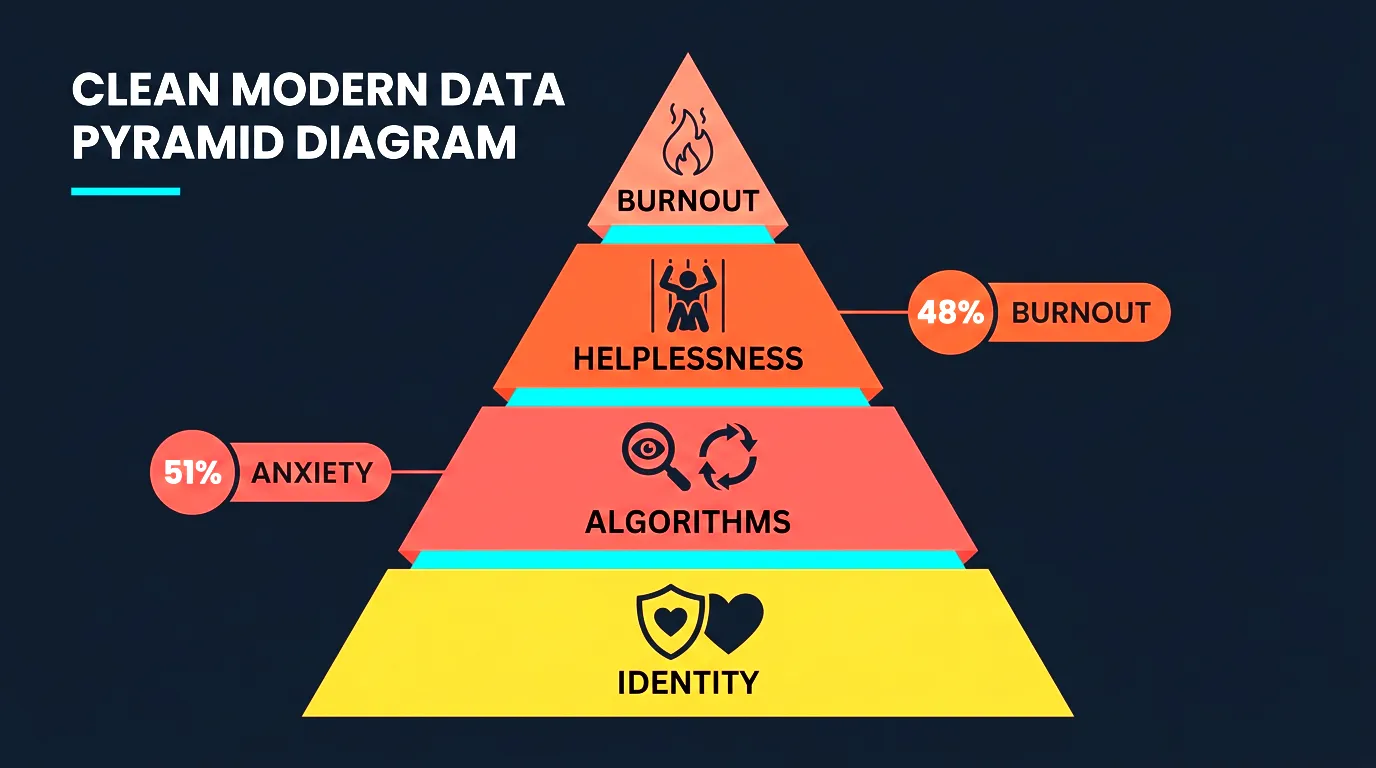
Political beliefs aren’t just opinions. They’re connected to your sense of self, your values, and your community. When you see someone attacking your political position, your brain processes it like a personal attack.[6] That’s why political arguments on social media feel so much more intense than disagreements about restaurants or movies.
Algorithms Amplify the Worst Content
Social media platforms don’t show you a balanced view of politics. They show you what generates the most engagement. And outrage, fear, and conflict generate far more engagement than nuance or compromise. This is exactly how propaganda works on social media today.
It Creates Learned Helplessness
Political doomscrolling exposes you to massive problems that feel completely beyond your control. A 2025 survey from the Thriving Center of Psychology found that 51% of Americans say politics causes them anxiety, and 48% report political burnout.[7] When you feel overwhelmed by problems you can’t solve, your brain starts shutting down motivation and hope. Psychologists call this learned helplessness.
The Outrage Machine Feeds Itself
A study on media-induced uncertainty found that extensive political media exposure perpetuates stress and is associated with symptoms of psychopathology.[8] The more you consume, the more anxious you feel. The more anxious you feel, the more you consume, searching for resolution that never comes.
| What Makes Political Content Different | How It Affects You |
|---|---|
| Tied to personal identity | Criticism feels like a personal attack |
| Algorithmically amplified outrage | You see the most extreme positions |
| Problems beyond individual control | Creates feelings of helplessness |
| Constant uncertainty | Drives compulsive checking behavior |
| Interpersonal conflict potential | Damages real relationships |
This is why you can spend hours scrolling political content and feel worse, not better, when you finally stop. Your brain has been running on threat mode the entire time. You’re not gaining useful information. You’re just giving your attention away to platforms that profit from your distress.
Recommended read: Stolen Focus by Johann Hari. A compelling look at why we’ve lost our ability to pay attention and what we can do to reclaim it.
Who Is Most Vulnerable, and the Role of Interpersonal Conflict
The Nature Medicine study revealed something that surprised even the researchers. The strongest predictor of lasting depression wasn’t how much time people spent online. It was whether political stress spilled over into their real-world relationships.[1]
When Politics Destroys Relationships
During the 2019 Hong Kong protests, 32.4% of participants reported conflicts with family members, friends, colleagues, or even strangers over political issues.[1] That’s roughly one in three people fighting with the people closest to them.
These conflicts didn’t just cause temporary stress. The association between interpersonal political conflict and depression persisted for over 13 years, with an odds ratio of 1.49.[1] Meanwhile, social media use alone showed weaker long-term effects.
This makes sense when you think about it. Social media is something you can turn off. A broken relationship with your mother or your best friend? That follows you everywhere.
Younger Adults Are Hit Hardest
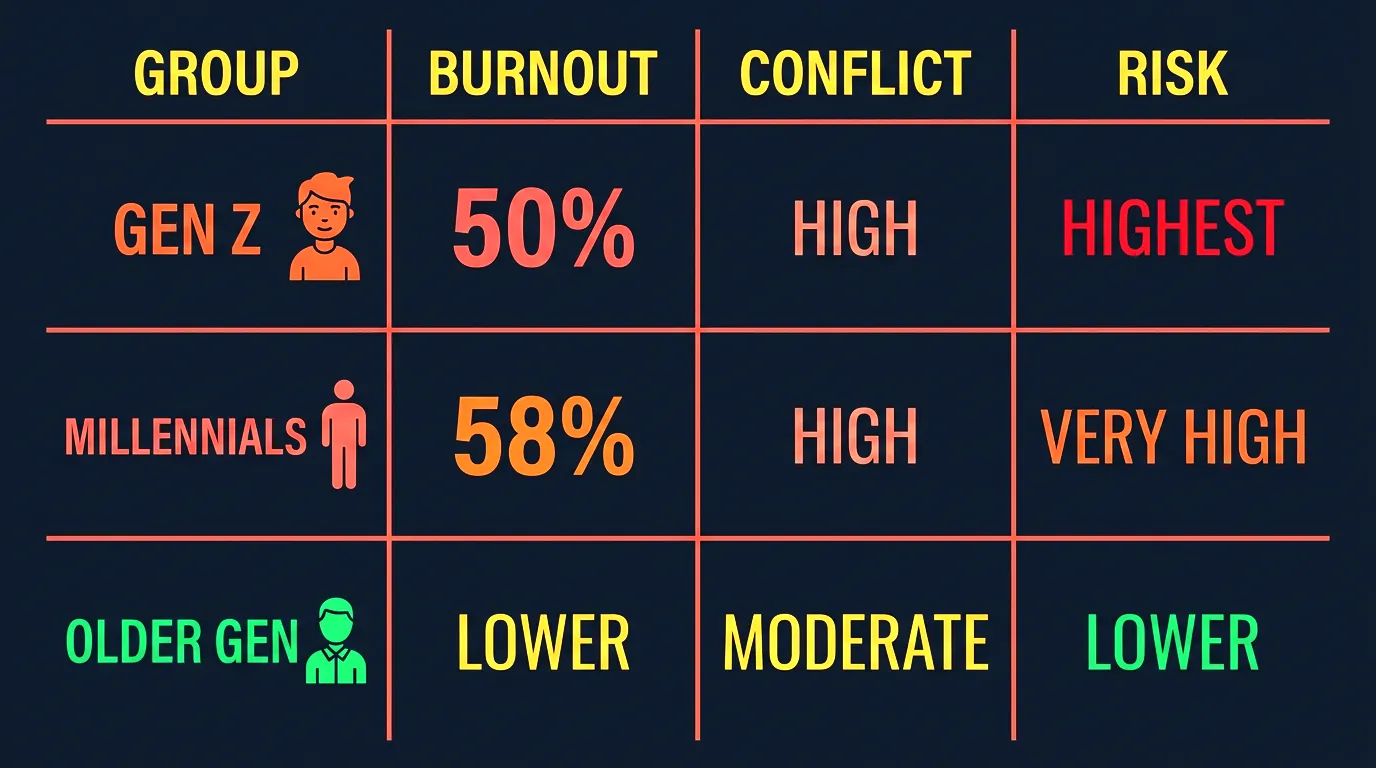
A 2025 analysis found that Gen Z and Millennials report the highest levels of political burnout, at 50% and 58% respectively.[7] A two-wave study of U.S. young adults found that higher 2024 presidential election stress was linked to increased odds of moderate or greater symptoms of major depression and generalized anxiety.[9]
About 1 in 6 people (16.5%) show signs of problematic news consumption severe enough to impact their stress, anxiety, and overall health.[10]
What Makes You More Vulnerable
Researchers have identified several risk factors:
- Heavy social media use of two or more hours daily on political content[1]
- Interpersonal conflicts over political beliefs with family and friends[1]
- High intolerance of uncertainty, the uneasy feeling that drives compulsive scrolling[11]
- Low psychological resilience and limited coping strategies[11]
- Pre-existing anxiety or depression that gets amplified by political stress
There’s a parallel here with why people won’t change their political beliefs. The more deeply you identify with a political position, the more threatening opposition feels. And the more threatening it feels, the harder it hits your mental health.
Recommended read: The Anxious Generation by Jonathan Haidt. Essential reading on how phone-based childhood is driving an epidemic of anxiety and depression in young people.
How to Protect Your Mental Health During Political Chaos
The research is clear that political social media use can seriously harm your mental health. But the solution isn’t to completely disengage from the world. It’s to change how you engage.
Take Structured Breaks
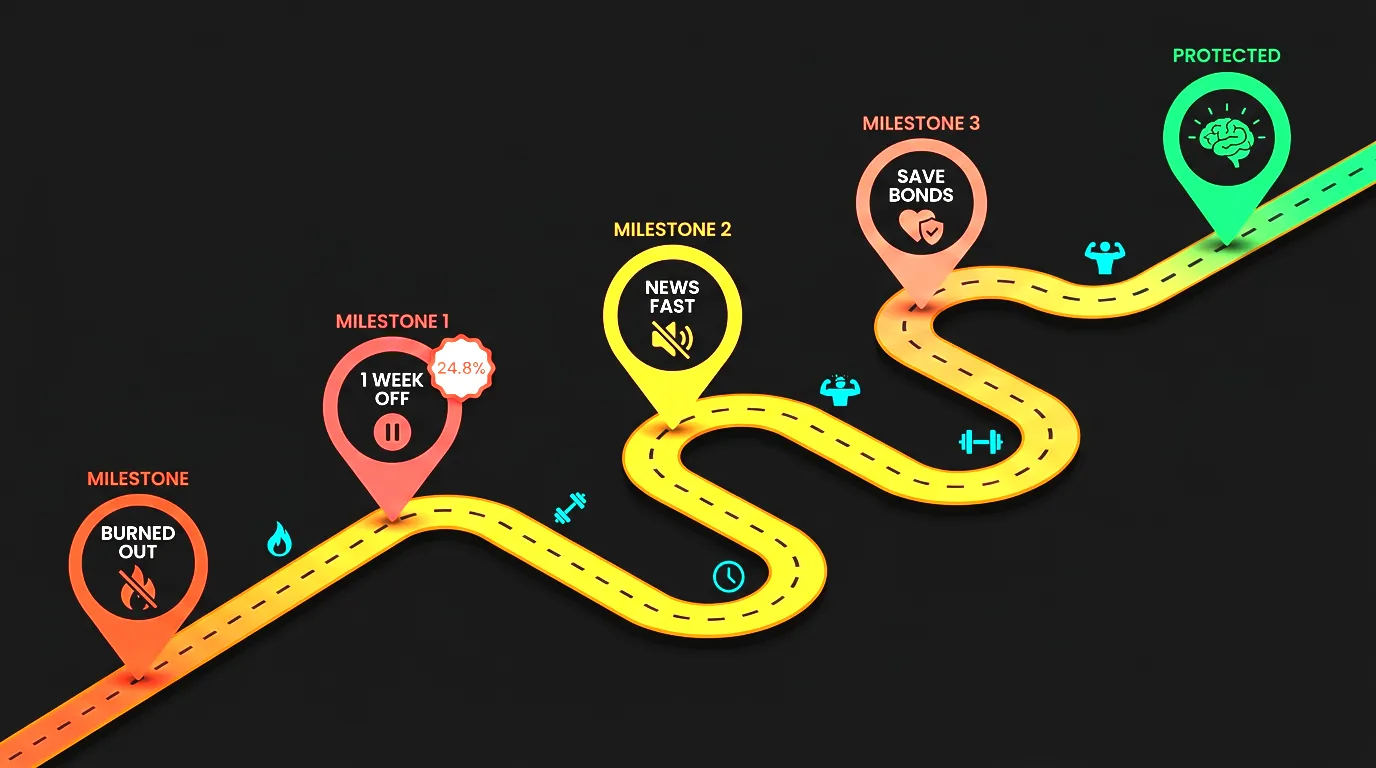
A 2025 study found that young adults who took a one-week social media break saw anxiety drop by 16.1%, depression drop by 24.8%, and insomnia drop by 14.5%.[12] Another study found that deactivating Facebook for six weeks produced about 25% as large an improvement as the average psychological intervention for depression and anxiety.[13]
You don’t have to quit forever. Even short breaks make a measurable difference.
Replace Doomscrolling With Intentional Check-Ins
Psychologists recommend “news-fast windows” where you set specific times to check the news instead of scrolling continuously.[14] Here’s a practical approach:
- Pick two set times per day to check political news, morning and evening
- Set a timer for 15 to 20 minutes per session
- Use trusted news sources directly instead of social media feeds
- When the timer goes off, close the app and move on
Protect Your Relationships
The Nature Medicine study shows that interpersonal conflict is the biggest long-term threat to your mental health during political turmoil.[1] Some practical boundaries:
- Avoid political discussions on social media with people you care about
- If a political conversation gets heated in person, take a break before it becomes a fight
- Remember that you can disagree with someone and still maintain the relationship
- Family support was found to buffer against probable depression in the study[2]
Move Your Body
Clinical psychologist Dr. Rachel Waford from Emory recommends focusing on self-care practices like getting enough sleep, eating nutritious foods, and prioritizing physical activity.[14] Exercise directly counteracts the cortisol buildup from chronic stress and has been shown to reduce symptoms of both anxiety and depression.
Know When to Get Help
If political stress is significantly impacting your daily functioning, sleep, relationships, or mood for weeks at a time, consider talking to a mental health professional. You’re not weak for struggling with this. A large majority of mental health clients reported that the political climate negatively affected their well-being.[7]
| Strategy | What Research Shows | How to Start |
|---|---|---|
| Social media breaks | 24.8% depression reduction in one week | Delete apps from phone for 7 days |
| News-fast windows | Structured exposure reduces anxiety | Set 2 daily check-in times, 15 min each |
| Protect relationships | Conflict predicts 13+ years of depression | No political debates on social media |
| Physical activity | Counteracts cortisol buildup | 30 minutes of movement daily |
| Professional help | Proven effective for political stress | Contact a therapist if struggling |
The goal isn’t to stop caring about politics. It’s to stop letting your attention get hijacked by platforms designed to profit from your distress. You can be informed without being consumed. You can care deeply without destroying your mental health in the process.
Recommended read: Outrage Machine by Tobias Rose-Stockwell. A powerful exploration of how online outrage is manufactured and what we can do to resist it.
Sources
What a 15 Year Study Found About Political Stress and Social Media
1. Political protests, social media use and mental well-being (Nature Medicine, 2025)
How Doomscrolling Rewires Your Brain for Anxiety
3. Doomscrolling dangers (Harvard Health, 2024)
Why Political Content Is Uniquely Toxic on Social Media
7. Politics and Mental Health: Survey Results (Thriving Center of Psychology, 2025)
8. Impact of Media-Induced Uncertainty on Mental Health (JMIR Mental Health, 2025)
Who Is Most Vulnerable, and the Role of Interpersonal Conflict
9. Mental Health Crisis in U.S. Politics: 2025 Presidential Inauguration (NeurostimTMS, 2025)
How to Protect Your Mental Health During Political Chaos
12. Effects of a One-Week Social Media Detox on Mental Health (JAMA Network Open, 2025)
13. The Welfare Effects of Social Media (American Economic Review, 2020)