
Forty percent of teenagers say they can’t control their emotions. And honestly? Most adults feel the same way.
You’ve been there. Someone cuts you off in traffic and you’re furious for the next hour. A coworker makes a snide comment and you replay it in your head all night. Your partner says something that stings, and suddenly you’re spiraling into a fight about something that happened three years ago.
It feels like your emotions have a mind of their own. Like they show up uninvited and take over. And no amount of deep breathing or positive thinking seems to help.
Here’s the thing. You’re not broken. And those emotions aren’t your enemy. But the way you’ve been taught to handle them? That’s probably making things worse.
Your Brain Isn’t Broken, It’s Doing Its Job
Let’s get something straight. You will never be able to stop emotions from happening. Not with meditation. Not with therapy. Not with sheer willpower.
Emotion regulation doesn’t mean controlling whether you feel angry, sad, or scared. It means controlling what happens after those feelings show up.
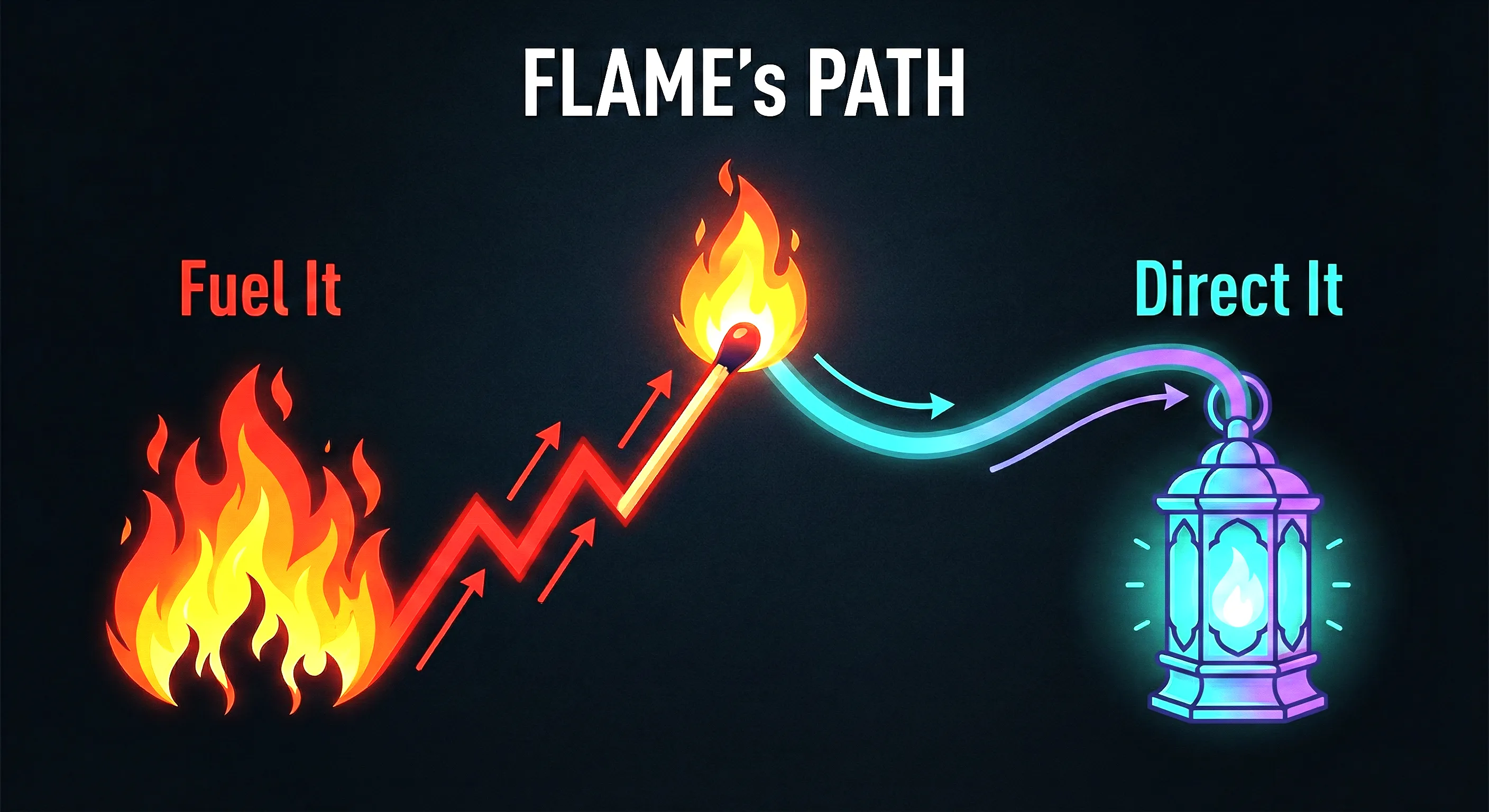
Ethan Kross, who runs the Emotion and Self-Control Laboratory at the University of Michigan, puts it simply. A fire can spontaneously blaze to life. But once it does, you have opportunities to either extinguish it or fuel it. You can control its trajectory.
Think of it like this:
- The trigger is the event that sets off your reaction. A child in danger. A rude email. The scent of someone’s perfume that reminds you of a painful memory.
- The trajectory is everything that happens after. How intense the emotion gets. How long it sticks around. Whether it spirals or fades.
You can’t control triggers. They just happen. But research shows you have real power over the trajectory. And that’s where emotion regulation lives.
Here’s what makes this even more hopeful. A landmark 50-year study from Dunedin, New Zealand tracked over 1,000 people from childhood into adulthood. Kids who were better at regulating their emotions ended up healthier, wealthier, and more successful. But here’s the key finding. The ability to regulate emotions isn’t fixed. People who improved over time saw their life outcomes improve too.[1]
A 2025 integrative framework on learning emotion regulation confirms this.[2] Improving emotion regulation abilities can enhance psychological well-being and mental health. The evidence shows that regulation can be learned during development, across the lifespan, and most explicitly through psychotherapeutic interventions and experimental training paradigms. This same principle extends to broader traits. Research now shows you can deliberately reshape your personality through structured interventions.
“Our ability to regulate our emotions isn’t fixed. It is malleable.” - Ethan Kross
Your starting point doesn’t determine your destination. That’s backed by decades of data.
Recommended read: Shift by Ethan Kross. The definitive guide to understanding why emotions spiral and the science-backed tools to change their trajectory.
Two Warning Signs Your Emotions Are Running the Show
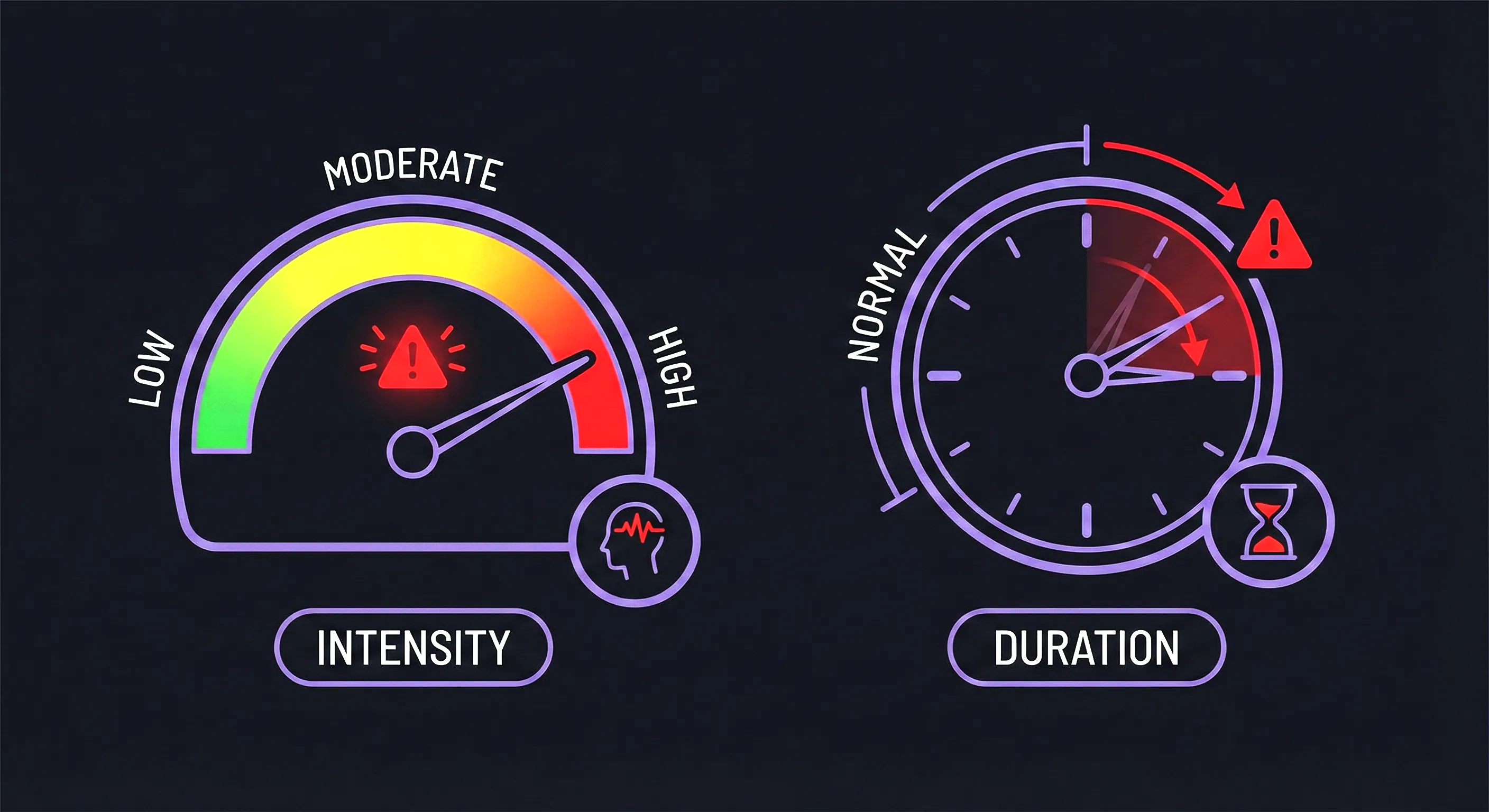
So how do you know when your emotions have crossed the line from helpful to harmful? Kross identifies two key indicators. Think of them as check-engine lights on your dashboard.
Intensity
Your emotions are supposed to focus your attention on what matters. But sometimes the alarm bells ring way too loud.
You explode at your kid’s soccer coach for benching them. You sink into despair because last year’s jeans don’t fit. These reactions are real. But they’re out of proportion with what actually happened.
Research shows that people who respond more intensely to everyday negative events have a higher risk of mental health disorders ten years later. The reaction itself becomes the problem.
Duration
The second warning sign is when emotions stick around too long. Your feelings aren’t light switches. You can’t just flip them off. But some emotions linger far past their usefulness.
A 2015 study found that sadness lasted 240 times longer than shame.[3] Why? Because sadness usually touches something deep about your identity or worldview. Shame is more surface-level and easier to brush off.
Here’s a quick breakdown:
| Factor | Makes Emotions Fade Faster | Makes Emotions Stick Around |
|---|---|---|
| Meaning | Low personal significance | Touches identity or worldview |
| Attention | You’re distracted from it | The source stays in front of you |
| Interpretation | You reframe physical symptoms | You catastrophize body sensations |
| Type | Anger at a stranger | Sadness, betrayal, or deep loss |
When your limbic system gets activated by strong emotions like rage or fear, it essentially hijacks your brain’s logical centers. Nicole Vignola, a neuroscientist and author of Rewire, explains that noradrenaline floods your brain during these moments. Your impulse control is compromised. Your rational thinking goes out the window.
A 2025 systematic review of emotionally dysregulated youth found scant evidence that automatic “closed-loop” mechanisms can rapidly downregulate high anger arousal.[4] Deliberate “open-loop” strategies like modifying situations, deploying attention elsewhere, cognitive reappraisal, and response modulation work for low-to-moderate arousal. But at peak intensity, your brain simply doesn’t have the bandwidth for deliberate regulation. That’s not a character flaw. That’s brain chemistry.
Recommended read: Rewire by Nicole Vignola. A neuroscientist’s guide to breaking unhelpful emotional patterns and building new neural pathways.
Why “Just Think Positive” Makes Everything Worse
Good vibes only. Look on the bright side. Everything happens for a reason. You’ve heard it all.
But forcing positivity when you’re struggling doesn’t just fail. It can actually make things worse.
A 2013 study found that positive reframing helps in some situations and hurts in others.[5] Here’s the split:
- When the problem is out of your control (you break a leg), reframing positively helps you cope.
- When the problem is in your control (a toxic relationship, a bad job), forcing silver linings predicts greater depression.
Why? Because when you can fix what’s wrong, turning your pain into something positive keeps you stuck. You stop taking action because you’ve convinced yourself it’s not that bad.
Your Body Budget Matters More Than Your Mindset
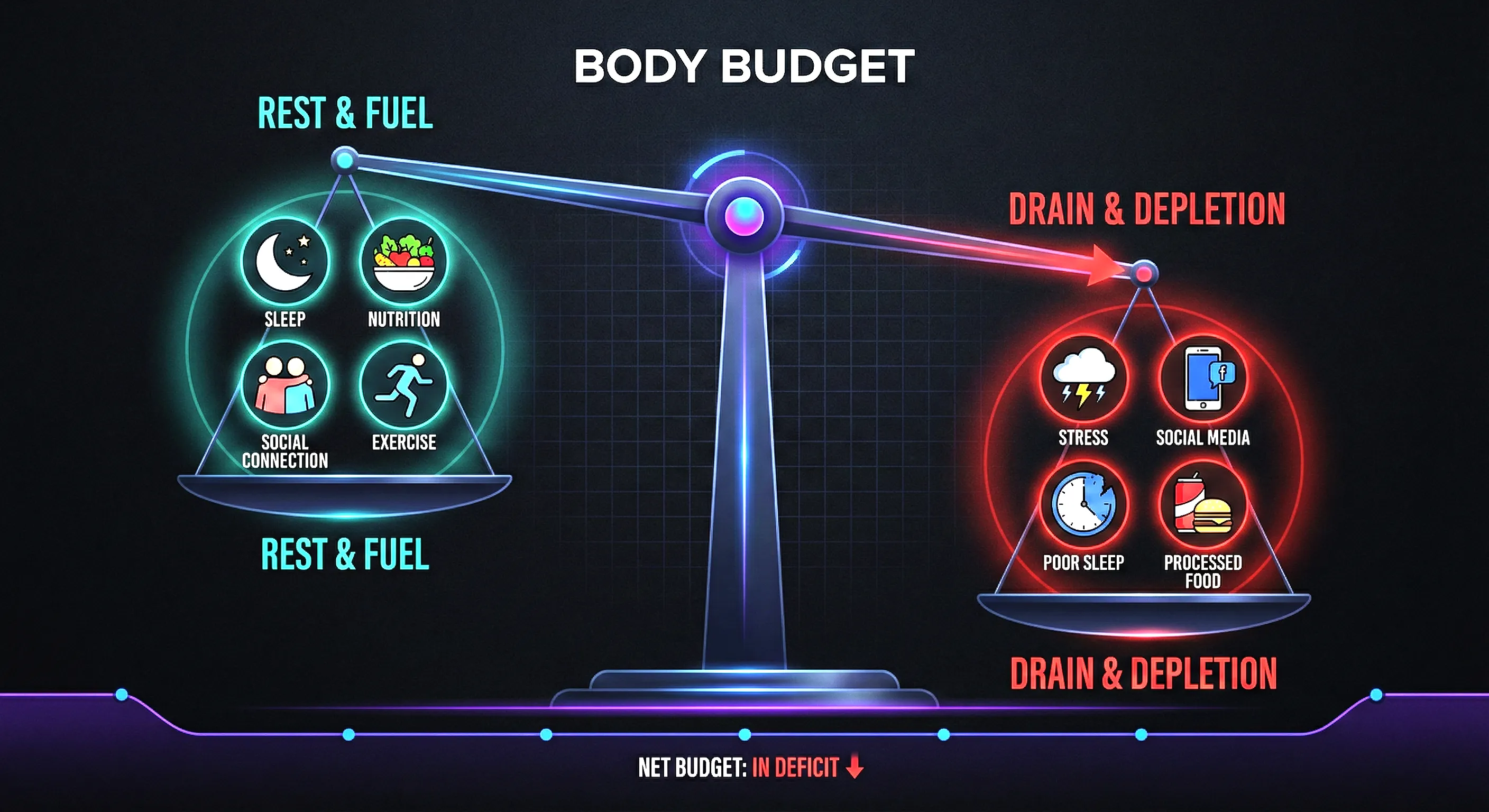
Lisa Feldman Barrett, a neuroscientist at Northeastern University, makes a powerful case that emotions start in the body, not the mind. She calls this your body budget. It’s your brain’s running tally of how much energy your body is spending and taking in.
When your body budget is out of whack, you feel terrible. Period. No amount of positive self-talk changes that.
And modern life is designed to wreck your body budget:
- Processed food loaded with refined sugar tanks your metabolism
- Over 40% of Americans are regularly sleep-deprived
- Social media creates constant low-grade rejection
- You never fully disconnect from work, so you never fully relax
“The most basic thing you can do to master your emotions is to keep your body budget in good shape.” - Lisa Feldman Barrett
This is why telling someone to “just think differently” often backfires. If their body budget is in the red, their brain will keep generating unpleasant feelings no matter what thoughts they try to layer on top.
Recommended read: How Emotions Are Made by Lisa Feldman Barrett. A groundbreaking look at how your brain constructs emotions from body signals, not the other way around.
The Flexibility Secret, How Resilient People Actually Cope
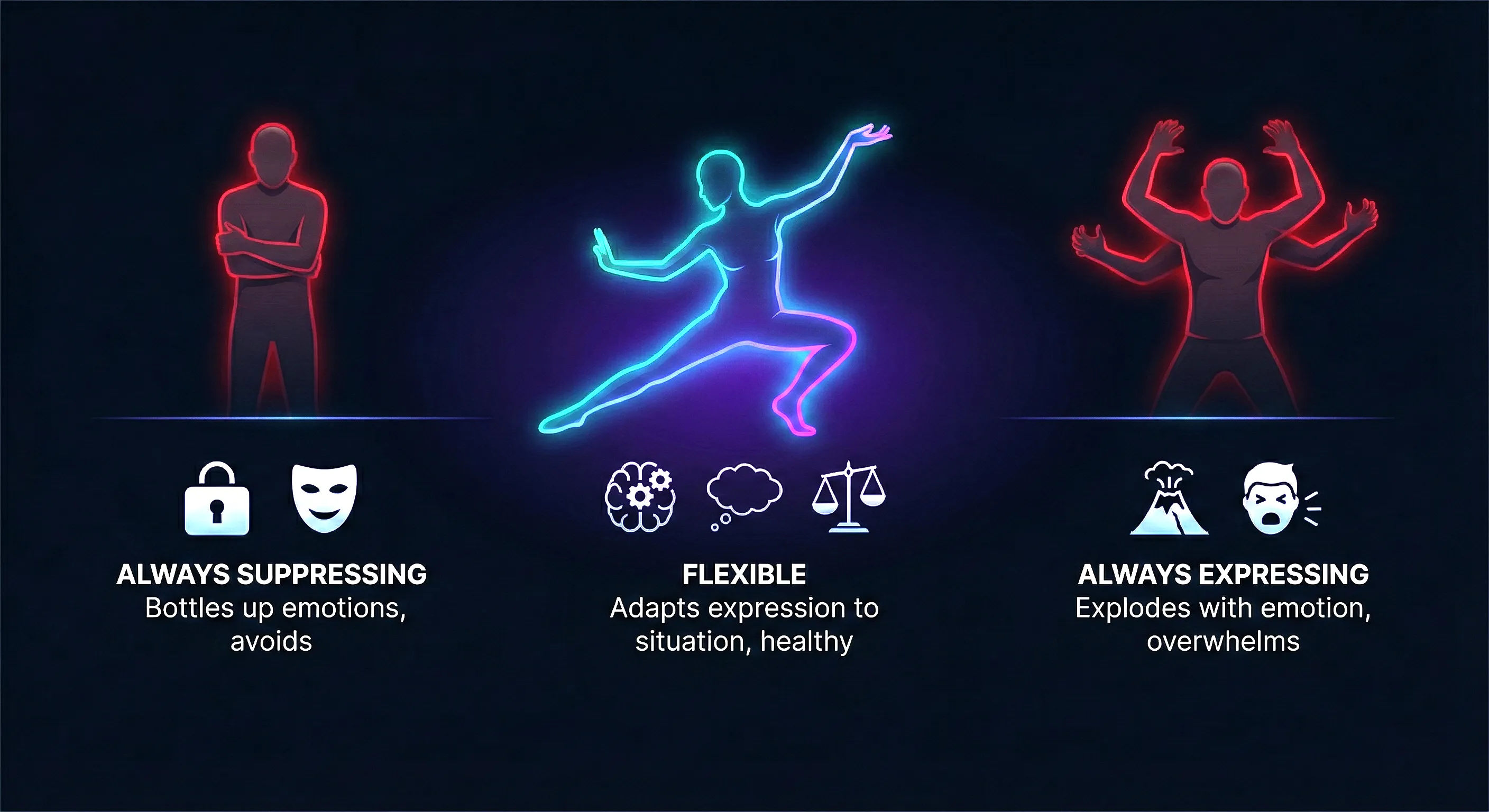
Here’s where things get interesting. The most emotionally resilient people aren’t the ones who always face their feelings head-on. They’re the ones who know when to face them and when to walk away.
Psychologists call this emotional flexibility. And it’s the single best predictor of how well you’ll handle hard times.
The 9/11 Study That Changed Everything
After the September 11 attacks, George Bonanno, a leading resilience researcher in Manhattan, studied how 101 New York City students coped.[6] He measured their ability to both express and suppress their emotions on command.
Eighteen months later, the students who performed best weren’t the ones who were great at expressing feelings. They weren’t the ones who were great at suppressing them either. The winners were the ones who could flexibly switch between both.
Think of it like fitness. Being able to do both push-ups and pull-ups shows total body strength. Being able to both approach and avoid your emotions shows total emotional strength.
Your Brain’s Emotional Gradient
A 2025 neuroscience study using a gradient-based framework revealed something remarkable about how regulation actually works in the brain.[7] Successful emotion regulation isn’t about one brain region overpowering another. It involves systematic reconfigurations of activation patterns along the brain’s principal neural gradient, moving from sensory regions to transmodal association regions.
In simpler terms, your brain doesn’t just “think” its way out of emotions. It dynamically shifts its entire processing mode. The study found that variance in regulation success was associated with these gradient transitions both in the lab and in daily life. This explains why flexibility matters so much. Rigid brains that can’t make these transitions get stuck in emotional loops.
When Avoidance Actually Works
There’s a pervasive myth that avoidance is always toxic. Kross calls it the myth of universal approach. The idea that you should always confront, express, and process your difficult feelings.
But here’s what the research actually shows:
- Chronic avoidance is bad. Constantly pushing down emotions predicts depression and anxiety over time.
- Strategic avoidance is healthy. Slamming your laptop shut instead of firing back an angry email. Taking a walk during an escalating argument. Distracting yourself after a painful breakup.
Your brain has a built-in psychological immune system. Just like your physical immune system fights off germs, your psychological immune system helps emotions fade over time. This is the same adaptation mechanism that explains why happiness fades too. The trick is giving it room to work by strategically stepping away when needed.
The people who struggle to read emotional situations often default to one strategy. All suppression, or all expression. That rigidity is what breaks them.
5 Science-Backed Tools to Shift Your Emotional State
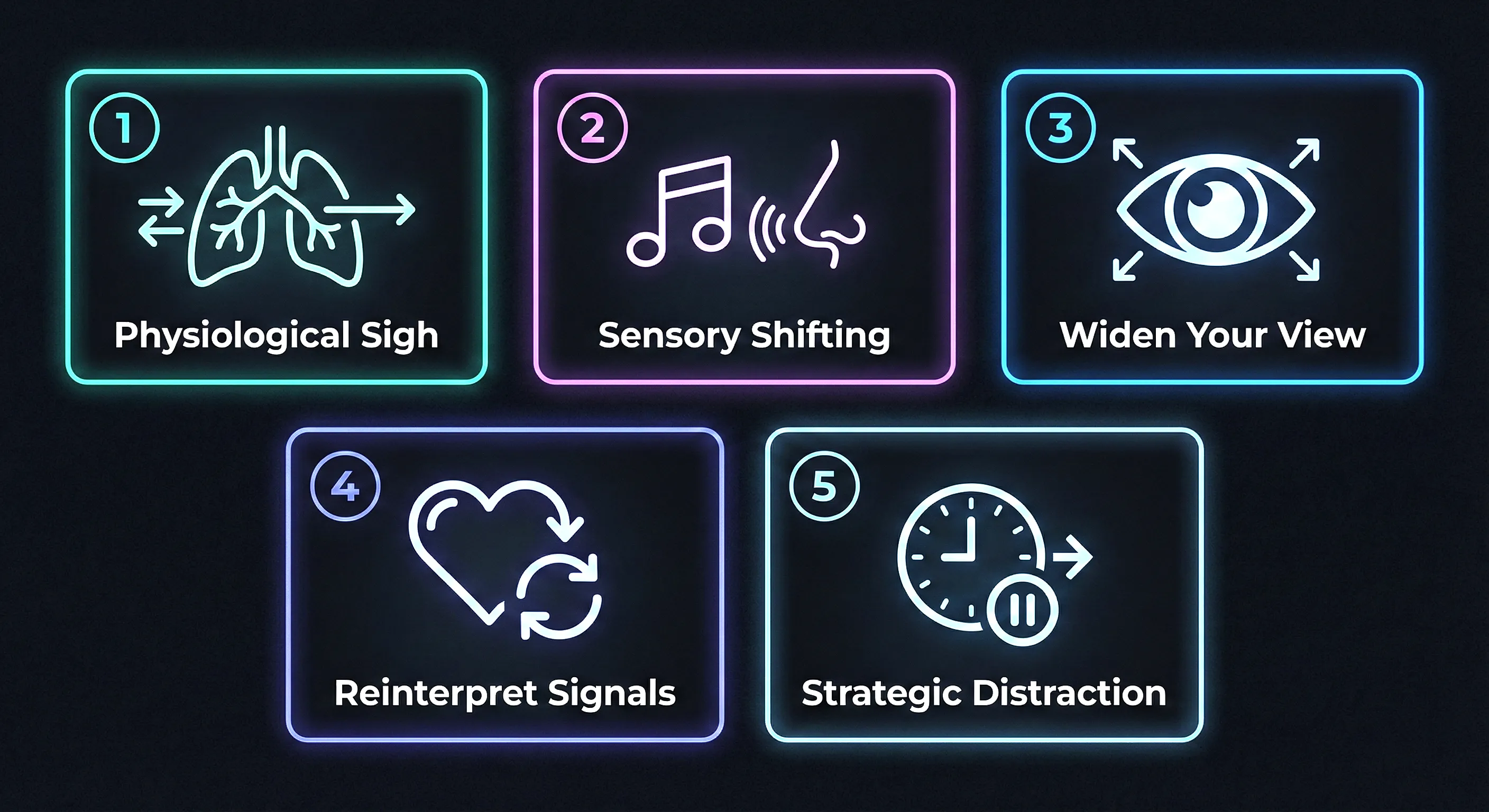
Now for the practical stuff. These aren’t vague tips. They’re tools backed by neuroscience and tested in labs.
-
The physiological sigh. Two quick inhales through your nose, then one long exhale through your mouth. This activates your parasympathetic nervous system in seconds. Nicole Vignola recommends this as the fastest way to bring your prefrontal cortex back online when emotions hijack your brain. This is especially important for people whose prefrontal cortex was underdeveloped due to childhood trauma that rewired their brain architecture.
-
Sensory shifting. Your five senses are powerful emotion regulators. Music is one of the strongest. A study found that 96% of participants used music primarily to manage their mood. Build a playlist for different emotional states and keep it one tap away. Other options include the smell of essential oils, the warmth of a pet, or the feeling of cold water on your wrists.
-
Widen your view. When you’re furious, your field of vision literally narrows. Tunnel vision is a real physiological response to anger. Step outside and look at a wide, panoramic view. This activates different neural circuits and can physically reduce the intensity of your anger.
-
Reinterpret your body signals. Your sweaty palms and racing heart before a presentation aren’t signs of failure. They’re signs your body is rising to the occasion. One study found that people who reframed their stress symptoms as helpful recovered faster from stressful situations than those who didn’t.
-
Use strategic distraction. Don’t fight the emotion head-on when it’s at peak intensity. Your psychological immune system needs time to work. Meta-analytic evidence from 2025 confirms that arousal-decreasing activities like deep breathing, meditation, and yoga effectively reduce anger and aggression.[8] Instead of replying to that infuriating text immediately, put your phone down and do something that requires focus. Come back to it when the emotional peak has passed.
The key is having multiple tools ready before you need them. When you’re in the middle of a strong emotion, you’re often blind to the exits. So identify your go-to tools now.
Ask yourself two questions:
- Which of your five senses gives you the biggest emotional shift?
- Which one comes with the lowest cost?
For some people, it’s taste. A piece of chocolate genuinely changes their state. But if that’s your go-to every time you’re stressed, the health costs add up. Music, touch, or getting outside might be just as powerful with zero downside. Your gut plays a bigger role in your mood than anyone realized.
Recommended read: Shift by Ethan Kross. Packed with practical tools for emotion regulation that go far beyond “just breathe.”
Sources
Your Brain Isn’t Broken, It’s Doing Its Job
1. A Gradient of Childhood Self-Control Predicts Health, Wealth, and Public Safety (PNAS, 2011)
2. Learning Emotion Regulation: An Integrative Framework (Psychological Review, 2025)