
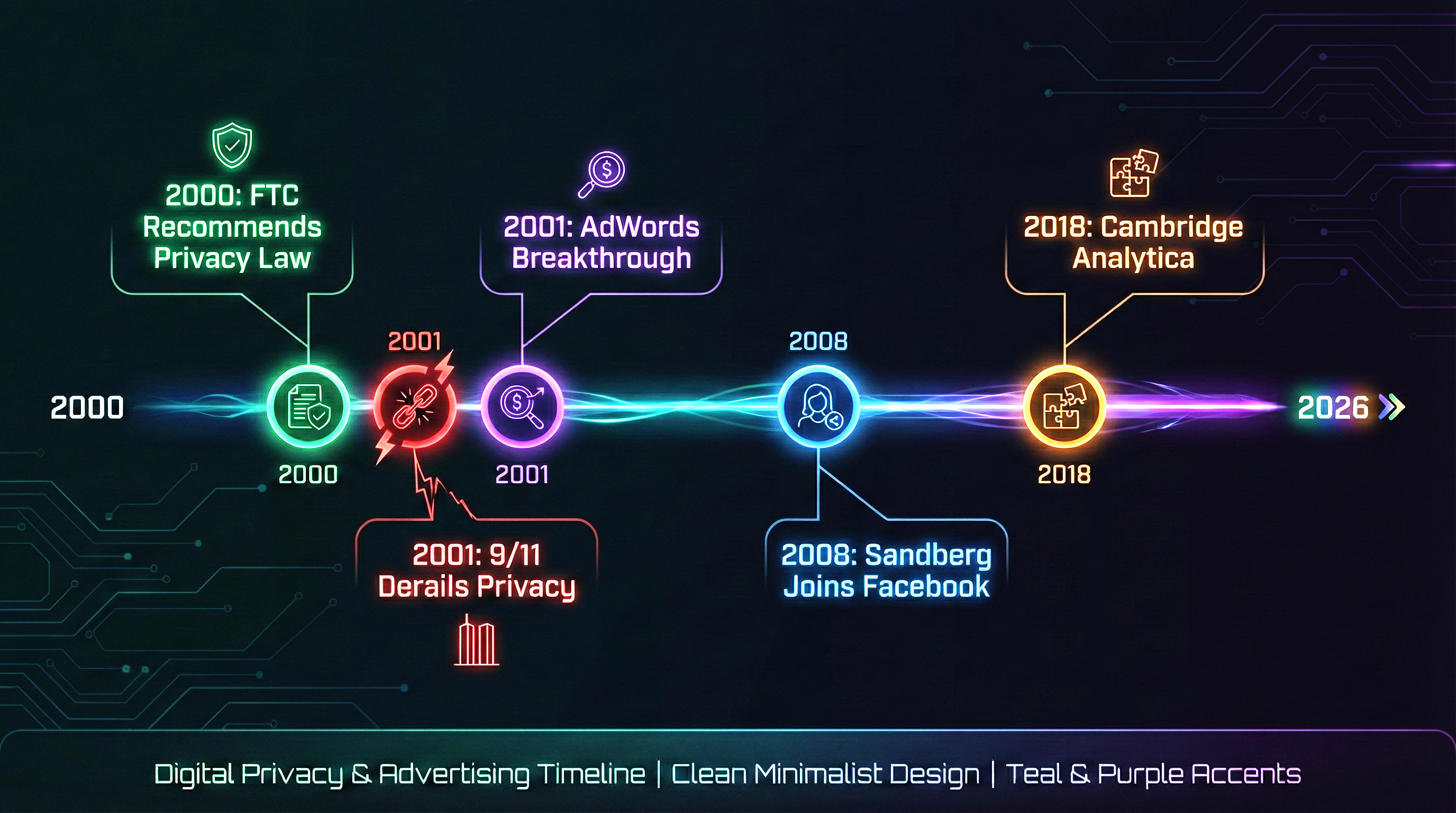
In 2000, the US Federal Trade Commission was ready to act. Commissioners had studied how internet companies handled personal data. Their conclusion was blunt. Self-regulation had failed. They recommended federal legislation to protect online privacy.
Then September 11, 2001 happened. And everything changed.
Privacy legislation vanished overnight. The political conversation shifted entirely to security. As former Clinton privacy counselor Peter Swire later explained, “Congress lost interest in regulating information usage in the private sector.” In that vacuum, a new kind of capitalism quietly took root. One that would reshape the relationship between you and your technology forever.
What Is Surveillance Capitalism?
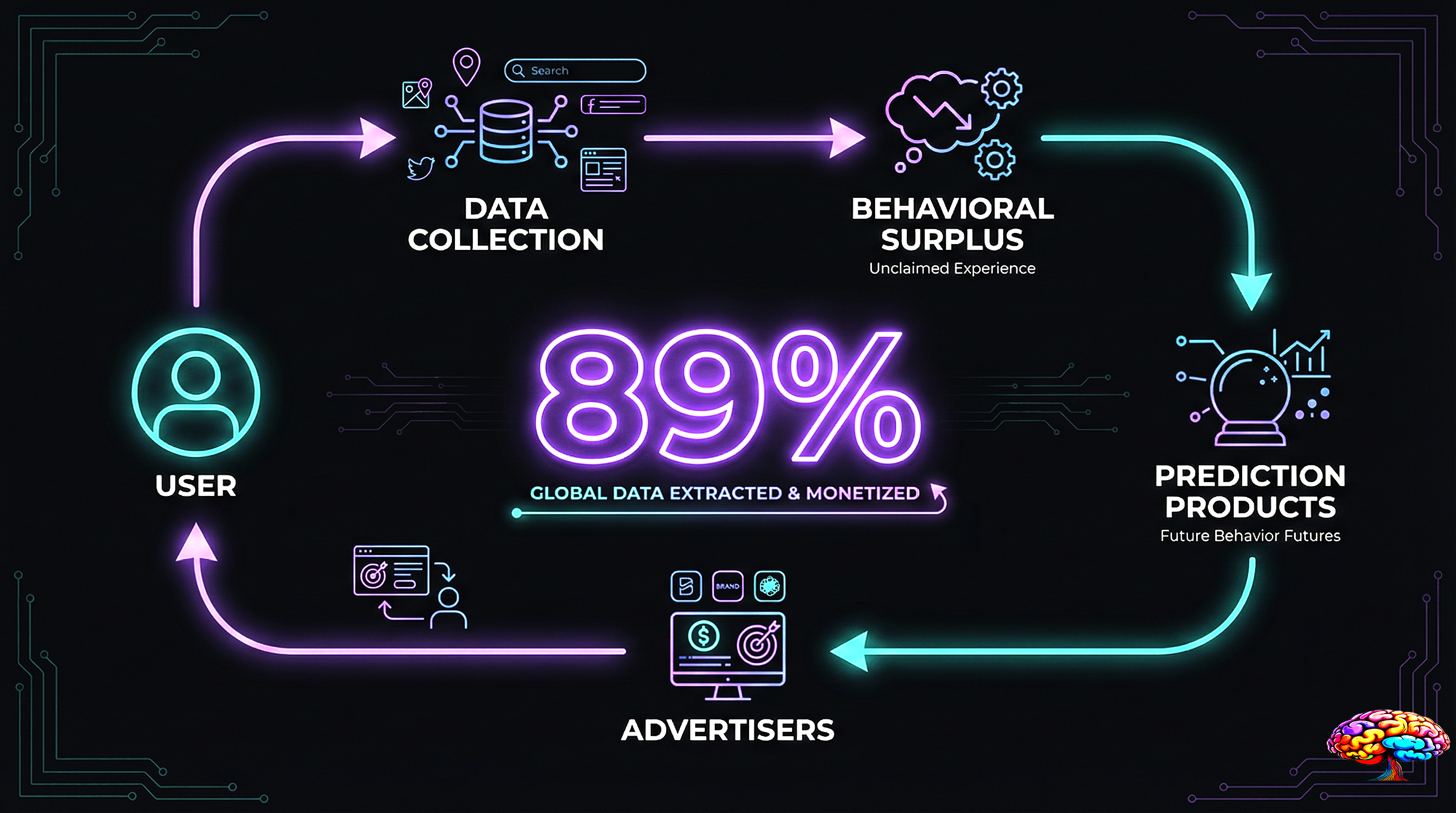
Surveillance capitalism is a term coined by Harvard professor Shoshana Zuboff to describe an economic system built on one core idea: your behavior is raw material. Every search you run, every app you open, every step your fitness tracker records. It all gets collected, analyzed, and turned into predictions about what you’ll do next.
Those predictions get sold. That’s the business.
You’re Not the Customer, You’re the Supply
Here’s the part most people miss. When you use a “free” app, you’re not the customer. You’re the supply chain. Your behavior generates what Zuboff calls behavioral surplus. That’s the data left over after a service gives you what you asked for.
- You search for a recipe. Google gives you the recipe. That’s the service.
- But Google also records what you searched, when, where you were, what device you used, and what you clicked next. That’s the surplus.
- That surplus gets fed into machine learning systems that predict your future behavior.
- Those predictions are packaged and sold to advertisers. That’s the product.
Google didn’t invent this model on day one. The breakthrough came around 2001 with AdWords, which figured out how to turn behavioral surplus into targeted advertising gold. The entire business model depends on capturing and selling your attention. By 2016, 89 percent of Google’s parent company Alphabet’s revenue came from targeted advertising programs. Facebook followed the same playbook after hiring Sheryl Sandberg from Google in 2008 to replicate the model.
“We have better information than anyone else. We know gender, age, location, and it’s real data as opposed to the stuff other people infer.” - Sheryl Sandberg
Recommended read: The Age of Surveillance Capitalism by Shoshana Zuboff. The definitive account of how tech companies turned human experience into free raw material for profit.
Your Body Is Being Tracked, Right Now
Surveillance capitalism didn’t stop at your search history. It moved into your body. Your fitness tracker, your health apps, your smart watch. They all feed the same machine.
Fitness Trackers and the Data They Actually Collect
A research team studied popular fitness trackers and found something alarming. The trackers were transmitting far more data than they needed to function:
- Device identification numbers that could link your fitness data to your specific phone
- Precise GPS coordinates transmitted passively and continuously
- Bluetooth MAC addresses that let any nearby third party track your movements
- None of this data was necessary for the tracker to actually work
The researchers concluded that consumers “overestimate the extent of security measures and underestimate the breadth of personal data collected by fitness tracking companies.” Of the nine trackers studied, only Apple randomly generated new MAC addresses to protect users.
Health Apps Are Even Worse
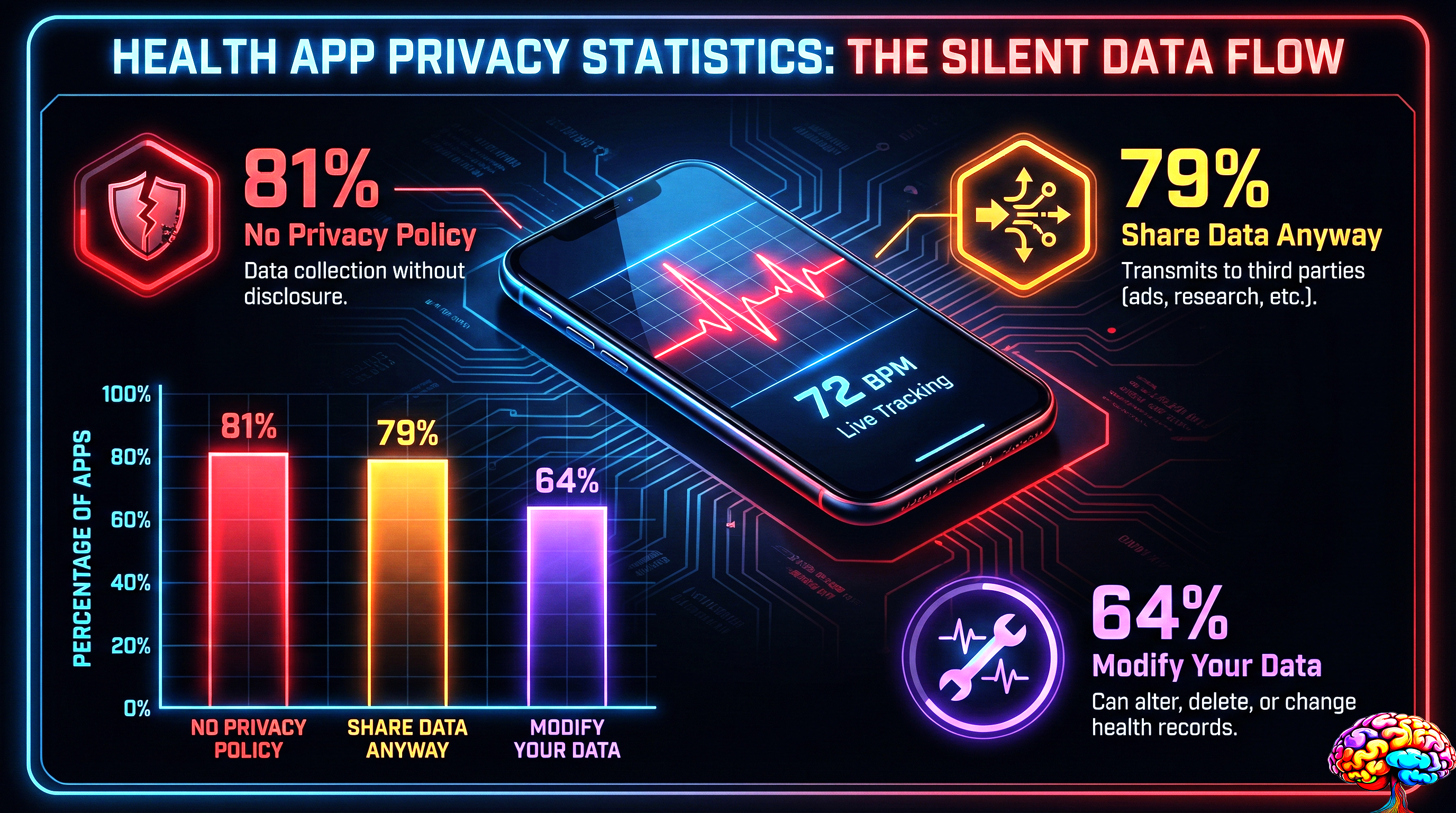
Think fitness trackers are bad? A 2016 study published in the Journal of American Medicine examined 211 diabetes apps. What they found was staggering.
| What the App Does Behind the Scenes | Percentage of Apps |
|---|---|
| Modifies or deletes your information | 64% |
| Reads your phone status and identity | 31% |
| Gathers your location data | 27% |
| Views your Wi-Fi connections | 12% |
| Activates your camera | 11% |
| Reads your contact lists or call log | 4-6% |
| Activates your microphone to record you | 4-6% |
Here’s the kicker. Of 211 apps, 81 percent had no privacy policy at all. Of those without policies, 76 percent shared your sensitive health data with third parties. Of those that did have privacy policies, 79 percent still shared your data. Only about half admitted it.
Zuboff suggests we should stop calling them “privacy policies” and start calling them what they really are. Surveillance policies.
The Wearable Future
The data grab is accelerating. Google has developed internet-enabled fabrics with sensors woven directly into clothing. Their partnership with Levi Strauss produced an “interactive denim” jacket in 2017 that can detect gestures as subtle as a finger twitch. Researchers are developing electronics that attach to skin as tattoos. Fingernails and wrists are becoming computational interfaces.
The marketing firm Ovum forecast 650 million wearable devices by 2020. Their research found growth was driven primarily by surveillance revenues. Wearables capture “contextual activity, health, and emotional state” data that can be used to tailor products and marketing messages “to a very high degree.” Research suggests that living under constant monitoring actually rewires your brain, making you more anxious and self-censoring over time.
Recommended read: Mindmasters by Sandra Matz. How big data reveals the most intimate details of your psychology and enables others to influence your choices.
How Your Personality Gets Weaponized
Collecting your data is only step one. The real power comes from what companies do with it. They build a psychological profile of you. Then they use it to predict and change your behavior.
IBM’s Personality Machine
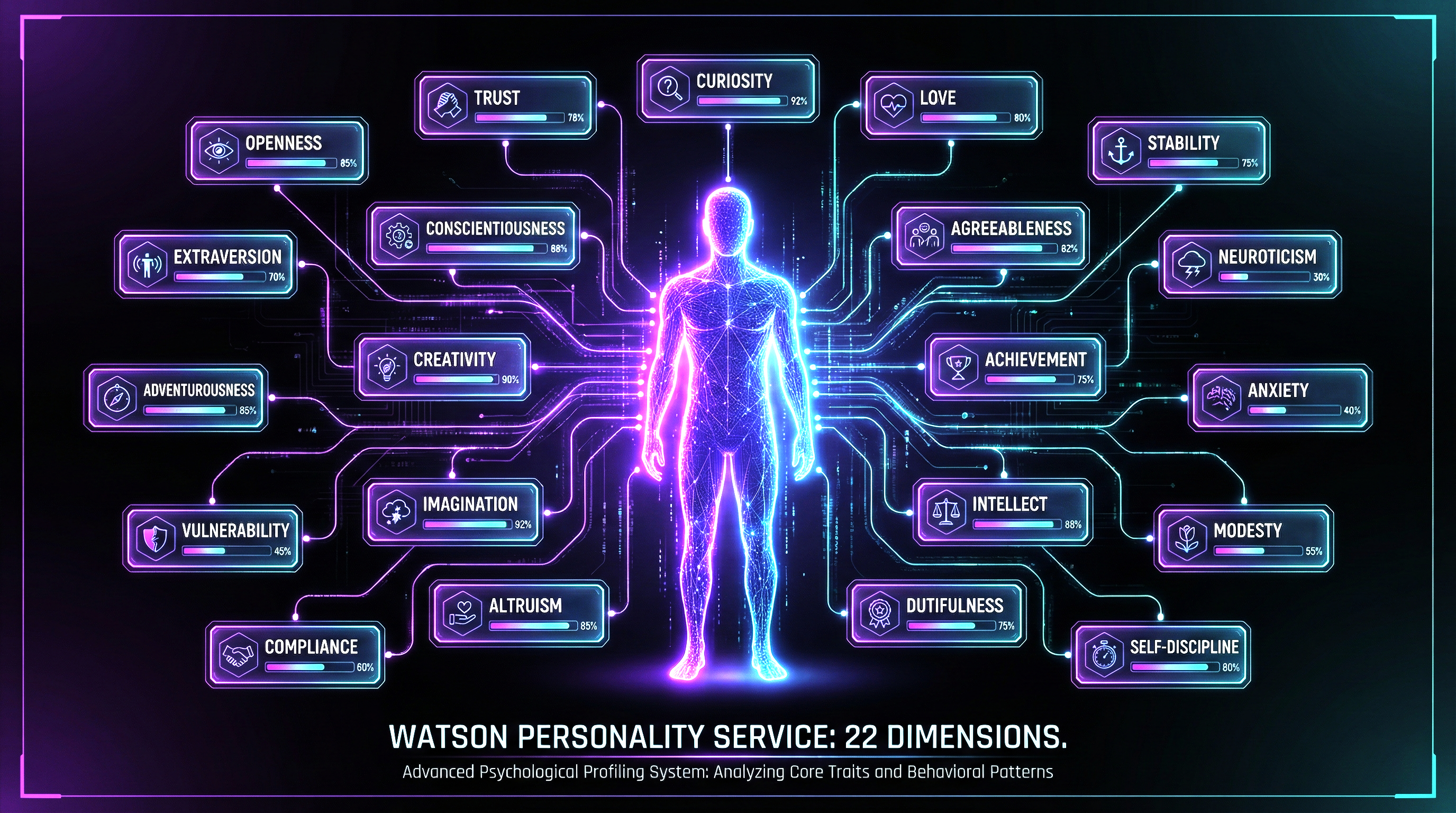
In 2015, IBM opened its Watson Personality Service for business. The system goes far beyond basic demographics. It assesses each individual across:
- Five personality factors (openness, conscientiousness, extraversion, agreeableness, neuroticism)
- Twelve categories of needs including excitement, curiosity, closeness, liberty, love, and stability
- Five value dimensions covering self-transcendence, tradition, hedonism, achievement, and openness to change
The system promises “limitless” applications. Customer service agents see your personality data displayed at the exact moment they contact you. Marketing messages get matched to your psychological profile. People rated as moral, trusting, and agreeable are targeted first because they’re more likely to respond.
Think about that for a moment. The qualities most of us try to teach our children. Kindness. Trust. Openness. These are being repurposed as vulnerabilities for profit.
Cambridge Analytica and the Prediction Arms Race
Researcher Michal Kosinski developed methods to predict personality from digital footprints. He later admitted his own work was “pretty creepy” and stressed that many things “one can do should certainly not be done by corporations or governments without users’ consent.”
But once the methods exist, the market finds suppliers. Cambridge Analytica used similar techniques to build voter profiles and influence elections. IBM, Facebook, and countless smaller firms all joined what Zuboff calls the “prediction imperative.” The race to know you better than you know yourself.
“All of our interactions are being mediated through digital products and services, which basically means that everything is being recorded.” - Michal Kosinski
Recommended read: The Chaos Machine by Max Fisher. How social media algorithms prey on psychological frailties and drive users toward extreme behavior.
Why Nobody Stopped This
You might be wondering why governments didn’t step in earlier. The short answer is a combination of bad timing and powerful lobbying.
The Post-9/11 Privacy Collapse
Before 9/11, the FTC had recommended clear federal privacy protections. The proposed rules would have required:
- Clear and conspicuous notice of data collection practices
- Consumer choice over how personal information gets used
- Access rights to see, correct, or delete your personal data
- Enhanced security requirements for personal information
Had these become law, many core practices of surveillance capitalism would have been either illegal or at least subject to public debate. But after the terrorist attacks, the political focus shifted entirely to security. The Patriot Act expanded warrantless data collection. Intelligence agencies tore down privacy walls. And tech companies were left free to build their surveillance empires without oversight.
The Lobbying Machine
Even without 9/11, the business community had mobilized to “shape or stop” any privacy legislation. In the post-attack environment, these two forces converged. As privacy scholar Chris Jay Hoofnagle observed, “Without the threat of legislation, the energy went out of many of the self-regulatory efforts that industry had created.”
The FTC shifted from broad privacy rights to a narrow “harms-based” approach. Only cases involving concrete injuries like identity theft got pursued. Meanwhile, surveillance capitalism rooted and grew unchecked.
The Ongoing Fight
Today, the Illinois Biometric Privacy Act stands as one of the few strong protections. It requires companies to get written consent before collecting biometric data and lets individuals sue for unauthorized collection. Surveillance capitalists have fought aggressively to weaken this law and block similar legislation in other states.
The pattern is clear. When regulation threatens profits, the industry fights back hard.
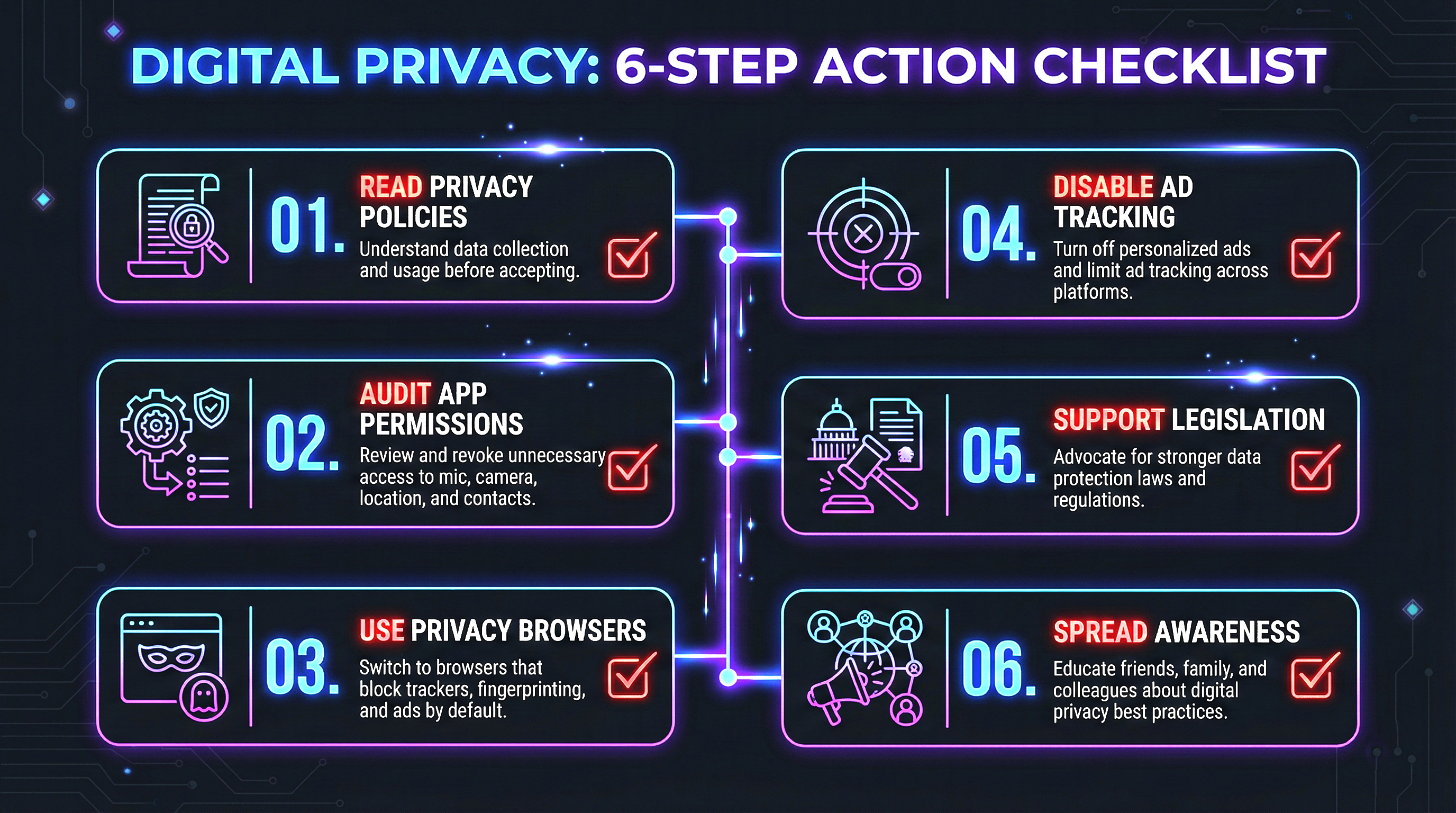
How to Take Back Some Control
You can’t opt out of surveillance capitalism entirely. But you can reduce your exposure and make more informed choices.
-
Read what you’re agreeing to. Most people skip privacy policies. That’s by design. They’re deliberately long and confusing. But checking app permissions before installing can reveal a lot. Does a flashlight app really need your contacts?
-
Audit your app permissions. Go through your phone settings right now. Revoke location access, microphone access, and camera access for any app that doesn’t genuinely need it. Pay special attention to health and fitness apps.
-
Use privacy-focused alternatives. Switch to browsers like Firefox or Brave. Use search engines like DuckDuckGo. Choose messaging apps with end-to-end encryption. Every switch reduces the surplus you generate. It also helps break the dopamine loops that apps use to keep you scrolling.
-
Disable ad tracking. Both iPhone and Android have settings to limit ad tracking. On iPhone, go to Settings, Privacy, Tracking, and turn off “Allow Apps to Request to Track.” On Android, go to Settings, Privacy, Ads, and delete your advertising ID.
-
Support privacy legislation. Individual action matters, but systemic change requires law. Support organizations fighting for digital privacy rights. Vote for candidates who take data protection seriously.
-
Talk about it. Most people have no idea how deeply they’re being tracked. Share what you’ve learned. The more people understand the system, the harder it becomes to maintain.
Recommended read: Stolen Focus by Johann Hari. Why our attention spans are collapsing and who profits from the destruction of our ability to focus.
The Bottom Line
Surveillance capitalism didn’t happen by accident. It was built deliberately over two decades by companies that discovered your behavior is worth more than whatever service they provide you. Your searches, your steps, your heartbeat, your personality. It’s all raw material for prediction machines that serve someone else’s bottom line.
The system thrives on your ignorance. The less you know about how it works, the more valuable you become. But awareness is the first crack in the wall. And walls can fall. As Zuboff reminds us, the Berlin Wall came down because people said “no more.”
Your data is yours. Start acting like it.