You were five years old. Maybe younger. Something happened that your conscious mind barely remembers. But your brain? Your brain remembers everything.
It recorded the yelling, the unpredictability, the feeling of not being safe. And it didn’t just file those memories away neatly. It physically rebuilt itself around them. Your neural wiring shifted. Your stress response system got stuck on high alert. And decades later, you’re still living with a brain that was shaped by experiences you may not even fully recall.
This isn’t a metaphor. Childhood trauma literally rewires the architecture of your brain. And a growing body of neuroscience research is showing us exactly how it happens, which regions are affected, and what you can actually do about it.
Your Brain Was Built for Survival, Not Peace
Your brain’s number one job isn’t to make you happy. It’s to keep you alive. And when you’re a child growing up in an unpredictable or threatening environment, your brain does what it’s designed to do. It adapts.
The problem is that these adaptations come at a cost. A brain wired for constant danger processes the world differently than one wired for safety.
Here’s what happens:
- Your stress response system gets calibrated to expect threats everywhere
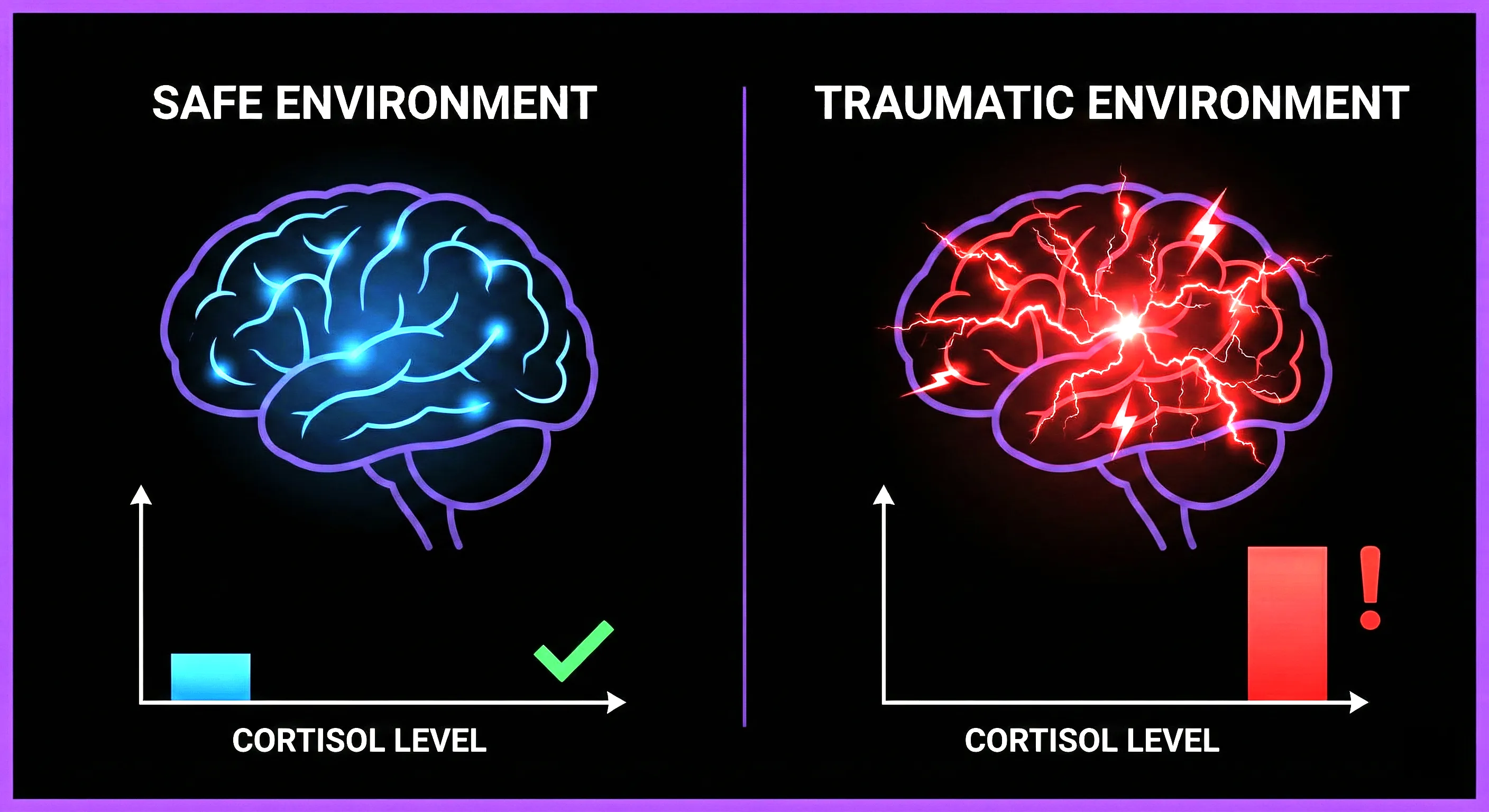
- Your brain floods with cortisol and norepinephrine at levels meant for emergencies, not everyday life
- Neural pathways for fear and hypervigilance get strengthened while pathways for calm reasoning get neglected
- Your fight-or-flight response becomes your default mode, not a temporary reaction
“Trauma is not what happens to you. Trauma is what happens inside you as a result of what happens to you.” — Gabor Maté
Dr. Bruce Perry, one of the world’s leading experts on childhood trauma, describes it this way. A child’s brain develops from the bottom up. The lower, more primitive brain regions that control survival responses develop first. When trauma happens during this critical window, those survival circuits get over-built. The higher brain regions responsible for reasoning and emotional control never get the resources they need.
This means that a child who grows up in chaos doesn’t just “feel stressed.” They develop a fundamentally different brain architecture than a child who grows up feeling safe.
Recommended read: The Deepest Well by Nadine Burke Harris — a pediatrician and former Surgeon General of California reveals how adverse childhood experiences get under your skin, change your brain, and shape your health for decades.
Three Brain Regions That Take the Biggest Hit
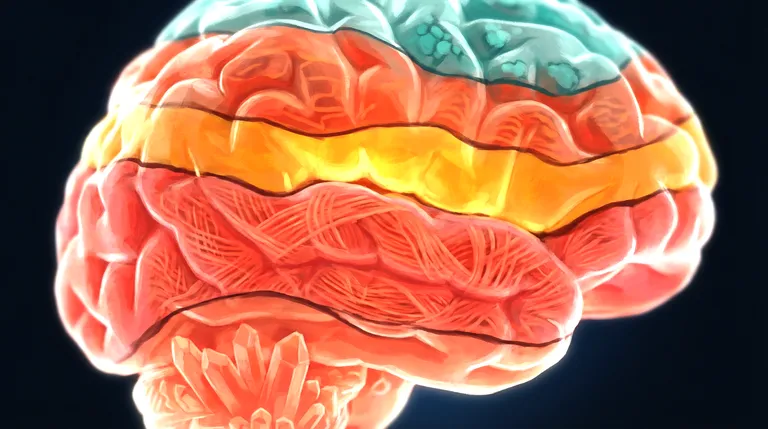
Neuroscience has pinpointed three specific brain areas that childhood trauma damages most. A 2025 systematic review and meta-analysis confirmed that structural and functional changes in these regions are consistently linked to early adverse experiences.[1] [2] [3] [9] [10]
The Amygdala, Your Alarm System
The amygdala is your brain’s threat detector. It scans your environment for danger and triggers your fight-or-flight response when it finds some.
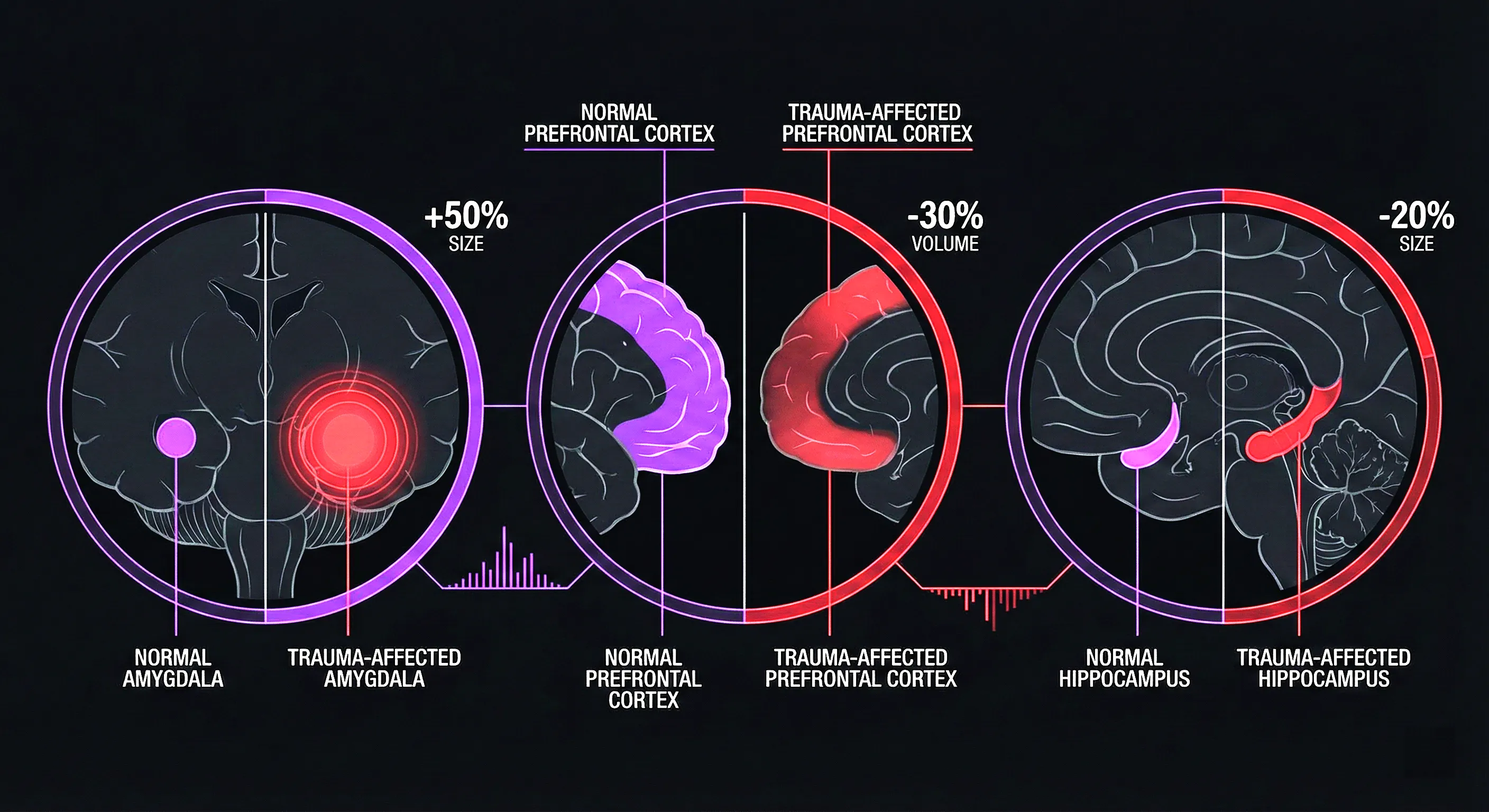
In trauma survivors, the amygdala becomes hyperactive. It fires too often, too intensely, and at things that aren’t actually threatening. A loud noise. A certain tone of voice. A facial expression that reminds you of something from years ago. Your amygdala treats them all like emergencies.
A 2025 Virginia Tech study found something even more striking. Simply witnessing trauma triggers distinct protein changes in the amygdala. You don’t even have to be the direct target. The researchers also discovered sex-specific differences in how male and female brains process these indirect fear memories.[4]
The Prefrontal Cortex, Your Brake Pedal
The prefrontal cortex sits right behind your forehead. It handles planning, decision-making, impulse control, and emotional regulation. Think of it as the brake pedal that’s supposed to slow down your amygdala’s alarm.
Childhood trauma disrupts the development of this region. Studies show reduced volume in the ventromedial prefrontal cortex and altered connectivity between the prefrontal cortex and the amygdala.[5] In plain language, the brake pedal doesn’t work properly.
This is why trauma survivors often struggle with controlling their emotions. It’s not a willpower problem. The brain region responsible for emotional regulation was literally underdeveloped during a critical growth window.
The Hippocampus, Your Memory Organizer
The hippocampus processes and organizes memories. It’s supposed to take experiences, file them with context and a timestamp, and store them properly.
Trauma shrinks the hippocampus. This means memories don’t get processed correctly. Instead of being filed as “something bad that happened in the past,” traumatic memories stay fragmented and timeless. They can get triggered at any moment, and when they do, your brain responds as if the event is happening right now.
| Brain Region | Normal Function | What Trauma Does |
|---|---|---|
| Amygdala | Detects threats, triggers fight-or-flight | Becomes hyperactive, fires at non-threats |
| Prefrontal Cortex | Impulse control, emotional regulation | Underdevelops, weakens emotional braking |
| Hippocampus | Organizes and timestamps memories | Shrinks, leaves memories fragmented and timeless |
Recommended read: The Body Keeps the Score by Bessel van der Kolk — the definitive guide to how trauma reshapes the brain and body, and what cutting-edge treatments can do about it.
The ACE Study Changed Everything We Know About Trauma’s Reach
In 1995, the CDC and Kaiser Permanente launched what would become the largest study ever conducted on childhood trauma and adult health. The Adverse Childhood Experiences (ACE) study surveyed over 17,000 adults and the results were staggering.[6]
The study measured 10 types of childhood adversity. Things like physical abuse, emotional neglect, household substance abuse, parental separation, and witnessing domestic violence. Each one counts as one point on your ACE score.[7]
Here’s what the data showed:
- More than two-thirds of participants reported at least one ACE
- Nearly one in four had experienced three or more
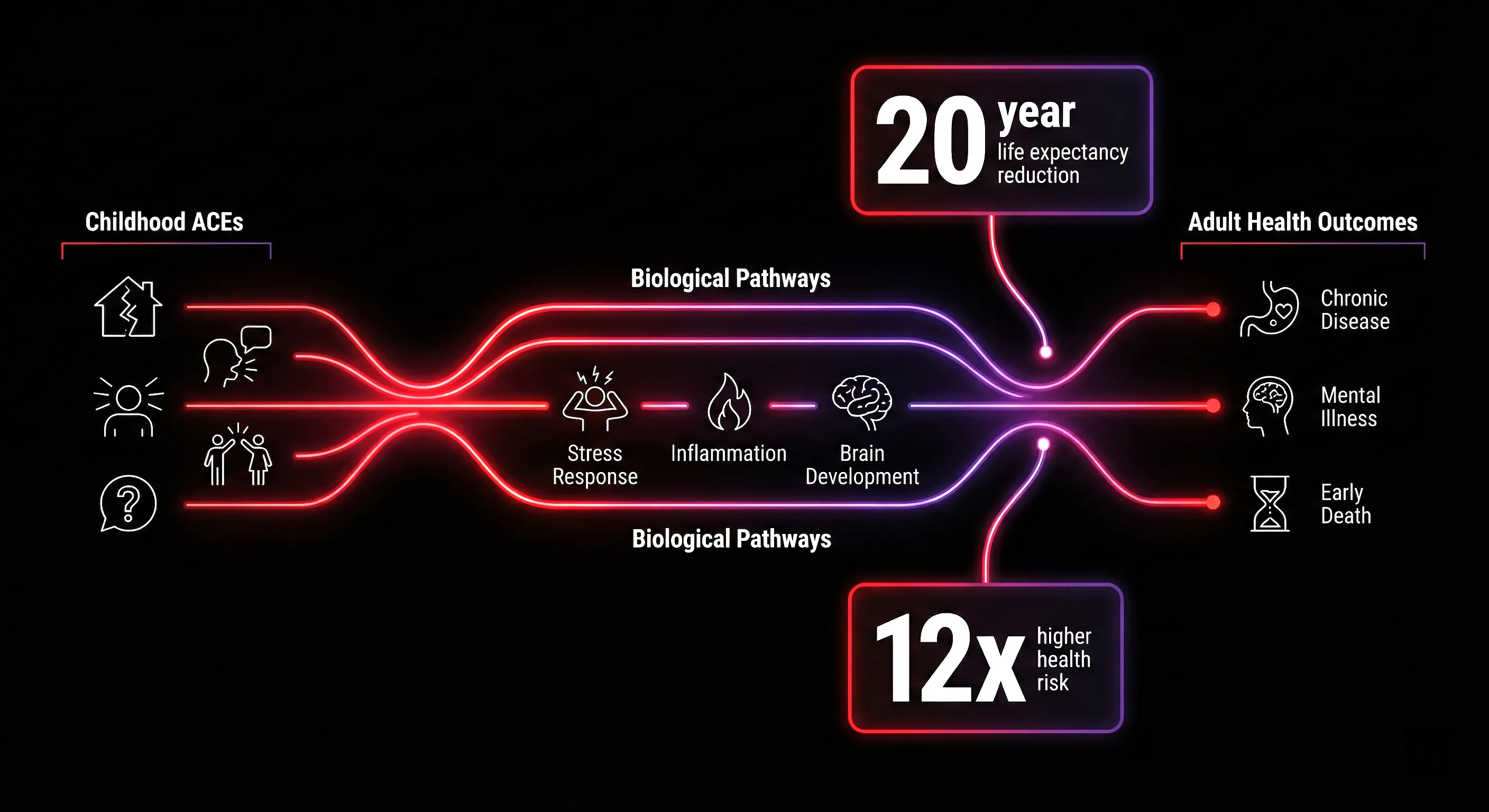
- Adults with 4 or more ACEs were 12 times more likely to attempt suicide, abuse substances, and develop depression
- High ACE scores correlated with dramatically increased rates of heart disease, diabetes, obesity, and autoimmune disorders
- ACEs can reduce life expectancy by up to 20 years
The economic toll is massive too. ACE-related health consequences cost an estimated $14.1 trillion annually in the United States alone.[8]
What made this study revolutionary wasn’t just the numbers. It was the realization that childhood trauma doesn’t stay in childhood. It gets embedded in your biology. Your biography literally becomes your biology.
And this isn’t just about extreme cases. You don’t need to have survived something catastrophic. Growing up with a parent who was emotionally unavailable, living in a home where you never felt safe expressing emotions, or experiencing consistent unpredictability as a child all count. The ACE study proved that “smaller” traumas add up in ways that change your health trajectory for decades.
Recommended read: Childhood Disrupted by Donna Jackson Nakazawa — explores the science behind how adverse childhood experiences get under your skin and into your cells, causing adult illness.
How to Start Rewiring Your Brain
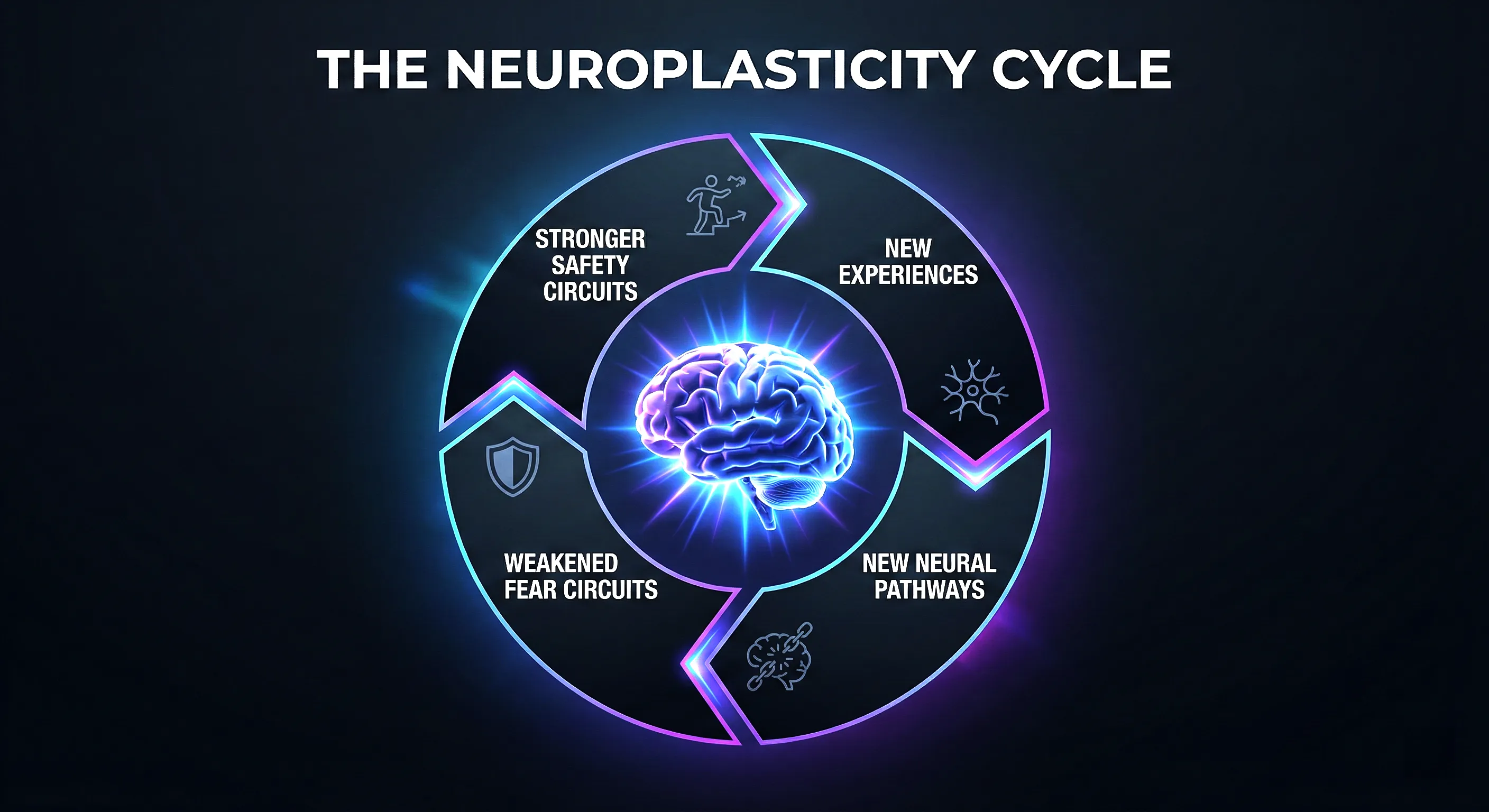
Here’s the good news. The same neuroplasticity that allowed trauma to reshape your brain also means your brain can be reshaped again. New experiences forge new neural pathways. Research even shows that creative activities can physically reshape brain connectivity and slow brain aging. Your brain’s compensation mechanisms actually improve with age in surprising ways. And with the right approach, you can weaken the old fear circuits and build stronger ones for safety and regulation.
This isn’t about “thinking positive” or “just getting over it.” It’s about using evidence-based approaches that work with your brain’s biology, not against it.
Evidence-Based Approaches That Work
-
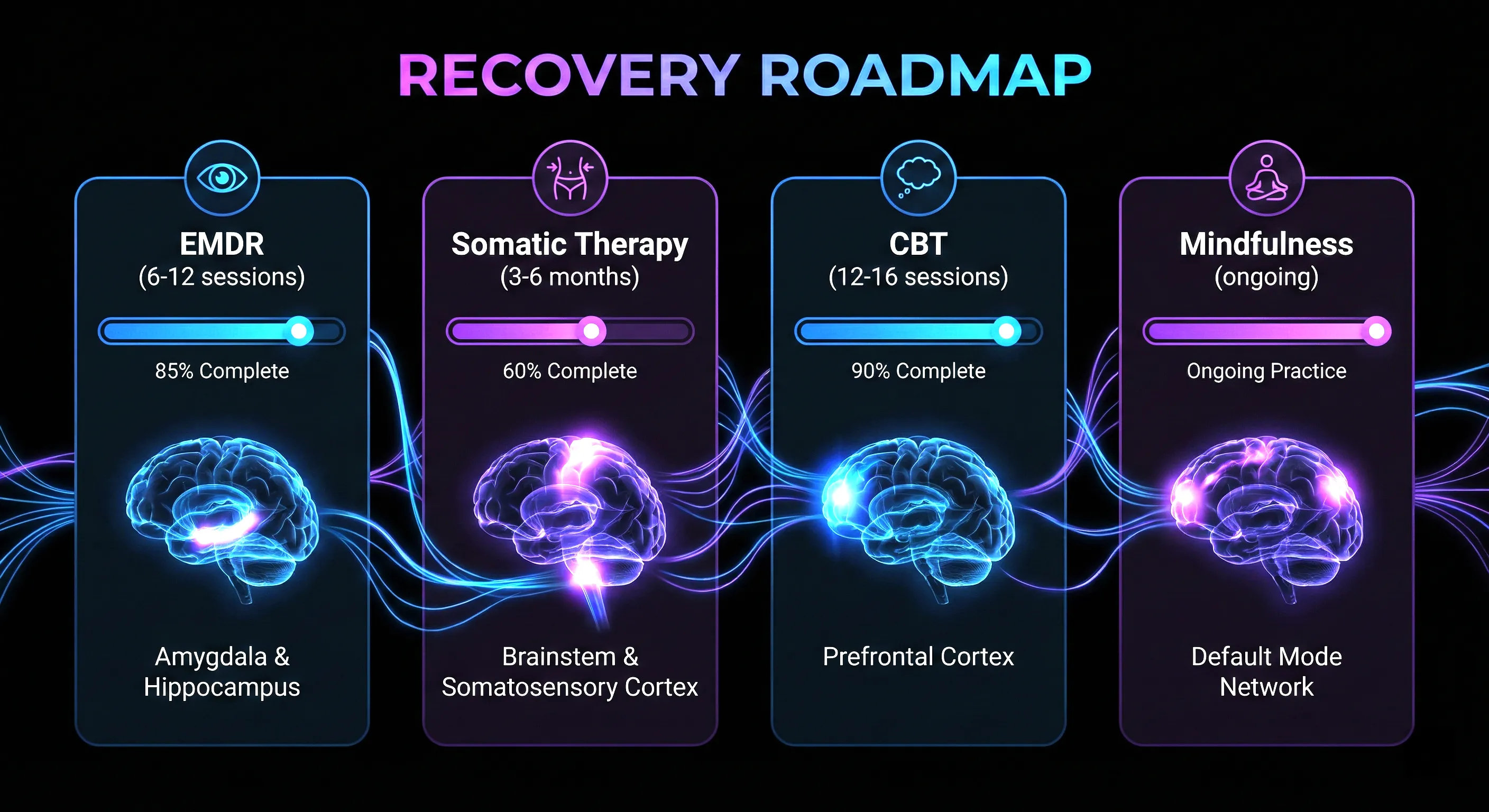
EMDR therapy. Eye Movement Desensitization and Reprocessing changes how traumatic memories are stored in your brain. It uses eye movements or rhythmic tapping to help you process trauma so you can remember it without reliving it. Research shows it can produce significant results in relatively few sessions.
-
Somatic experiencing. Your body stores trauma just like your brain does. Somatic therapies focus on releasing the physical tension and survival energy that got trapped in your nervous system during traumatic events.
-
Trauma-focused CBT. This structured approach helps you identify and reframe the distorted thoughts that trauma created. It gradually exposes you to trauma-related memories in a safe, controlled environment.
-
Mindfulness and meditation. Consistent mindfulness practice has been shown to strengthen the prefrontal cortex and reduce amygdala reactivity. Even 10 minutes a day can begin shifting your baseline stress response over time.
-
Safe relationships. Your brain was wired by relationships, and it can be rewired by them too. Secure, consistent connections with trustworthy people help recalibrate your nervous system. This is why attachment patterns formed in childhood keep showing up in adult relationships.
What Recovery Actually Looks Like
Recovery from childhood trauma isn’t linear. It’s not a straight line from “broken” to “fixed.” Here’s what to realistically expect:
- Progress comes in waves. You’ll have breakthroughs followed by setbacks. This is normal and doesn’t mean therapy isn’t working.
- Your triggers won’t disappear overnight. They’ll gradually lose their intensity as new neural pathways strengthen.
- You might feel worse before you feel better. Processing trauma means confronting things your brain spent years avoiding.
- Small daily practices matter more than occasional big efforts. Neuroplasticity requires repetition. Ten minutes of daily mindfulness beats one weekend retreat.
| Approach | What It Targets | Typical Timeline |
|---|---|---|
| EMDR | Traumatic memory processing | 6-12 sessions |
| Somatic Experiencing | Body-stored trauma and nervous system | 3-6 months |
| Trauma-Focused CBT | Distorted thought patterns | 12-16 sessions |
| Mindfulness Practice | Prefrontal cortex strengthening | Ongoing daily practice |
Recommended read: It Didn’t Start with You by Mark Wolynn — reveals how inherited family trauma shapes who we are, with practical tools to break the cycle and heal patterns passed down through generations.
Your Brain Tells a Story, But You Get to Write the Next Chapter
Childhood trauma changes your brain. That’s not a theory or a self-help platitude. It’s a measurable, documented fact backed by decades of neuroscience research and confirmed by studies as recent as 2025.
Your amygdala may be running too hot. Your prefrontal cortex may not have gotten the development it needed. Your hippocampus may be storing memories in fragments instead of filing them away properly.
But here’s what the science also tells us. Your brain never stops being plastic. It never loses the ability to form new connections, strengthen underused pathways, and quiet down overactive ones. The same mechanism that wired your brain for danger can wire it for safety.
You didn’t choose what happened to you as a child. But you can choose what happens next. And the neuroscience says your brain is ready to change whenever you are.
Sources
Three Brain Regions That Take the Biggest Hit
2. Childhood Adversity and Neural Development: A Systematic Review (PMC, 2020)
5. Insensitivity to Future Consequences Following Damage to Human Prefrontal Cortex (Cognition, 1994)
The ACE Study Changed Everything We Know About Trauma’s Reach
7. About the CDC-Kaiser ACE Study (Centers for Disease Control and Prevention)