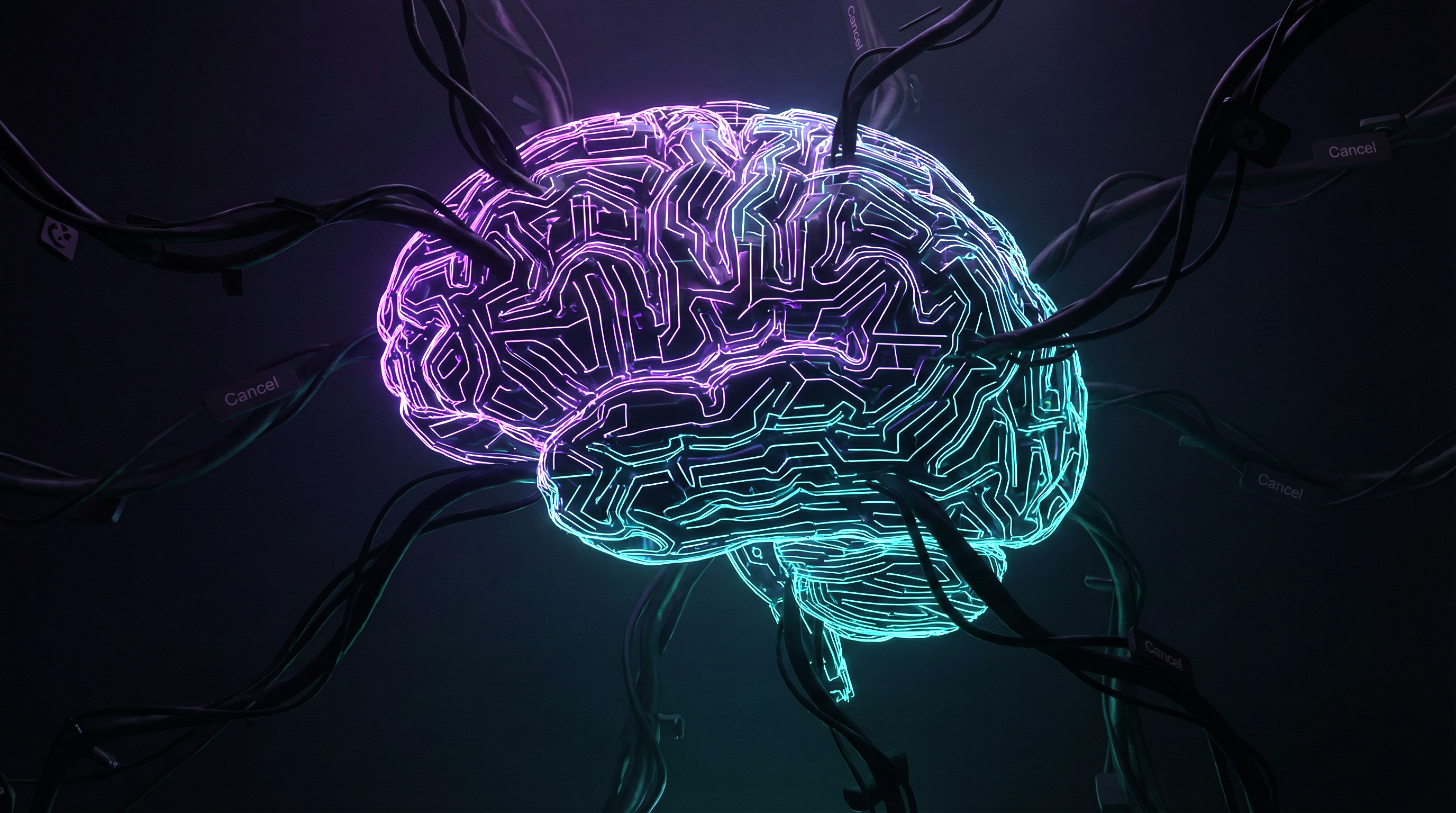
You just wanted to cancel a free trial. But the “cancel” button is buried three menus deep. The page asks if you’re sure. Then it offers you a discount. Then it asks you to type out why you’re leaving. By the time you find the actual cancellation link, you’ve spent ten minutes fighting a system designed to keep your money.
That wasn’t an accident. It was a dark pattern.
What Dark Patterns Actually Are
Dark patterns are design choices in apps, websites, and software that deliberately manipulate your behavior. They’re not bugs. They’re features, built on purpose to trick you into spending more, sharing more, or staying longer than you intended.
The term was coined by UX designer Harry Brignull back in 2010. But the tactics are as old as retail itself. What’s changed is the scale. Every major tech company now has teams of designers and data scientists optimizing for one thing. Your compliance.
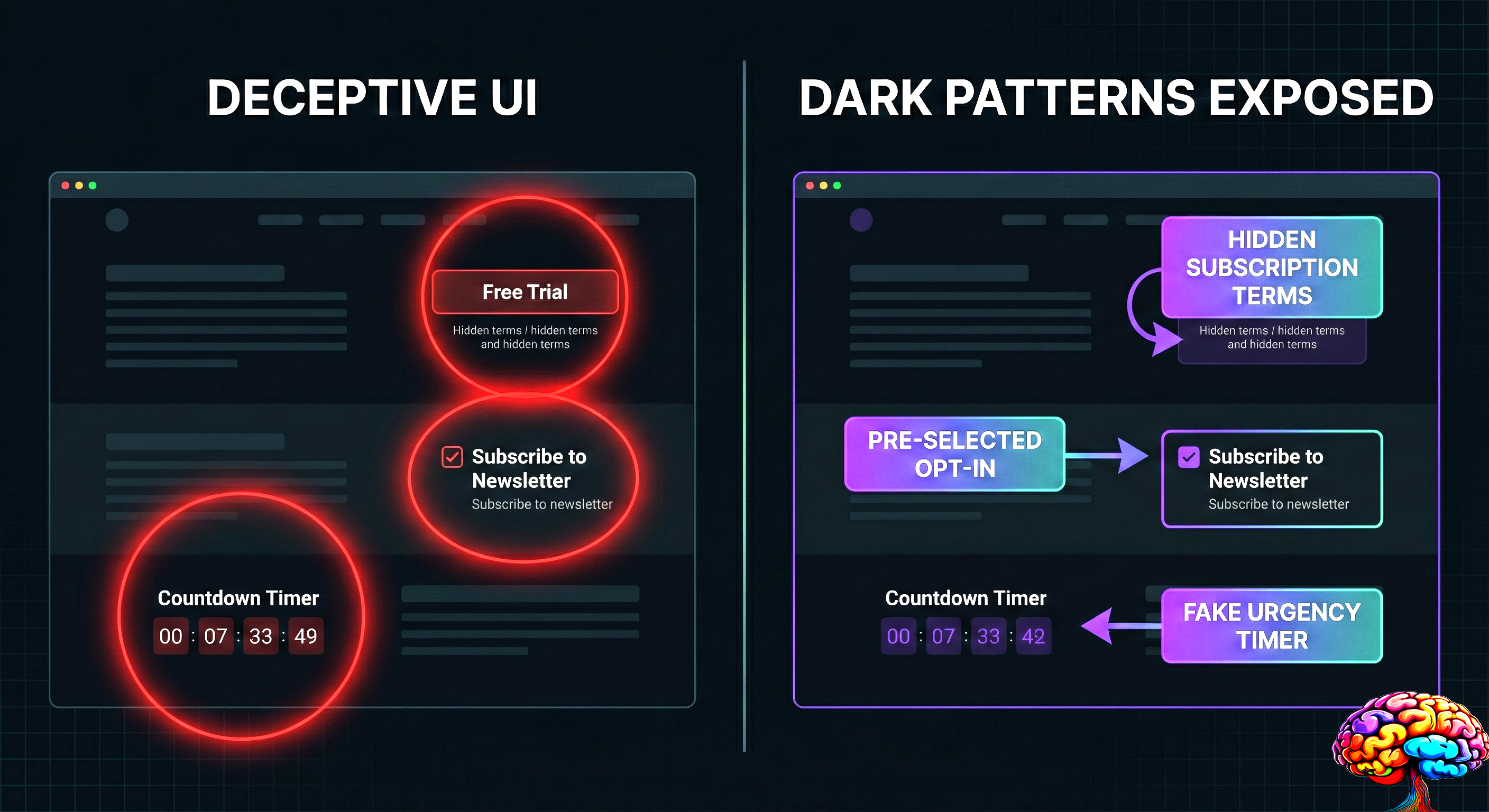
Cass Sunstein, a Harvard law professor and behavioral science expert, breaks it down simply. If a design choice isn’t transparent and doesn’t serve the user’s interest, it’s manipulation. Pre-checked boxes that auto-enroll you in subscriptions? That’s a dark pattern. Hidden fees that show up at checkout? That’s what Sunstein calls drip pricing, and he argues it’s a form of theft.
Here are the most common types you’ll encounter:
- Trick questions. Confusing wording that makes you agree to things you didn’t mean to.
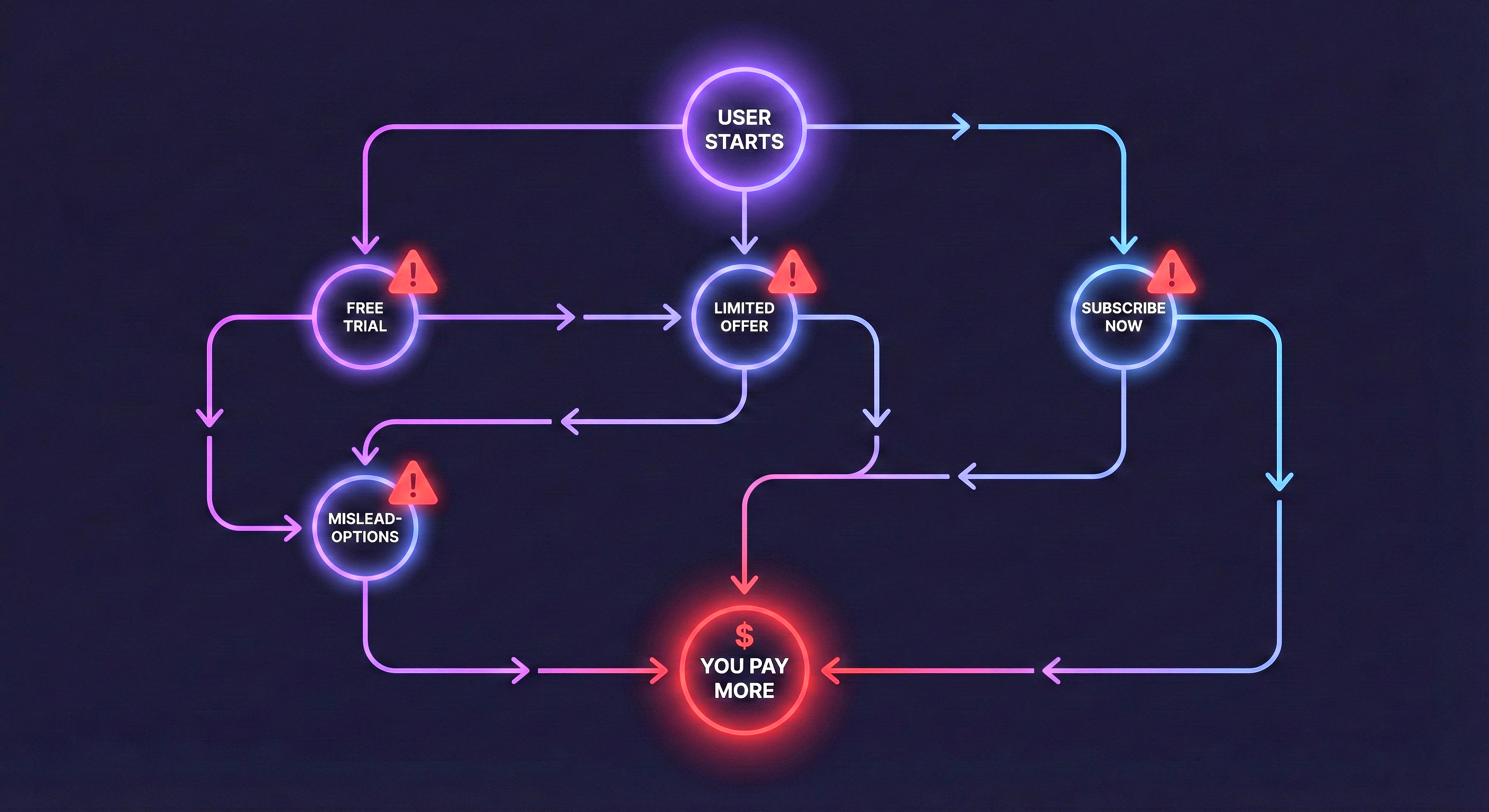
- Forced continuity. Free trials that silently convert to paid subscriptions.
- Roach motels. Easy to sign up, nearly impossible to cancel.
- Hidden costs. Surprise fees that appear only at the final checkout step.
- Misdirection. Design that draws your eye away from the option you actually want.
- Confirmshaming. Guilt-tripping language on decline buttons like “No thanks, I don’t want to save money.”
“Here is one of the darkest of dark patterns, and it is a form of theft. It should be forbidden.” — Cass Sunstein, Manipulation
The Cognitive Biases Dark Patterns Exploit
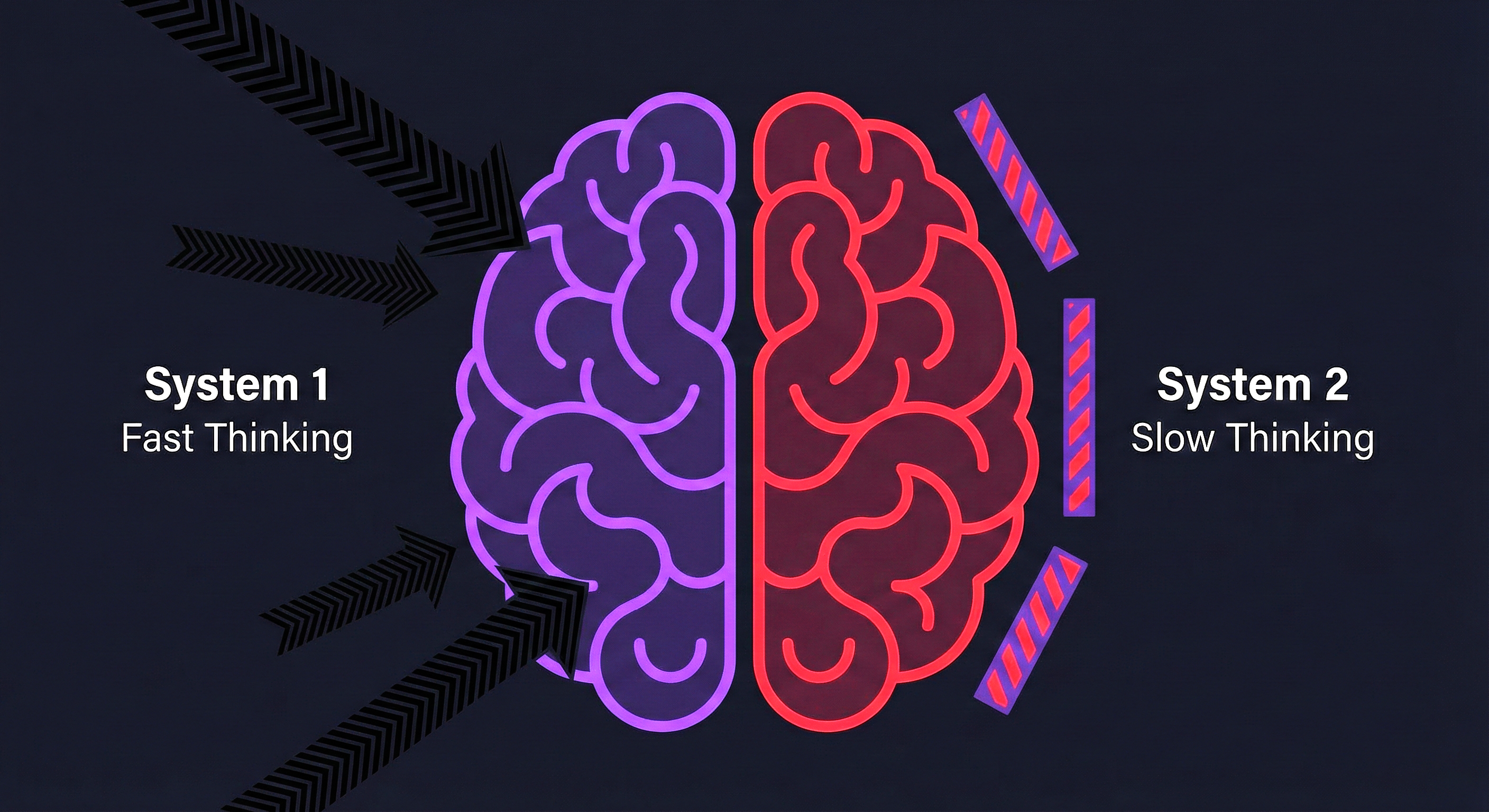
Dark patterns work because they hijack your brain’s shortcuts. Psychologists call these shortcuts cognitive biases. They’re mental rules of thumb that usually help you make fast decisions, but they also leave you vulnerable in ways you might not expect. (For a deeper look at the cognitive biases that quietly shape your everyday choices, we’ve got you covered.) When designers exploit these shortcuts on purpose, they turn your own brain against you.
David McRaney, author of You Are Not So Smart, puts it this way. You think you’re a rational person who sees the world clearly. You’re not. Your brain is running on mental shortcuts every second of the day, and most of the time you don’t even notice.
Here are the biases dark patterns target most:
- Default bias. You tend to stick with whatever is pre-selected. Companies know this, which is why they pre-check boxes for email lists, insurance add-ons, and premium tiers.
- Loss aversion. Losing something feels roughly twice as painful as gaining something of equal value. Dark patterns use phrases like “Don’t miss out” and countdown timers to trigger this fear.
- Anchoring. The first number you see shapes how you judge everything after it. Show a $200 product next to a $500 one, and suddenly it feels like a bargain.
- Commitment bias. Once you’ve started a process, you feel compelled to finish it. That’s why checkout flows are long. By step four, you’re too invested to quit.
- The affect heuristic. You judge things based on how they make you feel, not logic. Beautiful design and positive imagery make you trust a product more, even when the terms are terrible.
| Cognitive Bias | How Dark Patterns Exploit It | Real-World Example |
|---|---|---|
| Default bias | Pre-checked boxes and opt-out instead of opt-in | Newsletter sign-ups, insurance add-ons |
| Loss aversion | Countdown timers, “only 2 left” warnings | Hotel booking sites, flash sales |
| Anchoring | Showing inflated “original” prices | E-commerce “sale” pricing |
| Commitment bias | Multi-step checkout flows | Subscription cancellation mazes |
| Affect heuristic | Sleek design masking bad terms | Free trial landing pages |
Recommended read: You Are Not So Smart by David McRaney — A fun, eye-opening tour of 48 cognitive biases you fall for every day without realizing it.
Where You Encounter Dark Patterns Every Day
You might think dark patterns are rare. They’re not. Studies suggest that over 95% of popular apps use at least one deceptive design technique. You probably encountered three or four today before lunch.
Subscription Traps
Adobe became a poster child for this. Their subscription page shows a monthly payment amount. Looks simple, right? But buried in the fine print is the fact that you’re actually signing up for an annual contract billed monthly. If you cancel early, you owe a hefty fee. Sunstein points out that if you can’t find this information on the page, it’s not your fault. The confusion is by design.
Social Media Manipulation
In January 2024, Meta announced a “user experience improvement” for Facebook and Instagram. Their apps would now store your browsing history for 30 days. Sounds helpful. The catch? As Meta admitted, they use that link history to target you with more ads. Brian Clegg, author of Brainjacking, calls this kind of tactic a form of “getting inside your head.”
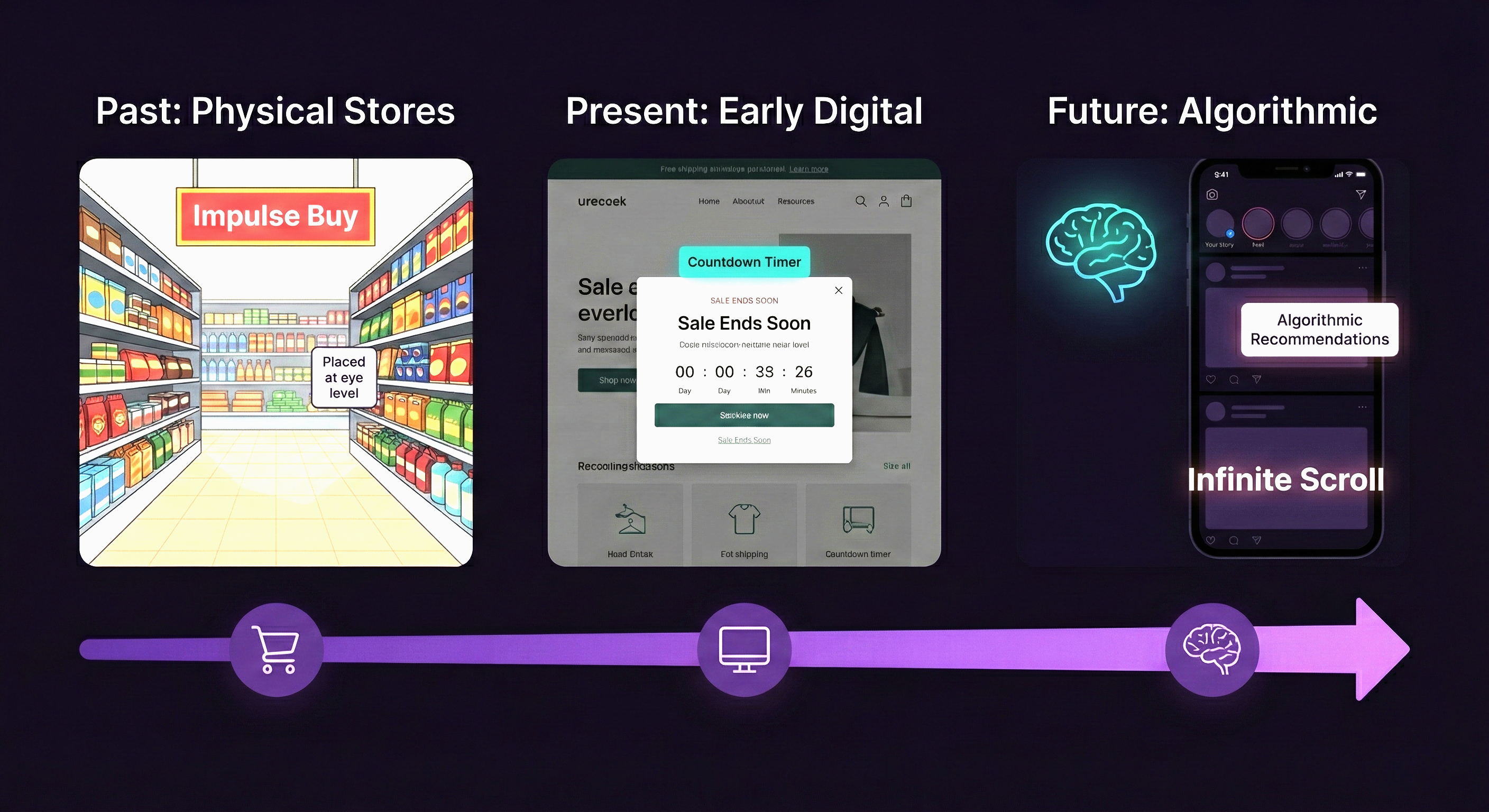
Infinite scrolling is another dark pattern hiding in plain sight. There’s no natural stopping point. No page break. No moment where your brain says “I’m done.” Tobias Rose-Stockwell documents how Tristan Harris, a former Google design ethicist, identified these attention hacks as a fundamental threat to human agency.
Store Design, Online and Off
Physical stores have used manipulation for decades, and the psychology behind how stores manipulate your shopping brain goes far beyond shelf placement. Supermarkets place impulse-buy items at checkout. High-profit products go at eye level. Sunstein notes that stores accumulate data on exactly what works and what doesn’t, then exploit your attention and salience to maximize revenue.
Online, this gets supercharged. Recommendation algorithms on Amazon and Netflix are opaque. You don’t know why they suggested something. It could be what’s best for you, or it could be what’s most profitable for them.
Recommended read: Hooked by Nir Eyal — The playbook Silicon Valley actually uses to make products addictive. Understanding the enemy’s tactics is the first step to defending yourself.
Cookie Consent Manipulation
Ever notice how the “Accept All” button on cookie pop-ups is big and colorful, while “Manage Preferences” is a tiny gray link? That’s a dark pattern. Lukasz Olejnik, in his book Propaganda, describes how companies use color, placement, and confusion to make it harder for you to protect your own data. They change button colors, bury opt-out functions, and write questions in language designed to confuse.
How to Spot and Defend Against Dark Patterns
The good news? Once you know what to look for, dark patterns lose most of their power. Your brain’s fast-thinking system gets hijacked only when you’re not paying attention. The moment you slow down, the manipulation falls apart.
Here’s how to protect yourself:
-
Pause before clicking. Any time a website creates urgency (“Only 3 left!” or “Offer expires in 10 minutes”), that’s your cue to slow down. Real deals don’t vanish in seconds.
-
Check the total price first. Before entering payment info, scroll to the final number. If it’s higher than what was advertised, you’ve been drip-priced. Close the tab.
-
Look for pre-checked boxes. Before submitting any form, scan every checkbox. Uncheck anything you didn’t actively choose.
-
Screenshot your cancellation attempts. If a service makes cancellation absurdly difficult, document it. Regulators are actively collecting these complaints.
-
Use browser extensions. Tools like “Dark Patterns Tip Line” and privacy-focused extensions can flag manipulative design in real time.
The regulatory world is catching up, too. In 2024, the White House launched a “Time Is Money” initiative targeting dark patterns across industries. The Department of Transportation now requires airlines to show all fees upfront. The FCC requires broadband providers to display standardized “nutrition labels.” And the FTC has fined companies like Epic Games $245 million for deceptive design aimed at children.
The European Union has gone even further. Under the Digital Services Act, manipulative interfaces are explicitly banned. Companies that use confirmshaming, hidden opt-outs, or deceptive cookie banners face serious penalties.
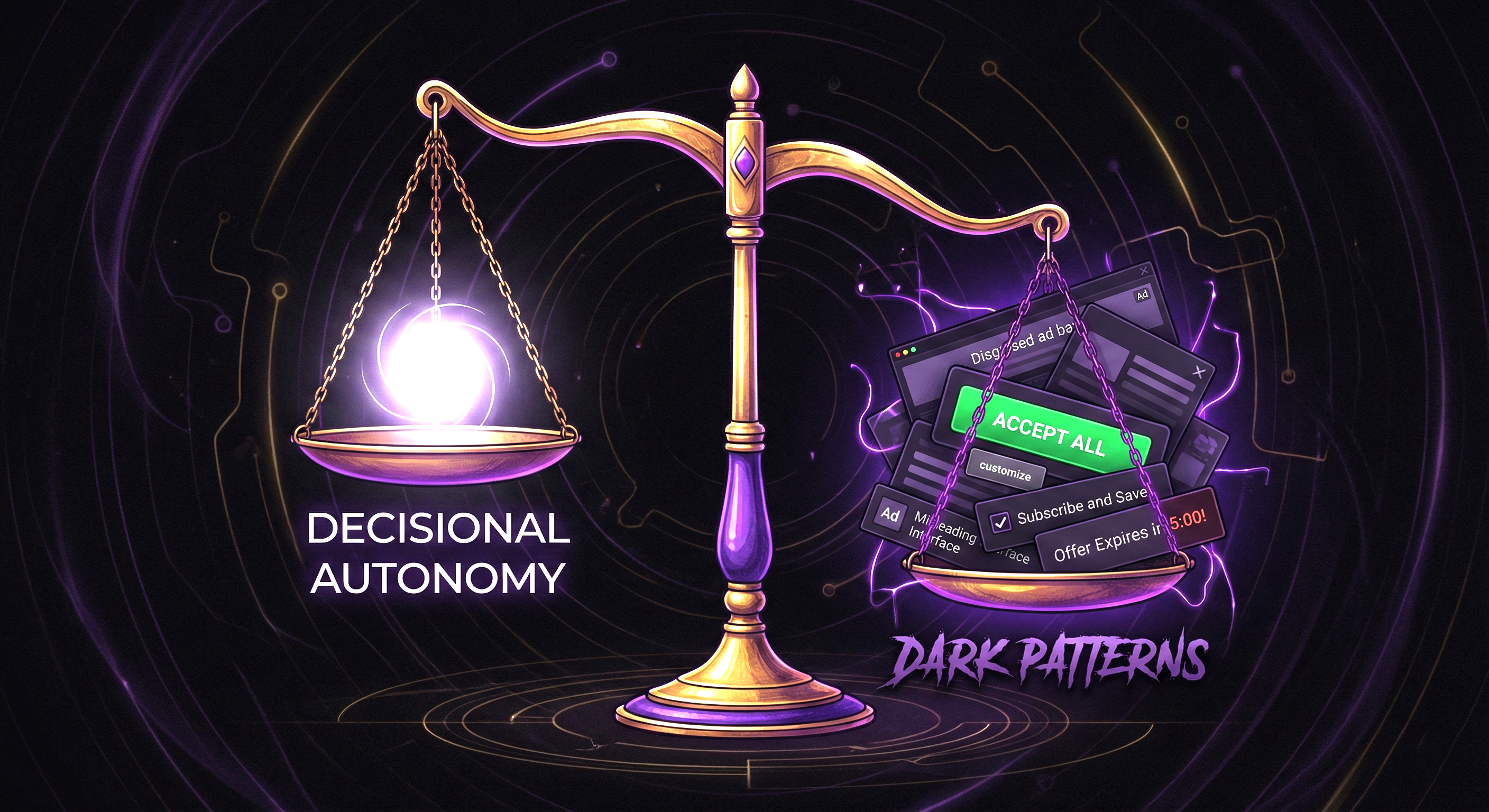
“The underlying principle should be one of decisional autonomy, which means that hidden fees and costs belong in a prohibited category.” — Cass Sunstein, Manipulation
Recommended read: The Dark Pattern by Guido Palazzo — Goes deeper into how corporations build systems of deception, and why scandals keep repeating the same psychological playbook.
The Real Cost of Manipulative Design
Dark patterns aren’t just annoying. They represent a fundamental attack on your ability to make free choices. Every hidden fee, every buried cancellation link, every guilt-trip button chips away at something psychologists call decisional autonomy. That’s your right to make informed choices without someone secretly tilting the playing field.
Tobias Rose-Stockwell captures the tension perfectly. On one side, you have people like Tristan Harris arguing that tech companies are stealing our agency through manipulative design. On the other, you have Nir Eyal insisting that blaming the tools is a cop-out and that we should take personal responsibility. The truth sits somewhere in between.
You can’t be expected to outsmart a team of behavioral scientists backed by billions of dollars in data. But you can learn the tricks. You can slow down. And you can demand better from the companies that want your money. Understanding how people exploit your trust is another powerful step toward protecting your autonomy.
The fight against dark patterns isn’t just about saving a few dollars on hidden fees. It’s about whether you get to be the one making your own decisions. Or whether someone else is making them for you, one deceptive click at a time.
- Dark patterns are not accidents. They’re engineered to exploit your psychology.
- Your cognitive biases make you vulnerable, but awareness is a powerful shield.
- Regulators worldwide are starting to treat deceptive design as what it is. Theft.
- The most important tool you have is the willingness to slow down and look closer.