
A 16-year-old in Vienna planned a mass attack at a Taylor Swift concert. He’d been radicalized entirely through TikTok. German intelligence officials traced his journey from casual scrolling to full extremist commitment. It took weeks, not years.
He’s not alone. Across Europe, a pattern has emerged since 2023. Young, digitally native teenagers are being pulled into violent extremism through short-form video algorithms.[1] The platforms aren’t just hosting the content. They’re delivering it.
What used to take months of in-person grooming by recruiters now happens in hours on a phone screen. And the algorithms are doing the recruiting.
How Algorithms Turn Curiosity Into Extremism
Your teenager doesn’t need to go looking for extremist content. The algorithm will find them.
Social media platforms track every interaction. Every like, every pause, every video watched to the end. When a teenager shows even passing interest in provocative content, the algorithm takes that as a signal to serve more of it. Not the same level of intensity. More extreme.
Research by Milli et al. found that Twitter’s algorithm amplifies divisive content far more than users’ stated preferences would suggest.[2] The algorithm doesn’t care about accuracy or safety. It cares about engagement. And extreme content gets engagement.
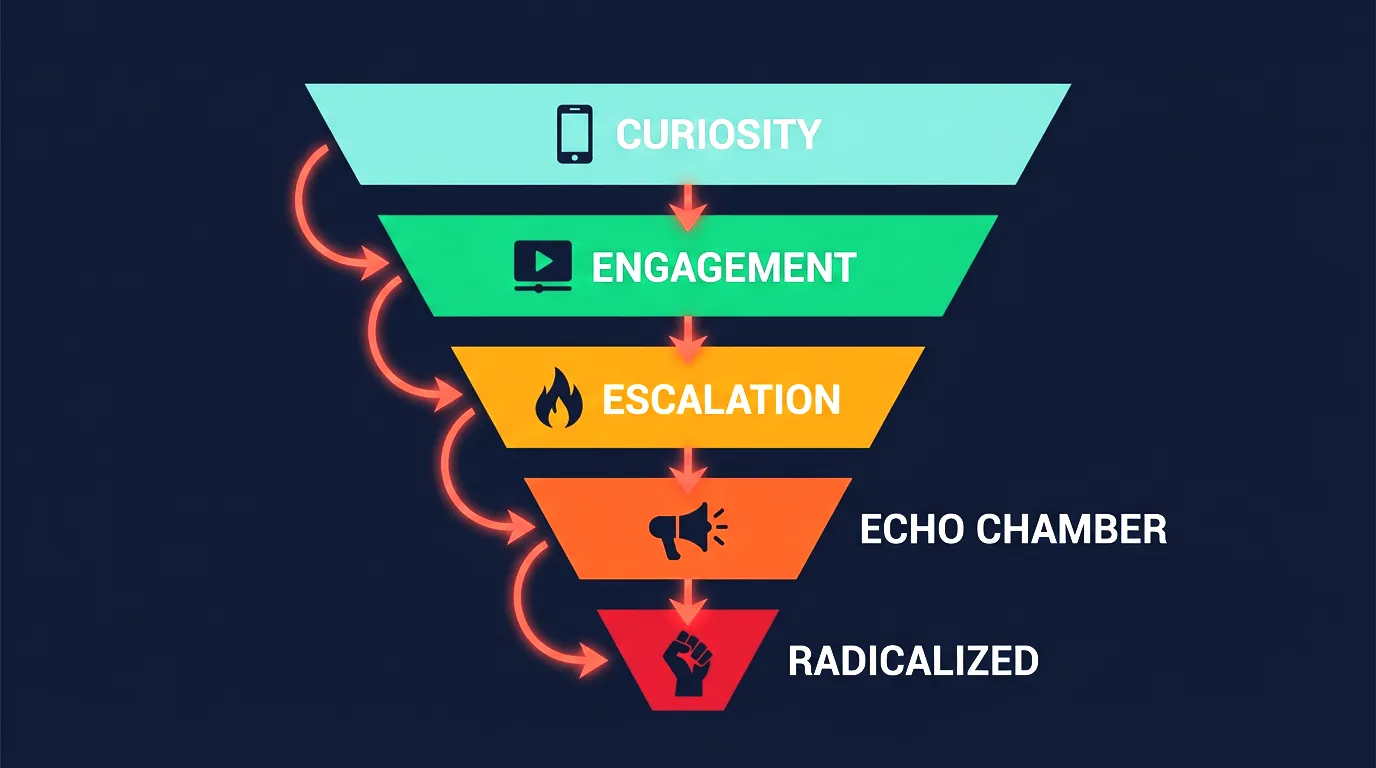
Here’s what the pipeline looks like for a typical teenager:
- Stage 1. Teen watches a mildly controversial video out of curiosity
- Stage 2. Algorithm serves similar but slightly more provocative content
- Stage 3. Within hours, the feed fills with increasingly radical material
- Stage 4. Teen enters an echo chamber where extreme views feel normal
- Stage 5. Radicalized content becomes the teen’s primary information diet
The Center for Countering Digital Hate found that TikTok recommended suicide-related content within 2.6 minutes of a new account being created.[3] Eating disorder content appeared within 8 minutes. The algorithm doesn’t wait for teens to seek out dangerous material. It delivers it on a silver platter.
“A radicalization process that once unfolded over months or years now typically takes days or even hours, largely due to the prevalence of extremist short-form online propaganda.” — The Soufan Center, 2025
Recommended read: The Chaos Machine by Max Fisher. The definitive account of how social media algorithms were engineered to maximize engagement and ended up destabilizing democracies.
The Science of Who Gets Radicalized
Not every teenager who encounters extreme content becomes radicalized. So what makes some kids vulnerable?
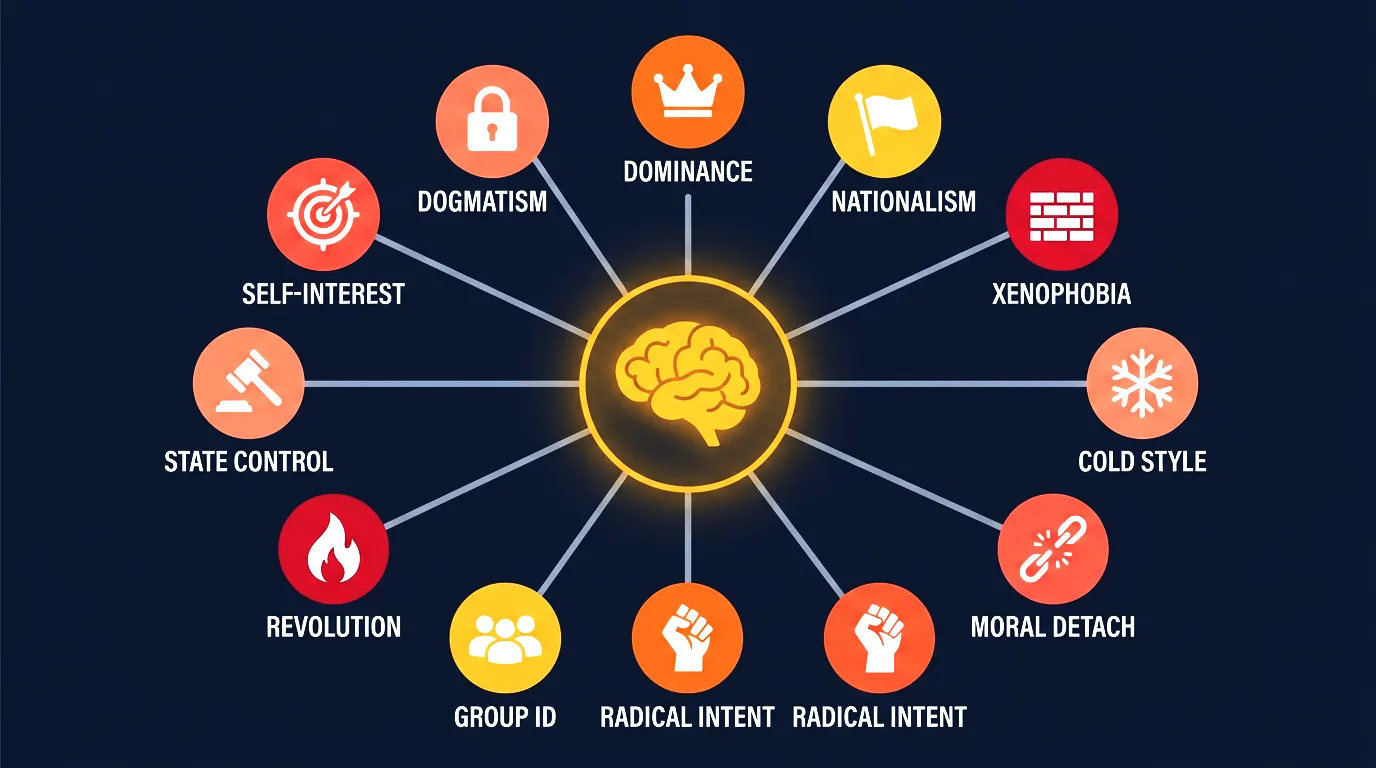
A groundbreaking 2025 study by researchers at Stony Brook University, McMaster University, and the University of Texas identified 11 distinct psychological traits that predict extremism across all ideologies.[4] They call it the “Extremist Eleven” framework.
| Trait | What It Looks Like |
|---|---|
| Revolutionary attitudes | Belief that the current system must be violently overthrown |
| Radical intentions | Willingness to use force for political goals |
| Social dominance | Belief that some groups deserve power over others |
| Nationalism | Extreme devotion to national identity above all else |
| Dogmatism | Rigid, black-and-white thinking with no room for nuance |
| Moral disengagement | Ability to justify harming others for a “greater cause” |
| Cold interpersonal style | Calculating, low-empathy approach to relationships |
| Xenophobia | Fear and hostility toward outsiders |
| Group identity | Defining self entirely through group membership |
The study analyzed over 882,000 data points from forums including Stormfront, incel communities on Reddit, and ISIS propaganda materials.[4] The model predicted who would join incel communities up to 10 months before they actually did, with accuracy reaching 90% at the three-to-four month mark.
Here’s what’s especially important for parents. The researchers found that extremist traits often develop before someone joins a radical community. Users who later joined incel forums showed increasing extremism in their regular posts months before they ever entered those spaces.[4]
The algorithm doesn’t create these vulnerabilities from scratch. But it finds kids who already have them and pours gasoline on the fire. Teenagers who are lonely, socially isolated, bullied, or dealing with family trauma are prime targets.
Real Cases, Real Kids, Real Consequences
This isn’t theoretical. Intelligence agencies across the globe are tracking a surge in algorithm-driven youth radicalization.
Europe’s TikTok Terror Pipeline
Since October 2023, European security services have documented a clear pattern. Young people, many of them minors, are being radicalized through TikTok’s algorithm and then attempting real-world attacks.[1]
The cases include:
- Vienna, 2024. A teenager planned a mass attack at a Taylor Swift concert after being radicalized through TikTok jihadi content
- Solingen, 2024. A young attacker carried out a knife attack after consuming extremist videos on social media
- Zurich, 2024. A minor attempted a stabbing after being exposed to algorithm-driven Islamist propaganda
Germany’s federal intelligence agency has specifically warned about TikTok’s role in jihadi recruitment across Europe.[1] The pattern is consistent. Emotionally vulnerable, digitally native teenagers encounter extremist content through algorithmic recommendations, not through deliberate searching.
The Numbers Are Staggering
The scope of online radicalization extends far beyond any single ideology or region:
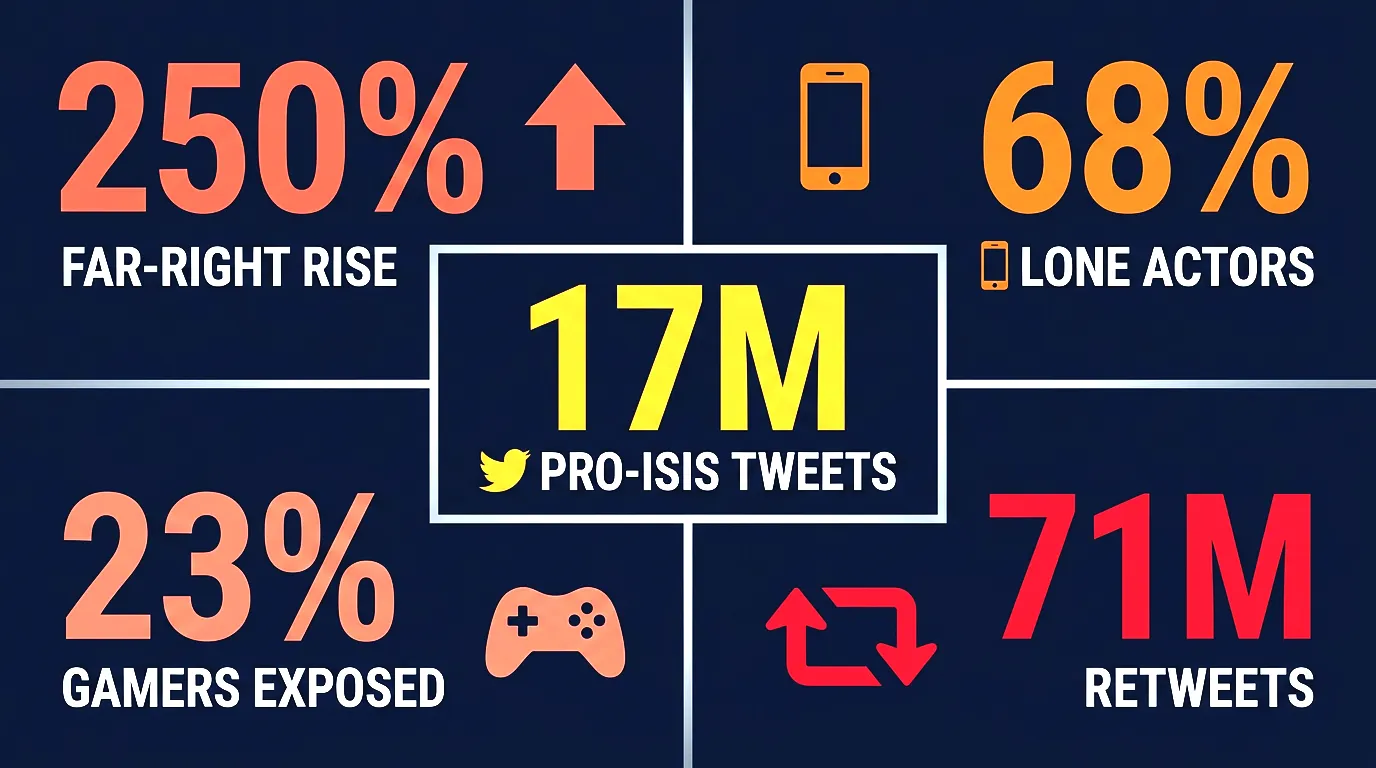
- Far-right extremism in the West has risen 250% over the last five years[5]
- 23% of online gamers have encountered right-wing extremist propaganda while gaming[6]
- ISIS supporters compiled 17 million pro-ISIS tweets with over 71 million retweets before being deplatformed[2]
- Social media played a role in 68% of lone actor radicalization cases in the US between 2005 and 2016[7]
- AI-generated extremist content is now so convincing that it fools academic experts[2]
“LLM-generated extremist texts appeared so credible that it even fooled academic experts.” — Baele et al., 2024, cited in Lavie-Driver and van der Linden
Youth radicalization is not just an American or European problem. The Soufan Center reports it’s growing rapidly in South Korea, India, the Philippines, and Singapore.[5]
Recommended read: The Anxious Generation by Jonathan Haidt. How the smartphone rewired childhood and why today’s teens are more vulnerable than ever to online manipulation.
What Parents Can Actually Do About It
You can’t unplug your teenager from the internet. But research points to strategies that actually work.
Psychological Inoculation
Cambridge psychologist Sander van der Linden has developed what he calls a “psychological vaccine” against extremist manipulation.[2] The concept is simple. Expose people to weakened versions of extremist arguments along with clear refutations. This builds cognitive resistance so they recognize manipulation when they encounter the real thing.
It works. In former ISIS-held regions of Iraq, researchers tested an inoculation game where participants role-played as extremist recruiters. Players who went through the simulation later showed greater resistance to actual recruitment tactics.[2]
A 2025 meta-analysis confirmed that psychological inoculation reduces susceptibility to misinformation across multiple contexts.[8]
Recommended read: Foolproof by Sander van der Linden. The science of how misinformation infects your mind and how psychological inoculation builds immunity.
Practical Steps for Parents
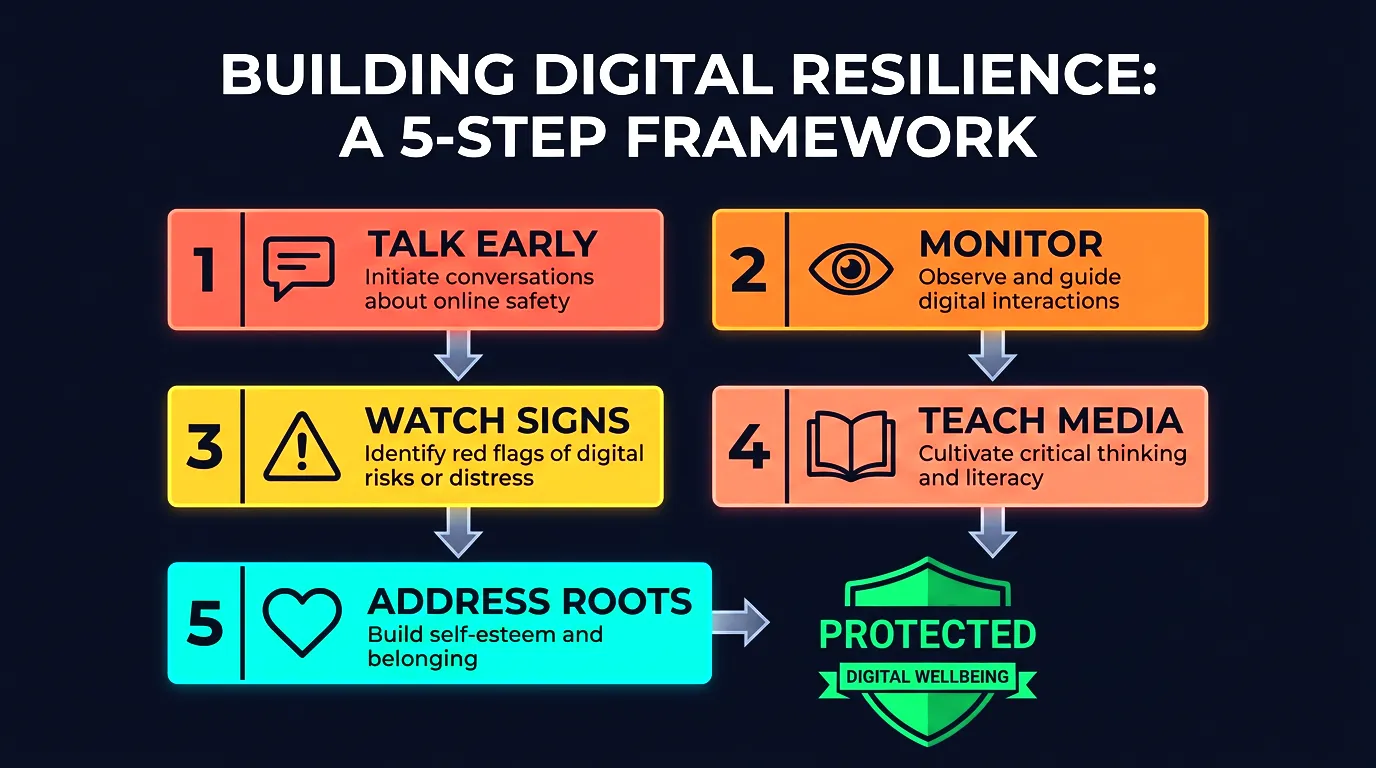
- Have the conversation early. Talk openly about how algorithms work. When teens understand they’re being manipulated, they become more resistant. Research shows that knowing about persuasion tactics makes them less effective.
- Monitor without surveilling. Know what platforms your teen uses and check in regularly. But don’t spy. Trust builds communication. Surveillance builds secrecy.
- Watch for warning signs. Sudden us-versus-them thinking, dehumanizing language about groups, withdrawal from friends, or an obsessive new ideology are all red flags.
- Build media literacy. Teach your teen to question sources, check claims, and recognize emotional manipulation. The goal isn’t to make them cynical. It’s to make them harder to fool.
- Address the root vulnerabilities. Loneliness, bullying, family conflict, and mental health struggles make teens more susceptible. Addressing these underlying issues is the most powerful protection.
The Algorithm Is Not Going to Fix Itself
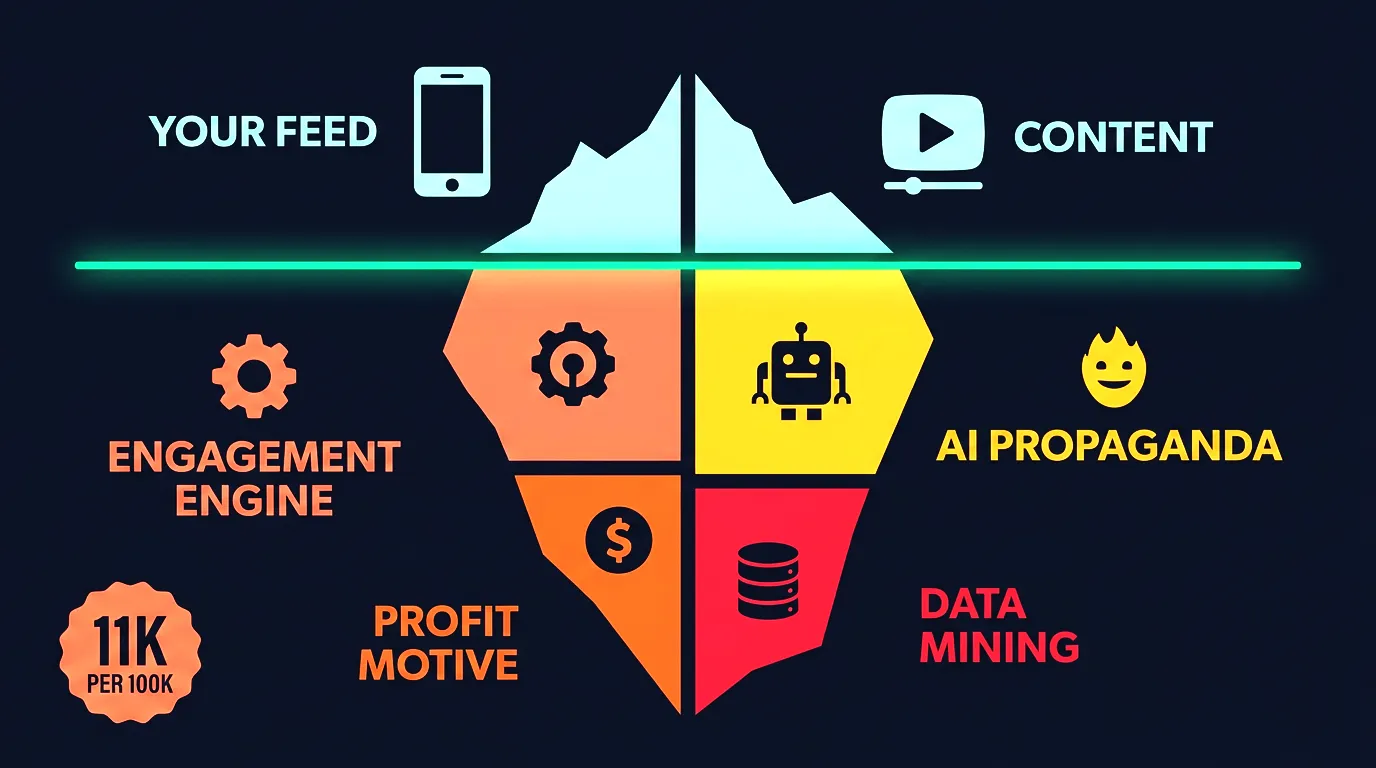
Social media companies know their algorithms push extreme content to vulnerable users. Internal documents from multiple platforms have confirmed it. But engagement-driven algorithms are too profitable to change voluntarily.
Cambridge researchers Lavie-Driver and van der Linden estimate that AI-powered propaganda campaigns can persuade between 2,500 and 11,000 people per 100,000 targeted.[2] As AI gets better, those numbers will only grow.
The problem is structural:
- Algorithms reward engagement, and outrage is the most engaging emotion
- Extreme content gets more clicks, shares, and watch time than moderate content
- Platforms profit from keeping users scrolling, regardless of what they’re scrolling through
- AI-generated extremist content is becoming indistinguishable from human-created material
Some governments are starting to act. Australia banned social media for children under 16 in 2024. The EU’s Digital Services Act requires platforms to assess and mitigate risks to minors. Jonathan Haidt’s The Anxious Generation has fueled a global movement pushing for smartphone-free childhoods until age 14 and no social media until 16.[9]
But regulation moves slowly. Algorithms move fast. Right now, the best defense your teenager has is a parent who understands the threat and takes it seriously.
The algorithm already knows your teenager better than you do. The question is whether you’ll catch up before something goes wrong.
Sources
How Algorithms Turn Curiosity Into Extremism
3. Deadly by Design (Center for Countering Digital Hate, 2022)
The Science of Who Gets Radicalized
Real Cases, Real Kids, Real Consequences
5. The Online Radicalization of Youth Remains a Growing Problem Worldwide (The Soufan Center, 2025)
6. Hate Is No Game: Hate and Harassment in Online Gaming (Anti-Defamation League, 2024)
7. The Use of Social Media by United States Extremists (START, University of Maryland, 2018)
What Parents Can Actually Do About It
The Algorithm Is Not Going to Fix Itself
9. How Anxious Generation author Jonathan Haidt took on Big Tech (NPR, 2026)