Imagine you’re sitting in a room with eight other people. Someone holds up a card with three lines on it. One line is clearly longer than the others. It’s obvious. A child could see it.
Then, one by one, every person in the room picks the wrong line. They all agree on an answer that’s clearly, visibly incorrect. Now it’s your turn.
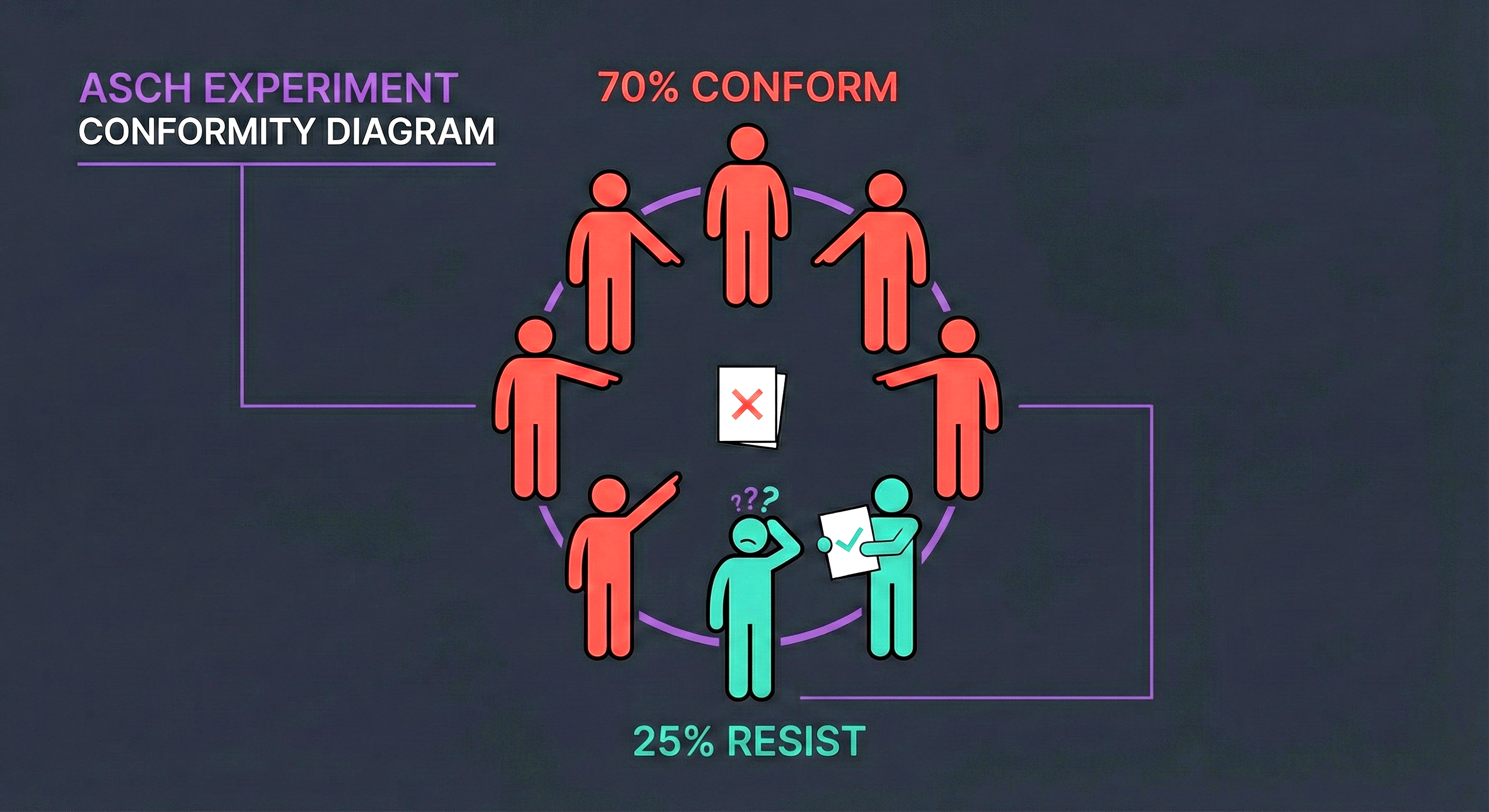
You’d stick with what you see, right? You’d trust your own eyes? Most people think they would. But here’s the thing. In the original experiment, 70% of people went along with the group at least once. They said the wrong line was right. They agreed with people they knew were wrong.
The Experiment That Changed How We Think About Crowds
In the 1950s, psychologist Solomon Asch ran one of the most famous experiments in social science. He put a volunteer in a room with a group of actors (the volunteer didn’t know they were actors). Everyone was asked to match lines by length. Easy task. Obvious answers.
For the first few rounds, everyone agreed. Then Asch’s actors started picking the wrong answer on purpose. All of them. Unanimously.
The results were striking:
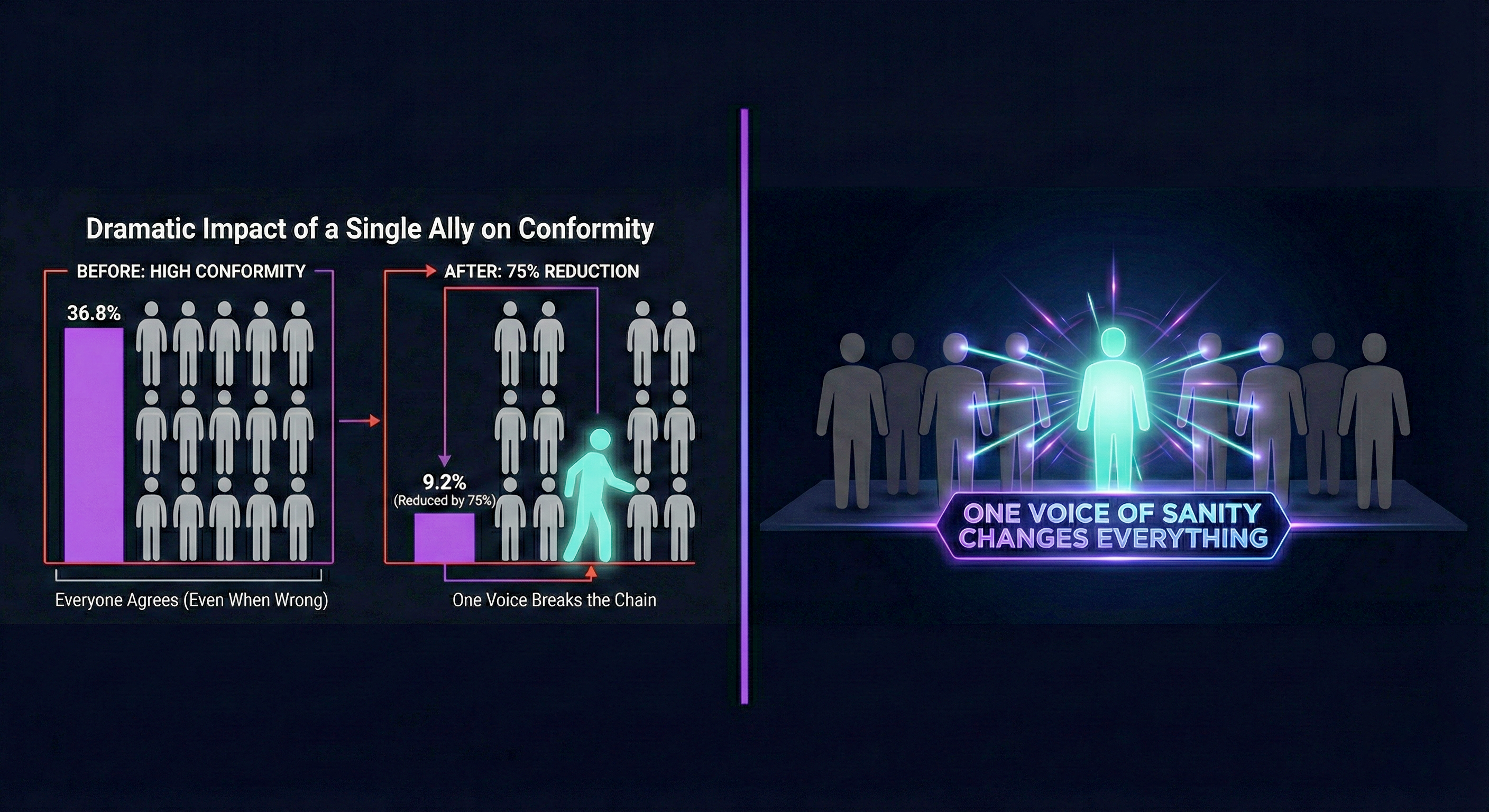
- 36.8% of the time, volunteers agreed with the clearly wrong answer
- 70% of volunteers caved at least once across twelve rounds
- Only 25% stayed independent every single time
- The error rate when people judged alone? Less than 1%
These numbers have held up across 130 studies in 17 countries. From the Democratic Republic of the Congo to Germany to Japan, the pattern is the same. People follow the crowd between 20% and 40% of the time, even when the answer is staring them in the face.
“That we have found the tendency to conformity in our society so strong that reasonably intelligent and well-meaning young people are willing to call white black is a matter of concern.” — Solomon Asch
But here’s what most people miss about this research. Conformity isn’t about stupidity. It’s about two powerful forces your brain can’t easily override.
Two Forces That Make You Say Yes When You Mean No
Cass Sunstein, a leading researcher on social influence, breaks conformity into two engines. Both run on autopilot.
The Information Engine
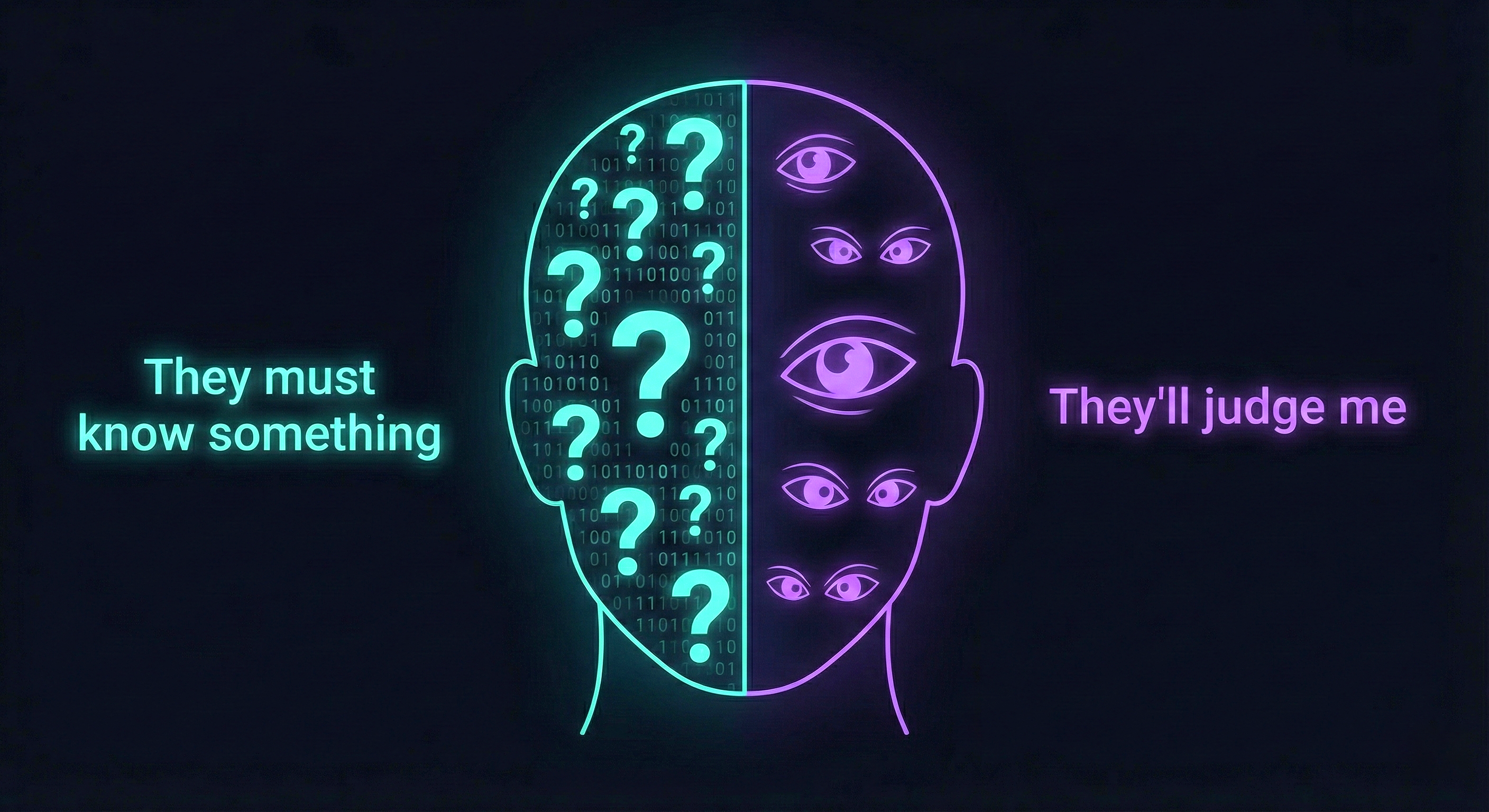
The first force is informational influence. Your brain uses a simple shortcut: if everyone else believes something, they probably know something you don’t.
This isn’t irrational. Most of the time, crowds DO have useful information. If every restaurant reviewer says a place is terrible, you’d probably skip it. If all your coworkers recommend a tool, you’d try it.
The problem shows up when the crowd is wrong. In Asch’s experiments, several subjects later admitted they thought their own eyes must have been mistaken. They genuinely started to doubt themselves. Brain imaging studies have even shown that conformity physically changes how people perceive reality. When you go along with the group, you may actually start to see things their way. This same mechanism helps explain why smart people fall for fake news. If enough people share a false story, your brain treats the crowd’s belief as evidence.
The Peer Pressure Engine
The second force is social pressure. You don’t want to look weird. You don’t want to be the one person who disagrees. You don’t want to face the group’s disapproval.
This one’s even more powerful than it sounds. Here’s what the research tells us:
- When answers were given anonymously, conformity dropped significantly
- When answers were given publicly, conformity spiked
- When conformity or deviation was made visible, people conformed even more
- People in collectivist cultures showed higher conformity than those in individualist ones
You’re not just worried about being wrong. You’re worried about being different. Skilled persuaders know this, which is why so many of the hidden rules of persuasion rely on making you feel like the odd one out.
| Factor | Effect on Conformity |
|---|---|
| Task is easy | Conformity decreases |
| Task is hard or ambiguous | Conformity increases |
| Financial reward for correct answer (easy task) | Conformity decreases |
| Financial reward for correct answer (hard task) | Conformity increases |
| Group members are strangers | Moderate conformity |
| Group members share your identity | High conformity |
| One dissenter exists in the room | Conformity drops by 75% |
There’s a fascinating twist in Sunstein’s research. When the task is hard and there’s money on the line, conformity goes UP. People figure that if everyone else agrees, they must know something. Financial incentives only help you resist the crowd when the answer is obvious.
Recommended read: You Are Not So Smart by David McRaney — a witty, accessible guide to every cognitive bias and social trap your brain falls into, including conformity.
Where Conformity Sneaks Into Your Everyday Life
You don’t need a psychology lab to see conformity at work. It’s running in the background of almost every group interaction you have.
At Work
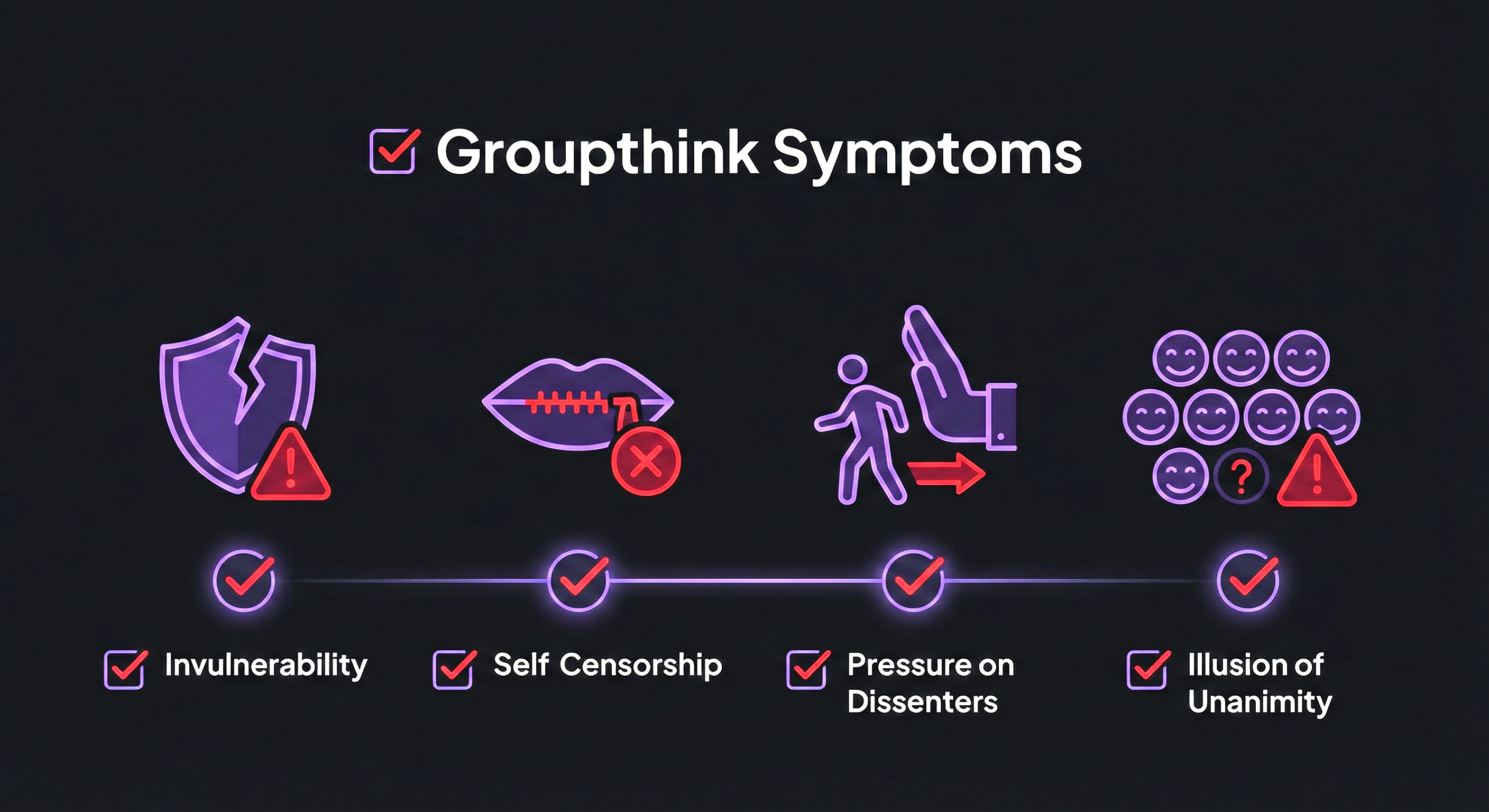
The workplace is a conformity machine. Psychologist Irving Janis coined the term groupthink to describe what happens when teams prioritize agreement over accuracy. The symptoms are predictable:
- The group believes it’s invulnerable
- Silence gets treated as agreement
- Dissenters face direct pressure to fall in line
- Members self-censor to avoid rocking the boat
- Everyone assumes the group is morally right
Brooke Harrington studied investment clubs and found something telling. The worst-performing clubs were built on friendship and social bonds. The best? They had weak social ties and lots of open disagreement. The friendly clubs had near-unanimous votes. The successful ones had heated debates.
In Your Memory
Carmen Simon’s research on memory conformity reveals something unsettling. When you discuss an event with other people, their version contaminates your memory. You start “remembering” things you never actually saw.
Here’s how it works:
- People who speak first in a group set the anchor for everyone else
- You conform more to the memories of friends than strangers
- Even when you KNOW someone has terrible recall, their version still influences yours
- The longer you wait to revisit an event, the more you adopt others’ versions of it
In Society
Social norms shape behavior in ways you barely notice. Research from Nudge shows that teenage pregnancy rates, lawsuit filing rates, media programming trends, and even judicial decisions are all shaped by what the people around you are doing.
Federal judges appointed by Republican presidents vote more liberally when sitting with Democratic appointees. And vice versa. The same person, with the same training and beliefs, shifts based on who’s in the room. It’s a vivid illustration of why people won’t change their political beliefs on their own, but will bend them to match whoever is nearby.
Recommended read: The Wisdom of Crowds by James Surowiecki — shows when groups are smarter than individuals and when herd behavior leads everyone off a cliff.
When Going Along Actually Serves You Well
Here’s the part most articles about conformity skip. Following the crowd isn’t always bad. In fact, it’s often the smartest thing you can do.
Conformity is a survival strategy. As psychologist Noam Shpancer puts it, social acceptance is built into your brain. You need allies. You need information from others. Outcasts get cut off from valuable resources.
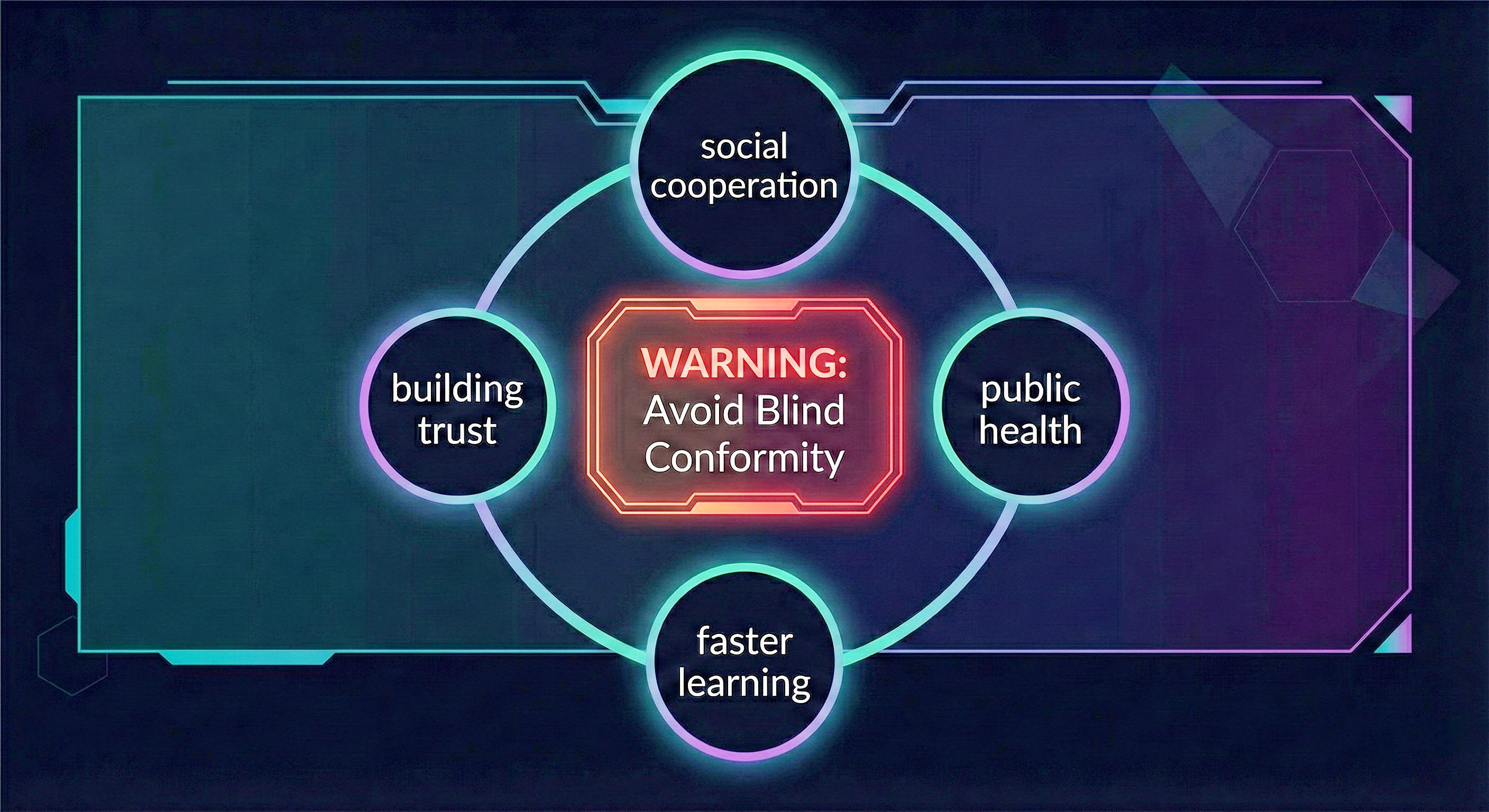
There are real benefits to going along:
- Social cooperation works because most people follow shared norms
- Public health improves when conformity supports behaviors like mask-wearing or seatbelt use
- Learning happens faster when you follow experienced people in unfamiliar situations
- Trust builds when group members show they’re team players
The imitation heuristic is a real cognitive shortcut. When you’re not sure what to do, copying what others do works surprisingly well in many situations. If everyone at the gym wipes down their equipment, you do it too. If your whole team uses a certain file-naming convention, you adopt it.
But here’s the distinction that matters. There’s a difference between compliance and acceptance. Compliance means going along in public while disagreeing in private. Acceptance means actually internalizing the group’s view. Both happen during conformity, and recent research shows that as the size of the majority grows, compliance increases faster than acceptance.
The danger isn’t conformity itself. It’s blind conformity. It’s agreeing when you have good reason to disagree. It’s staying silent when you have information the group needs. It’s choosing social comfort over accuracy when the stakes are high.
How to Think for Yourself Without Becoming an Outcast
The good news from Asch’s research is incredibly specific. You don’t need to be a rebel. You just need one thing.
One Ally Changes Everything
When Asch added just ONE person who gave the correct answer, conformity dropped by 75%. A single voice of disagreement was enough to free everyone else to speak honestly.
This means two things. First, if you’re the dissenter, your courage matters more than you think. Second, if you want better group decisions, your job is to make dissent safe.
Practical Steps to Resist Blind Conformity
-
Write your answer down first. Before any group discussion, record your own view. This anchors you against drift.
-
Speak early. People who speak first are less susceptible to memory conformity and group pressure. If you have information, share it before others set the anchor.
-
Seek out a “voice of sanity.” Find one person who will challenge your thinking. The best-performing teams have at least one consistent dissenter.
-
Separate social bonds from decisions. Harrington’s research is clear. The friendliest groups make the worst decisions. Create structures where disagreement is expected, not punished.
-
Verify independently. When others’ memories or opinions conflict with yours, don’t assume you’re wrong. Check the source. Trust but verify.
-
Know when to conform. Sometimes going along is the right call. Pick your battles. Save your dissent for the moments when accuracy truly matters.
You don’t have to fight every crowd. But you should always know when you’re choosing to follow one.
Recommended read: Nudge: The Final Edition by Richard Thaler and Cass Sunstein — packed with research on how social forces shape your choices and how to design better decision environments.