You bought the running shoes. Set the alarm for 6 AM. Told everyone you were finally getting in shape.
It lasted maybe two weeks. Then the alarm got snoozed. The shoes collected dust. The gym membership became a monthly reminder of failure.
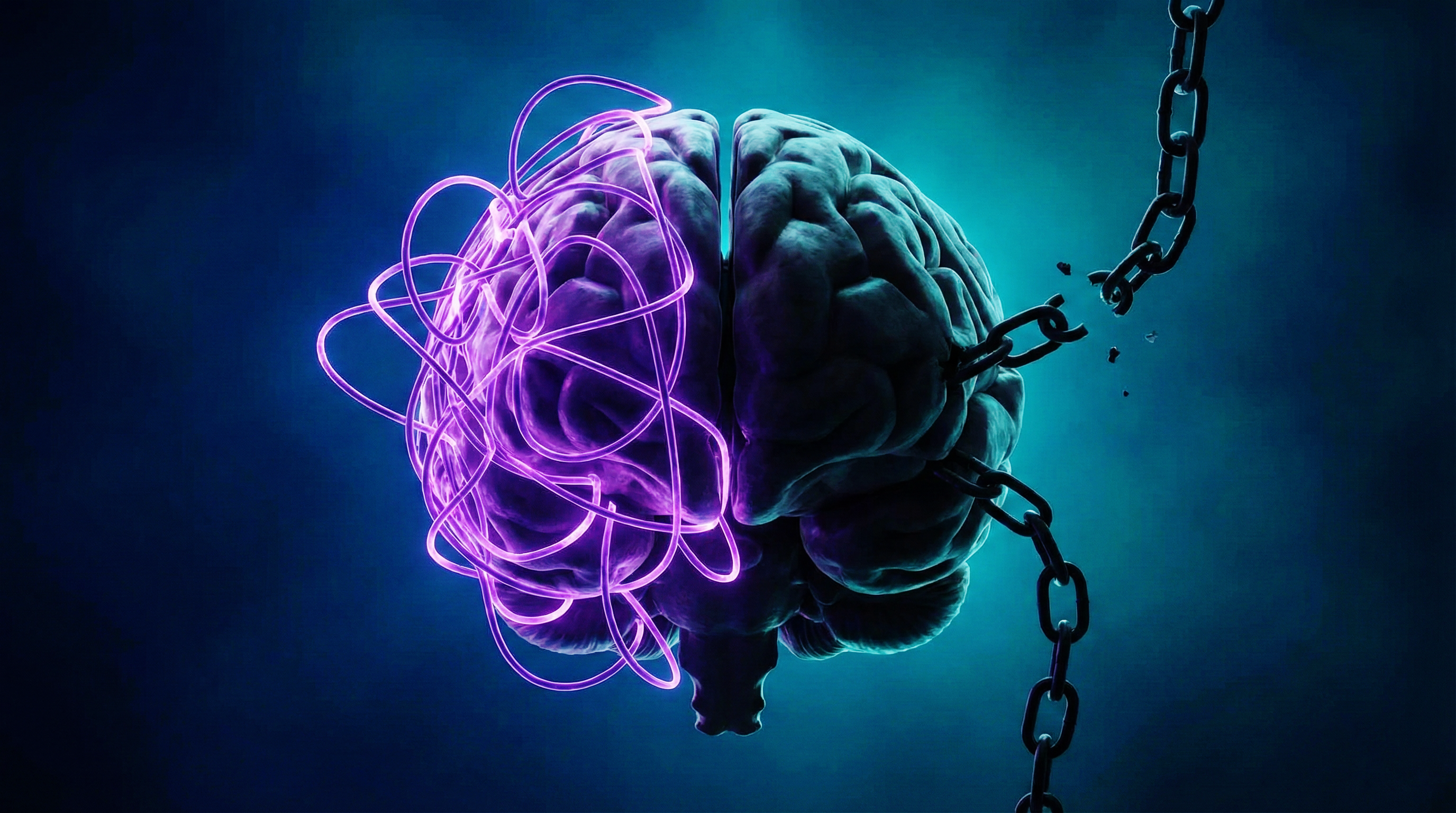
You’re not weak. You’re not lazy. You’re fighting your own brain. And your brain has been winning this fight for thousands of years.
The science of habit formation reveals something most self-help advice gets wrong. Building habits isn’t about motivation or willpower. It’s about understanding how your brain actually works. Once you get that, everything changes.
Your Brain Runs on Autopilot More Than You Think
Here’s a number that might surprise you. Researchers estimate that roughly 43% of your daily behaviors happen on autopilot. You don’t decide to grab your phone first thing in the morning. You just do it. You don’t choose to take the same route to work. Your body drives there while your mind wanders.
This isn’t a bug. It’s a feature. Your brain builds habits to save energy.
Habits are behaviors repeated enough times to become automatic. James Clear, author of Atomic Habits, puts it simply. “Habits are mental shortcuts learned from experience.” Your brain figured out a solution that works, so it stops wasting brainpower thinking about it.
The Habit Loop
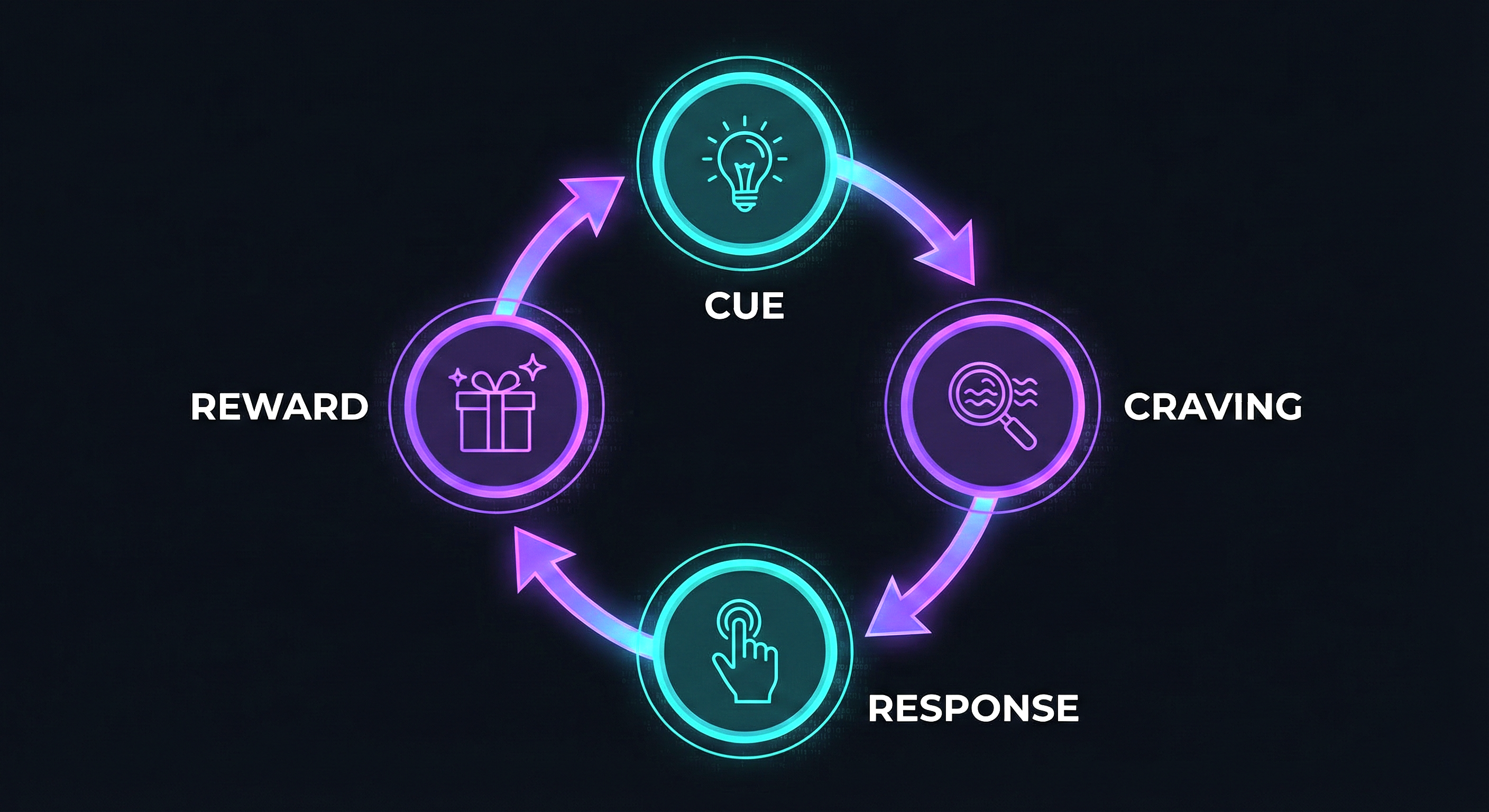
Every habit follows the same four-step pattern:
- Cue. Something triggers your brain. A time of day, a location, an emotion, or a preceding action.
- Craving. Your brain predicts a reward and wants it. This is the motivation behind the behavior.
- Response. The actual habit you perform. Grabbing a snack, checking your phone, going for a run. (Ever wonder why checking your phone is so hard to stop? It’s because apps hijack your dopamine system to make the reward step irresistible.)
- Reward. The payoff that satisfies the craving and teaches your brain to repeat the loop.
Charles Duhigg describes this as the engine of all habit formation in The Power of Habit. Once the loop is established, your conscious mind doesn’t even get a vote.
| Step | What It Does | Example (Coffee Habit) |
|---|---|---|
| Cue | Triggers the behavior | You wake up feeling groggy |
| Craving | Creates motivation | You want to feel alert |
| Response | The action you take | You brew a cup of coffee |
| Reward | Satisfies the craving | Caffeine kicks in, you feel awake |
This is why habits feel effortless once they’re locked in. Your brain has automated the entire sequence. But it’s also why building new habits feels so hard. You’re asking your brain to do extra work it hasn’t learned to skip yet.
“Habit formation is incredibly useful because the conscious mind is the bottleneck of the brain.” — James Clear
Recommended read: The Power of Habit by Charles Duhigg — The book that introduced the habit loop to the world and shows how habits work in individuals, organizations, and societies.
Why Willpower Always Loses
Most people try to build habits using pure willpower. They grit their teeth, white-knuckle through the first few days, and hope discipline carries them forward.
It almost never works. Here’s why.
Willpower is a limited resource. It gets depleted throughout the day. Every decision you make, every temptation you resist, every tough conversation you have chips away at your self-control reserves. By evening, you’re running on empty. On top of that, your brain is riddled with shortcuts that work against you. The same cognitive biases sabotaging your everyday decisions also undermine your ability to stick with new habits.
The “I Don’t” Trick
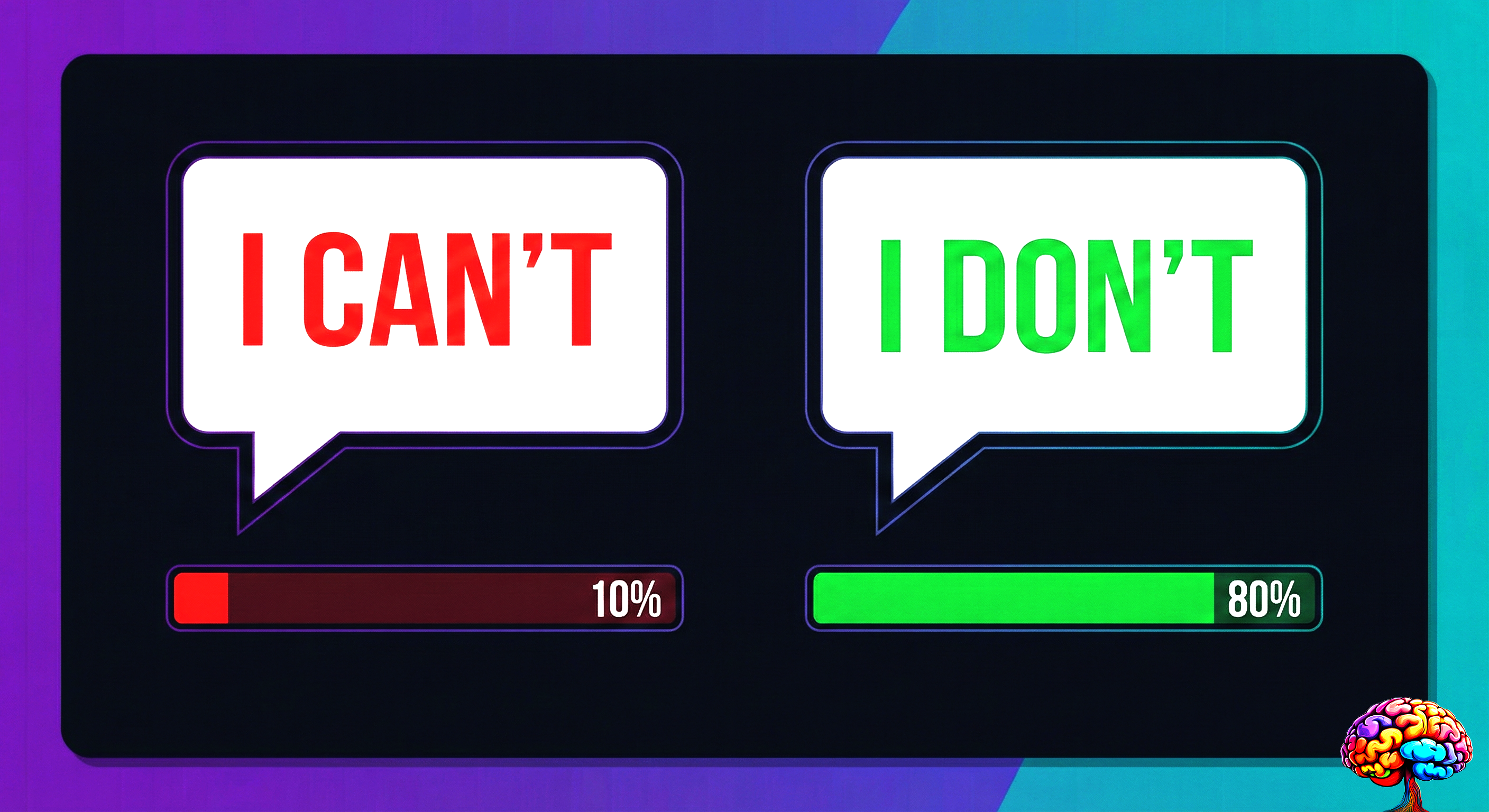
Researchers Vanessa Patrick and Henrik Hagtvedt ran a fascinating experiment. They asked women to pursue a long-term health goal. One group was told to resist temptation by saying “I can’t miss my workout.” The other group said “I don’t miss my workouts.”
After ten days, only 10% of the “I can’t” group stuck with their goal. But 80% of the “I don’t” group kept going.
The difference? Language shapes identity.
- “I can’t eat junk food” = Something is stopping me (10% success)
- “I don’t eat junk food” = This isn’t who I am (80% success)
“I can’t” implies an external force restricting you. It’s disempowering. You’re a child being told no. “I don’t” signals that you’re a certain kind of person. It gives the power back to you.
This connects to a bigger idea. The most effective habit change happens at the identity level, not the behavior level. You don’t just want to run. You want to become a runner. You don’t just want to read more. You want to become a reader.
“When you say ‘I don’t,’ you are signaling that you are a particular kind of person, the kind of person who, on principle, doesn’t do that thing.” — Adam Alter, Irresistible
The 21-Day Myth and What Research Actually Shows
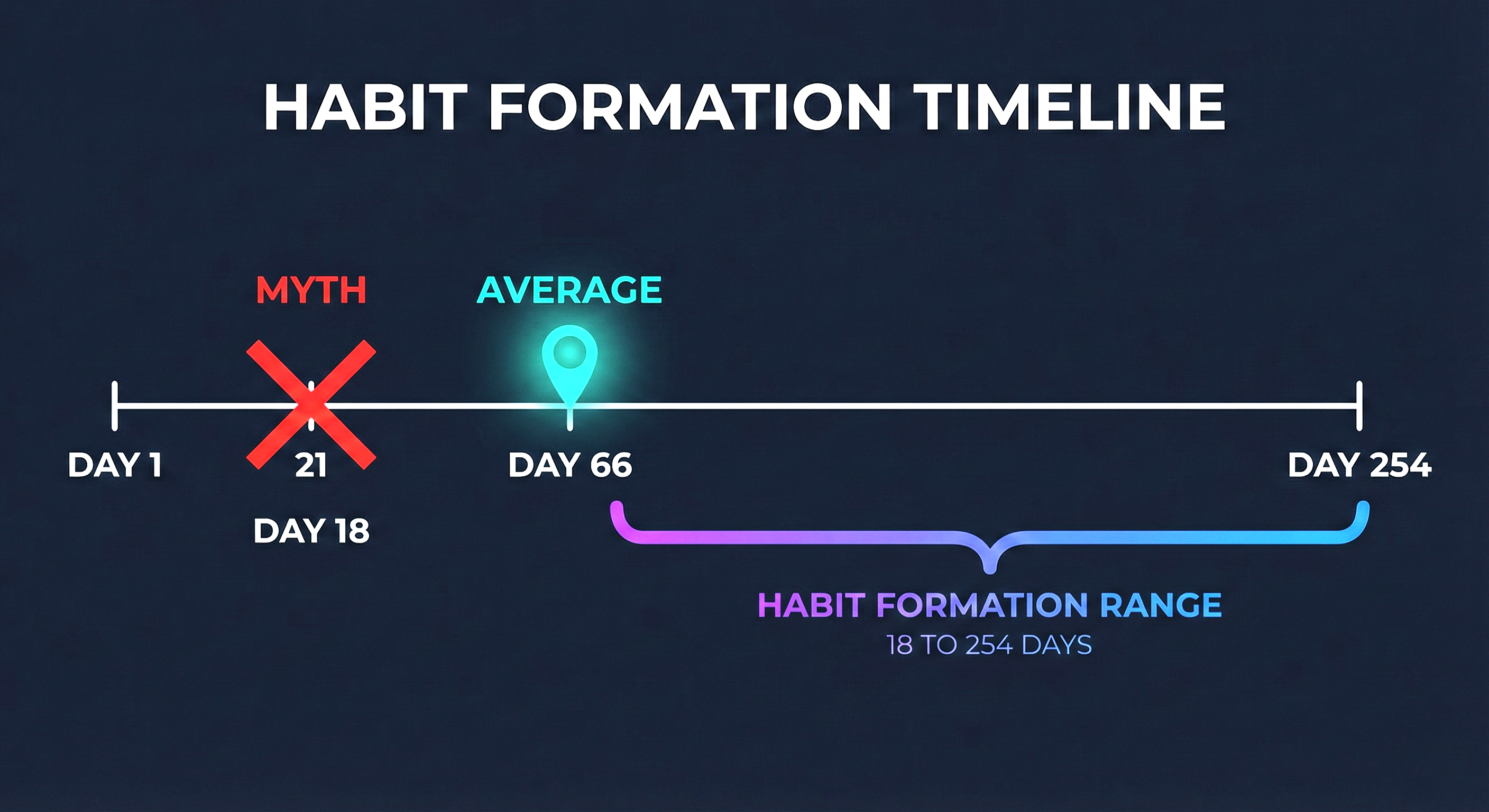
You’ve probably heard it takes 21 days to form a habit. It’s one of the most repeated claims in self-help. It’s also wrong.
The number comes from a 1960s plastic surgeon named Maxwell Maltz. He noticed patients took about 21 days to adjust to their new appearance. Somehow this observation about cosmetic surgery became gospel for habit formation.
What the Science Says
In 2009, researcher Phillippa Lally and her team at University College London tracked habit formation in the real world. They asked 96 people to build one new daily habit over 12 weeks.
The results were eye-opening:
- Average time to automaticity: 66 days
- Fastest participant: 18 days
- Slowest participant: 254 days
That’s a massive range. And the key finding wasn’t about time at all. It was about repetition.
James Clear makes this point in Atomic Habits. “The question people should be asking isn’t ‘How long does it take to form a new habit?’ but ‘How many repetitions does it take?’” Your brain doesn’t track calendar days. It tracks how many times neurons fire together.
Emotions Beat Repetition
BJ Fogg, Stanford behavior scientist and author of Tiny Habits, takes this even further. He argues that emotions are the real driver of habit formation. Not repetition. Not frequency.
When a behavior produces a strong positive emotion, your brain wires it in faster. Sometimes in a single experience. Think about the first time you used a smartphone. The delight you felt cemented the habit almost instantly.
- Positive emotions after a behavior speed up habit formation
- Negative emotions like shame and guilt after failure slow it down
- Celebrating immediately after a new behavior is one of the fastest ways to wire it in
“Emotions create habits. Not repetition. Not frequency. Not fairy dust. Emotions.” — BJ Fogg
Recommended read: Tiny Habits by BJ Fogg — A Stanford scientist’s method for building habits that stick by starting incredibly small and celebrating immediately.
Five Strategies That Actually Make Habits Stick
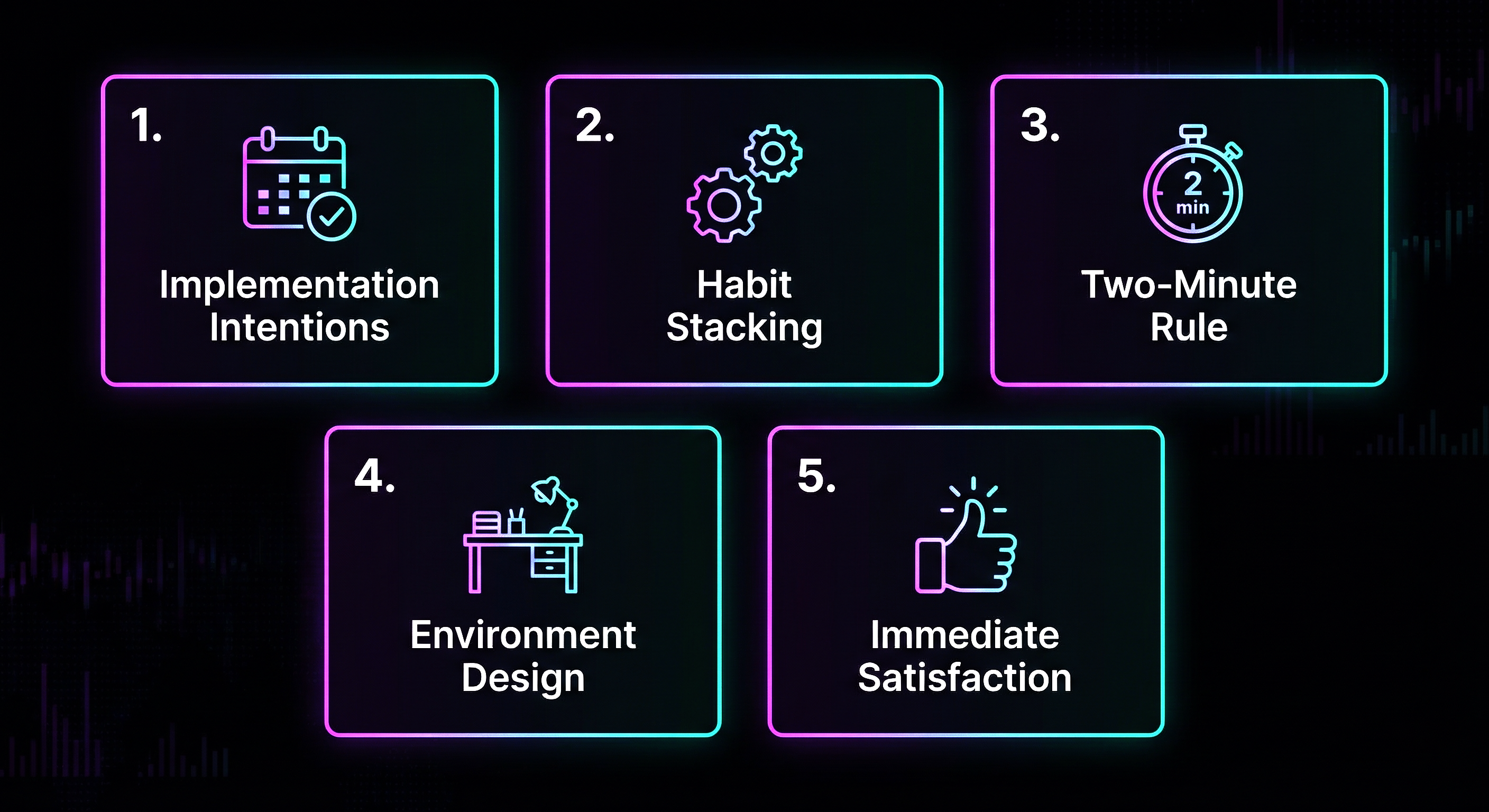
Now for the practical part. Here are five research-backed strategies that work with your brain instead of against it.
-
Use implementation intentions. Don’t just say “I’ll exercise more.” Fill in the blanks: “I will [BEHAVIOR] at [TIME] in [LOCATION].” In one British study, this simple sentence boosted exercise rates from 38% to 91%. Your brain needs specific cues, not vague goals.
-
Stack habits on existing routines. Habit stacking means linking a new habit to something you already do. “After I pour my morning coffee, I will write in my journal for two minutes.” The existing habit becomes the cue for the new one. You’re borrowing a neural pathway that’s already built.
-
Follow the two-minute rule. When starting a new habit, shrink it down until it takes two minutes or less. Want to read more? Start with one page. Want to meditate? Start with two deep breaths. The point isn’t the full behavior. It’s showing up consistently so your brain builds the automaticity.
-
Design your environment. Your surroundings shape your behavior more than your motivation does. Want to eat healthier? Put fruit on the counter and hide the cookies. Want to exercise? Lay out your workout clothes the night before. James Clear calls this “priming your environment.” It reduces friction between you and the good habit. Marketers use this same principle in reverse. The hidden rules of persuasion show how companies design environments that nudge you toward their goals instead of yours.
-
Make it satisfying in the moment. Your brain prioritizes immediate rewards over future benefits. This is why bad habits win. They feel good now. To compete, attach an immediate positive feeling to your good habits. Celebrate small wins. Track your streaks. Give yourself a genuine moment of satisfaction after each rep.
| Strategy | What It Does | Example |
|---|---|---|
| Implementation intention | Creates a specific cue | ”I’ll run at 7 AM from my front door” |
| Habit stacking | Borrows existing neural pathway | ”After brushing teeth, I’ll do 5 pushups” |
| Two-minute rule | Removes resistance to starting | ”I’ll just put on my running shoes” |
| Environment design | Reduces friction | Lay out gym clothes the night before |
| Immediate satisfaction | Wires in the reward | Check off a habit tracker after each rep |
Recommended read: Atomic Habits by James Clear — The definitive guide to building good habits and breaking bad ones, with a practical framework built on the four laws of behavior change.
Your Habits Are Not Your Character
If you’ve ever failed at building a habit and felt ashamed, you need to hear this. BJ Fogg puts it bluntly. “If you’ve followed some misguided advice on breaking habits and failed, it’s not your fault. You have inherited a flawed way of thinking.”
Bad habits are not character flaws. They’re design problems. Your brain isn’t broken. It’s running a program that was optimized for a different environment. The same brain machinery that makes you scroll social media for two hours can be redirected to make you exercise every morning.
You just need better architecture.
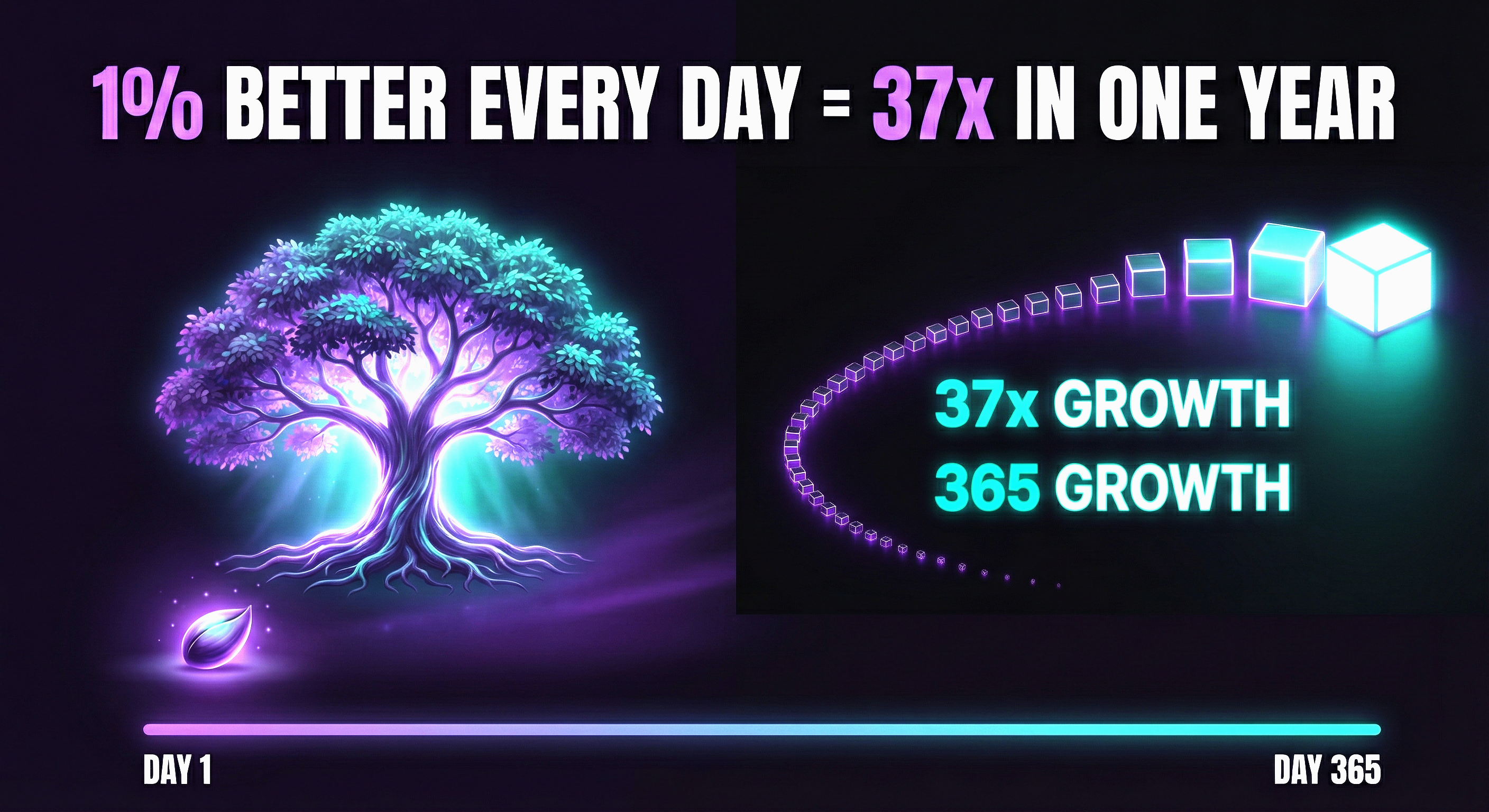
The research is clear. Small changes compound over time. James Clear’s “1% better every day” idea isn’t motivational fluff. It’s math. If you improve by 1% every day for a year, you end up 37 times better. The problem is that progress feels invisible at first. You don’t notice the compounding until months later.
Here’s what to remember:
- Habits are not about willpower. They’re about systems.
- Your environment shapes your behavior more than your motivation does.
- Start laughably small. Two minutes. One page. One pushup.
- Celebrate immediately. Emotions wire habits faster than repetition.
- Be patient. The average habit takes 66 days. Some take much longer. That’s normal.
Michael Norton, author of The Ritual Effect, adds one more layer. Good habits automate your life. But when you add intention and emotion to those habits, they become rituals. And rituals don’t just get things done. They make life feel meaningful.
You don’t need to overhaul your life overnight. You need to redesign one small loop at a time. Your brain will take care of the rest.
Recommended read: The Ritual Effect by Michael Norton — Explores how adding meaning and emotion to your routines transforms habits into rituals that stick and improve your wellbeing.