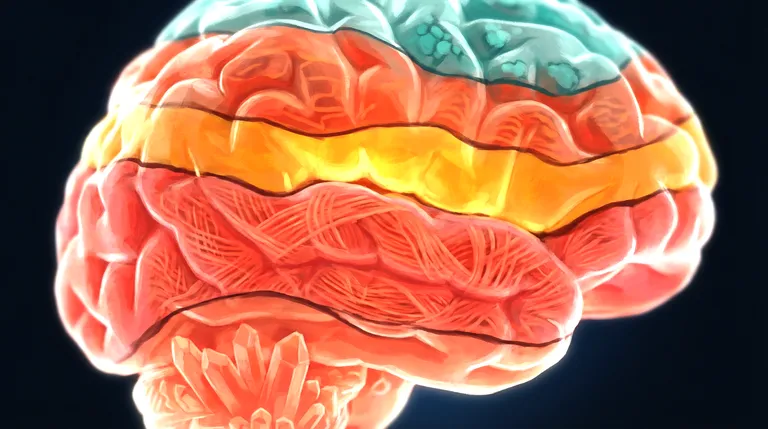
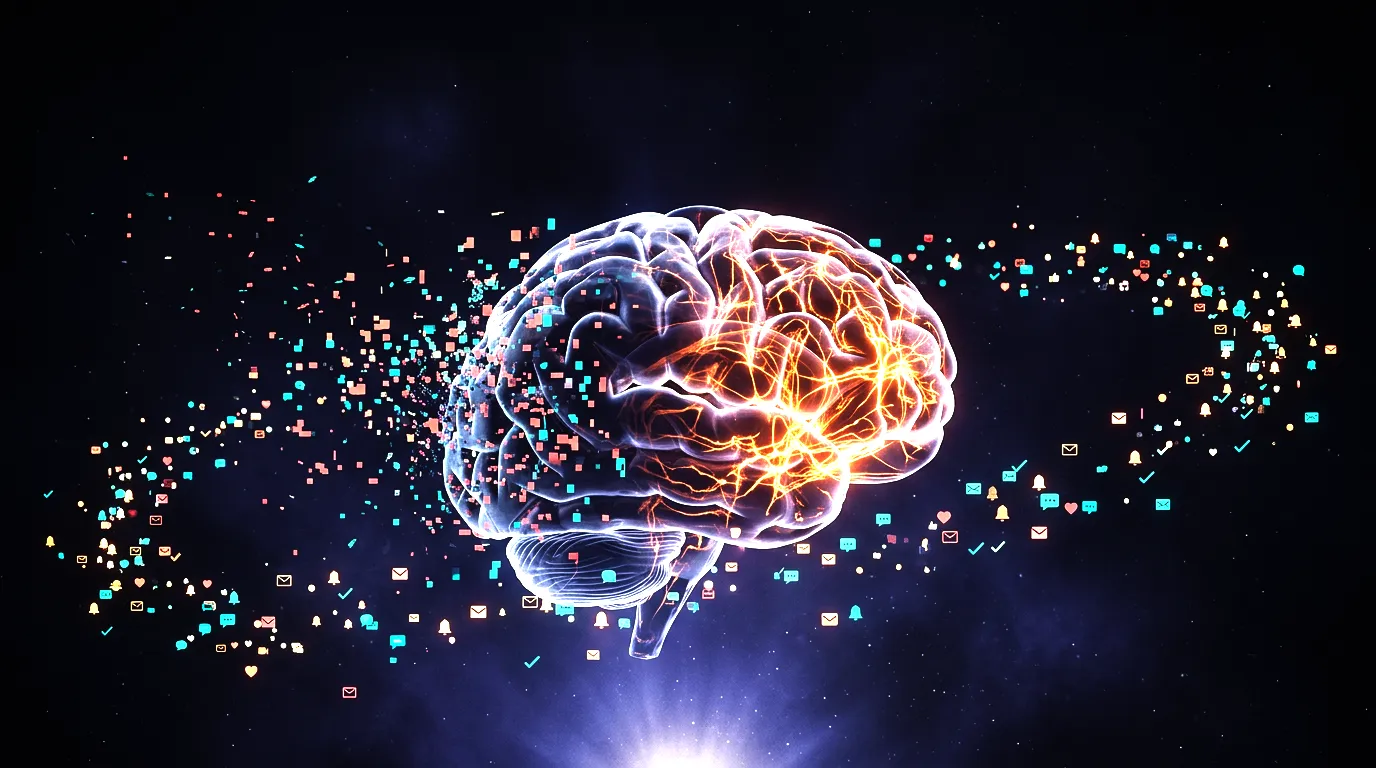
Oxford named “brain rot” its Word of the Year in 2024. Most people laughed. It sounded like something your grandparents would say about too much television.
But in 2025, a team of researchers published a peer-reviewed study proving that brain rot is not a joke. It is a measurable, documented pattern of cognitive decline caused by excessive digital content consumption.[1]
Your phone is doing something to your brain. And the science now shows exactly what.
What Brain Rot Actually Means, According to Science
The term “brain rot” refers to the deterioration of your mental and intellectual state from overconsumption of trivial online content. That is not slang. That is the definition used in a 2025 rapid review published in Brain Sciences that analyzed 35 peer-reviewed papers.[1]
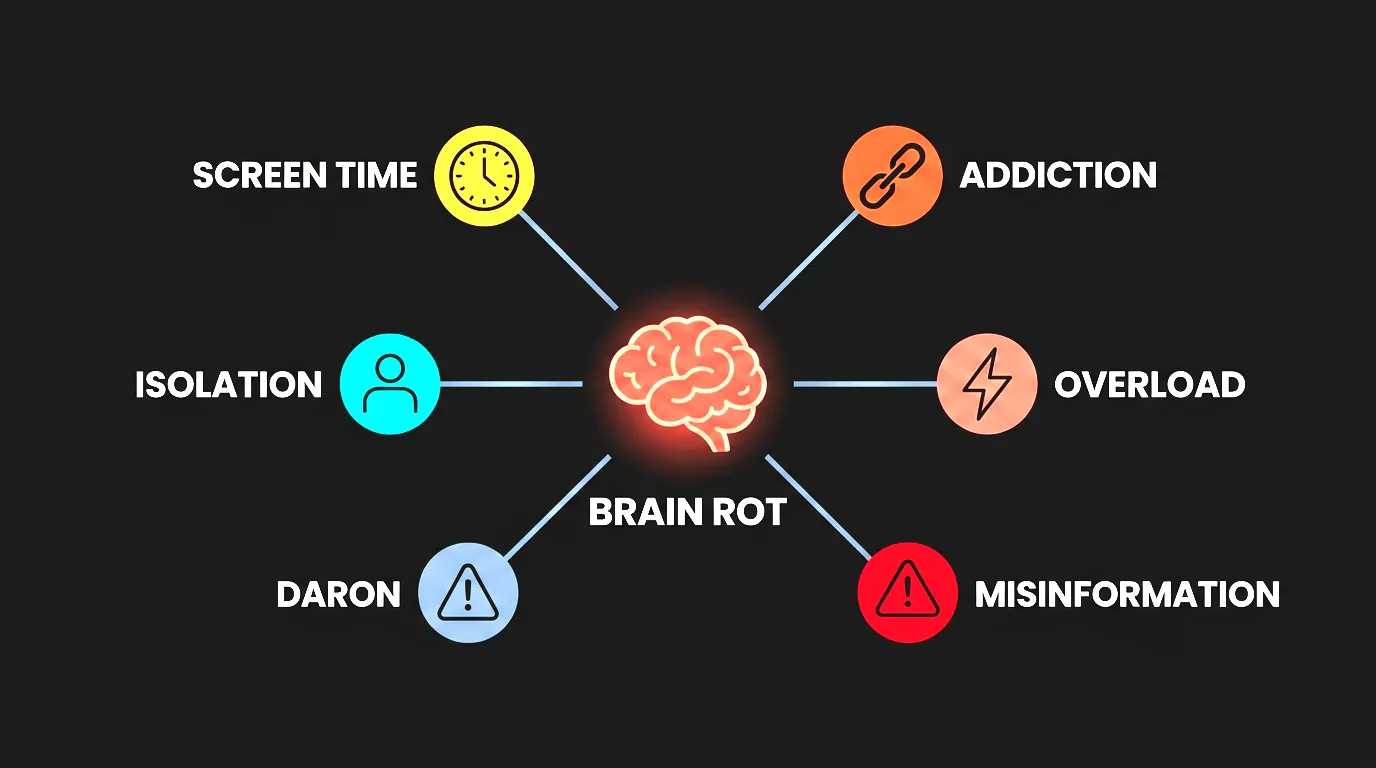
The researchers identified three core drivers of brain rot:
- Excessive screen time. College students now average 7 hours per day on mobile devices for entertainment. Not studying. Not working. Just scrolling.
- Social media addiction. Platforms use dopamine-driven feedback loops that create compulsive engagement patterns.
- Cognitive overload. Your brain gets bombarded with news, entertainment, and social updates until it simply shuts down.
The Numbers Are Staggering
| Metric | Finding |
|---|---|
| Daily screen time (college students) | 7 hours for entertainment |
| Internet-connected young adults globally | 4 billion |
| Average daily time online | 6.5 hours |
| TikTok videos containing misinformation | 52% of top-viewed |
| Studies discussing digital addiction | 71% of reviewed papers |
The review found that 71% of the papers they analyzed discussed digital addiction as a primary driver. Another 57% focused on excessive screen time specifically.[1]
This is not a niche concern. Researchers have now developed a validated Brain Rot Scale (BRS-14) to formally measure digital content overconsumption among Gen Z and Gen Alpha. The scale identifies three measurable factors: attention dysregulation, digital compulsivity, and cognitive dependency.[2]
Recommended read: The Shallows by Nicholas Carr. A prescient book that predicted how the internet would physically reshape our capacity for deep thinking.
How Scrolling Rewires Your Reward System
Your brain has a chemical called dopamine. It is supposed to reward you for things that keep you alive. Eating. Sleeping. Connecting with other people. But social media has figured out how to hijack that system.
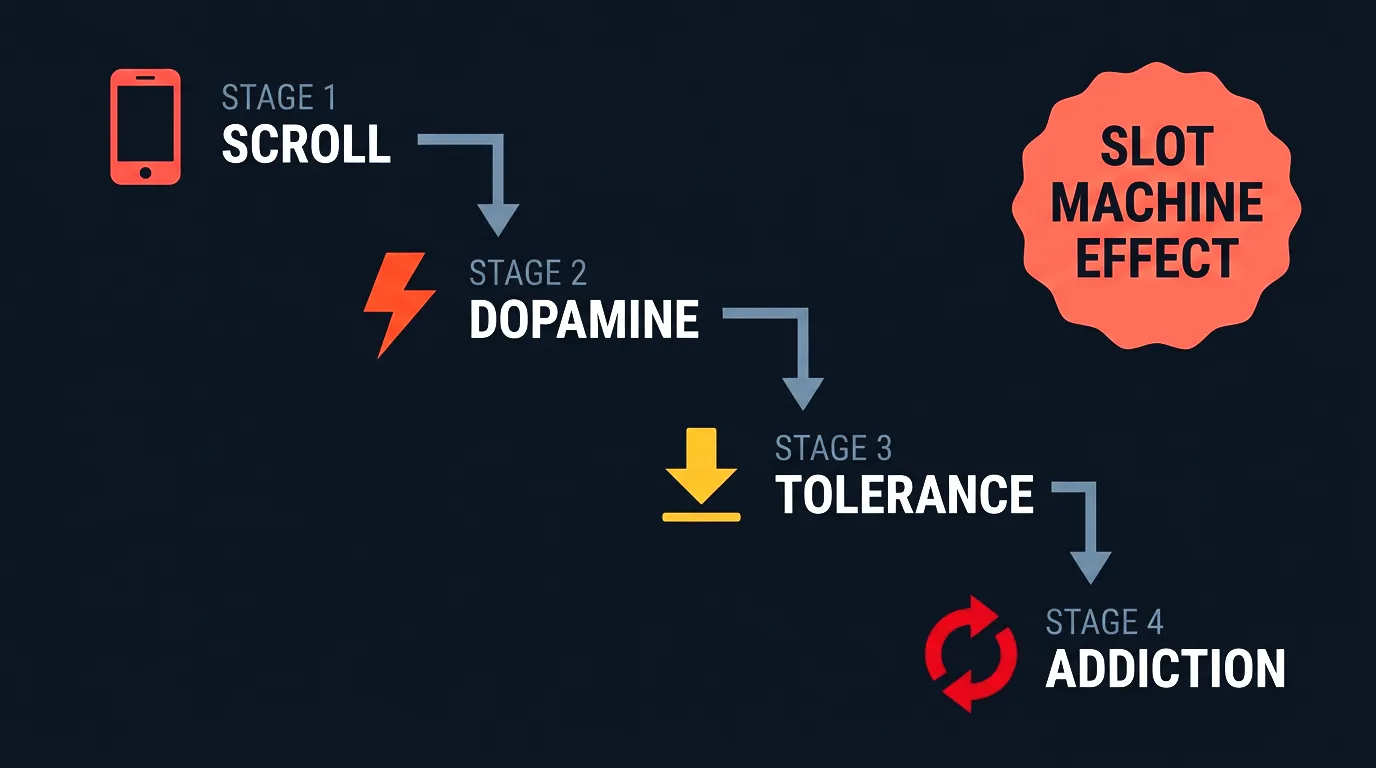
Every like, comment, and notification triggers a small dopamine release. Platforms use variable reward schedules. The same mechanism that makes slot machines addictive. You never know when the next reward is coming, so you keep pulling the lever. Or in this case, keep scrolling.[3]
A 2025 paper in Perspectives in Public Health identified dopamine-scrolling as a distinct behavioral pattern that warrants urgent public health attention. Unlike doomscrolling, which focuses on negative content, dopamine-scrolling is the habitual act of swiping through feeds in pursuit of novel, entertaining content. The researchers found it operates through reward mechanisms and variable reinforcement schedules that create tolerance development over time.[4]
The Tolerance Trap
Here is what tolerance looks like in practice:
- You need more scrolling to feel the same satisfaction
- Simple pleasures like a walk or a conversation start feeling flat
- You pick up your phone automatically without deciding to
- You feel restless or anxious when you cannot check your notifications
Anna Lembke, a Stanford psychiatrist and author of Dopamine Nation, explains that your brain has a pleasure-pain balance. Flood it with too much dopamine and it compensates by dialing down your baseline. That is why chronic scrollers feel bored and restless even when they are doing things that used to feel good.
This connects directly to how apps are designed to hijack your dopamine system. The algorithms are not accidental. They are engineered to keep you in this loop.
A 2025 study framed social media as a “behavioral dopamine agonist,” finding that frequent engagement alters dopamine pathways and changes brain activity in the prefrontal cortex and amygdala.[5]
Your Attention Span Is Collapsing
The damage goes beyond mood. Brain rot is physically shrinking your capacity to focus.
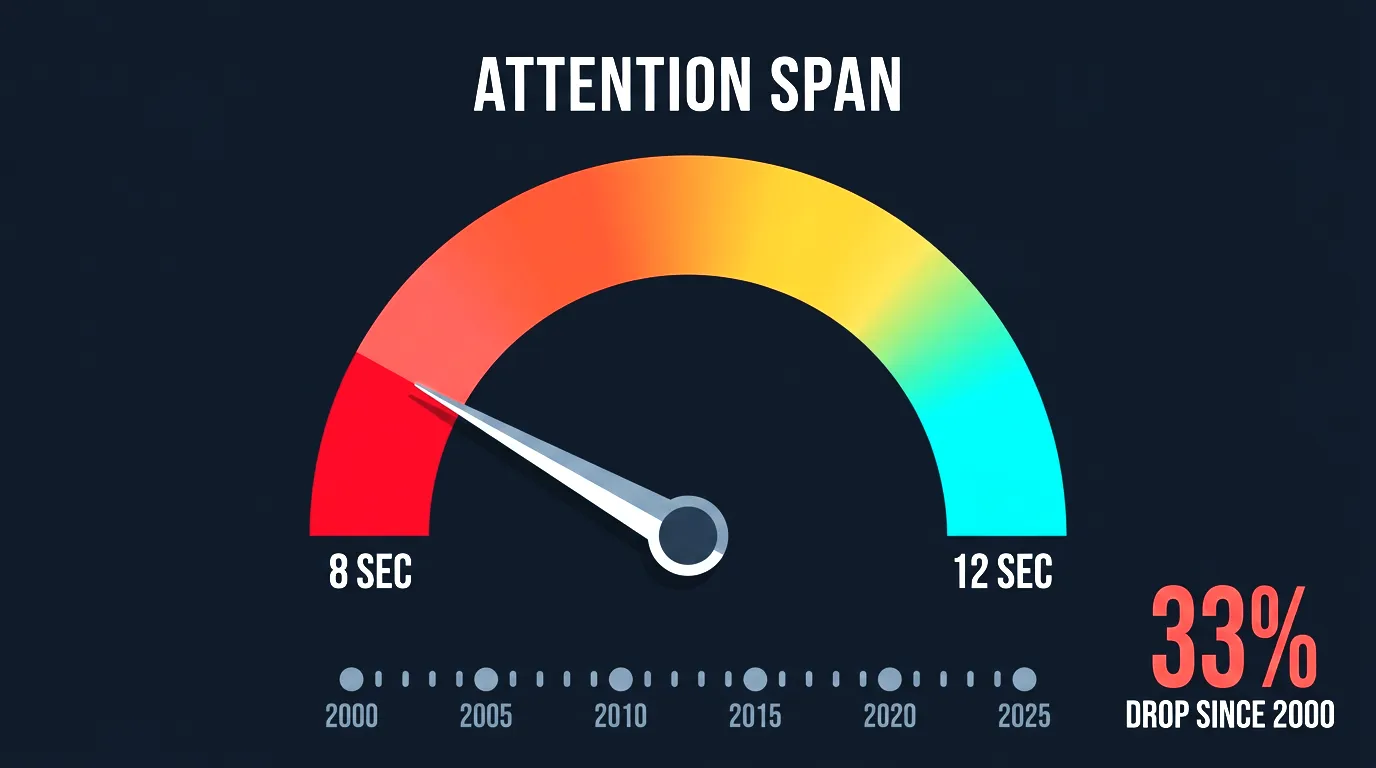
Microsoft’s attention span research found that the average human attention span dropped from 12 seconds in 2000 to just 8 seconds by 2013. That is a 33% decline that matches the rise of smartphones and social media perfectly.[6]
A landmark 2025 study from the Karolinska Institutet followed 8,324 children from age 9 to 14. They found that children who spent significant time on social media experienced a gradual, measurable decline in their ability to concentrate. The effect was specific to social media. TV and video games showed no clear association with attention problems.[7]
What the Researchers Found
“Social media entails constant distractions in the form of messages and notifications, and the mere thought of whether a message has arrived can act as a mental distraction.” - Torkel Klingberg, Karolinska Institutet
The Karolinska study revealed something important. Children who already had attention problems did not start using social media more. But children who used social media more developed attention problems. The direction goes from screens to symptoms. Not the other way around.[7]
Gen Alpha children now have an average attention span of about 8 seconds. Screen-free activities hold their attention for roughly 16 minutes before they seek digital stimulation.[8]
This is part of a larger pattern where your attention has become a product that companies buy and sell. The shorter your attention span, the more ads you see.
Recommended read: Stolen Focus by Johann Hari. A powerful investigation into the forces destroying our ability to pay attention and what we can do about it.
The Psychological Damage Goes Deeper Than You Think
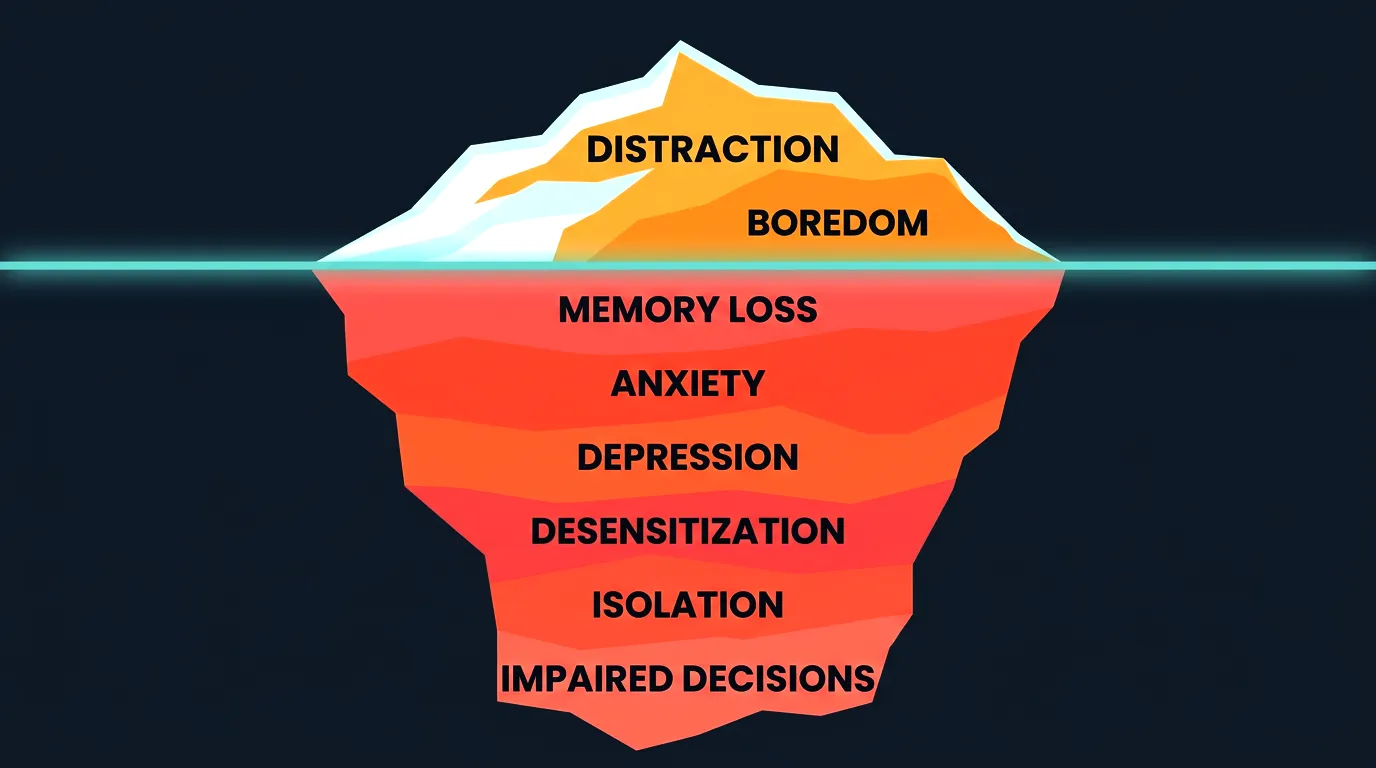
Brain rot does not just make you distracted. The 2025 review documented a full range of psychological consequences that go far beyond attention problems.[1]
Cognitive Impacts
- Memory consolidation and retrieval break down. Your working memory gets weaker.
- Problem-solving abilities decline. You lose cognitive flexibility.
- Executive functioning suffers. Planning and decision-making get harder.
- Critical thinking erodes. You accept information without questioning it.
Emotional and Social Impacts
- Emotional desensitization. You stop reacting normally to real-world events.
- Anxiety and depression increase from constant comparison and doomscrolling.
- Distorted reality perceptions. What you see online warps what you believe is normal.
- Social withdrawal. Digital connection replaces real human connection.
The review specifically named two destructive scrolling behaviors. Doomscrolling is the compulsive consumption of distressing content. It keeps your amygdala in a permanent state of alert and weakens your prefrontal cortex. A 2024 study of 800 adults found that doomscrolling significantly increases existential anxiety.[9]
Zombie scrolling is the passive, mindless consumption of content with zero intentionality. You are not looking for anything. You are not learning anything. Your brain is just running on autopilot while the algorithm feeds you more content.[1]
A 2025 phenomenological study of university students found they associated brain rot with reduced productivity, poor concentration, and impaired decision-making. Students reported that low-quality digital content harmed their academic performance and caused feelings of inadequacy.[10]
This kind of cognitive erosion is similar to what researchers are finding with AI tools making people dumber. When technology does the thinking for you, your brain stops doing it on its own.
Recommended read: The Anxious Generation by Jonathan Haidt. Essential reading on how phone-based childhood is driving an epidemic of mental illness in young people.
How to Stop Brain Rot Before It Gets Worse
The good news is that your brain is plastic. It can change. The same neuroplasticity that lets scrolling rewire your brain also lets you rewire it back. Here is what the research recommends.[1]
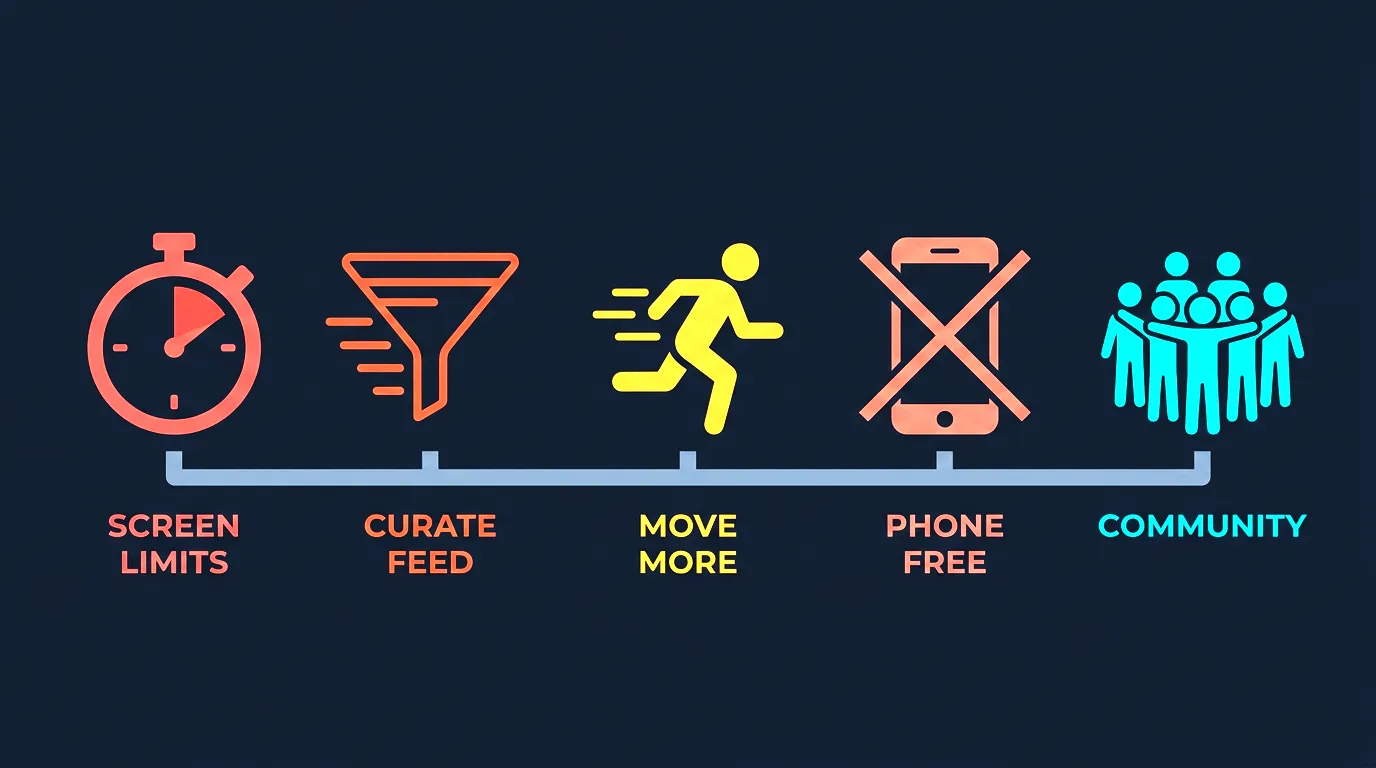
Set Hard Boundaries on Screen Time
Do not rely on willpower. Use app timers, grayscale mode, and physical separation from your phone. The 2025 review found that screen time regulation is the single most effective intervention.
Curate Your Feed Ruthlessly
Unfollow accounts that make you feel worse. Mute trending topics that trigger doomscrolling. The algorithm serves you what you engage with. Change what you engage with and the algorithm changes too.
Replace Scrolling with Real Activities
- Exercise. Physical activity produces natural dopamine without the tolerance trap.
- Reading. Long-form content rebuilds sustained attention capacity.
- Face-to-face socializing. Real human connection satisfies needs that likes and comments never will.
- Creative hobbies. Writing, music, art, and cooking engage your brain in active rather than passive ways.
Build Community Support
The review emphasized that community engagement and social support networks help combat the isolation that drives excessive screen use. You are more likely to put your phone down when you have something better to do with real people.
| Strategy | What It Does | How to Start |
|---|---|---|
| Screen time limits | Breaks the automatic scrolling habit | Set a 2-hour daily entertainment cap |
| Feed curation | Removes low-quality content triggers | Unfollow 10 accounts today |
| Non-digital activities | Rebuilds natural dopamine baseline | 30 minutes of exercise daily |
| Phone-free zones | Creates physical separation from the device | No phones at meals or in bed |
| Community engagement | Replaces digital connection with real connection | Schedule one in-person meetup per week |
Johann Hari, author of Stolen Focus, puts it simply. The solution is not about having more willpower. It is about changing the environment so you do not need willpower in the first place. Remove the temptation. Replace it with something real.
Brain rot is not permanent. But it will not fix itself. Every hour you spend mindlessly scrolling is an hour your brain spends getting worse at the things that actually matter. The science is clear. The question is what you do about it.
Sources
What Brain Rot Actually Means, According to Science
1. Demystifying the New Dilemma of Brain Rot in the Digital Era: A Review (Brain Sciences, 2025)
How Scrolling Rewires Your Reward System
Your Attention Span Is Collapsing
6. Attention Spans Research Report (Microsoft Canada, 2015)
8. Gen Alpha Attention Spans Statistics, Facts and Trends Guide for 2025 (NikolaRoza, 2025)