You’re pouring coffee when a thought hits you. You’ve done this before. Not just the coffee. The exact angle of sunlight. The specific song playing. The feeling of the mug in your hand. Every detail is familiar in a way that makes your skin prickle.
For a split second, you’re absolutely certain you’ve lived this exact moment before.
Then it’s gone. And you’re left wondering whether reality just stuttered.
Over a million people on the r/Glitch_in_the_Matrix subreddit share stories like this. Deja vu. Impossible coincidences. Memories that don’t match reality. They call them glitches, evidence that the simulation is showing its seams.
But neuroscience has a less exciting and far more fascinating explanation. These glitches are real. They’re just not coming from a faulty simulation. They’re coming from your brain.
Deja Vu Is a Memory Error, Not a Proof of Simulation
Deja vu translates from French as “already seen.” Almost everyone experiences it. That eerie feeling of having lived through a moment before, even though you know you haven’t.
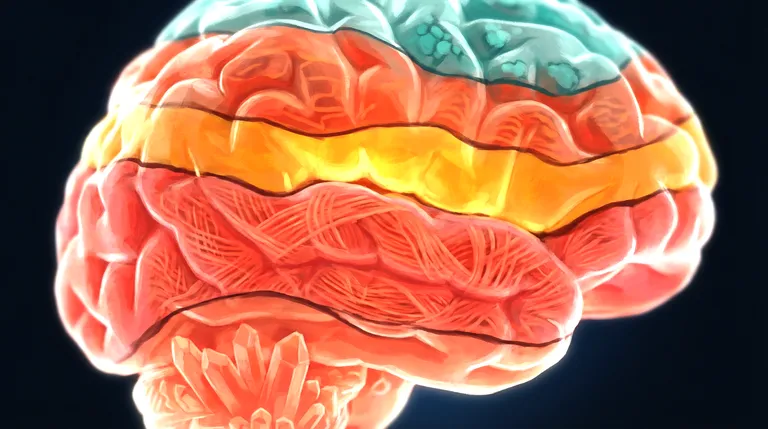
In the 1950s, neurosurgeon Wilder Penfield was operating on epilepsy patients with their skulls open and brains exposed. When he stimulated certain areas of the temporal lobe with a tiny electrode, something remarkable happened. Patients reported sudden, vivid deja vu. One zap, and they felt certain they’d experienced that exact moment before.
Penfield had found the switch. Deja vu wasn’t mystical. It was electrical.
Two Memory Systems Out of Sync
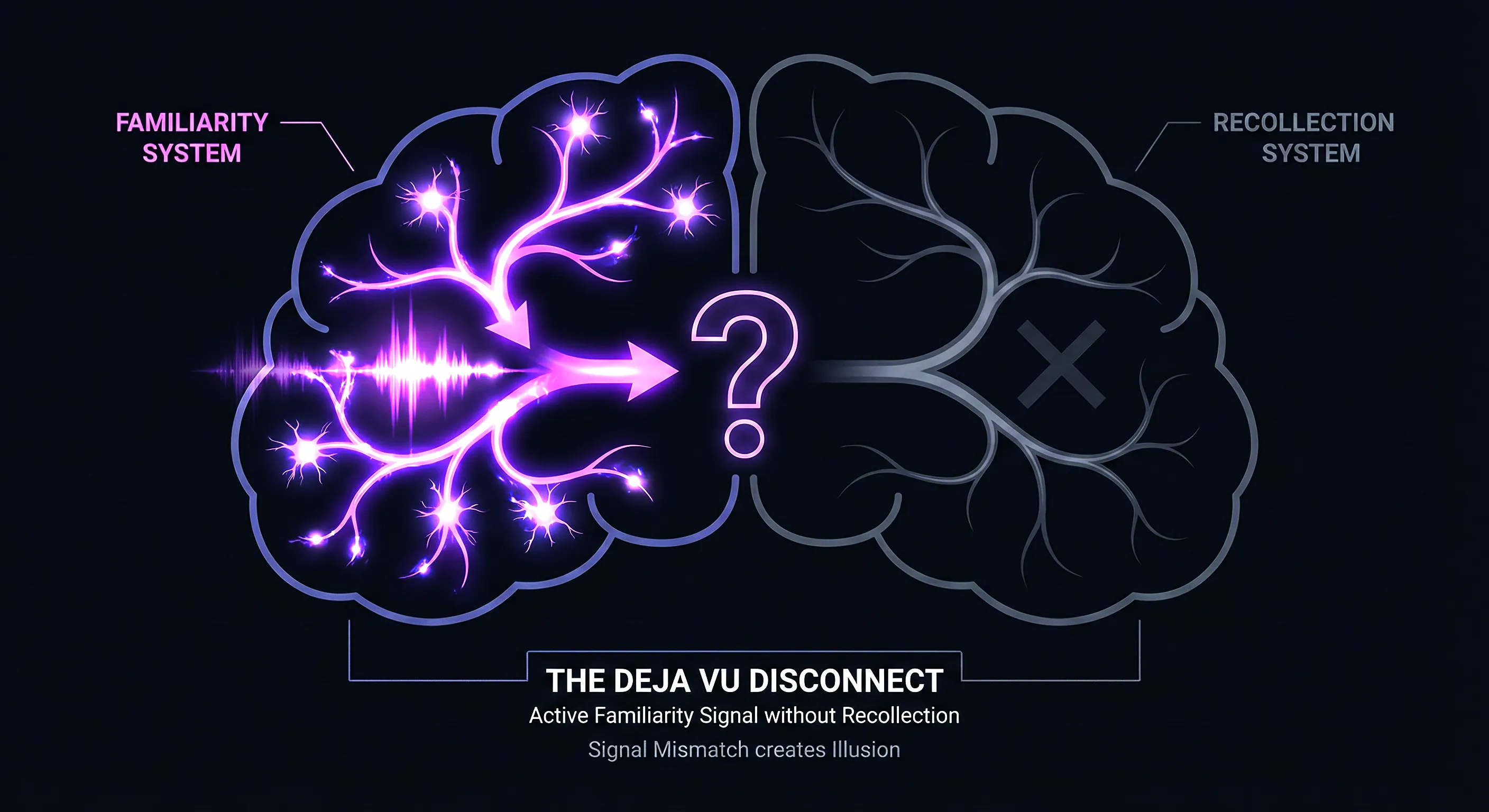
Neuroscientist Charan Ranganath explains the mechanism. Your brain has two separate memory systems working in parallel:
- Recollection. This pulls up a specific memory. You remember where, when, and what happened.
- Familiarity. This gives you a vague sense that something is known. No details. Just a feeling.
Normally these systems work together. You see a face and feel familiar with it. Then recollection kicks in and you remember it’s your neighbor from three years ago.
Deja vu happens when familiarity fires but recollection doesn’t. Your brain screams “I know this!” but can’t find the matching memory. The result is an uncanny feeling that the present moment is a repeat.
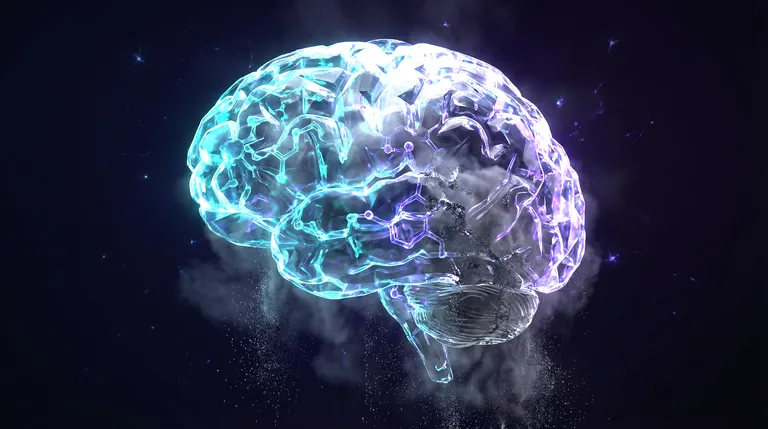
More recent studies using intracranial electrodes in temporal lobe epilepsy patients have pinpointed the exact wiring. Electrical stimulation of the entorhinal and perirhinal cortices is more likely to produce deja vu than stimulation of the hippocampus or amygdala. The familiarity signal lives in a specific neighborhood of your brain, and when it misfires, you get that eerie feeling.[1] [2] [3]
A 2025 study added a surprising twist. Researchers found that the sensation of deja vu can trigger an illusory feeling of being able to predict the future. When people detect familiarity in a novel scene, it creates a subjective sense that they know what will happen next. Even when they can’t actually predict the outcome. That “I knew that was going to happen” feeling after deja vu? Your brain is generating that illusion too.[4]
| What You Think Is Happening | What Your Brain Is Actually Doing |
|---|---|
| “I’ve lived this exact moment before” | Familiarity signal activated without a matching memory |
| “Reality is repeating itself” | Similar environmental cues triggered partial pattern match |
| “The simulation is glitching” | Perirhinal cortex misfired, creating false recognition |
| “I can predict what happens next” | Brain generates illusory prediction confidence after familiarity signal |
“Deja vu is an almost universal experience. Your brain’s familiarity system fires without delivering the memory that should come with it.” - Charan Ranganath
Recommended read: Why We Remember by Charan Ranganath. A neuroscientist’s guide to why memory works the way it does and what that means for how we experience reality.
The Mandela Effect Is False Memory at Scale
In 2010, blogger Fiona Broome discovered something strange. She distinctly remembered Nelson Mandela dying in prison in the 1980s. She remembered news coverage of his funeral. She remembered his widow’s speech. Hundreds of other people shared the exact same memory.
The problem? Mandela didn’t die in prison. He was released in 1990 and became president of South Africa. He didn’t die until 2013.
Broome named this the Mandela Effect. Since then, thousands of examples have surfaced online:
- The children’s book series is spelled “Berenstain Bears,” not “Berenstein Bears”
- The Monopoly Man doesn’t wear a monocle
- Curious George doesn’t have a tail
- It’s “Looney Tunes,” not “Looney Toons”
- Darth Vader says “No, I am your father,” not “Luke, I am your father”
Each example follows the same pattern. Large groups of people share a confident, detailed memory of something that never happened.
Your Brain Doesn’t Store Memories Like Video
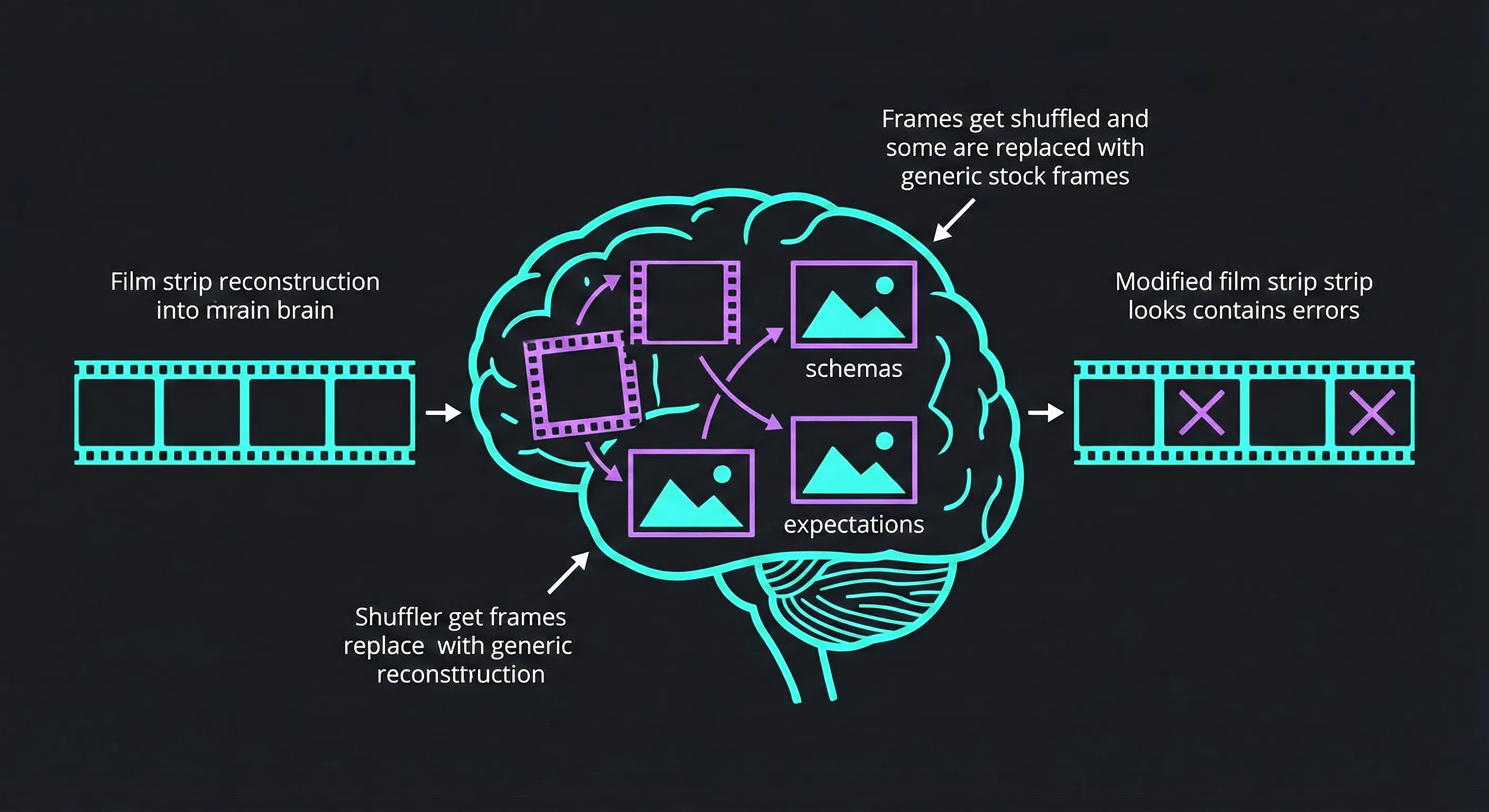
The explanation isn’t a glitch in reality. It’s how your memory actually works. Psychologist Frederic Bartlett proved in the 1930s that memory is reconstruction, not recording. Every time you remember something, your brain rebuilds it from fragments, filling gaps with expectations and general knowledge.
Memory researcher Daniel Schacter calls this the “sin of suggestibility.” Your brain is so eager to construct a coherent story that it borrows details from other memories, from conversations, and from cultural expectations. This same pattern-completion drive is why placebos produce real healing even when you know they’re sugar pills.
- You “remember” the Monopoly Man with a monocle because he looks like Mr. Peanut, who does have one
- You “remember” “Berenstein” because “-stein” is a common suffix you’ve seen thousands of times
- You “remember” Mandela dying in prison because you absorbed details from the death of Steve Biko, another South African activist who did die in custody
Research at the University of Chicago confirmed something important. Certain images from popular iconography elicit consistent, specific false memories across large groups of people, with no clear difference in how often people actually see these images. The errors aren’t random. They’re predictable. Everyone’s brain makes the same reconstruction mistakes because everyone shares the same cultural schemas.[5]
Social Amplification Makes It Worse
The Mandela Effect didn’t exist before the internet. Not because memory errors are new. But because the internet lets thousands of people discover they share the same error. Reddit forums, YouTube videos, and social media create echo chambers where shared false memories feel validated.
A 2025 study found that narrative complexity and perceived credibility amplify the Mandela Effect. The more detailed and believable a false memory sounds, the more likely it spreads. Social media provides the perfect breeding ground because millennial and Gen Z users are the heaviest consumers of the platforms where these shared memories circulate.
When enough people “remember” the same wrong thing, it stops feeling like a mistake. It starts feeling like evidence. A 2025 study even explored whether large language models like ChatGPT can exhibit their own version of the Mandela Effect in multi-agent conversations. The answer was yes. AI systems can propagate and reinforce false information in the same way human social groups do.[6]
Recommended read: Memory Lane by Ciara Greene and Gillian Murphy. Explores why our imperfect memories are actually a feature, not a bug, and how they shape our sense of reality.
Coincidences Are Statistically Inevitable, Not Mystical
You think about a friend you haven’t talked to in years. An hour later, they text you. You walk into a bookstore and the first book you see is exactly the one you were thinking about. You dream about a plane crash, and the next morning one makes the news.
These moments feel impossible. They feel designed. They feel like proof that something bigger is going on.
They’re not. They’re math.
Littlewood’s Law of Miracles
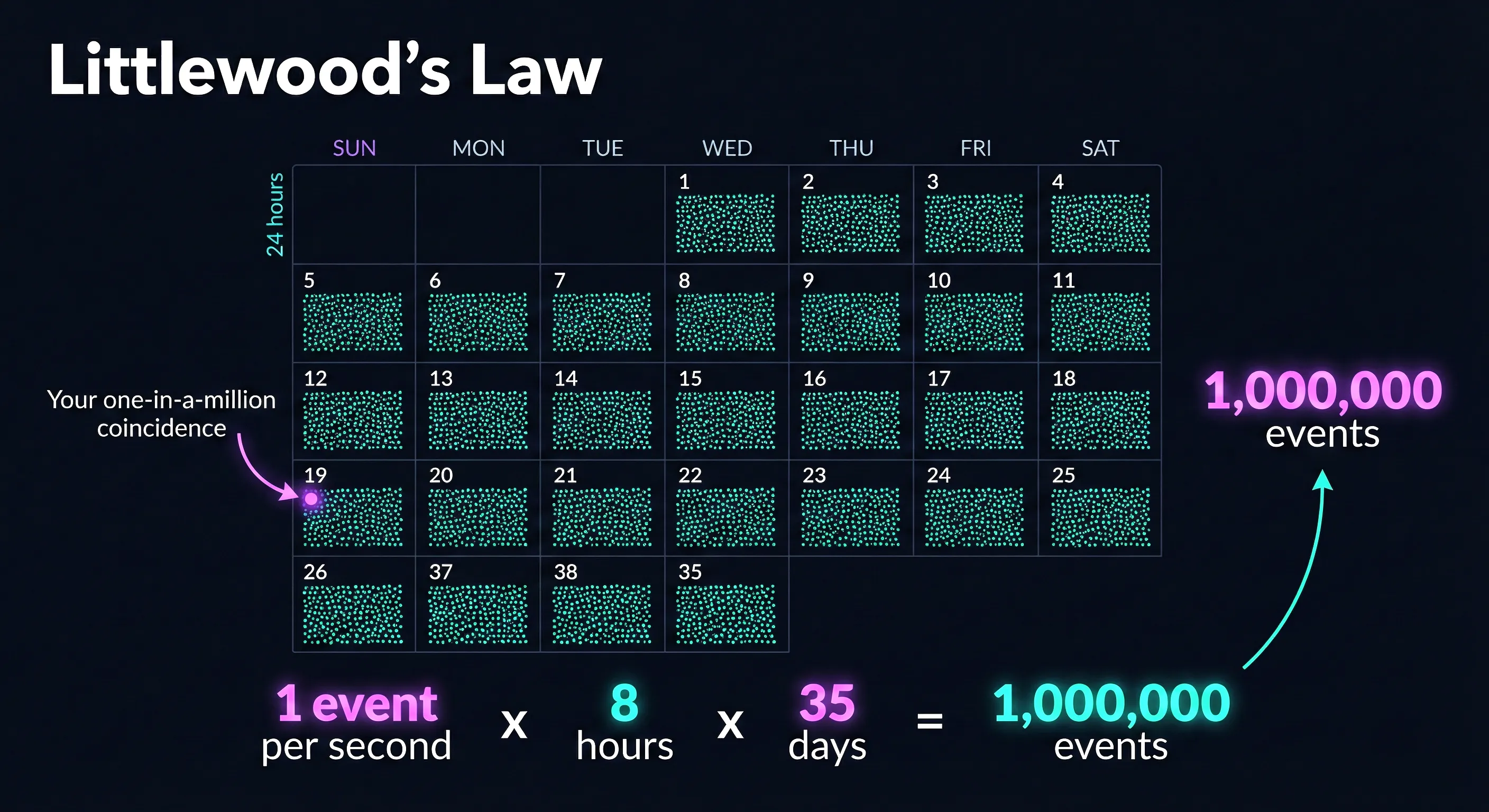
Mathematician J.E. Littlewood calculated that the average person is alert for about eight hours a day and experiences roughly one event per second. That’s about one million events every 35 days.
A one-in-a-million coincidence should happen to you once a month.
Littlewood called it the “Law of Miracles.” On a planet of eight billion people, statistically impossible things happen to someone every single day. The only reason they feel significant is because your brain notices them and ignores the millions of non-coincidences in between.
The Baader-Meinhof Phenomenon
There’s a specific brain glitch that supercharges this effect. You learn a new word, and suddenly you see it everywhere. You buy a red car, and the roads seem full of red cars. Psychologists call this the frequency illusion or the Baader-Meinhof phenomenon.
Your brain didn’t change reality. It changed its filter. Once something enters your attention, your reticular activating system flags it as important. Now you notice it every time. Before, you saw just as many red cars. You just didn’t care.
This is the same machinery that makes people believe simulation theory feels so convincing. Your brain is a pattern detector, and it’s always running. When it finds something, it assumes the pattern is real.
- You think of a friend, then they call. But you forget the hundreds of times you thought of someone who didn’t call.
- You dream about a plane crash, and one happens. But you forget the thousands of dreams that predicted nothing.
- You see the number 23 everywhere. But you ignore the thousands of other numbers you see every day.
The same cognitive biases that sabotage your everyday decisions are at work here. Your brain overweights vivid hits and ignores quiet misses. It’s confirmation bias applied to reality itself.
“On a planet with close to 7 billion people, there is a lot of opportunity for flukes. When people notice coincidences, they remember them and tell others. When coincidences don’t happen, no one cares.” - David McRaney
Recommended read: Everything Is Predictable by Tom Chivers. Reveals how Bayesian probability explains the patterns your brain insists must be meaningful.
Your Brain Needs These Glitches to Work Properly
Here’s what most “glitch in the matrix” explainers miss. These brain errors aren’t design flaws. They’re side effects of systems that usually work brilliantly.
Pareidolia Keeps You Alive
Your visual system can identify a face in one-fifth of a second. That speed comes at a cost. It fires for things that only vaguely resemble faces. A three-prong outlet. A cloud formation. Jesus on a shrimp tail dinner.
Christopher Chabris and Daniel Simons call this pareidolia in their book The Invisible Gorilla. Your brain’s face detection is set to high sensitivity on purpose. In evolutionary terms, the cost of seeing a face that isn’t there is embarrassment. The cost of missing a face that is there could be death.
The same principle applies to all your “glitch” experiences:
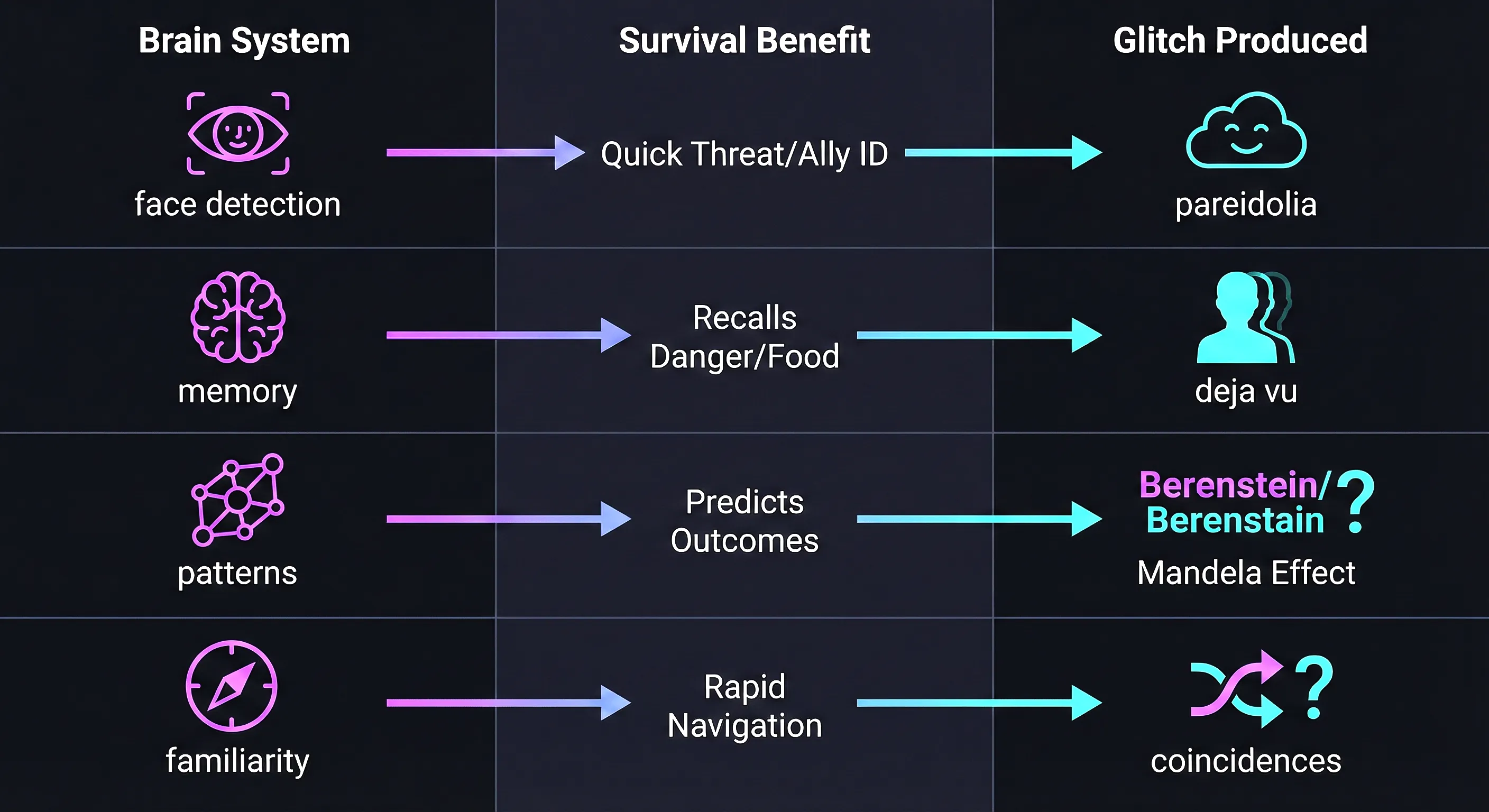
- Deja vu is a side effect of having a fast familiarity system that helps you navigate the world
- The Mandela Effect is a side effect of having flexible, reconstructive memory that helps you generalize from experience
- Coincidence detection is a side effect of having a pattern recognition system that helps you learn from your environment
- Pareidolia is a side effect of having a face detection system that helps you read social situations instantly
Jamais Vu, the Reverse Glitch
There’s a “glitch” even stranger than deja vu that most people don’t know about. Jamais vu is the opposite experience. Something completely familiar suddenly feels alien and unrecognizable.
You stare at a word you’ve written a thousand times and it looks wrong. You look at your own hand and it feels like it belongs to someone else. You walk into your own house and for a brief, unsettling moment, nothing feels like home.
A 2025 study published in Brain and Behavior found that people who experience jamais vu regularly show significant alterations in self-referential brain processing. Using resting-state fMRI, researchers found changed connectivity between brain regions responsible for self-recognition.[7] The familiarity system that misfires during deja vu can also go dark, stripping the “known” feeling from things you’ve seen your entire life.
When this happens persistently, it crosses into depersonalization/derealization disorder. Your own body feels unfamiliar. Your surroundings feel like a stage set. A 2025 theoretical model in Frontiers in Psychology linked this to disruptions in “temporal depth,” the brain’s ability to place itself in a continuous timeline of past, present, and future. Without that thread of continuity, reality feels flat and unreal.[8]
| Brain System | What It Does Well | The “Glitch” It Produces |
|---|---|---|
| Familiarity detection | Helps you recognize people, places, danger | Deja vu (false familiarity) |
| Memory reconstruction | Lets you learn, generalize, imagine the future | Mandela Effect and false memories |
| Pattern recognition | Helps you predict outcomes, learn from experience | Seeing meaning in coincidences |
| Face detection | Instant social reading and threat detection | Pareidolia |
| Self-referential processing | Maintains your sense of identity and continuity | Jamais vu and depersonalization |
Each “glitch” is the tradeoff for having a brain that works fast enough to keep you alive. A perfectly accurate brain would be too slow. Evolution chose speed over precision, and these are the quirks that come with the deal.
Recommended read: Look Again by Tali Sharot and Cass Sunstein. Explores how habituation shapes everything you notice and miss, and why breaking the pattern can change your life.
How to Enjoy the Mystery Without Losing Your Grip
The worst thing you can do with “glitch in the matrix” experiences is ignore them. The second worst thing is take them as literal proof of a simulation.
The best thing? Treat them as windows into how your brain actually works.
Here’s how to keep your sense of wonder without drifting into unfounded beliefs:
-
Name the mechanism. When you experience deja vu, say to yourself: “That’s my familiarity system firing without a matching memory.” It doesn’t kill the wonder. It adds a new layer of fascination.
-
Track your misses. For one week, write down every coincidence you notice. Also write down every time you thought of someone who didn’t call, every prediction that didn’t come true. You’ll see how dramatically your brain overweights the hits.
-
Embrace the error. False memories aren’t shameful. They’re evidence of a creative, flexible brain. The same system that creates the Mandela Effect also lets you imagine the future, plan ahead, and solve novel problems.
-
Be skeptical of online communities. Reddit threads about “glitches” are fascinating. They’re also echo chambers that amplify shared errors and discourage skepticism. The 2025 research on narrative credibility shows that the more detailed and believable a false memory sounds, the faster it spreads. Enjoy the stories. Don’t treat them as data.
-
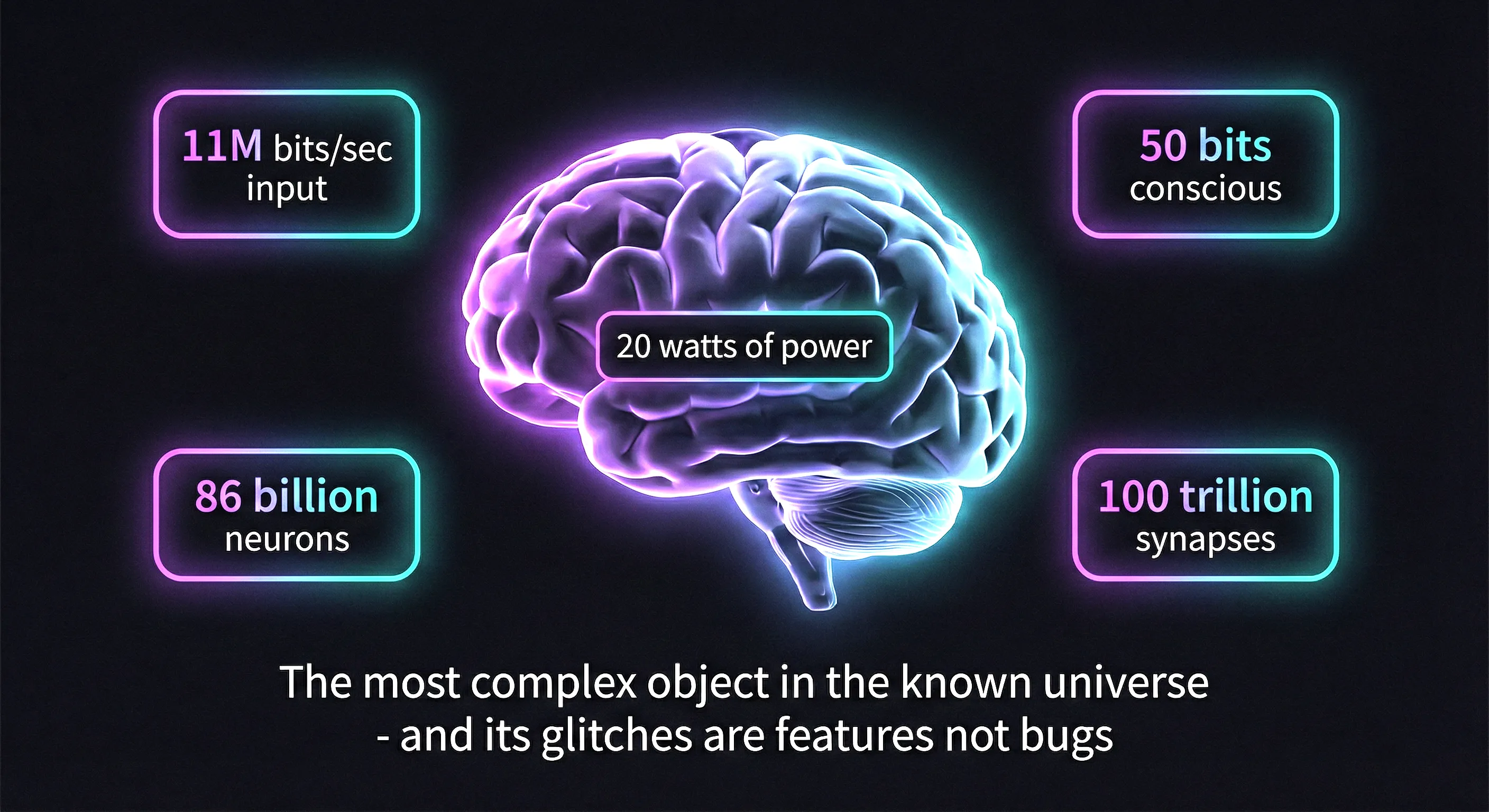
Marvel at your own hardware. Your brain processes roughly 11 million bits of sensory information per second. You’re consciously aware of about 50. The gap between what your brain handles and what you experience is enormous. It’s the same reason music can give you physical chills. Your brain is doing far more with incoming signals than you realize. Of course there are moments that feel strange. The strange thing would be if there weren’t.
Your brain is not a camera. It’s not a computer. It’s a prediction engine running on 20 watts of power, making millions of calculations per second, and getting it right often enough to keep you alive. The occasional deja vu, false memory, or meaningful coincidence isn’t a flaw in the matrix. It’s the price of admission for having the most complex object in the known universe between your ears.
Recommended read: You Are Not So Smart by David McRaney. A witty, eye-opening tour of 48 ways your brain deceives you daily, including the pattern-seeking instincts behind every “glitch.”
Sources
Deja Vu Is a Memory Error, Not a Proof of Simulation
2. Deja Vu Experiences in Temporal Lobe Epilepsy (Epilepsy and Behavior, 2012)
3. Rhinal-Hippocampal Interactions During Deja Vu (Clinical Neurophysiology, 2012)