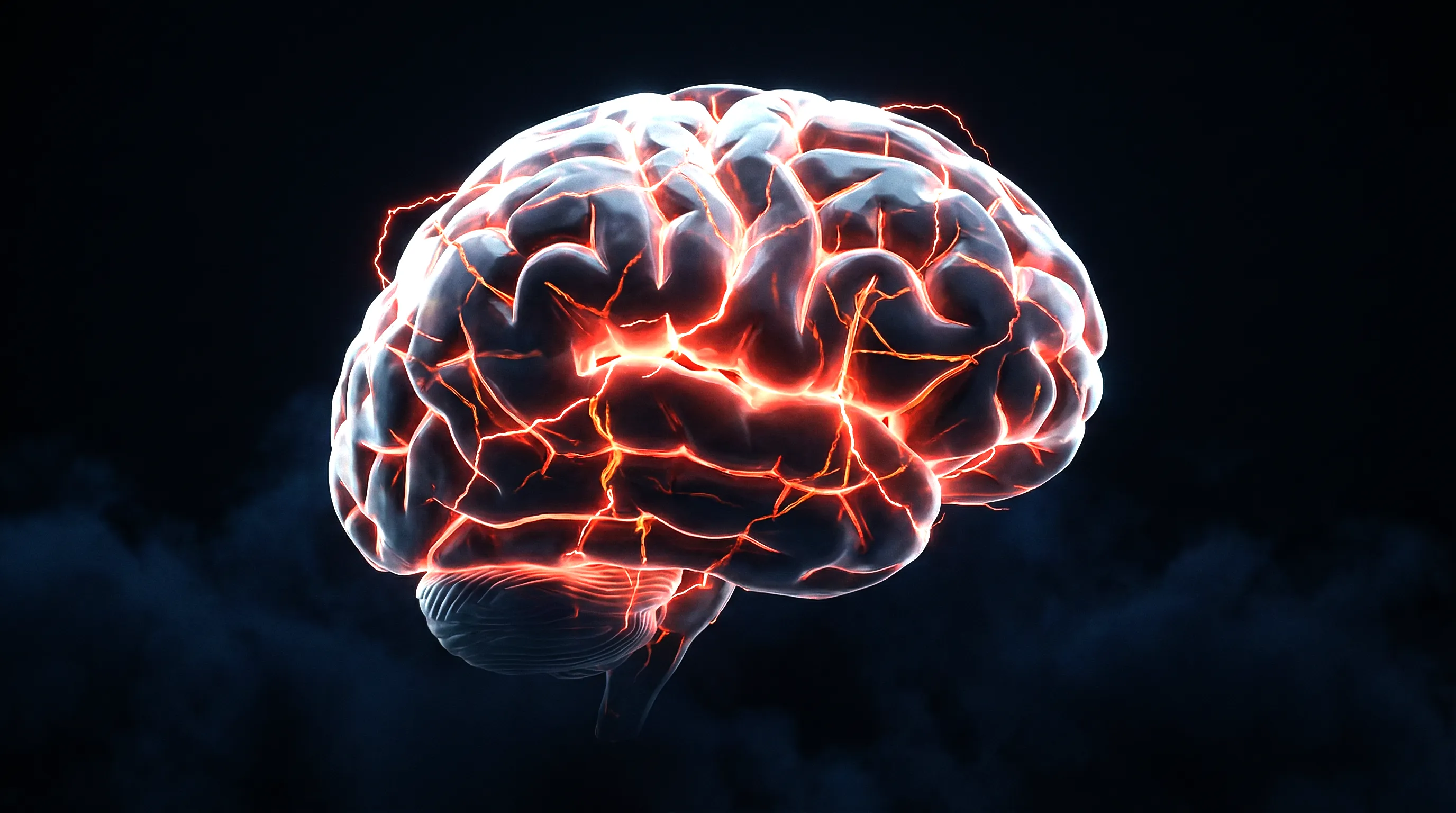
Your DNA remembers things you’ve never experienced. That’s not science fiction. It’s the conclusion of multiple 2025 studies that tracked trauma across three generations of families.
Scientists scanned over 2 million brain cells from 111 human brains. They mapped 850,000 DNA sites in refugee families. They tested drugs that erase fear memories in real time. The picture that emerged is both terrifying and hopeful.
Trauma doesn’t just hurt. It physically rebuilds your brain, rewrites your genetic code, and hands the damage to your kids. But for the first time in decades, science is catching up with treatments that might actually reverse it.
Your Brain After Trauma, Cell by Cell
For years, researchers knew trauma changed the brain. But they didn’t know exactly how. The tools weren’t good enough. MRI scans could show which regions lit up, but they couldn’t peek inside individual cells.
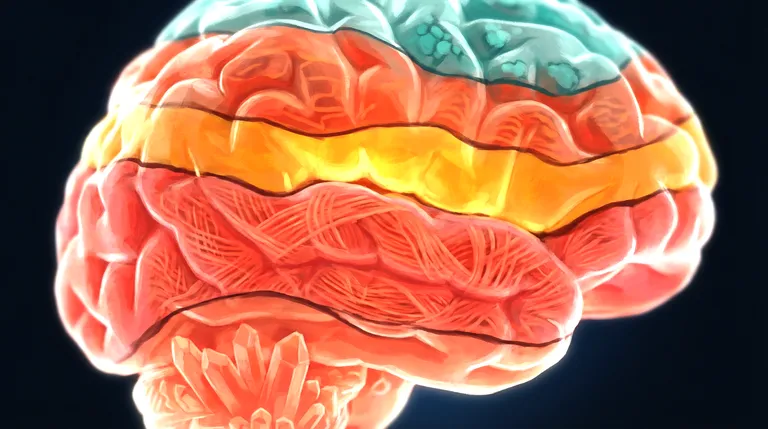
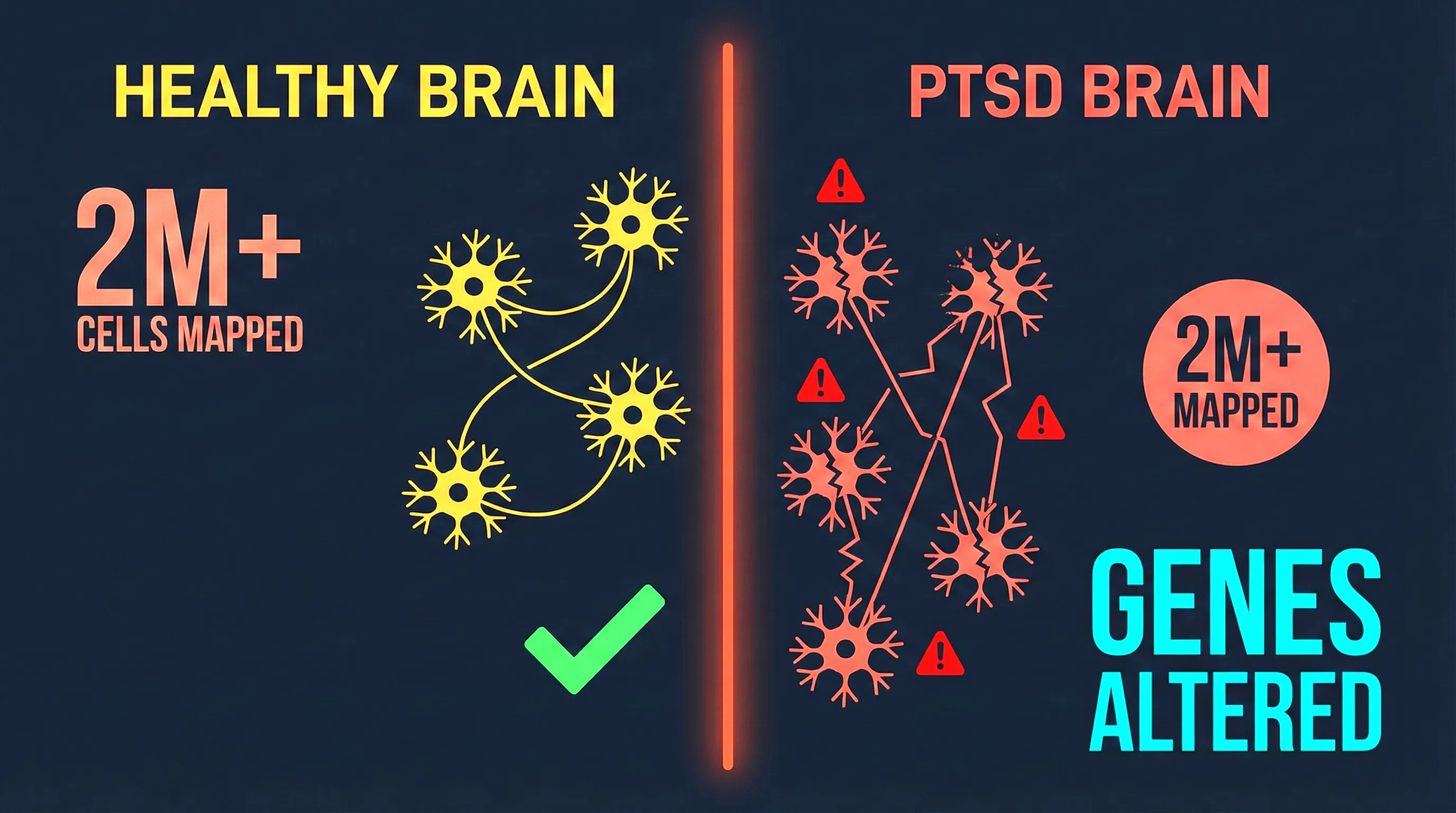
That changed in 2025. A landmark study published in Nature analyzed over 2 million nuclei from the brains of 111 people. Some had PTSD. Some didn’t.[1] The researchers used single-cell RNA sequencing to map gene activity in each cell type across different brain regions.
What they found was shocking. PTSD didn’t just cause “inflammation” or “stress responses” in a vague way. It caused specific gene-level changes in inhibitory neurons, the brain cells responsible for calming neural circuits down.[1]
Think of inhibitory neurons like your brain’s braking system. They prevent runaway anxiety, stop intrusive thoughts from looping, and help you regulate emotions. In people with PTSD, these brakes were genetically altered.
- Inhibitory neurons showed the most dramatic gene changes of any cell type
- The changes were specific to PTSD, not found in other mental health conditions
- Different brain regions showed different patterns of cellular damage
- Gene alterations persisted even in people whose symptoms had partially improved
“This is the first comprehensive single-cell atlas of the PTSD brain. We can now see exactly which cells are affected and how.” — Nature, 2025
This isn’t your brain “feeling stressed.” This is your brain being physically remodeled at the genetic level. Every cell that’s supposed to keep you calm has had its instruction manual rewritten. And trauma isn’t the only thing that rewires your brain this way. Research shows that poverty literally shrinks your brain’s bandwidth through chronic stress and cognitive overload.
Recommended read: Rewire by Nicole Vignola — A neuroscientist breaks down how your brain’s wiring changes and what you can actually do to reshape it.
Trauma Lives in Your DNA and Passes to Your Grandchildren
Here’s where it gets unsettling. Trauma doesn’t stay in your brain. It writes itself into your DNA. And your children inherit the edits.
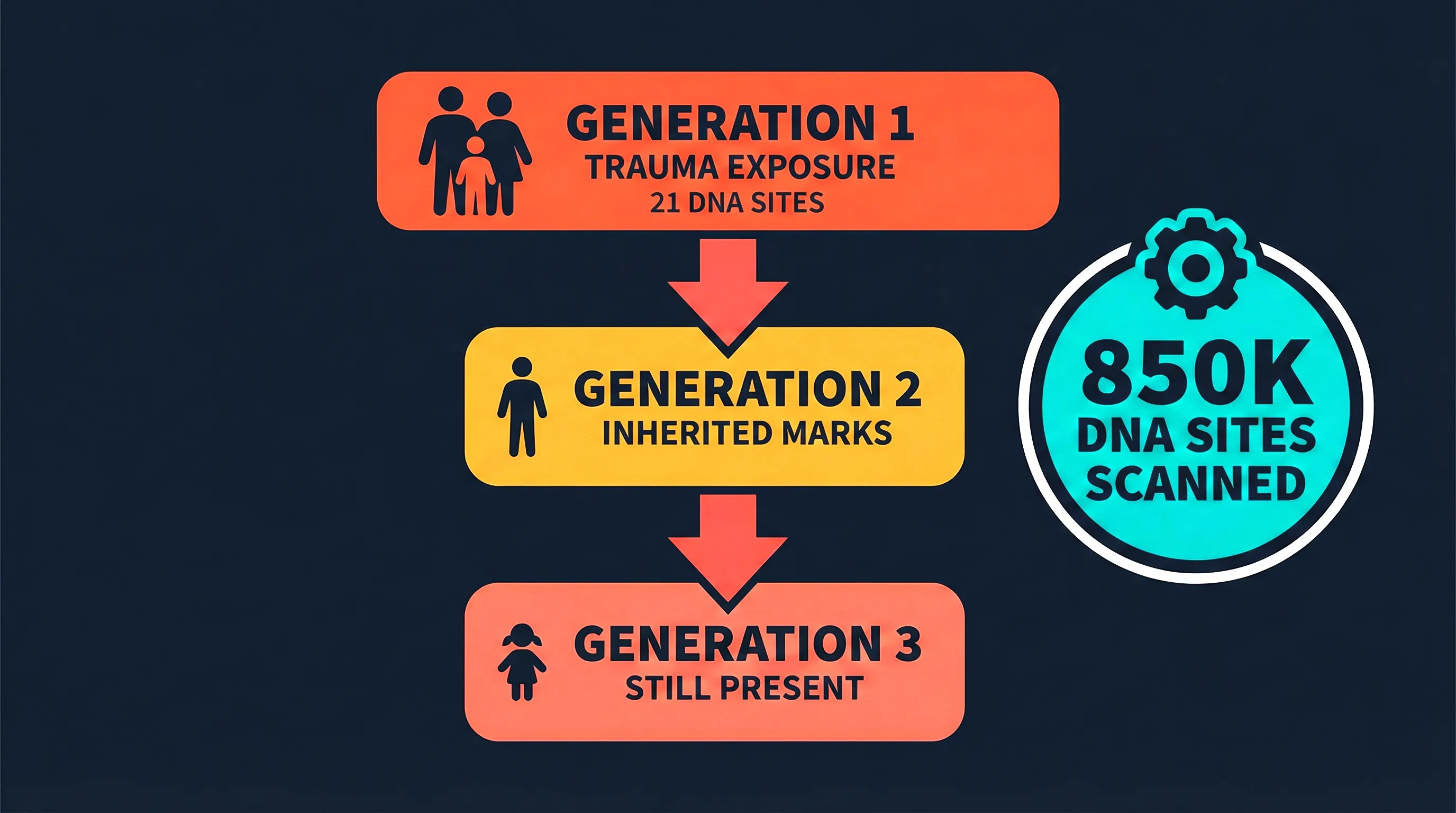
A 2025 Yale study examined 48 Syrian refugee families across three generations.[2] The researchers scanned over 850,000 DNA methylation sites. Epigenetic changes are chemical tags that sit on top of your DNA and control which genes turn on and off. They don’t change the DNA sequence itself. They change how it’s read.
The results were staggering. Twenty-one specific DNA sites were altered in people who experienced war-related trauma. Those same alterations showed up in their children. And their grandchildren. Three generations deep.[2]
A separate study confirmed the same pattern in Holocaust survivor families. Researchers found epigenetic changes in the oxytocin system, the brain’s bonding and trust circuitry, that persisted into the third generation.[3]
| Finding | Syrian Refugee Study | Holocaust Study |
|---|---|---|
| Generations tracked | 3 | 3 |
| DNA sites altered | 21 methylation sites | Oxytocin system changes |
| Sample | 48 families, 850K sites | Multi-generational cohort |
| Key system affected | Stress response genes | Bonding and trust circuits |
| Published | 2025 | 2025 |
This means a grandmother who survived war in Syria can pass biological stress markers to a grandchild born in safety in the United States. The grandchild’s body carries a molecular memory of violence it never witnessed.
- Trauma creates epigenetic tags that alter gene expression without changing DNA sequence
- These tags affect stress hormones, immune function, and emotional regulation
- Children inherit altered stress response systems before they ever face a stressor
- The pattern has been replicated across different populations and trauma types
Your brain isn’t the only thing that remembers trauma. Your genome does too. And it tells the next generation to stay on alert.
The brain-body connection runs deeper than most people realize. Biology shapes behavior in ways that go far beyond what you consciously experience.
You Don’t Have to Experience Trauma to Be Damaged by It
Most people think PTSD requires direct exposure. You have to be the one in the car crash, the one in the warzone, the one who was attacked. That’s wrong.
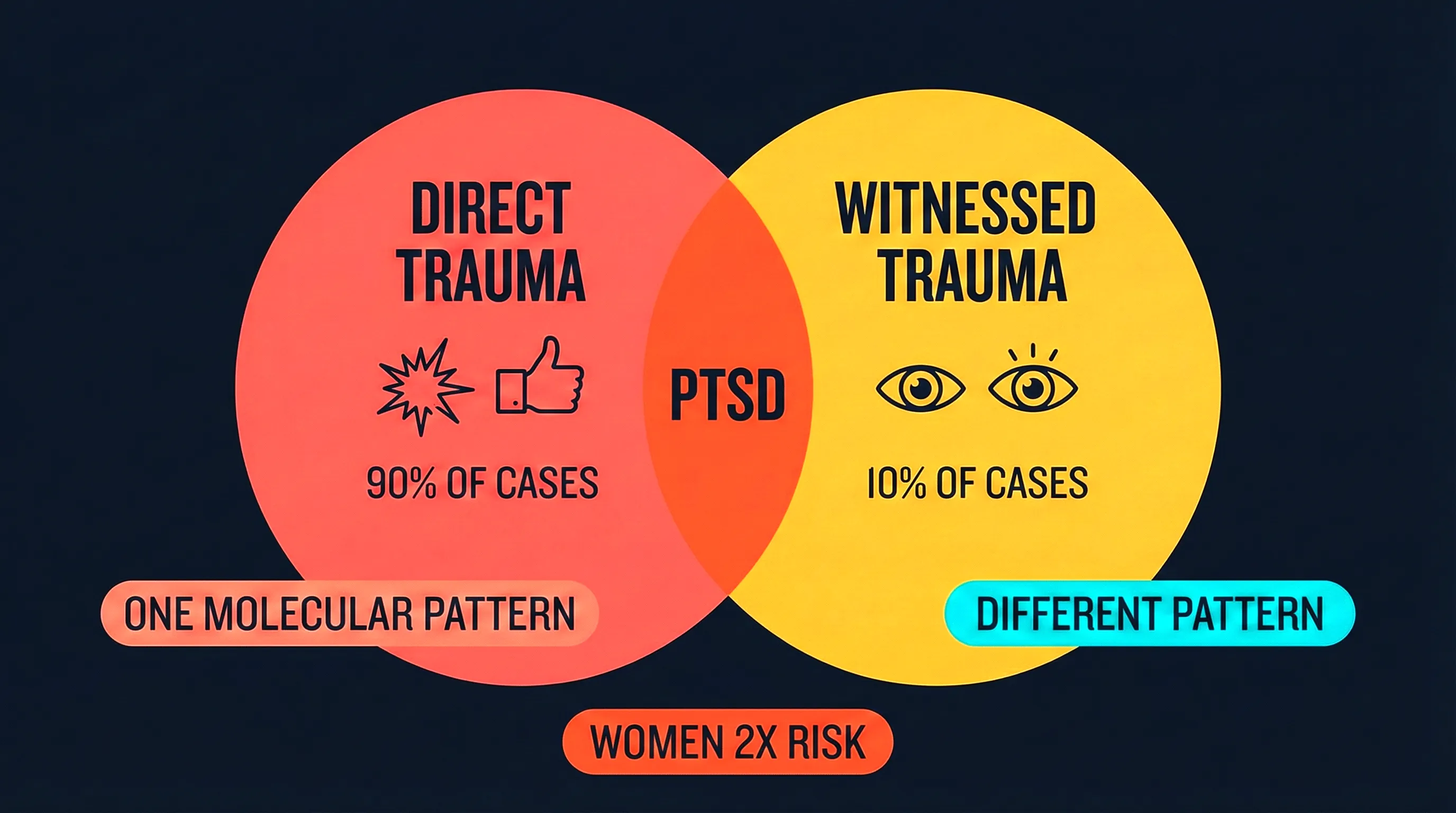
A 2025 study published in PLOS ONE found that witnessed trauma creates its own unique pattern of brain changes.[4] People who watched someone else get hurt developed PTSD at significant rates. About 10% of all PTSD cases come from witnessed events rather than direct experience.
But here’s the critical finding. The molecular signatures in bystander PTSD were different from direct trauma PTSD.[4] Your brain doesn’t process watching violence the same way it processes experiencing violence. It creates a distinct biological pattern.
The study also found a striking gender difference. Women are twice as likely as men to develop PTSD from witnessed trauma.[4] This aligns with broader research showing women develop PTSD at roughly double the rate of men across all trauma types.
- Bystander PTSD accounts for roughly 10% of all PTSD cases
- Witnessed trauma produces different molecular signatures than direct trauma
- Women face 2x the PTSD risk from witnessing violence
- Current diagnostic criteria may miss bystander PTSD because they emphasize direct exposure
“Witnessed trauma is not a lesser form of trauma. It creates its own unique neurobiological footprint.” — PLOS ONE, 2025
A massive meta-analysis of 465 studies in 2025 confirmed that childhood trauma, whether experienced or witnessed, produces lasting effects on cognition that persist into adulthood.[5] Your developing brain is especially vulnerable. The younger you are when the exposure happens, the deeper the cognitive effects run.
This matters because millions of children witness domestic violence, community violence, and online violence every year. Their brains are being reshaped by events that aren’t technically “happening to them.” And your brain isn’t fully grown until your early 30s, which means the window of vulnerability is much wider than most people assume.
Recommended read: The Balanced Brain by Camilla Nord — A neuroscientist explains how your brain maintains mental health and what happens when that balance breaks down.
New Drugs Are Finally Targeting the Real Problem
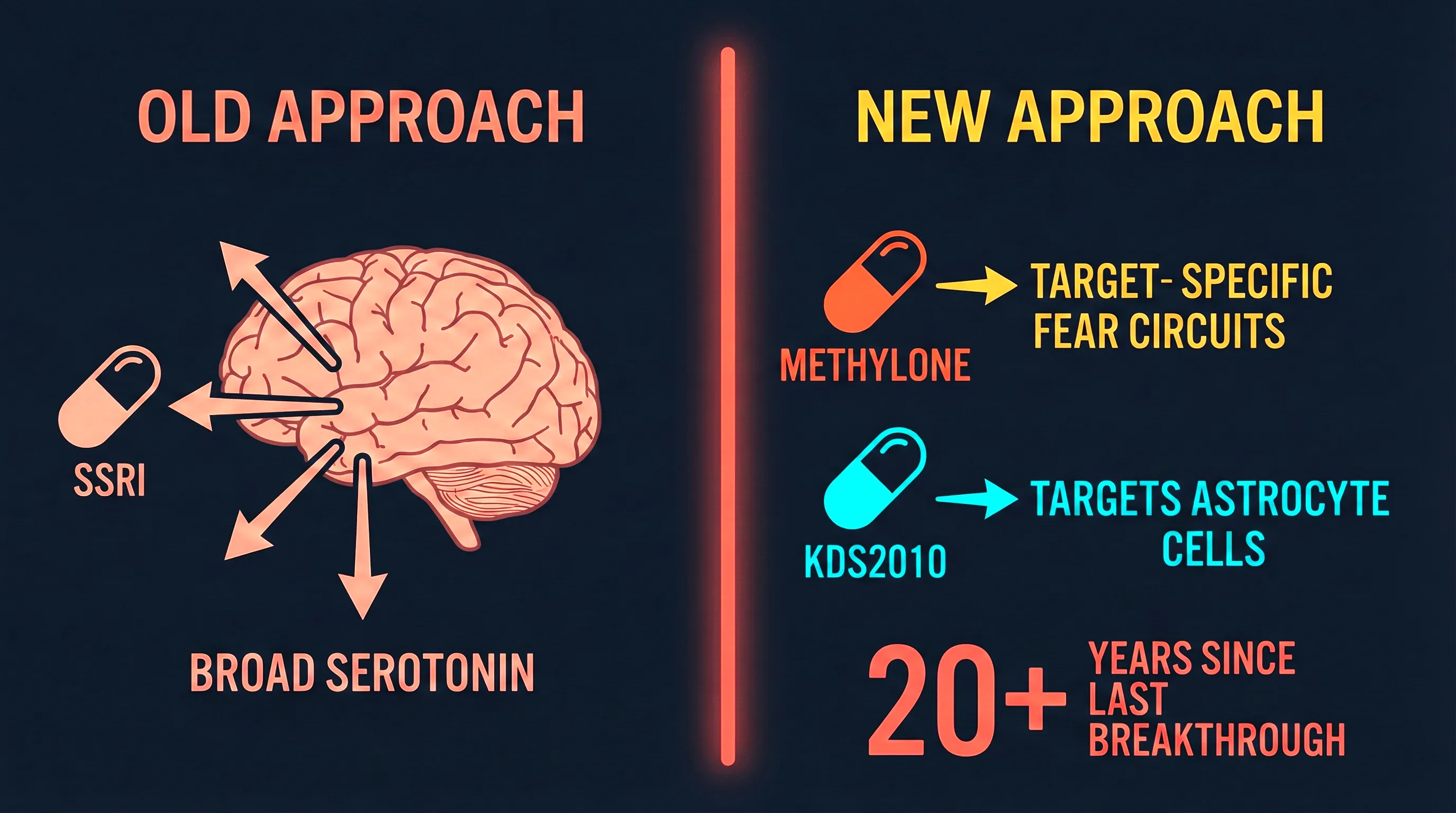
For over two decades, the only FDA-approved medications for PTSD were SSRIs like sertraline and paroxetine. They help some people. They fail many others. But 2025 brought two genuine breakthroughs.
Methylone, the First New PTSD Drug in 20 Years
A compound called methylone (TSND-201) received FDA Breakthrough Therapy designation in 2025.[6] This is the first new PTSD drug to receive that status in over two decades. Unlike SSRIs, which broadly boost serotonin, methylone targets the specific neural circuits involved in fear processing and emotional memory.
KDS2010, Erasing Fear Memories Through Astrocytes
The second breakthrough came from an unexpected place. Researchers discovered that astrocytes, support cells in the brain that were previously thought to just “feed” neurons, play a direct role in maintaining fear memories.[7]
In people with PTSD, astrocytes overproduce a chemical called GABA in the brain’s fear circuits. This excess GABA keeps fear memories locked in place. The drug KDS2010 blocks that overproduction and, in trials with over 380 participants, it reversed fear memories.[7] The drug is currently in Phase 2 clinical trials.
| Treatment | Mechanism | Stage | Key Finding |
|---|---|---|---|
| Methylone (TSND-201) | Targets fear circuits directly | FDA Breakthrough | First new PTSD drug in 20+ years |
| KDS2010 | Blocks astrocyte GABA overproduction | Phase 2 trials | Reversed fear memories in 380+ people |
| SSRIs (current standard) | Broad serotonin boost | Approved since 1990s | Help some, fail many |
| Trauma-focused CBT | Reprocesses trauma memories | Well-established | 50% see 50%+ improvement |
A 15-year review of psychotraumatology research published in 2025 puts these advances in context. About 50% of people who undergo trauma-focused cognitive behavioral therapy (TF-CBT) see a 50% or greater reduction in symptoms.[8] That’s good. But it means half of patients don’t get adequate relief from the current gold standard.
These new drugs aren’t replacing therapy. They’re targeting the biological machinery that therapy alone can’t reach. When your astrocytes are chemically locking fear memories in place, talk therapy has a ceiling. Removing that chemical lock first could make therapy dramatically more effective. Meanwhile, psilocybin research shows that a single dose can produce lasting depression relief by physically rewiring brain connections, offering yet another angle on treating trauma-related conditions.
Recommended read: Dopamine Nation by Anna Lembke — A Stanford psychiatrist explains how your brain’s reward system gets hijacked and how to restore balance.
What Actually Works for Healing, According to the Latest Science
The popular narrative around trauma has gotten complicated. The bestselling book The Body Keeps the Score has spent over 376 weeks on the bestseller list. A 2025 peer review in the BJPsych Bulletin was the first to formally evaluate its claims against current evidence.[9]
The review found that some of the book’s claims are well-supported. Others stretch beyond what the research actually shows. The core idea that trauma affects the body is solid. But some specific treatment recommendations lack strong evidence.
So what does the latest research actually support?
Evidence-Based Approaches
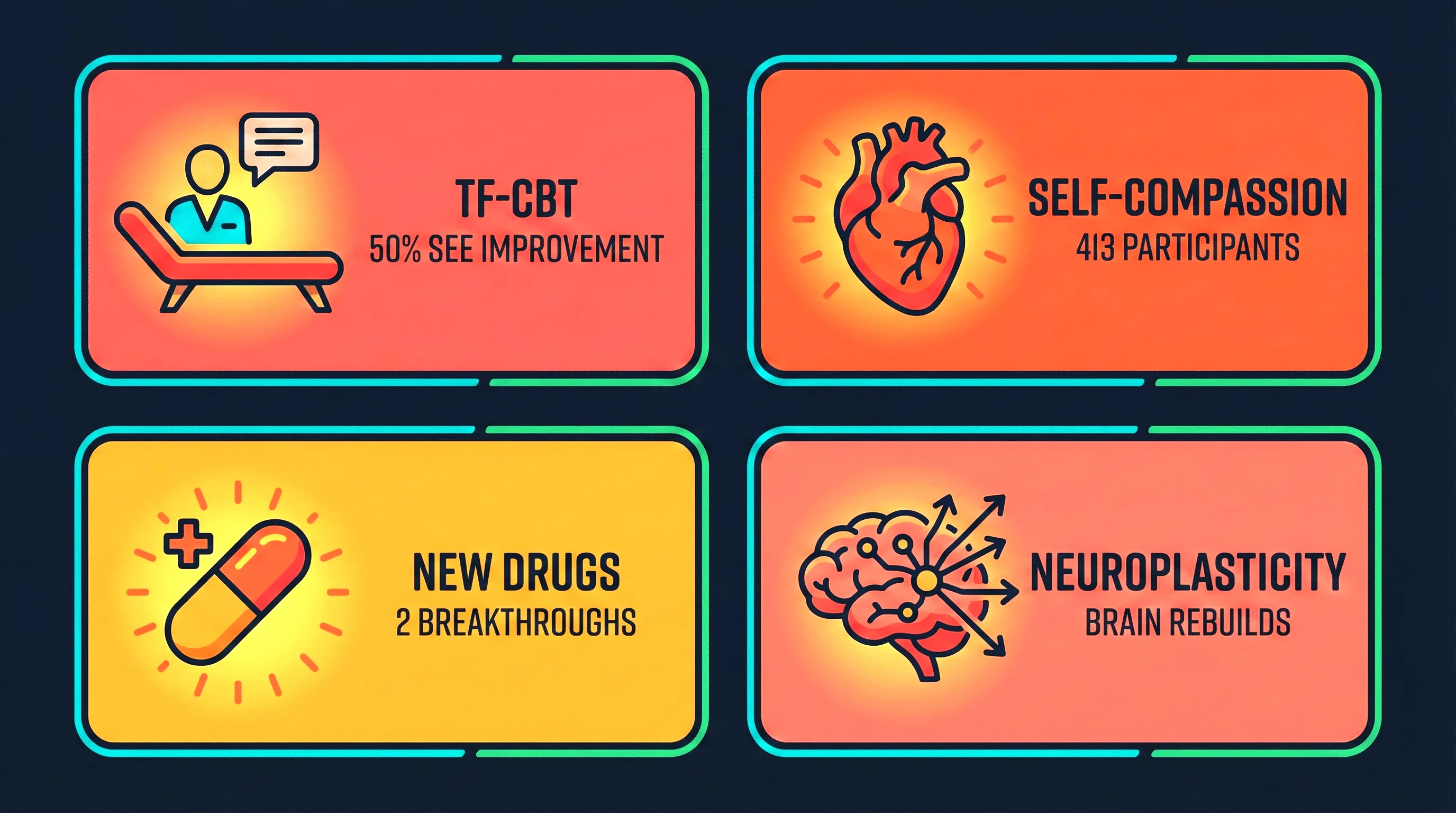
- Trauma-focused CBT remains the strongest evidence-based treatment. A 15-year review confirms roughly 50% of patients see major improvement.[8]
- Self-compassion moderates trauma recovery significantly. A 2025 study of 413 participants found that people who practiced self-compassion showed better outcomes across multiple trauma measures.[10]
- New pharmacological options like methylone and KDS2010 are entering trials and could transform treatment within years
- Neuroplasticity means your brain can rebuild. Research confirms your brain never stops growing new neurons, even after severe trauma
What the Science Warns Against
- Assuming all trauma leads to PTSD. Most people who experience trauma do not develop PTSD
- Believing trauma damage is permanent and irreversible. The brain shows remarkable capacity for recovery
- Relying on a single treatment approach. The best outcomes combine therapy, social support, and potentially medication
- Ignoring the role of witnessed and intergenerational trauma in assessment
“Self-compassion is not a luxury in trauma recovery. It is a measurable moderator of outcomes.” — Scientific Reports, 2025
The science of trauma is moving fast. In 2025 alone, researchers mapped the PTSD brain at single-cell resolution, confirmed intergenerational DNA transmission across three generations, and advanced two new drug candidates into trials. The field has made more progress in one year than in the previous decade.
Your brain was changed by what happened to you. That’s real. But your brain also has the machinery to change again. The question isn’t whether healing is possible. It’s whether you’ll use the tools that actually work.
Recommended read: Shift by Ethan Kross — A psychologist shares evidence-based tools for managing the emotional aftershocks that trauma leaves behind.
Sources
Your Brain After Trauma, Cell by Cell
1. Single-Cell Brain Map of PTSD: 2M+ Nuclei From 111 Brains (Nature, 2025)
Trauma Lives in Your DNA and Passes to Your Grandchildren
2. Violent Experiences Alter Genome in Ways That Persist for Generations (Yale News, 2025)
You Don’t Have to Experience Trauma to Be Damaged by It
4. Witnessed Trauma Creates Unique Molecular Brain Changes (ScienceDaily, 2025)
5. Childhood Trauma Meta-Analysis: 465 Studies on Lasting Cognitive Effects (Annals of Medicine, 2025)
New Drugs Are Finally Targeting the Real Problem
6. Methylone Receives FDA Breakthrough Therapy Designation for PTSD (Psychiatric Times, 2025)
7. KDS2010 Drug Reverses Fear Memories via Astrocyte GABA (ScienceDaily, 2025)
8. 15-Year Review of Psychotraumatology: TF-CBT Outcomes (European Journal, 2025)
What Actually Works for Healing, According to the Latest Science
9. Critical Evaluation of The Body Keeps the Score (BJPsych Bulletin, 2025)
10. Self-Compassion Moderates Trauma Recovery in 413 Participants (Scientific Reports, 2025)