You feel it before you understand it. That knot in your stomach before a big meeting. The nausea that hits when you get bad news. The “gut feeling” that something is wrong.
These aren’t just figures of speech. Your gut is literally talking to your brain. And new research suggests it might have more control over your mood than anyone realized.
Scientists at the University of Victoria just discovered that chronic stress destroys a critical protein in your intestines.[1] One that your gut needs to repair itself. And when it breaks down, your mental health goes with it.
Your Second Brain Lives in Your Stomach
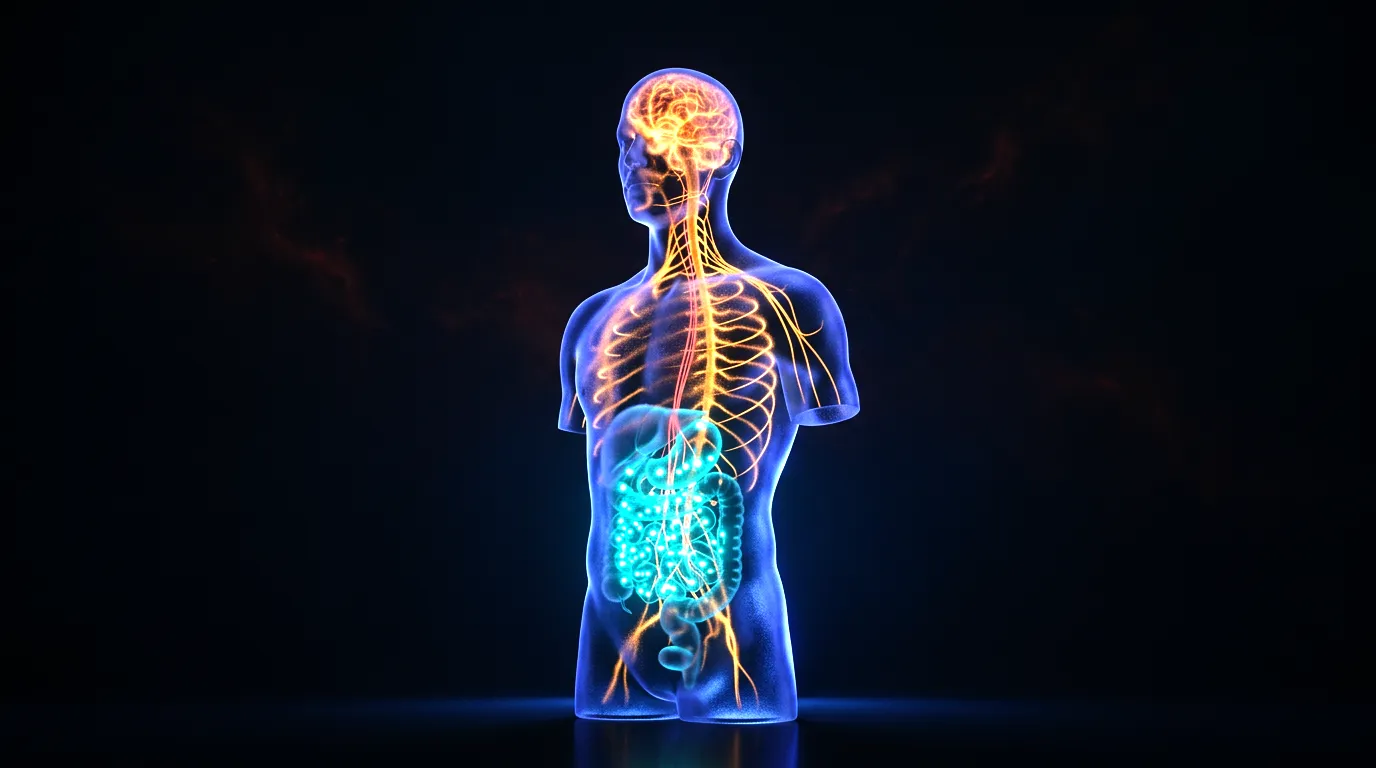
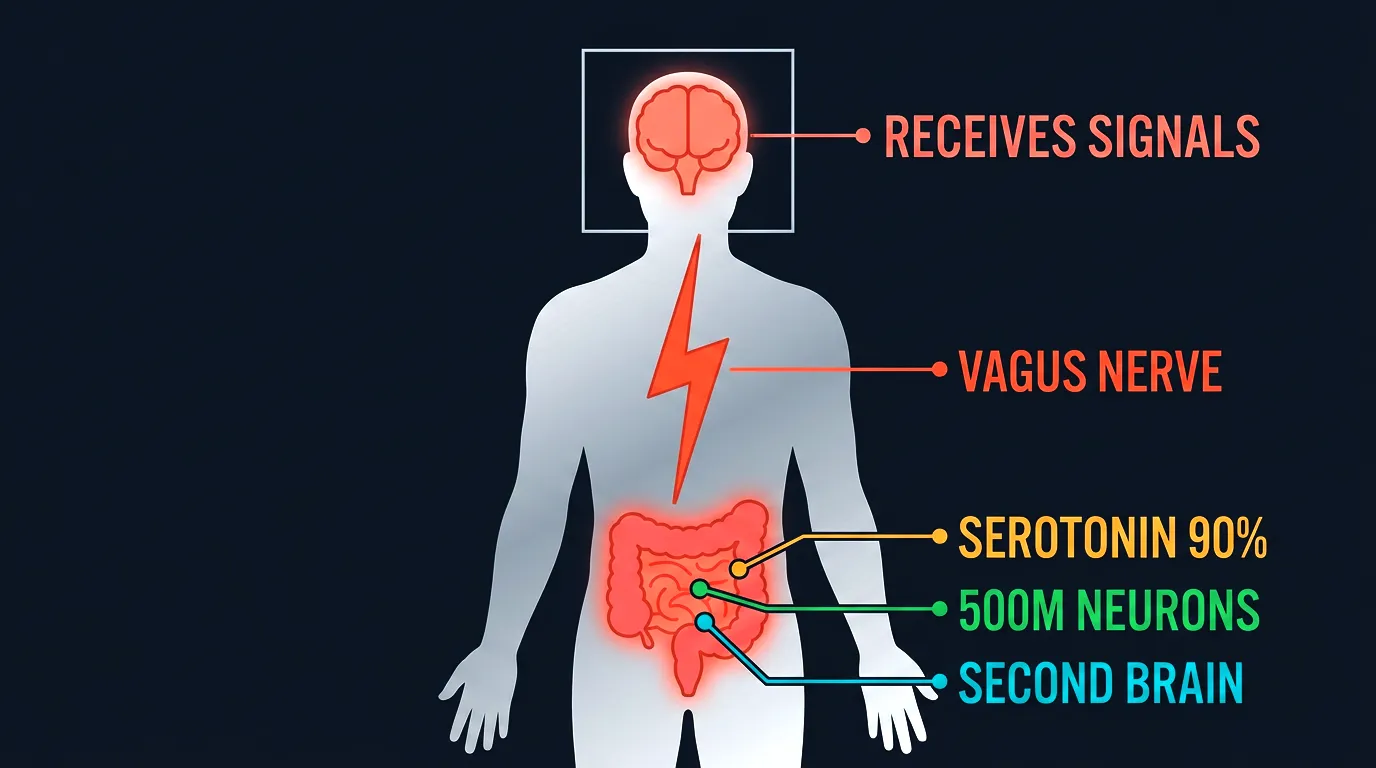
There’s a network of 500 million neurons lining your digestive tract. Scientists call it the enteric nervous system. You might know it as your “second brain.”
This isn’t a metaphor. Your gut contains more neurons than your spinal cord. It can operate completely independently from your brain. And it produces chemicals that directly shape how you feel.
Here’s the stat that surprises most people. About 90% of your body’s serotonin, the neurotransmitter most associated with mood and happiness, is produced in your gut. Not in your brain.[11]
- Your gut makes serotonin using specialized cells called enterochromaffin cells[12]
- This serotonin regulates digestion, immune function, and bone density
- Your gut also produces dopamine, GABA, and acetylcholine
- These chemicals travel to your brain through a major nerve highway
That highway is the vagus nerve. It’s the longest cranial nerve in your body, running from your brainstem all the way down to your abdomen. Think of it as a two-lane road. Your brain sends stress signals down to your gut. Your gut sends mood signals back up to your brain.
“The gut-brain axis is becoming essential to understanding many psychiatric disorders, including depression.” — Hector Caruncho, Professor of Medical Sciences, University of Victoria
A 2025 review in The Neuroscientist confirmed that vagus nerve signaling from the gut plays a central role in regulating anxiety, depression, learning, memory, and motivation.[4] When this communication breaks down, your mental health pays the price.
Recommended read: The Balanced Brain by Camilla Nord — A neuroscientist’s guide to how your brain creates mental health, and how the gut-brain connection fits into the bigger picture.
How Stress Destroys Your Gut From the Inside
Your gut lining is only one cell thick. That’s it. One layer of cells stands between your bloodstream and trillions of bacteria. Under normal conditions, your gut replaces this lining every four to five days.
But chronic stress shuts that process down.
When you’re stressed, your body floods with cortisol. Cortisol increases your gut’s permeability. In plain terms, it makes your gut “leak.” Bacteria and toxins slip through the damaged lining into your bloodstream. This triggers a system-wide inflammatory response.
Here’s where it gets worse. A groundbreaking 2025 study from the University of Victoria discovered exactly how stress breaks your gut.[2] Researchers found that chronic stress reduces levels of a protein called Reelin in the intestines by roughly 50%.
| What Stress Does to Your Gut | The Result |
|---|---|
| Reduces Reelin protein by ~50% | Gut lining stops repairing itself |
| Increases gut permeability | Bacteria leak into your bloodstream |
| Triggers inflammatory cytokines (IL-6, TNF-alpha) | Brain inflammation worsens mood |
| Depletes beneficial gut bacteria | Less serotonin and GABA production |
| Activates the kynurenine pathway | Tryptophan gets diverted away from serotonin |
Reelin normally helps cells migrate up the intestinal wall to replace old, dying cells. When stress knocks Reelin levels down, that cell turnover slows dramatically. Your gut can’t fix itself.
The researchers measured a 55% drop in programmed cell death at the tips of intestinal villi.[1] That might sound good at first. But this type of cell death is actually essential. It’s how your body clears out old cells to make room for new ones. Without it, your gut lining becomes stale and vulnerable.
And the damage feeds on itself. A leaky gut sends inflammatory signals to your brain through the immune system. Those signals make you feel more anxious and depressed. Which produces more cortisol. Which makes your gut leak more.
As neuroscientist Anna Lembke explains in Dopamine Nation, modern life keeps us locked in chronic stress loops that our biology was never designed to handle. Your gut is absorbing the damage.
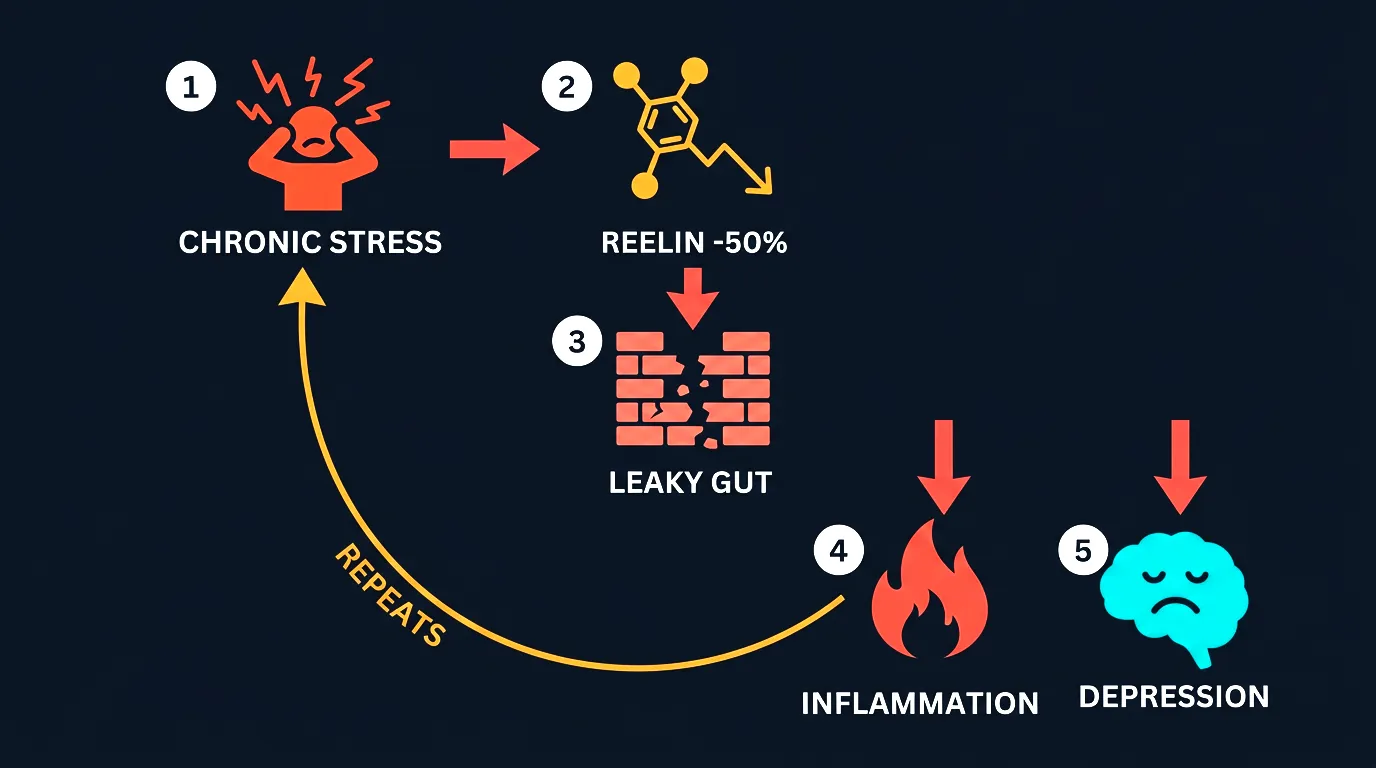
The Vicious Cycle That Keeps You Stuck
The gut-brain connection isn’t a one-way street. It’s a feedback loop. And when it goes wrong, it can trap you in a cycle that’s incredibly hard to break.
Here’s what researchers have found happening inside the guts of people with depression.
- Beneficial bacteria disappear. Large-scale studies show that people with major depression have significantly fewer Faecalibacterium prausnitzii and Coprococcus bacteria.[7] These are the species that produce butyrate, a compound that keeps your gut lining strong.
- Inflammatory bacteria multiply. At the same time, pro-inflammatory species like Enterobacteriaceae become more abundant. They produce toxins that further damage the gut barrier.
- The immune system overreacts. About 70% of your immune system lives in your gut. When immune cells detect a breach in the gut lining, they flood your body with inflammatory markers like interleukin-6 and TNF-alpha. These reach your brain and disrupt normal mood regulation.
The numbers are striking. Between 40% and 90% of people with irritable bowel syndrome also have anxiety or depression.[8] For years, doctors assumed the mental health problems came first and caused the gut issues. New research flips that around. Johns Hopkins researchers now believe that irritation in the gut may send signals to the brain that trigger mood changes.[10]
The Tryptophan Trap
There’s another hidden mechanism. Your body uses an amino acid called tryptophan to make serotonin. But during chronic inflammation, your body diverts tryptophan down a different pathway called the kynurenine pathway.[3]
Instead of becoming serotonin, tryptophan gets converted into inflammatory compounds that are toxic to brain cells. So inflammation doesn’t just make you feel bad. It literally steals the raw materials your brain needs to produce its own mood-boosting chemicals.
This is why traditional approaches to controlling emotions often miss the mark. If the problem starts in your gut, no amount of willpower or positive thinking will fix it.
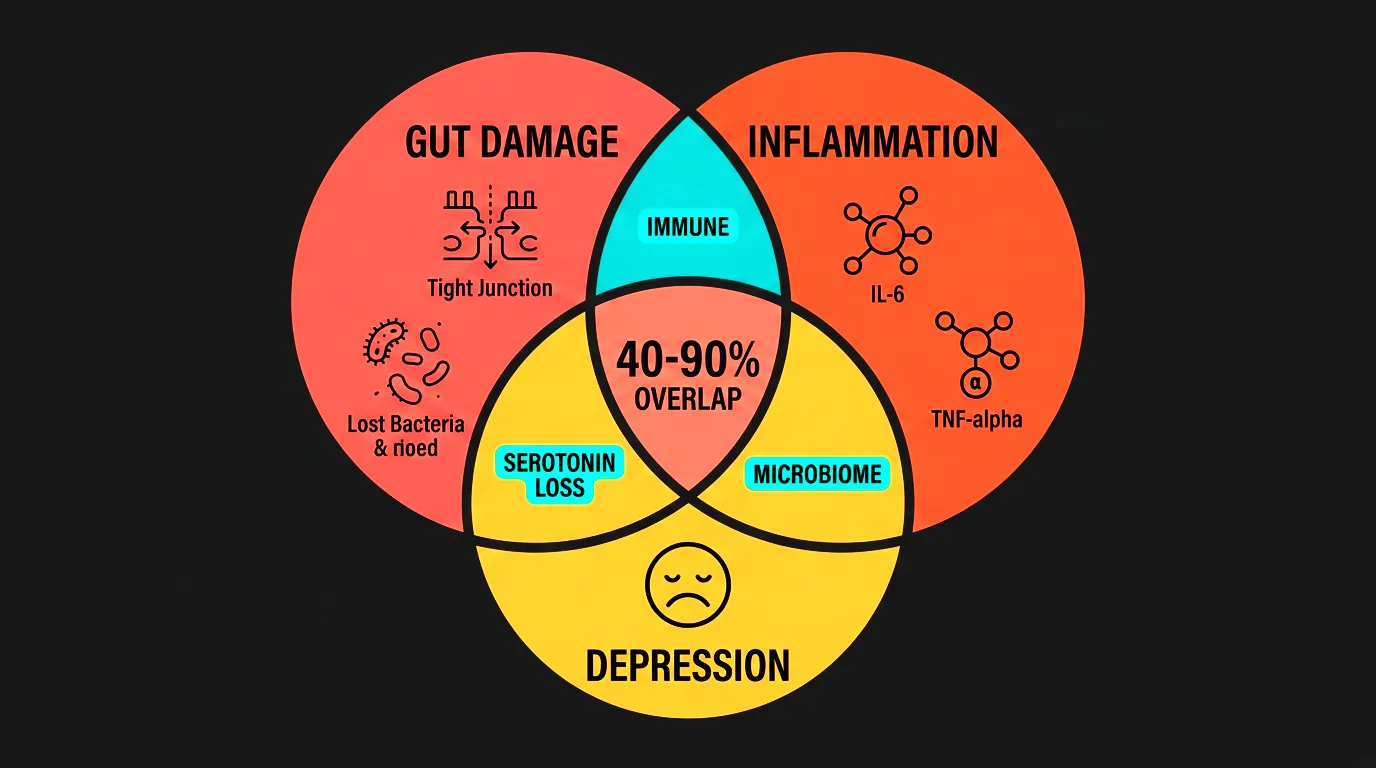
What Science Says You Can Actually Do
The good news is that the gut-brain connection works both ways. If a damaged gut can wreck your mood, then healing your gut can improve it. Here’s what the research actually supports.
1. Probiotics Show Real Results
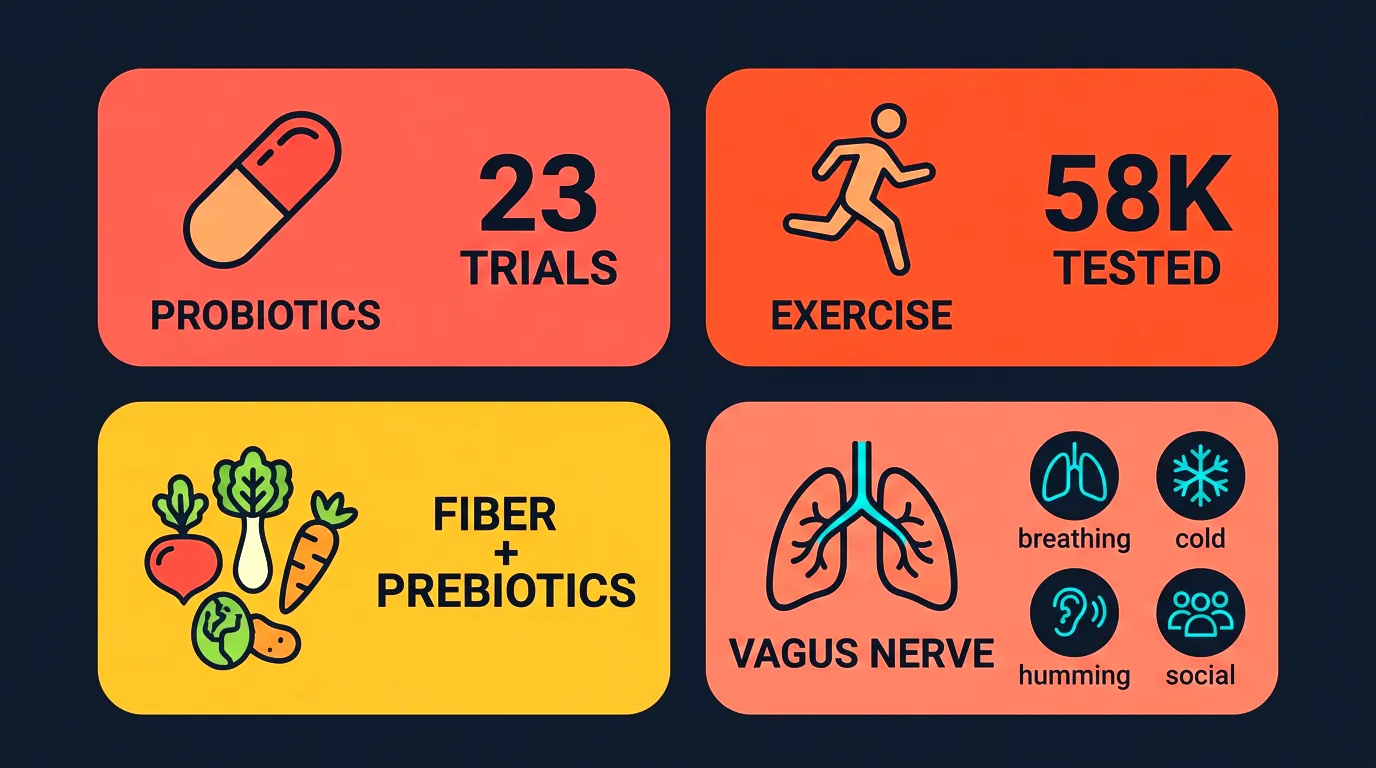
A 2025 meta-analysis published in Nutrition Reviews analyzed 23 randomized controlled trials with 1,401 patients.[5] The findings were clear. Probiotics significantly reduced symptoms of both depression and anxiety compared to placebo.
- Best results came within 8 weeks of consistent use
- Single-strain probiotics outperformed multi-strain blends
- People with mild to moderate symptoms saw the biggest improvements
- Lactobacillus and Bifidobacterium strains showed the strongest evidence
This doesn’t mean probiotics replace therapy or medication. But it does mean they deserve a seat at the table.
2. Feed Your Gut Bacteria What They Need
Your gut bacteria thrive on fiber. Specifically, prebiotic fiber found in foods like garlic, onions, asparagus, bananas, and oats. These foods feed the beneficial bacteria that produce butyrate and short-chain fatty acids.
A diet rich in whole grains, vegetables, and fermented foods (yogurt, kimchi, sauerkraut) has been linked to lower rates of depression across multiple large-scale studies.
3. Move Your Body
A massive 2026 umbrella review in the British Journal of Sports Medicine analyzed 800 trials covering nearly 58,000 participants.[6] The conclusion was striking. Aerobic exercise (running, swimming, dancing) was as effective as medication and therapy for reducing depression and anxiety symptoms.
- Supervised group exercise worked best for depression
- Shorter, lower-intensity programs (under 8 weeks) worked best for anxiety
- Benefits appeared regardless of age or sex
4. Stimulate Your Vagus Nerve Naturally
You can activate the vagus nerve without any fancy equipment.
- Deep, slow breathing (exhale longer than you inhale)
- Cold water exposure (cold showers, splashing cold water on your face)
- Humming or singing (vibrates the vagus nerve in your throat)
- Regular social connection (the vagus nerve responds to safe social cues)
Nicole Vignola explains in Rewire that these small daily habits can physically change your neural pathways over time. The vagus nerve gets stronger with practice, just like a muscle.
The Future of Treating Depression Through Your Gut
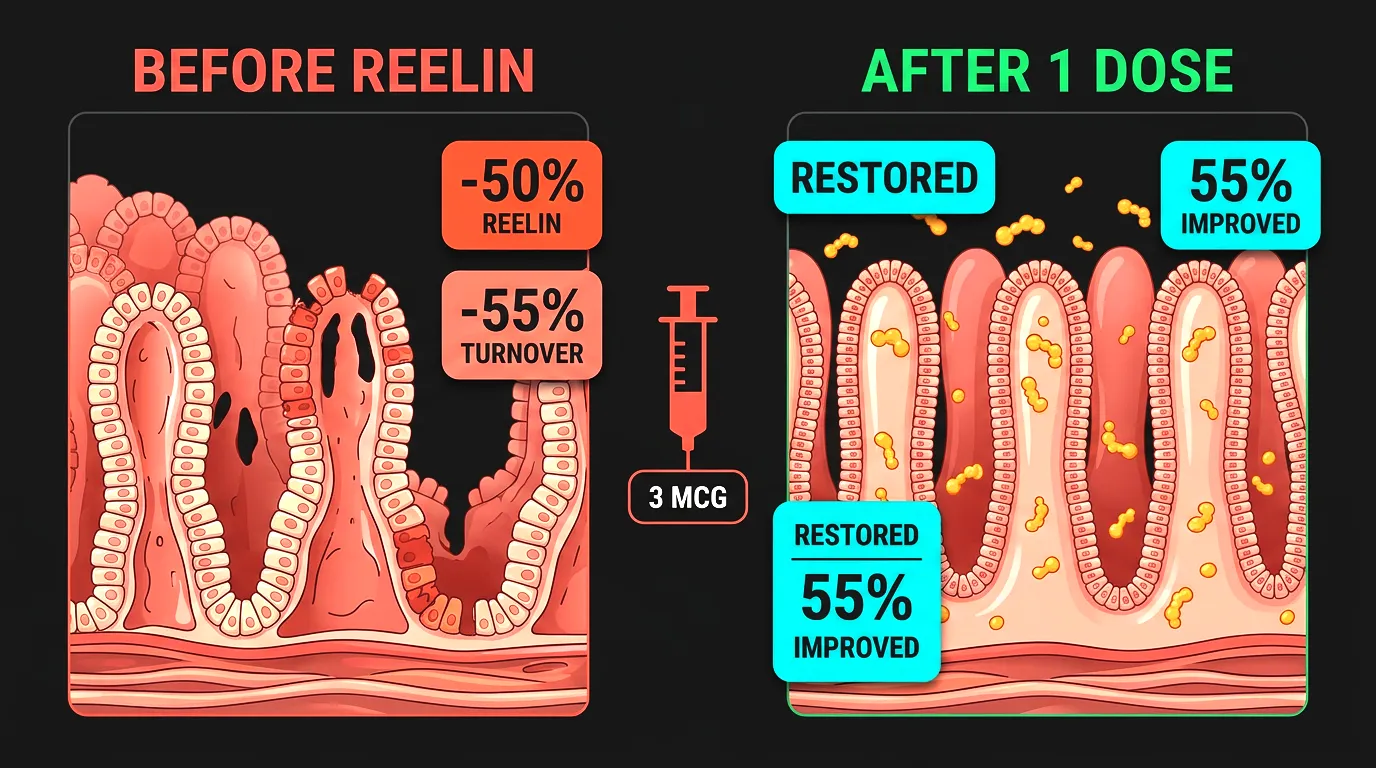
The most exciting part of this research is what comes next. The University of Victoria’s Reelin study showed something remarkable.[1] A single injection of just 3 micrograms of Reelin protein completely reversed the gut damage caused by chronic stress.
That’s not a gradual improvement. It’s a full restoration. The researchers measured Reelin-expressing cells returning to normal levels.[2] Gut cell turnover started working again. And in behavioral tests, the animals showed a 55% reduction in depression-like behavior.
This is still preclinical research. It was done in animal models, not humans. But the implications are significant. If a single dose of a naturally occurring protein can repair the gut-brain connection after weeks of stress damage, it opens the door to an entirely new approach to treating depression.
The Paradigm Shift
For decades, mental health treatment focused almost entirely on the brain. Antidepressants target brain chemistry. Therapy targets thought patterns. Both of these matter. But they miss a massive piece of the puzzle.
The gut-brain axis research suggests that depression isn’t just a brain disease. It’s a whole-body condition.[9] And for some people, the most effective path to better habits and mental health might start not with their thoughts, but with their gut.
Researchers are already working on what they call psychobiotics. These are targeted probiotic formulations designed specifically to treat psychiatric conditions. Early clinical trials are underway. And the field of environmental influences on behavior is expanding to include the internal environment of your microbiome.
Your gut has been quietly shaping your mood, your stress response, and your mental health for your entire life. Science is finally catching up.
Sources
Your Second Brain Lives in Your Stomach
2. Reelin Shows Promise for Healing Both Gut and Depression (Neuroscience News, 2026)
How Stress Destroys Your Gut From the Inside
3. Gut-Brain Axis and Neuropsychiatric Health: Recent Advances (Scientific Reports, 2025)
4. Vagus Nerve and Gut-Brain Communication (The Neuroscientist, 2025)
What Science Says You Can Actually Do
5. Effects of Prebiotics and Probiotics on Symptoms of Depression and Anxiety (Nutrition Reviews, 2025)
The Vicious Cycle That Keeps You Stuck
7. The Gut-Brain Connection: Microbes’ Influence on Mental Health (Frontiers in Microbiomes, 2025)
8. Understanding the Impact of the Gut Microbiome on Mental Health: A Systematic Review (PubMed, 2025)
The Future of Treating Depression Through Your Gut
11. Serotonergic Mechanisms Regulating the GI Tract (Handbook of Experimental Pharmacology, 2017)