You’re driving home. A song comes on. Maybe it’s one you haven’t heard in years. The melody builds. Something in your chest tightens. Then it hits. A wave of chills rolls down your spine. Your arms break out in goosebumps.
You’re not cold. You’re not scared. Your brain just had a tiny neurochemical explosion. And it happened because of sound waves.
Not everyone gets this feeling. Scientists call it frisson. And what it reveals about your brain is fascinating.
Your Brain on Music, It’s More Active Than You Think
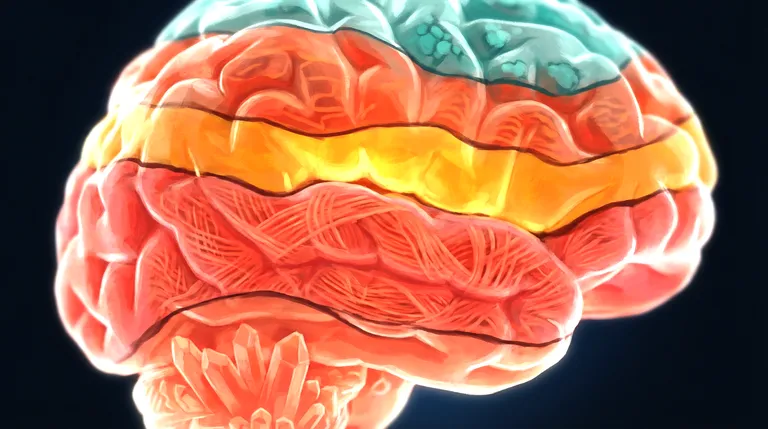
When you listen to music, your brain doesn’t just process sound. It lights up like a pinball machine. Memory, emotion, movement, language, reward. All firing at once.
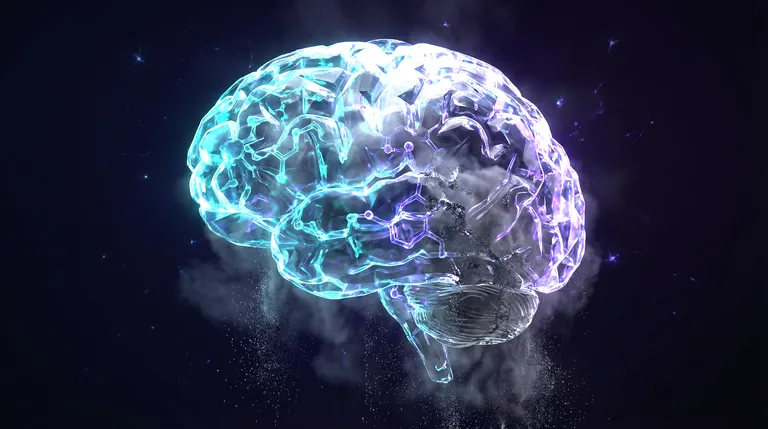
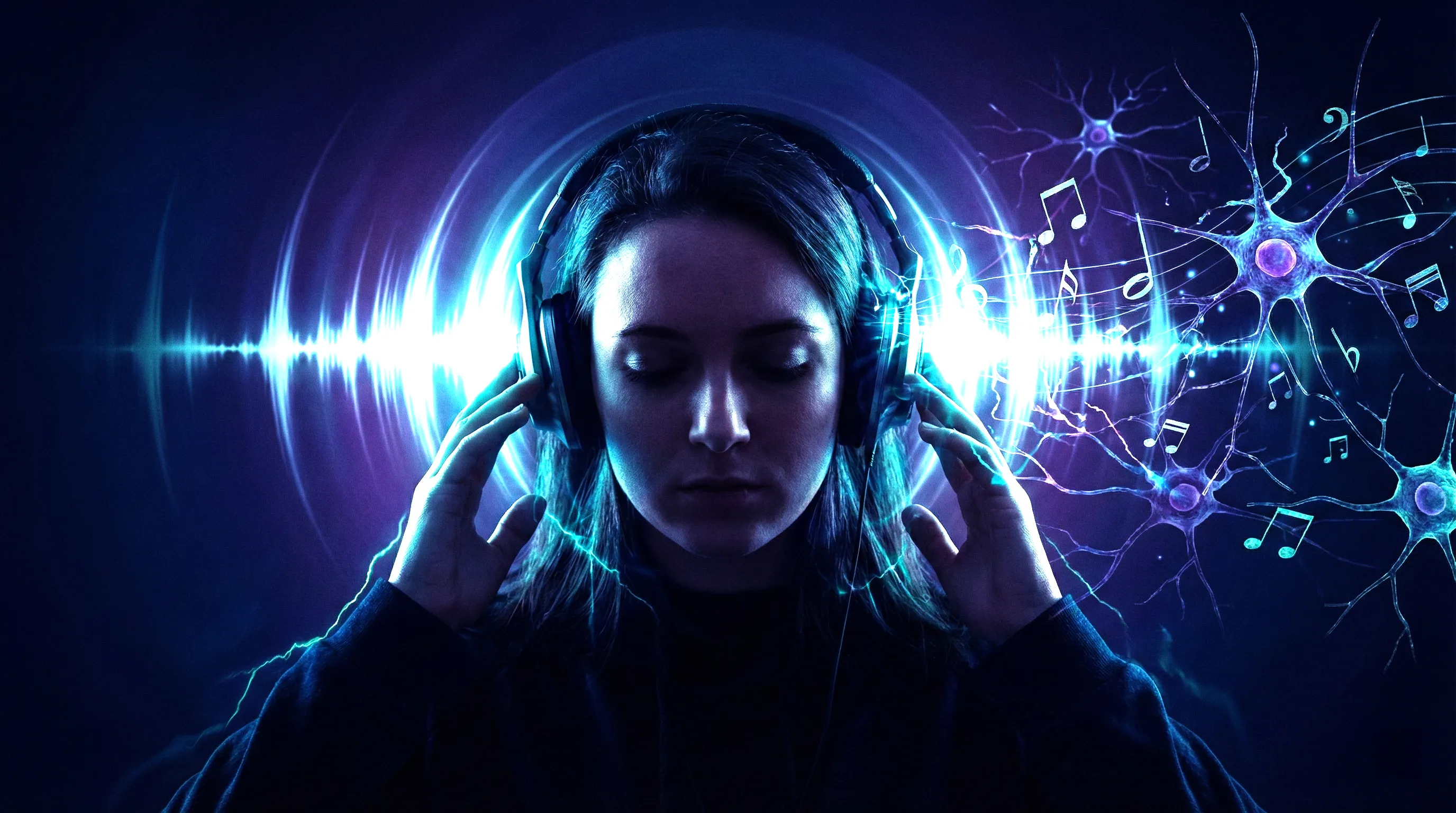
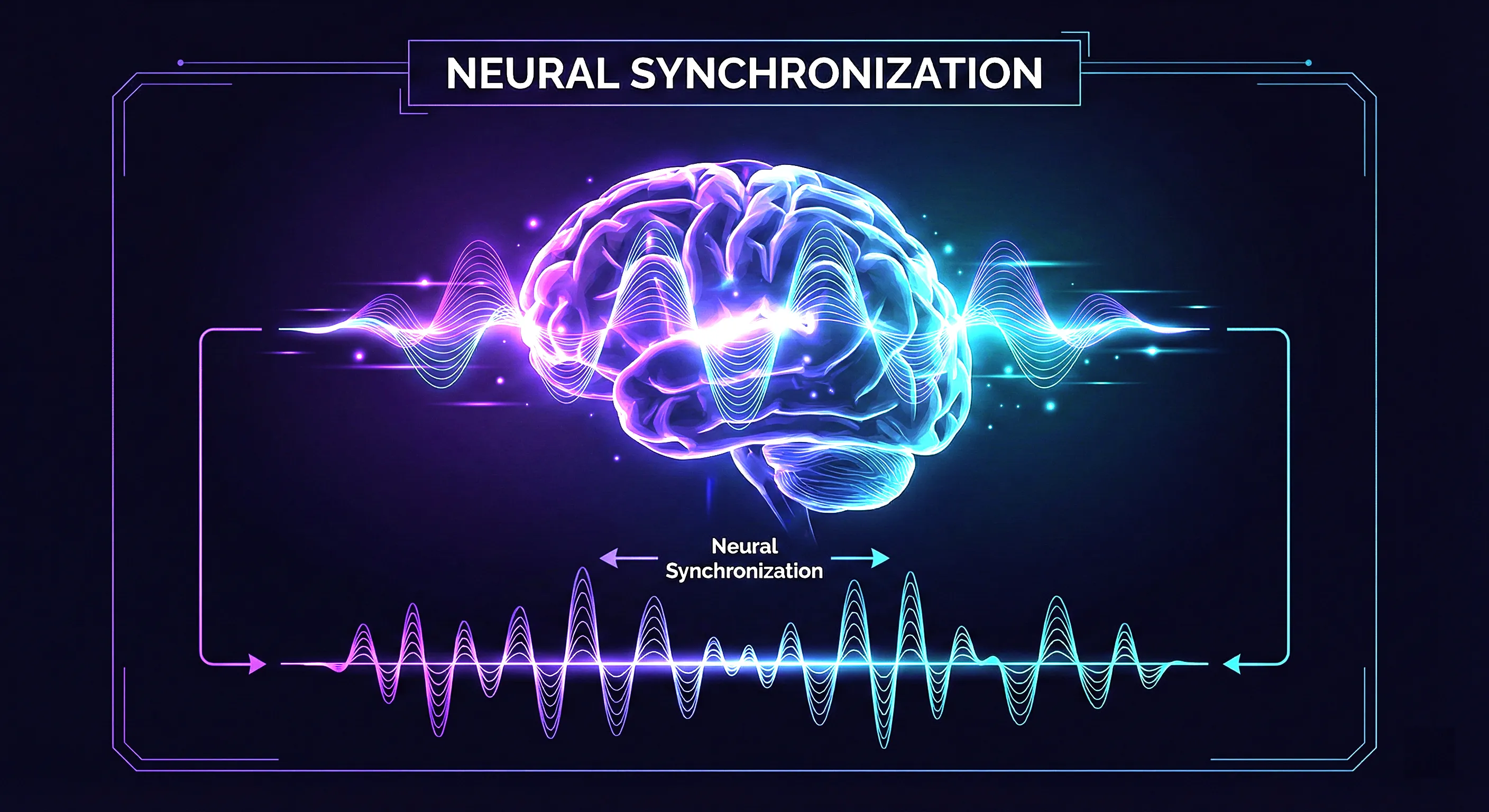
A 2025 study from the University of Connecticut confirmed something researchers had long suspected. Your brain’s neural oscillations physically synchronize with musical rhythms and pitches. Your neurons literally vibrate in time with the music. This isn’t a metaphor. It’s measurable.[1]
This is called Neural Resonance Theory. Your brain creates predictions about what note comes next. When the music confirms your prediction, you feel satisfaction. When it surprises you, you feel a jolt of excitement. That push and pull between expectation and surprise is what makes music feel alive.
Here’s what makes this even wilder. A 2025 Stanford study found that syncing transcranial magnetic stimulation pulses to musical rhythms amplified their effects on brain activity by 77%. Music doesn’t just activate your brain. It supercharges it.[2]
And a 2026 study revealed something surprising about non-musicians. People with zero formal training can pick up on complex tonal structures just from a lifetime of casual listening. Your brain has been quietly becoming a music expert without you knowing.
“Music is the one thing that simultaneously engages virtually every area of the brain.” — Daniel Levitin
Recommended read: This Is Your Brain on Music by Daniel Levitin — The definitive guide to how your brain processes melody, rhythm, and emotion.
The Science of Frisson, Why Music Gives You Chills
That shiver down your spine has a name. Frisson comes from the French word for “shiver.” And only about 50% of people experience it regularly.
Researchers at the University of Southern California discovered why. People who get chills from music have a denser network of nerve fibers connecting their auditory cortex to the areas of the brain that process emotion. More fibers means more communication. More communication means a stronger emotional response to sound.[3]
What Happens in Your Brain During Frisson
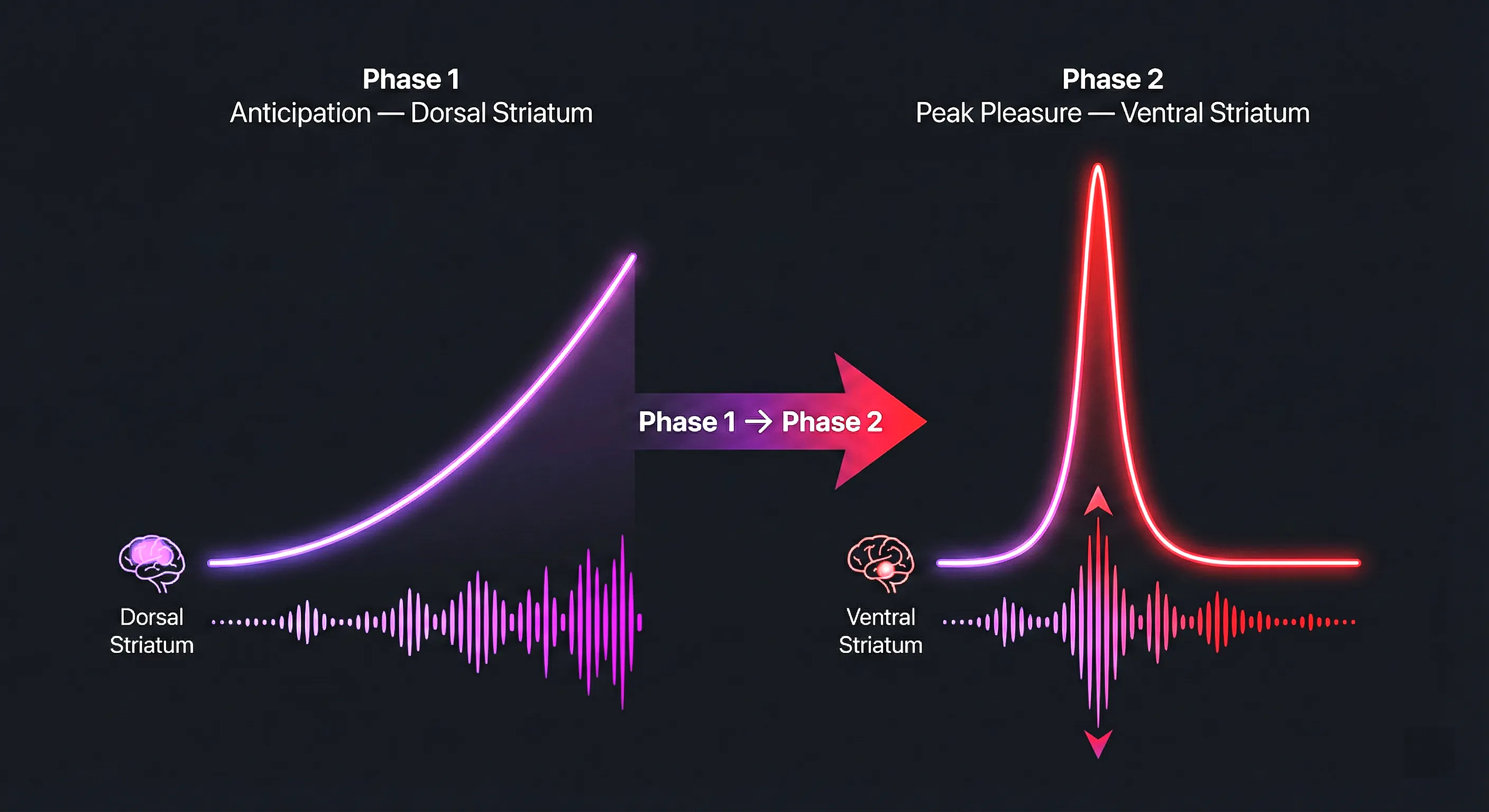
The chills happen in two distinct phases:
- Phase 1: Anticipation. Your dorsal striatum releases dopamine as the music builds toward a climax. You feel the tension rising.
- Phase 2: Peak pleasure. Your ventral striatum floods with dopamine when the musical moment hits. This is the same reward center activated by food, sex, and drugs.[4]
This is your brain’s dopamine reward system in action. The same pathways that tech companies exploit are the ones that make a perfect key change feel transcendent.
Who Gets Chills and Who Doesn’t
Not everyone’s brain is wired for frisson. Research shows that people who experience musical chills tend to share certain traits:
| Trait | Frisson Experiencers | Non-Experiencers |
|---|---|---|
| Openness to experience | Significantly higher | Lower |
| Creativity | Higher than average | Average |
| Intellectual curiosity | Elevated | Typical |
| Auditory-emotional connectivity | Dense fiber networks | Fewer connections |
A small percentage of people experience the opposite. Musical anhedonia means feeling nothing from music despite having normal hearing and intact emotions. A 2026 brain imaging study found that their auditory and reward systems simply don’t communicate with each other. The signal gets lost.[5]
Recommended read: Musicophilia by Oliver Sacks — Fascinating case studies of how music rewires, heals, and sometimes haunts the human brain.
Why Songs Get Stuck in Your Head
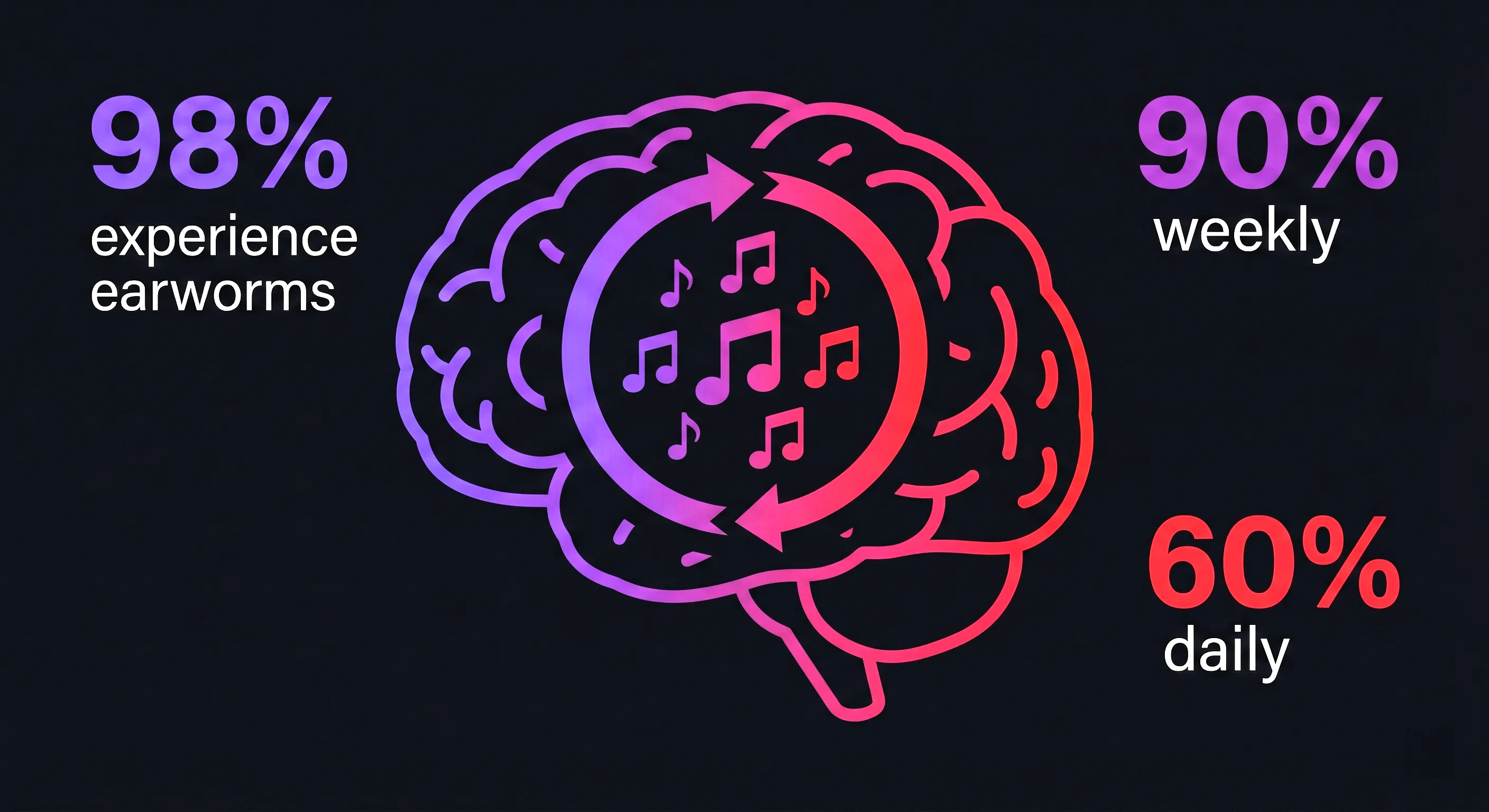
You know the feeling. A jingle from a commercial. A chorus from the radio. It loops in your brain for hours. Sometimes days. Scientists call these earworms. And they’re almost universal.
Research shows that 98% of people experience earworms. More than 90% get them at least weekly. About 60% deal with them daily.
What Makes a Song Stick
Music psychologist Kelly Jakubowski studied what makes certain songs more “catchy” than others.[6] The findings:
- Faster tempo than average
- Simpler melodic contour that’s easy for your brain to replicate
- Unusual intervals between notes that make the melody stand out
- Repetitive structure that reinforces the neural pattern
Earworms hijack your working memory. That’s the same brain system you use for mental math and remembering phone numbers. When a song occupies that space, it literally crowds out other thoughts. Studies show that people with active earworms perform worse on working memory tasks.
How to Actually Stop an Earworm
The science-backed solutions are surprisingly simple:
- Engage your working memory. Do a crossword puzzle, solve anagrams, or read something engaging. This displaces the loop.
- Chew gum. Seriously. College students who chewed gum after hearing a catchy song reported significantly fewer earworms. The jaw movement seems to interfere with the brain’s internal “singing.”[7]
- Listen to the full song. Earworms often loop because your brain is trying to complete an unfinished pattern. Hearing the whole song can resolve the loop.
- Replace it. Listen to a different, less catchy song. Your brain can only hold one earworm at a time.
Why Your Favorite Song Stops Giving You Chills
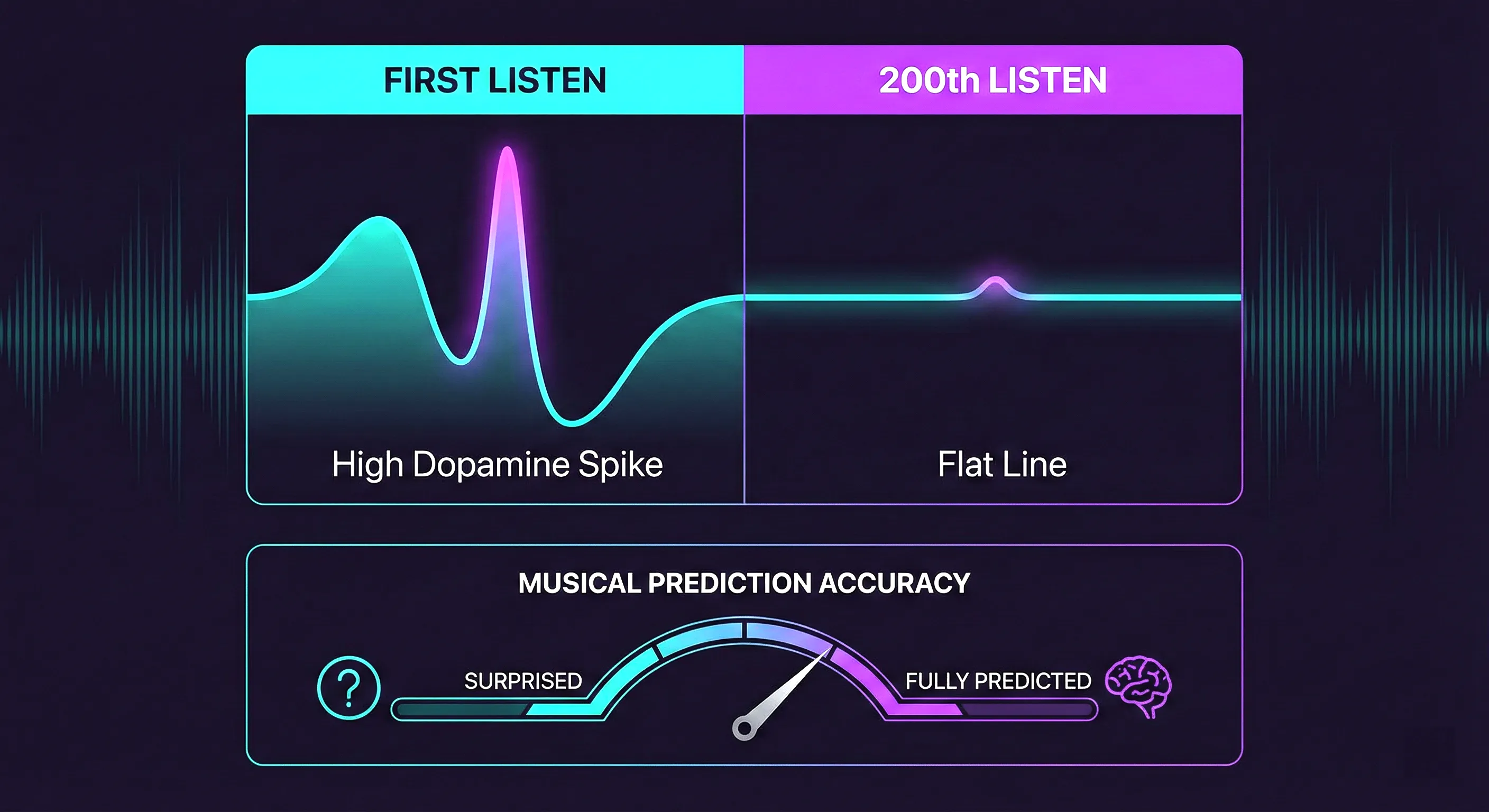
Remember the first time a song gave you goosebumps? Now think about the 200th time you heard it. The chills are gone. The magic faded. Why?
Your brain adapts. This is the same hedonic adaptation that makes everything feel less exciting over time. Your dopamine system is built around novelty and surprise. When your brain knows exactly what note comes next, there’s no prediction error. No surprise means no dopamine spike. No dopamine spike means no chills.
This explains why:
- New music gives stronger chills than familiar favorites
- Live performances feel more intense than recordings. The unpredictability of a live show adds surprise.
- Movie soundtracks hit harder because the visual context adds layers of unexpected emotional input
- Hearing a song you forgot about can bring back the full chill response. Your brain has partially “reset” its predictions.
The anticipation mechanism matters too. Just like your brain’s expectation system can create real physical responses from placebos, knowing that a powerful musical moment is coming can either enhance or diminish the experience depending on how predictable it’s become.
“Music produces a kind of pleasure which human nature cannot do without.” — Confucius
Music Therapy Is Real Medicine
This isn’t just about pleasure. Music’s effect on the brain has real clinical applications. A 2025 analysis of over 2,000 music therapy sessions found that active music interventions reduced pain more effectively than passive listening.[8] The MELODY trial in 2025 showed that music therapy matched cognitive behavioral therapy for reducing anxiety in cancer survivors.[9]
A 2026 study explored AI-assisted music therapy that adapts to patients’ emotional states in real time. The results showed reductions in both anxiety and depressive symptoms. This matters especially for young brains, where early screen exposure can rewire neural pathways for anxiety before protective connections even form.
| Application | Finding | Year |
|---|---|---|
| Pain management | Active music therapy beats passive listening | 2025 |
| Cancer anxiety | Music therapy matches CBT effectiveness | 2025 |
| Brain injury recovery | Musical stimulation reveals consciousness levels | 2025 |
| AI-personalized therapy | Reduces anxiety and depressive symptoms | 2026 |
Recommended read: Your Brain on Art by Susan Magsamen and Ivy Ross — How the arts, including music, physically transform your brain, reduce cortisol, and extend your life.
What Music Reveals About Who You Are
Your relationship with music says something real about your brain. The people who get chills tend to be more open, more creative, and more emotionally aware. The songs that stick in your head reveal what your working memory is doing when you’re not paying attention.
Even the genres you prefer map onto personality traits. Research consistently finds that:
- Complex music lovers (jazz, classical) score higher on openness and intellectual curiosity
- Intense music fans (heavy metal, punk) tend to be gentle and creative despite stereotypes
- Upbeat music preferences (pop, dance) correlate with extraversion and agreeableness
- Rebellious music taste (alternative, indie) links to openness but lower agreeableness
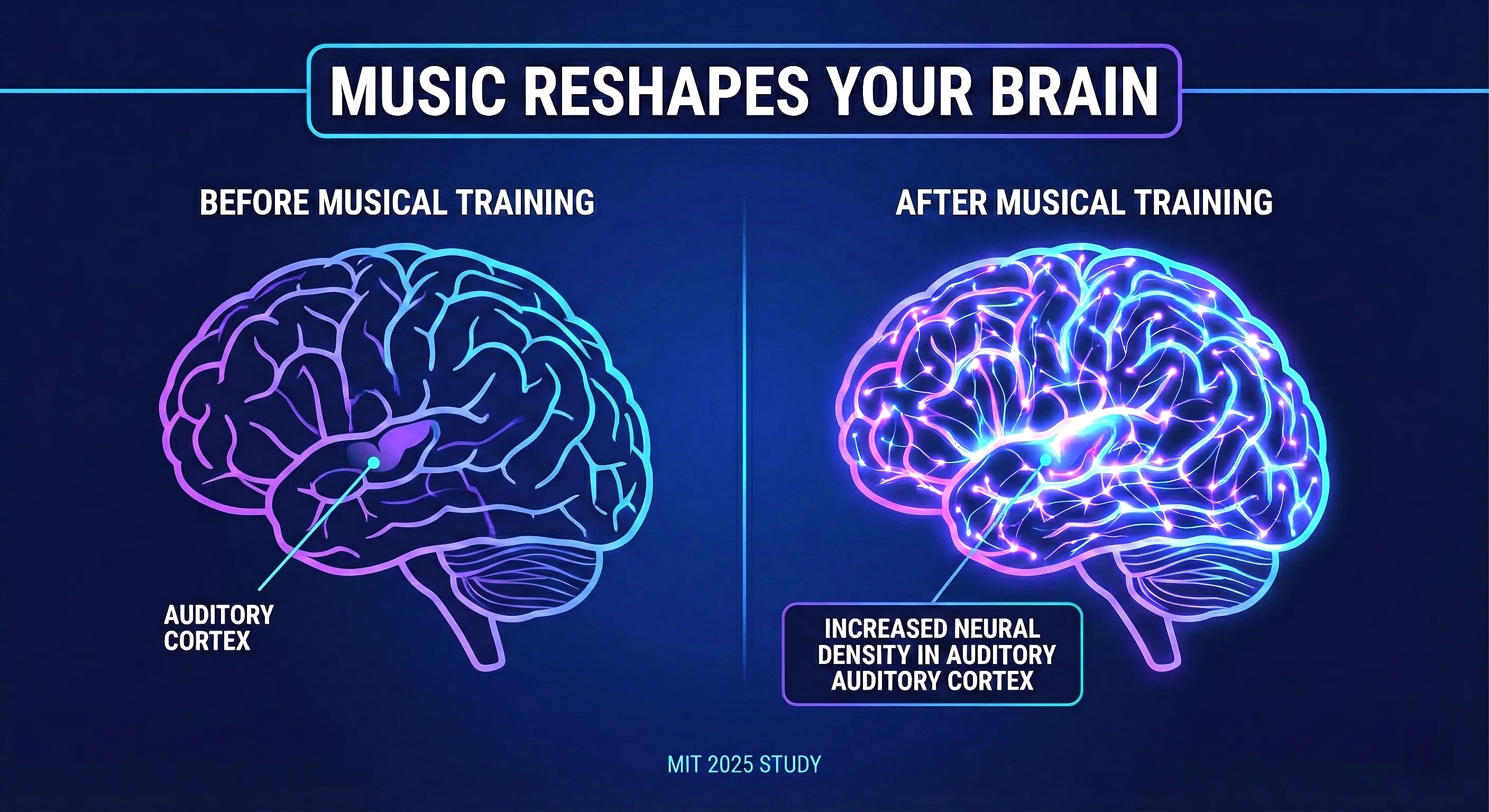
A 2025 MIT study showed that musicians process attention differently than non-musicians. Musical training physically changes how the brain filters sounds, enabling stronger focus and distraction resistance.[10] You don’t need to be a professional. Even casual playing reshapes your neural architecture.
Music is the only stimulus that activates every major region of the brain simultaneously. It’s why a three-minute song can make you cry, give you chills, flood you with memories, and make you move. All at the same time. No drug, no technology, no other experience does all of that at once.
Your brain was built for music. And the chills are proof.
Recommended read: Why You Like It by Nolan Gasser — The science behind musical taste, from the creator of Pandora’s Music Genome Project.
Sources
Your Brain on Music, It’s More Active Than You Think
1. Musical Neurodynamics: Neural Resonance Theory (UConn Today, 2025)
2. Groove Is in the Brain: Music Supercharges Brain Stimulation (Stanford Report, 2025)
The Science of Frisson, Why Music Gives You Chills
5. Neural Correlates of Specific Musical Anhedonia (PNAS, 2016)
Why Songs Get Stuck in Your Head
Why Your Favorite Song Stops Giving You Chills
What Music Reveals About Who You Are
10. Study Sheds Light on Musicians’ Enhanced Attention (MIT News, 2025)