You have been staring at that email for twenty minutes. You know you need to reply. It will take three minutes. But something inside your brain simply will not let you start.
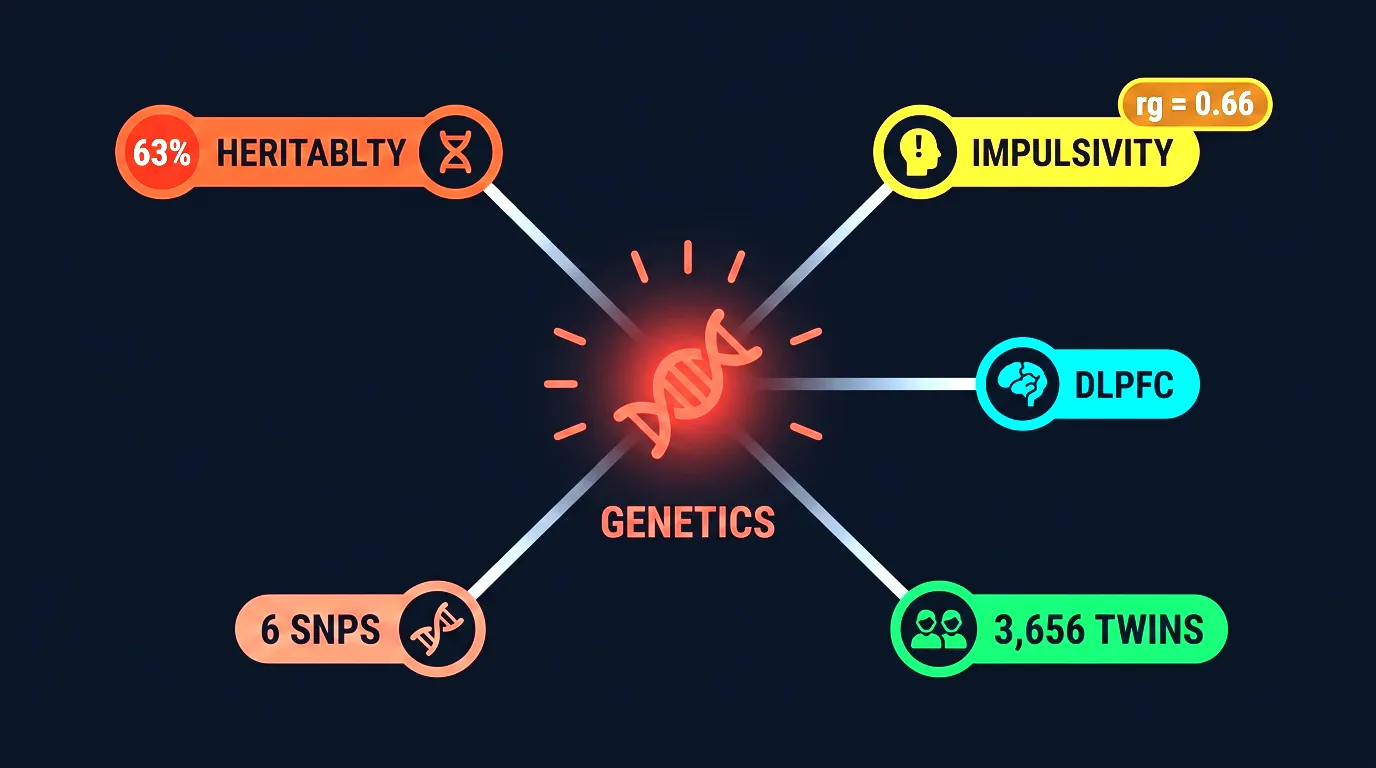
You are not lazy. You are not broken. And according to a wave of 2025 research, you might be able to blame your parents. A landmark twin study found that procrastination is up to 63% heritable. Your tendency to put things off is literally written into your DNA.
But here is where it gets interesting. Scientists did not just find the problem. They found a fix. A brain stimulation treatment dropped procrastination rates from 43% to zero. And a 2-minute technique from UC Santa Barbara works almost as well for everyday tasks.
It’s Not Laziness, It’s Your Genes
For decades, people treated procrastination as a character flaw. Something you could fix with willpower and a better planner. The science says otherwise.
A 2025 study published on bioRxiv analyzed 3,656 twin pairs across four studies.[1] The researchers combined an 8-year longitudinal twin study with genome-wide association analysis and brain imaging data from over 37,000 participants. Their findings changed how we understand procrastination.
- Procrastination is 63% heritable. Your genes account for most of the tendency.
- Procrastination and impulsivity share a genetic correlation of rg = 0.66
- Six specific gene variants (SNPs) overlap between procrastination and impulsivity
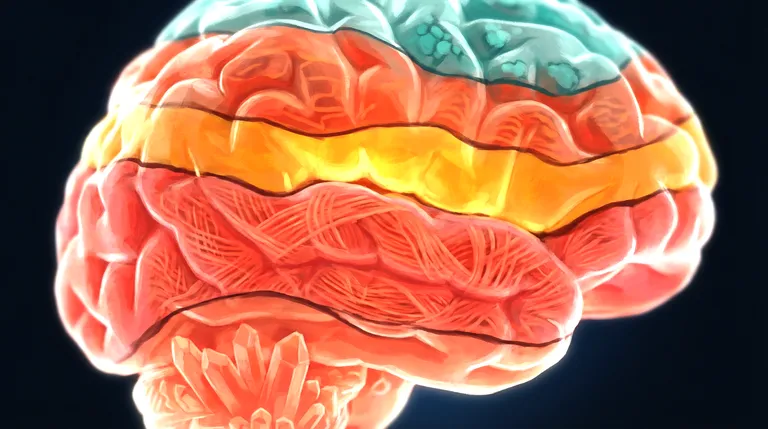
- Both traits affect the same brain region. The left dorsolateral prefrontal cortex (DLPFC)
“Procrastination is an emotion-regulation problem. It’s not a time management problem.” - Tim Pychyl, Carleton University
This confirms a groundbreaking 2014 study from Psychological Science.[2] That study found procrastination and impulsivity are phenotypically distinct but genetically identical. At the DNA level, they are the same trait. Procrastination did not evolve on its own. It is a side effect of genes that were selected for impulsivity in our ancestors.
Think about that. The same genetic wiring that helped your ancestors make quick survival decisions now makes you scroll Instagram instead of answering emails. Evolution did not plan for deadlines.
| Trait | Heritability | Shared Genetics |
|---|---|---|
| Procrastination | 63% | rg = 0.66 with impulsivity |
| Impulsivity | 38% | Same 6 SNPs |
| Shared brain region | Left DLPFC | Cortical thickness affected |
Recommended read: Atomic Habits by James Clear - a practical system for building habits that work with your brain instead of against it.
Your Amygdala Is Sabotaging You
Your genes load the gun. Your brain pulls the trigger.
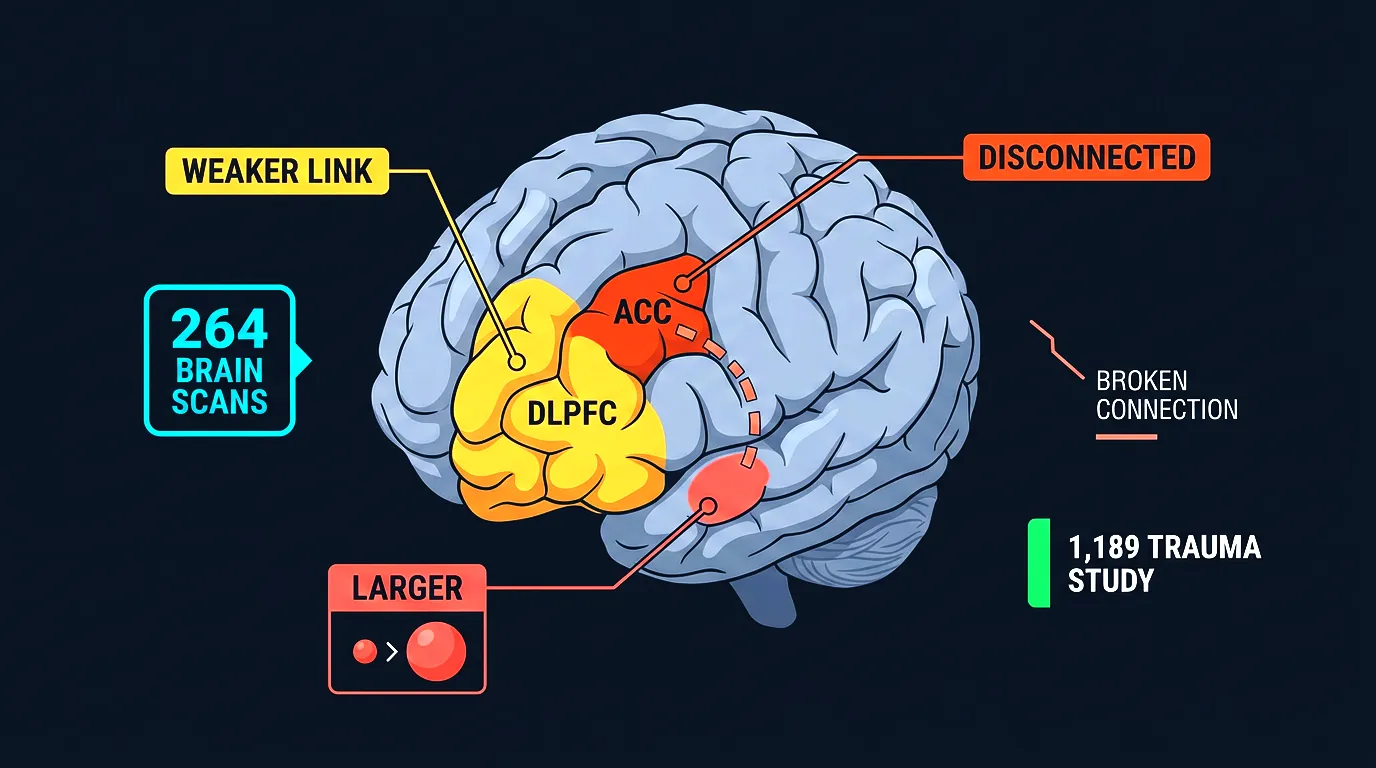
In 2018, researchers at Ruhr University Bochum scanned the brains of 264 people.[3] They found something unexpected. Procrastinators have a larger amygdala than non-procrastinators. More gray matter in the threat detection center of the brain.
A bigger amygdala is not an advantage here. It means the alarm system is overactive. Every time you think about starting a task, your amygdala floods you with anxiety about what could go wrong. And the connection between your amygdala and your rational brain (the dorsal anterior cingulate cortex) is weaker in procrastinators.
“Individuals with a higher amygdala volume may be more anxious about the negative consequences of an action. They tend to hesitate and put off things.” - Erhan Genc, Ruhr University Bochum
This is why telling a procrastinator to “just do it” is useless. Their brain is literally screaming danger before they even open the document.
A 2025 study in NeuroImage made this even clearer.[4] Researchers scanned 1,189 people and found that childhood trauma rewires the exact brain circuits that control procrastination. The frontoparietal network, salience network, and cerebellum all showed disrupted connectivity in people who experienced adverse childhood events.
- Childhood trauma predicted elevated procrastination through neural pathway changes
- Trait anxiety and low self-control jointly mediated the connection
- The pattern reflects trauma-related disruptions in cognitive control and emotional reactivity
If you experienced difficult things as a child, your brain may have rewired itself in ways that make procrastination more likely. It is not a personal failing. It is a neural scar that affects how you regulate emotions.
A 2025 study in the British Journal of Psychology confirmed this chain.[5] When researchers accounted for emotional dysregulation, the attention problems that procrastinators show completely disappeared. Procrastination is not an attention problem at all. It is an emotion problem wearing an attention mask.
Recommended read: Dopamine Nation by Anna Lembke - how the brain’s reward system drives compulsive avoidance and what to do about it.
The Brain Hack That Drops Procrastination to Zero
If procrastination is genetic and neurological, can you actually fix it? A 2025 study published in eLife says yes.[6] And the results are staggering.
Researchers ran a double-blind randomized controlled trial with 46 chronic procrastinators. Half received real brain stimulation (HD-tDCS) targeting the left DLPFC. Half received sham stimulation. Seven sessions over 15 days, 20 minutes each.
The results.
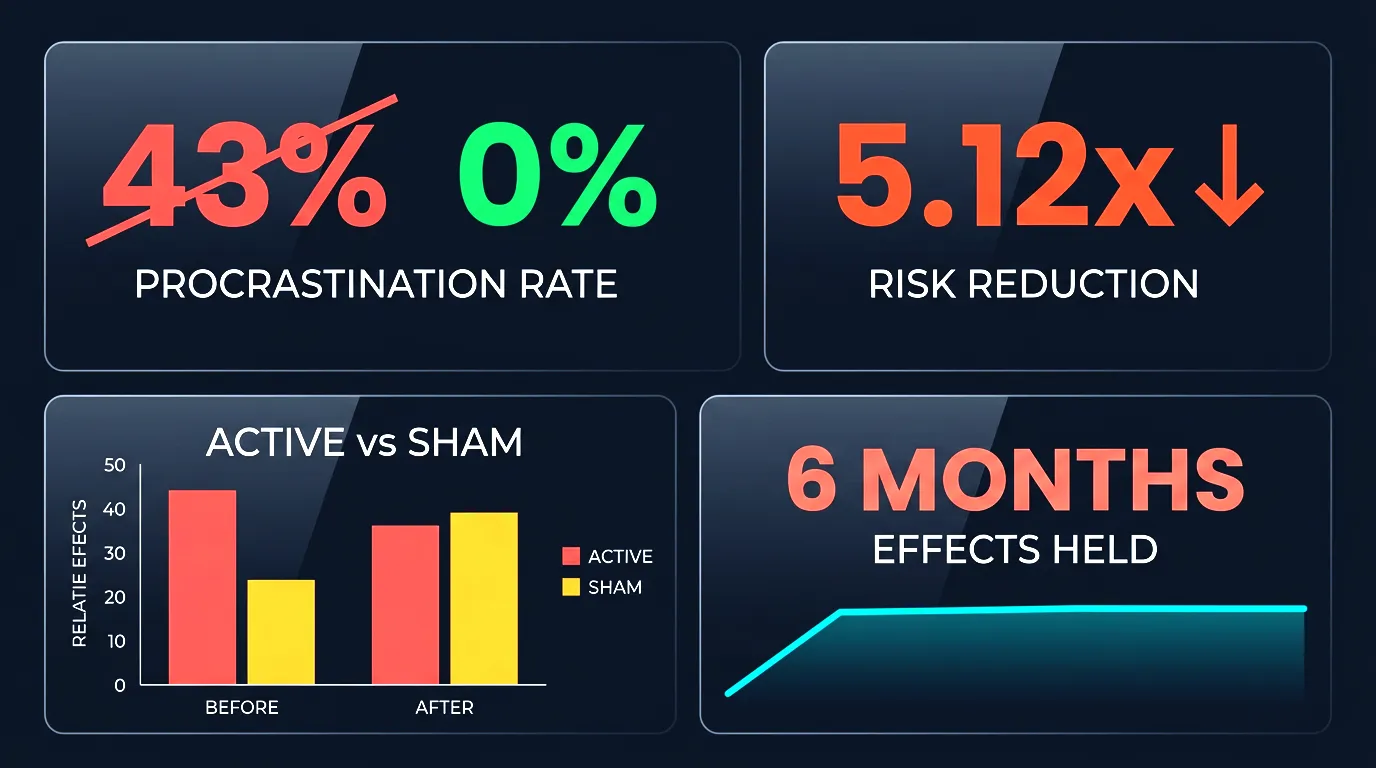
- Procrastination rate in the active group dropped from 43.26% to 0.00%
- The sham group barely changed (46.47% to 33.34%)
- Task willingness jumped from 35 out of 100 to 80 out of 100
- Procrastination risk was reduced 5.12 times compared to sham
- Six months later, the effects held. Active group procrastination stayed at 18.63%
But the most surprising finding was the mechanism. The brain stimulation did not work by making tasks feel less awful. People still found their tasks just as aversive after treatment. Instead, it worked by amplifying how much people valued the future reward of completing the task.
This flips the entire “just push through the pain” narrative. You do not beat procrastination by white-knuckling through discomfort. You beat it by making the finish line feel closer and more valuable. The brain stimulation literally turned up the volume on future rewards.
You cannot buy a brain stimulation device at the pharmacy yet. But the mechanism matters because it points to the right approach. Anything that makes future rewards feel more real and immediate will work.
Recommended read: The Power of Habit by Charles Duhigg - the science of how habit loops form and how to rewire them.
What You Can Do Right Now
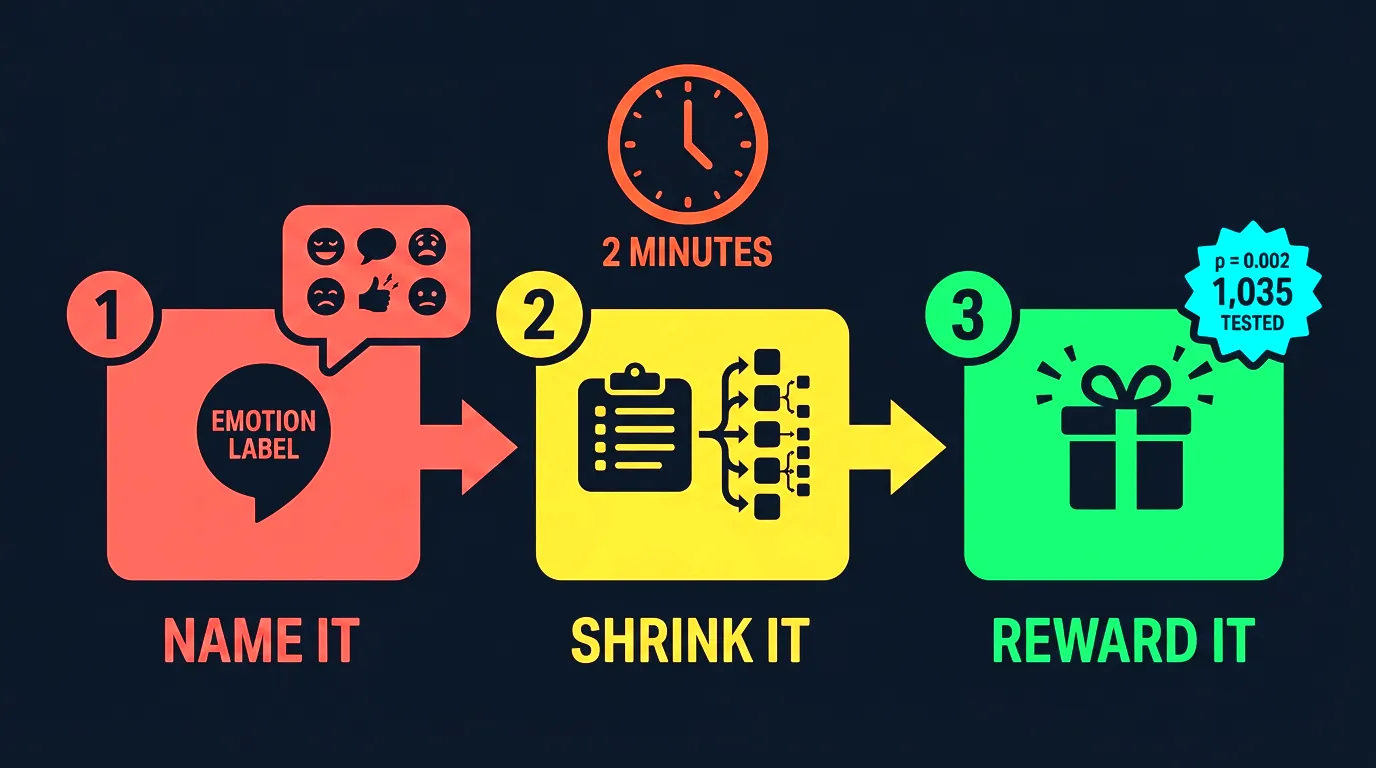
You do not need brain stimulation to fight your genes. Researchers at UC Santa Barbara found a technique that takes just two minutes.
In a 2025 study of 1,035 participants, the team tested a simple three-step process.[7]
-
Name the emotion. Identify exactly what feeling the task triggers. Anxiety? Boredom? Frustration? This is called affect labeling and it reduces the amygdala’s grip on your decision-making.
-
Break it into the smallest first step. Not “write the report.” Just “open the document.” The smaller the step, the less your threat system activates.
-
Pick a specific reward. Choose something concrete you will do after finishing. This mirrors what brain stimulation does naturally. It makes the reward feel more real.
The results were significant. Task completion likelihood increased (p = 0.002). Mood improved. And here is the key detail. The intervention did not make the task feel less bad (p = 0.267). People still dreaded it. But naming their emotions made them willing to start anyway.
A separate 2025 study tested a 5-module internet-based CBT program on 403 university students.[8] Half the participants showed reliable improvement. And the effects actually grew stronger over six months rather than fading.
- Immediate effect: d = 0.38 (moderate)
- Six-month follow-up: d = 1.11 (large)
- Depression, anxiety, and stress all improved alongside procrastination
The lesson is clear. Skills for beating procrastination compound over time. The more you practice, the better they work. Even small habit changes stick better when you understand the brain science behind them.
Self-compassion also plays a critical role. Research by Fuschia Sirois at Durham University shows that self-compassion training programs (4-8 weeks) produce meaningful reductions in procrastination. Being kinder to yourself about procrastinating actually makes you procrastinate less. Beating yourself up makes it worse.
The Real Cost of Putting Things Off
Procrastination is not just an inconvenience. It is a health risk.
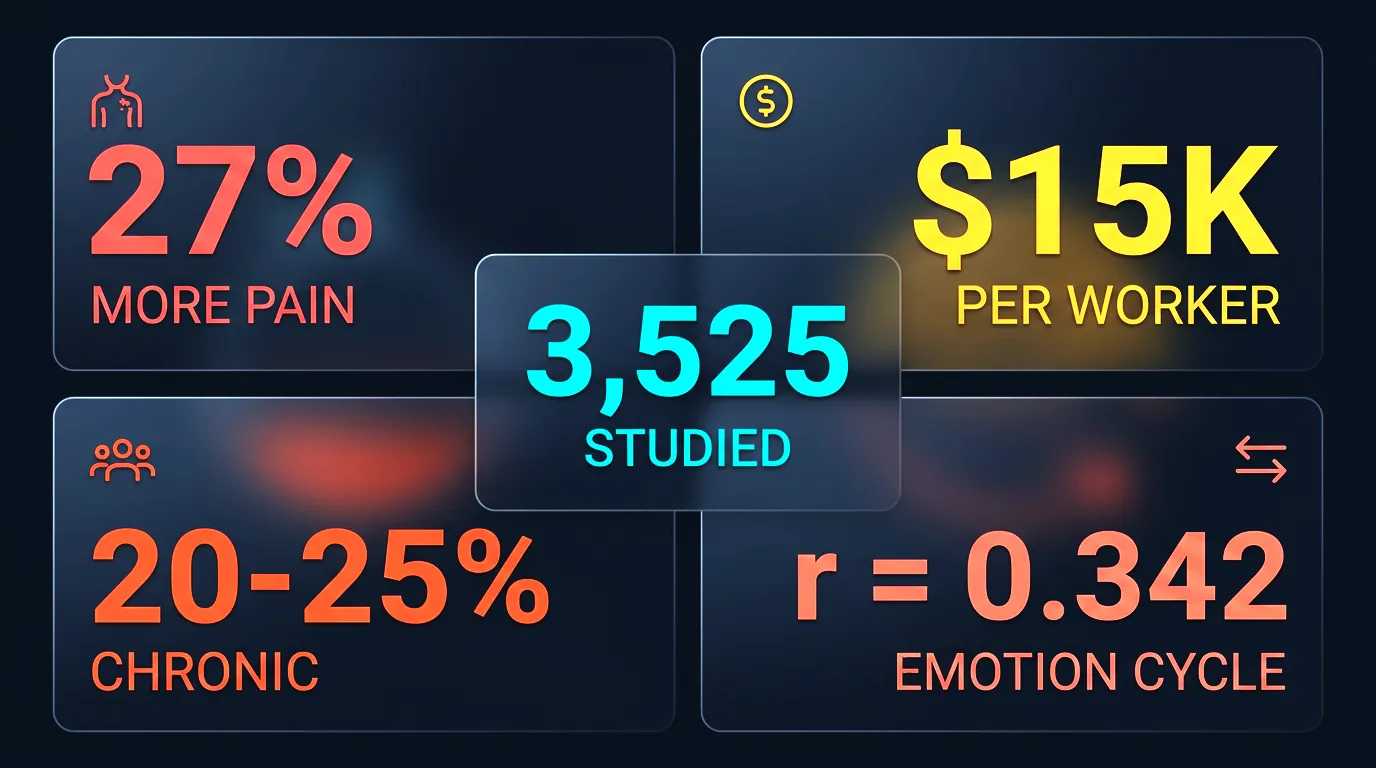
A 2023 study in JAMA Network Open followed 3,525 university students for nine months.[9] The researchers controlled for demographics, prior health, and personality traits. Procrastination still predicted real, measurable harm.
- Depression: beta = 0.13 per standard deviation increase in procrastination
- Anxiety: beta = 0.08
- Stress: beta = 0.11
- Disabling physical pain: 27% higher risk (RR = 1.27)
- Poor sleep quality: 9% higher risk
- Physical inactivity: 7% higher risk
- Loneliness: 7% higher risk
The physical pain finding is not a metaphor. Procrastination predicted actual disabling arm and shoulder pain. Putting things off literally makes your body hurt.
A 2025 meta-analysis spanning 63,323 participants across 17 countries found that procrastination and negative emotions feed each other in a vicious cycle.[10] Procrastination causes depression and anxiety. Depression and anxiety cause more procrastination. The correlation is moderate (r = 0.342) but the cycle is relentless.
The most surprising finding from that meta-analysis was that sleep procrastination showed stronger associations with anxiety and stress than regular task procrastination. The worst emotional damage comes not from putting off work. It comes from putting off sleep while your motivation drains away.
The economic toll is massive. About 20-25% of adults are chronic procrastinators, up from just 5% in the 1970s. The average employee spends 3 hours per day procrastinating. That costs businesses roughly $15,000 per worker per year.
Your genes may have loaded the gun. But you do not have to keep pulling the trigger. The science is clear. Procrastination is not a character flaw. It is a treatable brain pattern. And the first step to changing it is understanding that it was never about willpower in the first place.
Recommended read: Tiny Habits by BJ Fogg - how to start so small that your amygdala never notices.
Sources
It’s Not Laziness, It’s Your Genes
Your Amygdala Is Sabotaging You
3. The Structural and Functional Signature of Action Control (Psychological Science, 2018)
The Brain Hack That Drops Procrastination to Zero
6. Modulating Task Outcome Value to Mitigate Procrastination via Brain Stimulation (eLife, 2025)
What You Can Do Right Now
7. A Brief, Scalable Intervention for State Procrastination (BMC Psychology, 2025)
8. Internet-Based CBT Intervention for Procrastination (Internet Interventions, 2025)
The Real Cost of Putting Things Off
9. Procrastination and Subsequent Health Outcomes (JAMA Network Open, 2023)
10. Procrastination and Negative Emotions Meta-Analysis (Frontiers in Psychiatry, 2025)
Additional References
11. Common and Distinct Neural Basis of Procrastination and Impulsivity (Cerebral Cortex, 2025)