Amazon employees had a name for it. They called it the Iliad Flow.
Not because it was epic. Because it was a journey that never seemed to end. Canceling your Prime membership required navigating four separate pages, clicking six different buttons, and choosing from fifteen options designed to confuse you into staying.
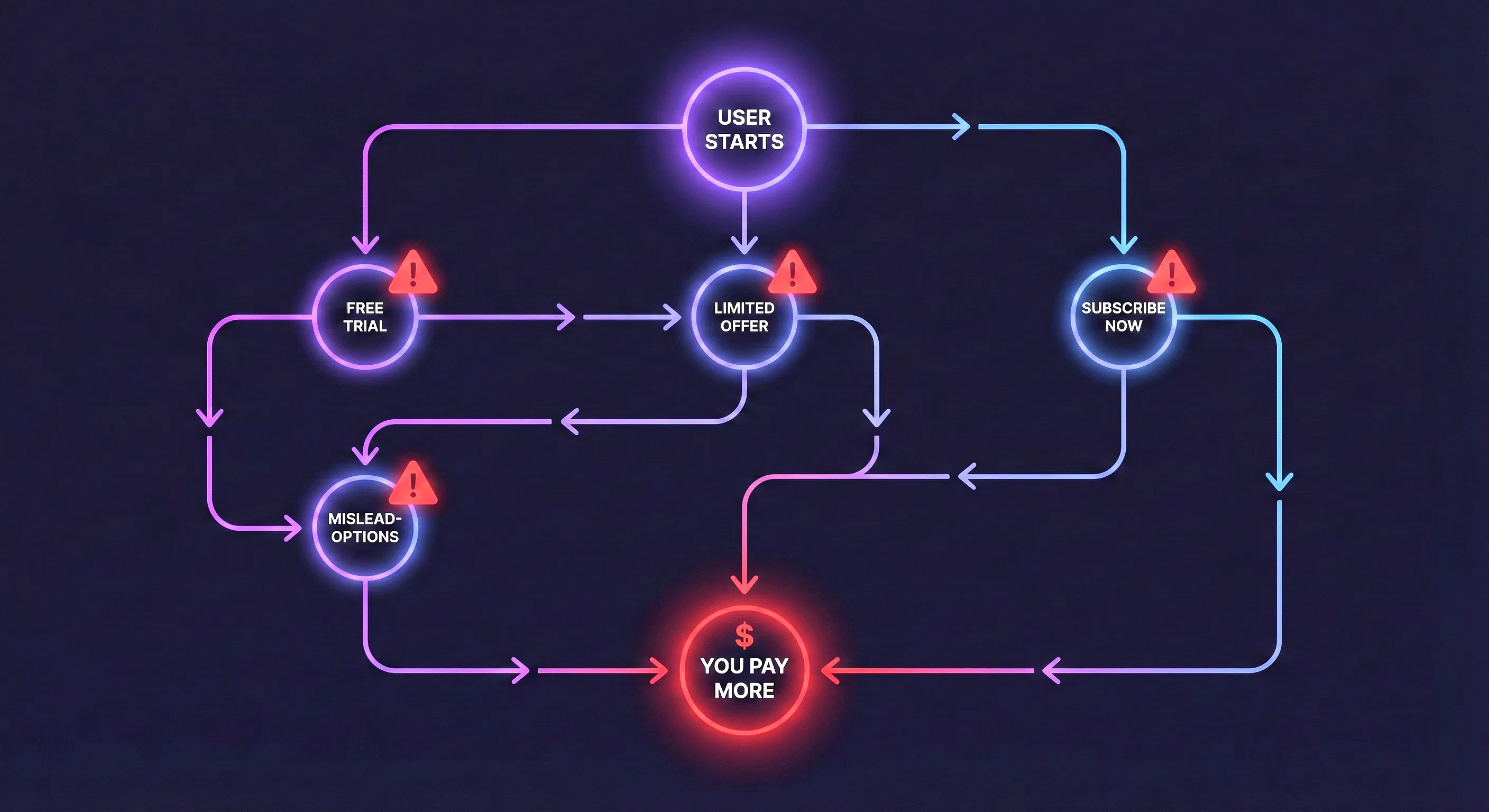
In September 2025, the FTC settled with Amazon for $2.5 billion. The largest dark patterns fine in history.[1] The reason was simple. Amazon’s checkout showed a big, friendly button reading “Get free delivery with Prime.” One click enrolled you in a $14.99/month subscription. The option to buy without Prime was hidden in tiny, gray text.
Millions of people signed up for something they never intended to buy. And that was the whole point.
Your Brain’s Shortcuts Are the Target
Dark patterns are design choices in apps and websites built to manipulate your behavior. They’re not bugs or bad design. They’re features, carefully engineered to exploit the way your brain makes decisions. A behavioral scientist later mapped every one of these tricks into six categories he called FORCES.
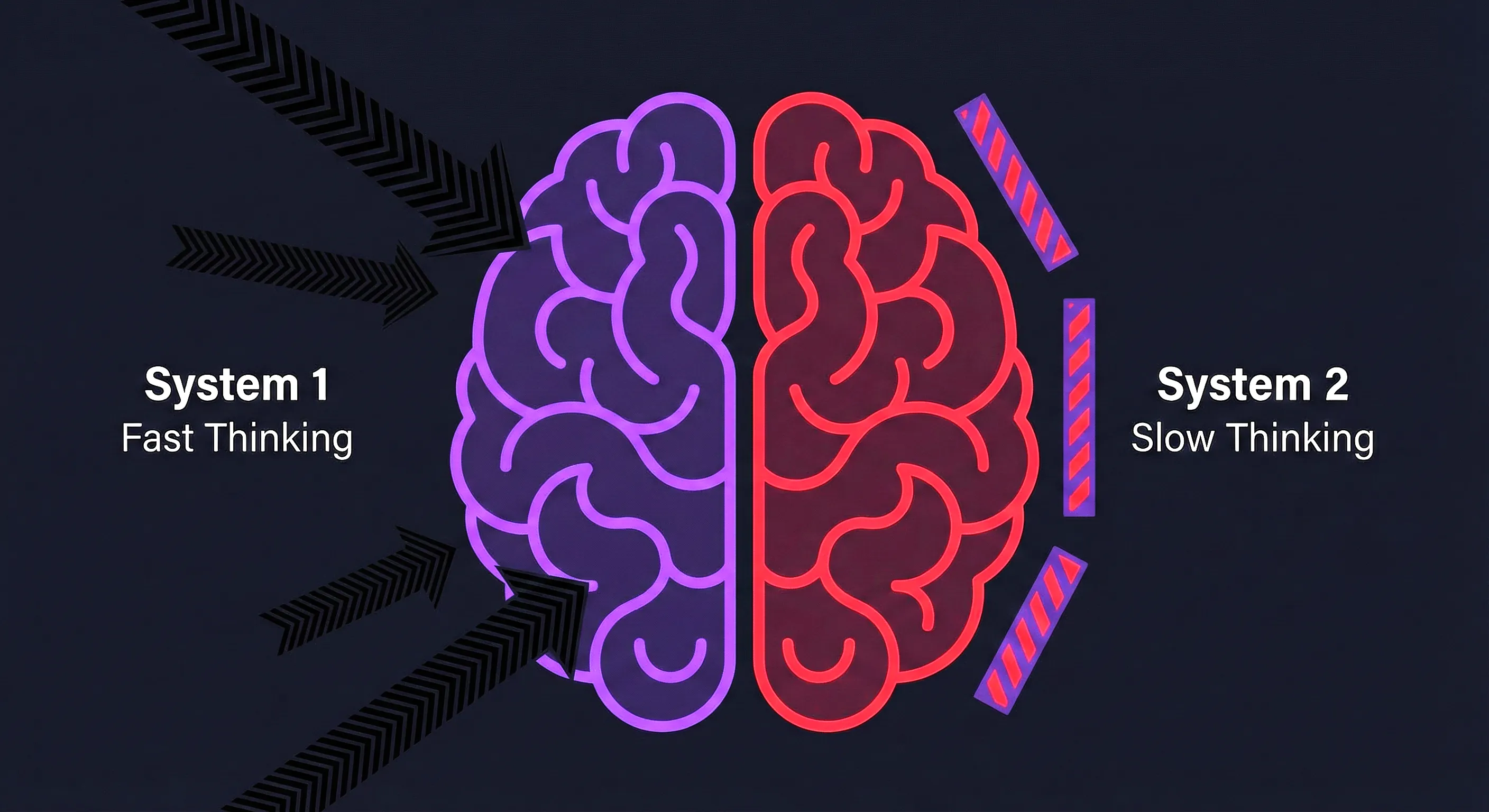
UX designer Harry Brignull coined the term back in 2010.[2] But the psychology behind it goes much deeper. Your brain runs on cognitive biases, mental shortcuts that help you make fast decisions without thinking too hard. Most of the time, these shortcuts serve you well. The problem starts when designers learn to trigger them on purpose.
Here are the biases dark patterns target most:
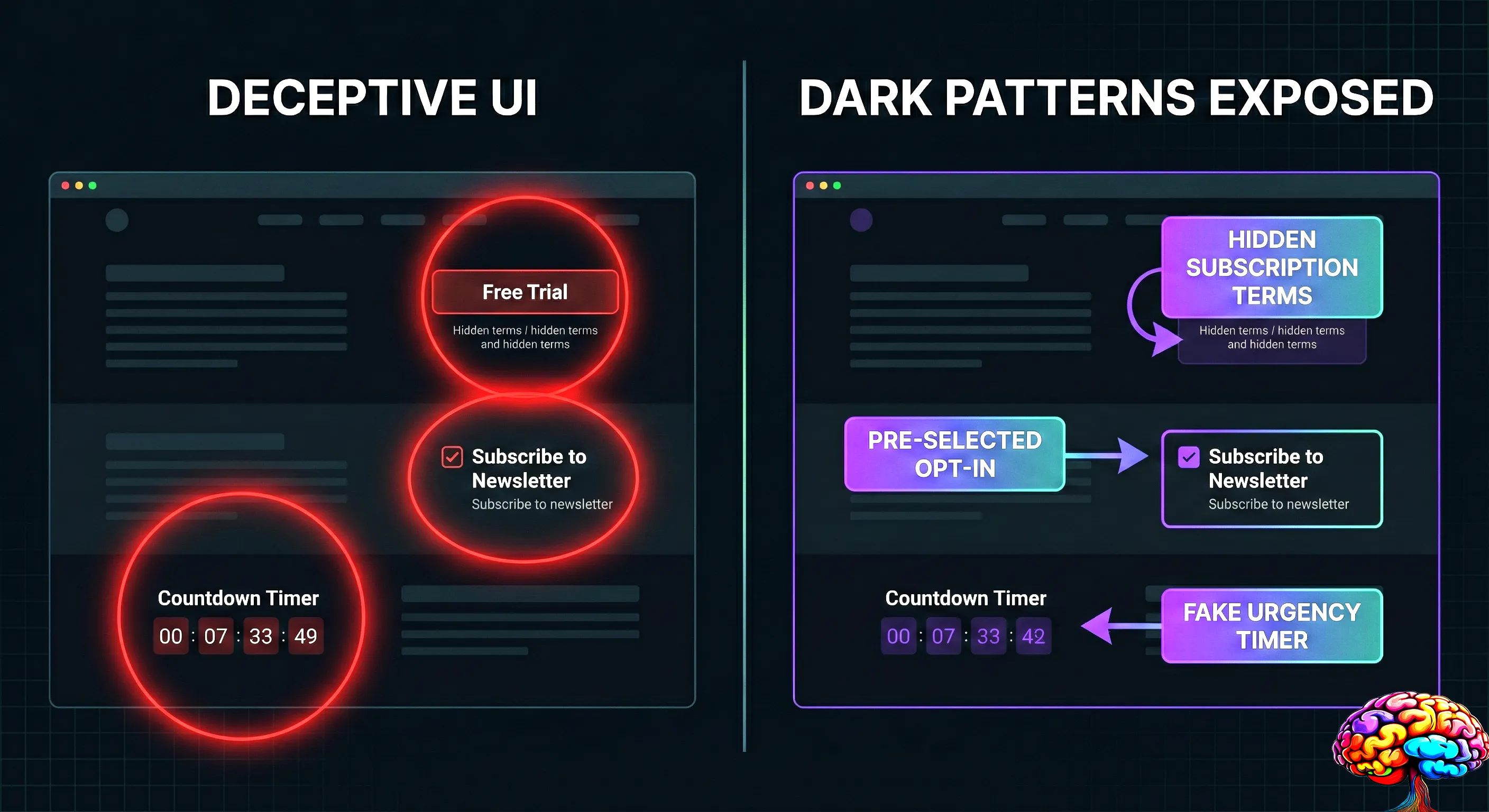
- Default bias. You stick with whatever is pre-selected. Companies pre-check boxes for email lists, insurance add-ons, and premium tiers because they know you won’t uncheck them.
- Loss aversion. Losing something feels roughly twice as painful as gaining something equal. “Don’t miss out” and countdown timers trigger this fear directly.
- Anchoring. The first number you see sets your expectations. A $200 product next to a $500 one suddenly feels like a steal.
- Commitment bias. Once you start a process, you feel compelled to finish it. Long checkout flows exploit this. By step four, you’re too invested to quit.
- Sunk cost fallacy. You’ve already spent ten minutes trying to cancel. Might as well keep the subscription, right? Wrong. But your brain doesn’t see it that way.
A 2024 study published in Behavioural Public Policy found strong evidence that people across all demographics are susceptible to dark patterns.[3] Income, education, and age made almost no difference. Everyone falls for them because the biases being exploited are universal.
“You think you are a rational agent, reasoning your way through life, forming opinions based on facts and logic. The truth is, most of the time, you are not.” - David McRaney, You Are Not So Smart
These shortcuts are the same ones that quietly shape your everyday decisions without you noticing. Dark patterns just weaponize them.
Recommended read: You Are Not So Smart by David McRaney. A witty tour of 48 cognitive biases you fall for every day.
The Most Common Tricks and Where You’ll Find Them
A 2024 international sweep by ICPEN and the FTC examined 642 subscription websites and apps across multiple countries. They found that 76% used at least one dark pattern.[4] Nearly 67% used multiple. A European Commission study found dark patterns in 97% of popular apps used by EU consumers.[5]
You’re swimming in this stuff. Here are the patterns you hit most often:
| Dark Pattern | What It Does | Where You See It |
|---|---|---|
| Drip pricing | Shows a low price, then adds hidden fees at checkout | Airlines, hotels, event tickets |
| Confirmshaming | Guilt-trips you for saying no (“No thanks, I hate saving money”) | Newsletter popups, app upsells |
| Roach motel | Easy to sign up, almost impossible to cancel | Streaming services, gym memberships |
| Forced continuity | Free trial silently converts to paid subscription | SaaS products, media subscriptions |
| Misdirection | Design draws your eye away from the option you actually want | Cookie consent banners, checkout pages |
| Sneaking | Adds items to your cart or pre-selects expensive options | Insurance add-ons, e-commerce |
The Cookie Consent Trick
You see it every day. The “Accept All” button is big, bright, and colorful. “Manage Preferences” is a tiny gray link buried below it. This is interface interference, and it works because your brain follows the path of least resistance.
An EU sweep of retail websites in 2025 found that nearly 40% of online stores used visual trickery like fake countdown timers, hidden cost information, and deceptive button placement to steer consumers toward choices that benefit the business.[6]
Infinite Scroll and the Dopamine Loop
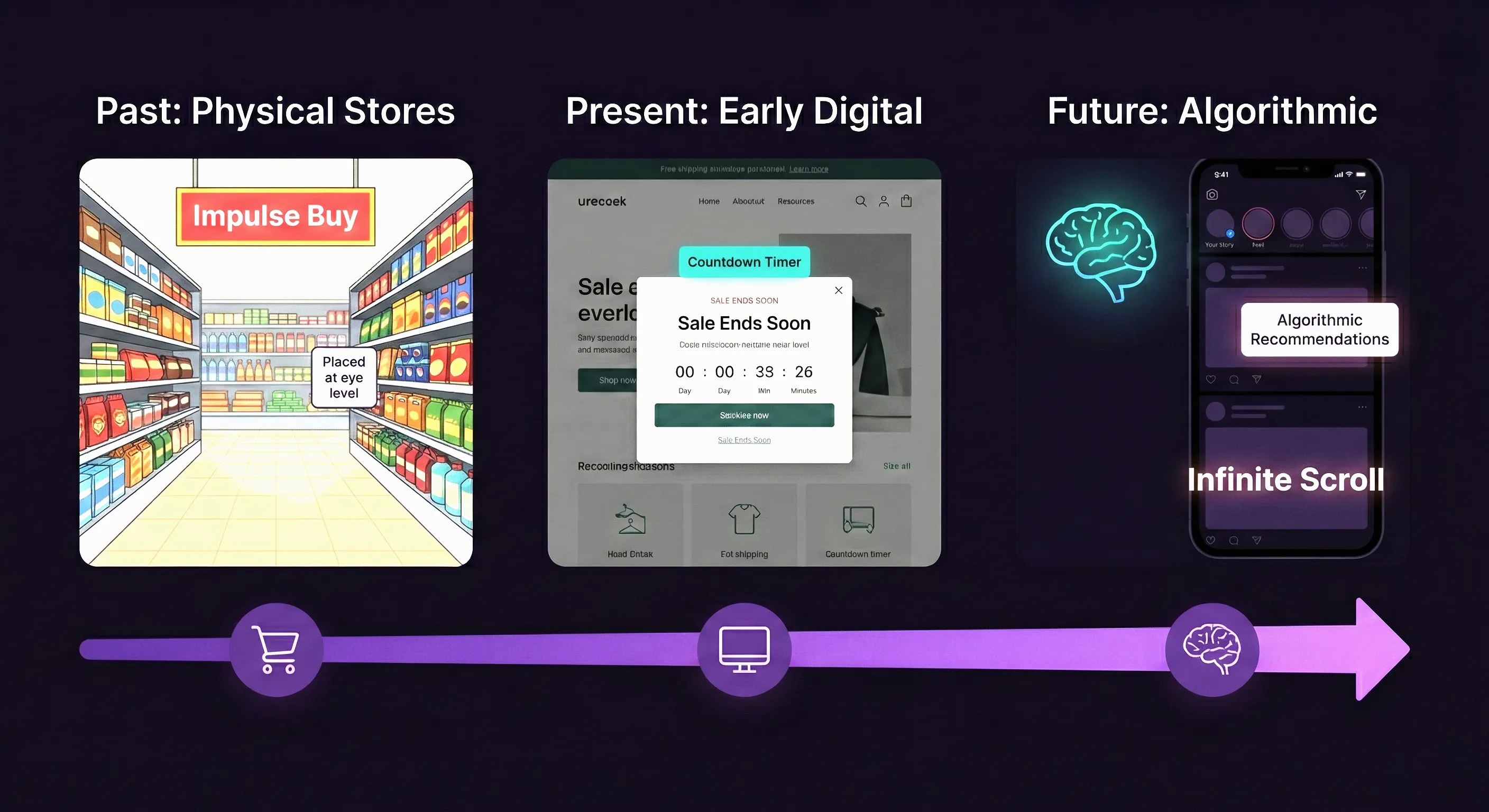
Social media’s favorite dark pattern has no buttons at all. Infinite scrolling removes natural stopping points from your experience. There’s no page break. No “next” button. No moment where your brain says “I’m done.”
This works because it hijacks your dopamine system. Every scroll is a slot machine pull. Variable rewards keep you engaged because your brain can’t predict what comes next.[7] Tristan Harris, the former Google design ethicist, called these attention hacks “a race to the bottom of the brain stem.”
Recommended read: Hooked by Nir Eyal. The actual playbook Silicon Valley uses to make products addictive. Understanding the enemy’s tactics is the first step to defense.
The Real Psychology Behind Why These Work
Dark patterns aren’t just clever design. They exploit deep psychological principles that behavioral scientists have studied for decades.
Choice Architecture Gone Wrong
Cass Sunstein, the Harvard behavioral scientist behind nudge theory, draws a clear line between helpful nudges and dark patterns. A nudge makes the healthy option easier. A dark pattern makes the profitable option harder to avoid.
The difference comes down to transparency. If a design choice is hidden, one-sided, or deliberately confusing, it’s not a nudge. It’s manipulation. Sunstein calls drip pricing “a form of theft” because it conceals the true cost until you’re too committed to walk away.
This is the toxic version of choice architecture. Same tools. Opposite intent.
The Endowment Effect in Action
Once you’ve started a checkout process, your brain treats the product as partially yours. Psychologist Richard Thaler’s research on the endowment effect shows that people value things more once they feel ownership over them. Even filling out a shipping address creates a tiny sense of possession.
Car dealerships have exploited this for decades with the lowball technique. Robert Cialdini watched it firsthand while training undercover at a Chevrolet dealership. The salesman offers an incredible price. You fill out paperwork. You tell your friends. Then the price “accidentally” goes up. But by then, you’ve already mentally claimed the car. You buy it anyway.
Reactance and the Backfire Effect
Sometimes dark patterns push too hard. Psychologist Jonah Berger’s research on psychological reactance shows that heavy-handed manipulation can backfire completely. When people feel their freedom is threatened, they do the opposite of what you want.
This is why the most effective dark patterns are subtle. You never feel manipulated. You feel like you made a choice. That’s the scary part.
Recommended read: Manipulation by Cass Sunstein. A rigorous look at where persuasion ends and manipulation begins, from the legal scholar who helped define nudge theory.
How to Fight Back
The good news is that awareness breaks the spell. Dark patterns work on your fast, automatic thinking. The moment you slow down and engage your deliberate thinking, the manipulation falls apart.
Here’s your defense playbook:
-
Pause when you feel urgency. “Only 3 left!” and “Offer expires in 10 minutes” are designed to bypass your critical thinking. Real deals don’t vanish in seconds. If you feel rushed, that’s your cue to stop.
-
Check the total price before paying. Scroll to the final number before entering payment info. If it’s higher than advertised, you’ve been drip-priced. Close the tab.
-
Scan every checkbox. Before submitting any form, look for pre-checked boxes. Uncheck anything you didn’t actively choose. Companies count on you skipping this step.
-
Screenshot cancellation attempts. If a service makes canceling absurdly difficult, document every screen. Regulators are actively collecting these complaints. The FTC’s $2.5 billion Amazon settlement started with consumer complaints exactly like yours.
-
Use the “stranger test.” Before buying, ask yourself if you’d still want this product if a stranger was selling it. This strips away the liking bias that friendly design creates.
-
Watch for the tiny first ask. Free trials, quick surveys, and “just your email” requests are often foot-in-the-door openers designed to lead somewhere bigger. These are the same tricks used by people who exploit your trust in everyday life.
Regulators are catching up too. California’s new privacy regulations took effect January 2026, adding protections against dark patterns. The EU’s Digital Services Act explicitly bans manipulative interfaces. And the FTC distributed over $126 million to Fortnite players affected by Epic Games’ deceptive design.[8][9]
But don’t wait for laws to protect you. The best defense is knowing how your brain gets played.
The Stakes Are Higher Than You Think
Dark patterns cost real money. Americans lose an estimated $1.8 billion annually to unwanted subscriptions alone. But the real cost isn’t financial. It’s psychological.
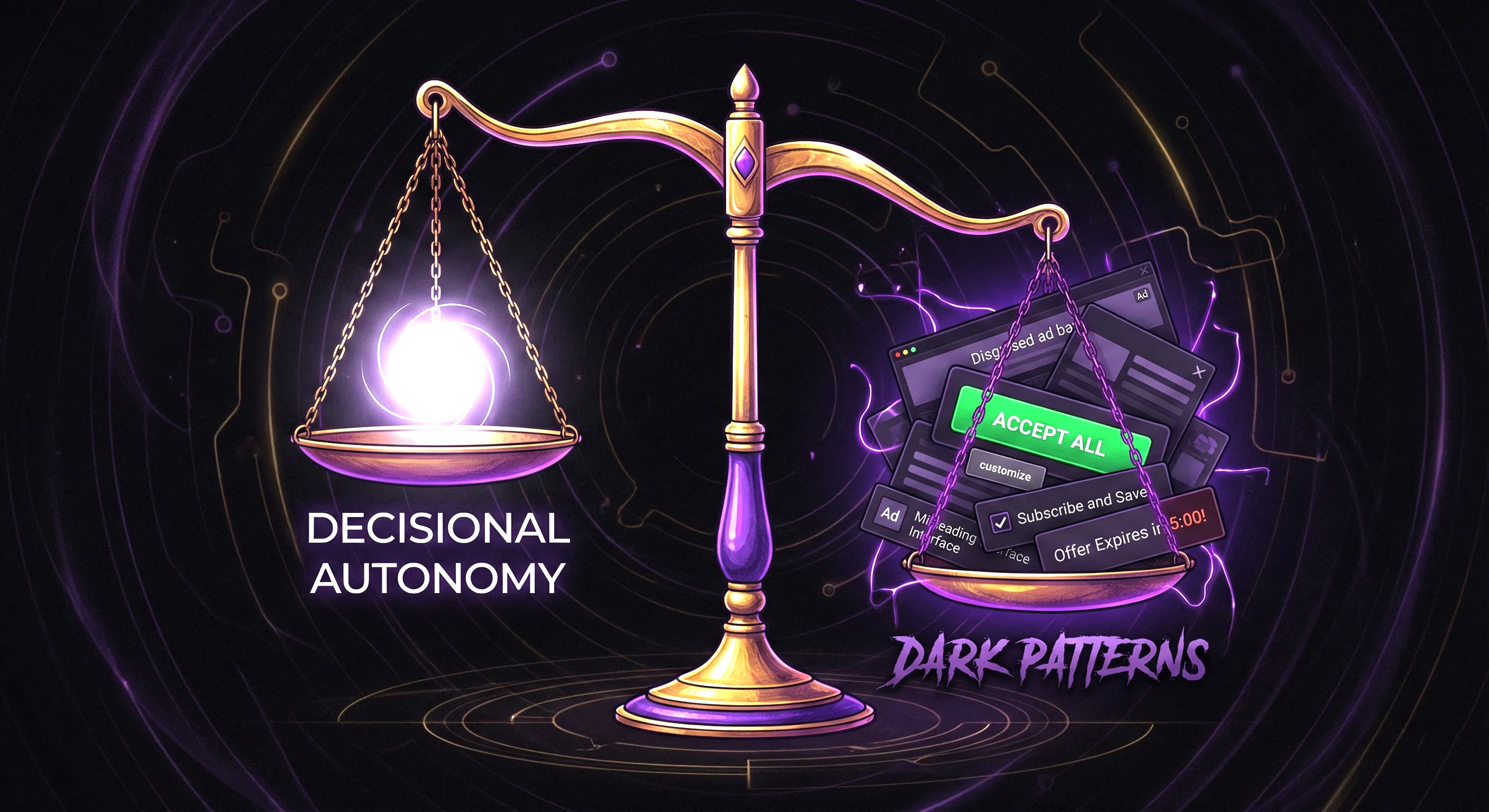
Every hidden fee, every buried cancel button, every guilt-trip popup chips away at something psychologists call decisional autonomy. That’s your ability to make informed choices without someone secretly tilting the playing field.
The 2024 research on dark patterns in mixed reality found something troubling. Deceptive design doesn’t just trick people. It reduces comfort, increases reactance, and decreases willingness to use technology altogether.[10] Dark patterns erode trust in digital experiences as a whole.
Here’s what matters:
- 76% of subscription apps use at least one dark pattern
- All demographics are equally vulnerable. Education and income don’t protect you
- The largest enforcement fine in history was $2.5 billion against Amazon in 2025
- Your best defense is slowing down and recognizing the tricks before they work
You didn’t sign up to be manipulated. But every time you open an app, someone is betting you won’t notice. Prove them wrong.
Sources
Introduction
1. FTC Secures Historic $2.5 Billion Settlement Against Amazon (FTC, 2025)
Your Brain’s Shortcuts Are the Target
2. Deceptive Patterns: Spreading Awareness Since 2010, Founded by Harry Brignull
3. Dark Patterns and Consumer Vulnerability (Behavioural Public Policy, 2024)
The Most Common Tricks and Where You’ll Find Them
6. Sweeps: EU Consumer Protection Enforcement (European Commission)
7. Psychological Targeting as an Effective Approach to Digital Mass Persuasion (PNAS, 2017)
How to Fight Back
8. FTC Finalizes Order Requiring Fortnite Maker Epic Games to Pay $245 Million (FTC, 2023)
9. FTC Sends $126 Million in Refunds to Fortnite Players (FTC, 2025)
The Stakes Are Higher Than You Think
10. Mind Games! Exploring the Impact of Dark Patterns in Mixed Reality Scenarios (ACM, 2024)