
Scroll through social media for five minutes. You will see someone calling their ex a narcissist. Their boss a narcissist. Their mother a narcissist. The word has become the favorite diagnosis of the internet age.
There is just one problem. The narcissism epidemic everyone talks about never actually happened.
The largest study ever conducted on the topic analyzed 546,225 people across 41 years and 55 countries. Narcissism scores have not been rising. They have been falling. And the countries most people assume are the most narcissistic are not even close to the top of the list.
The Study That Started It All
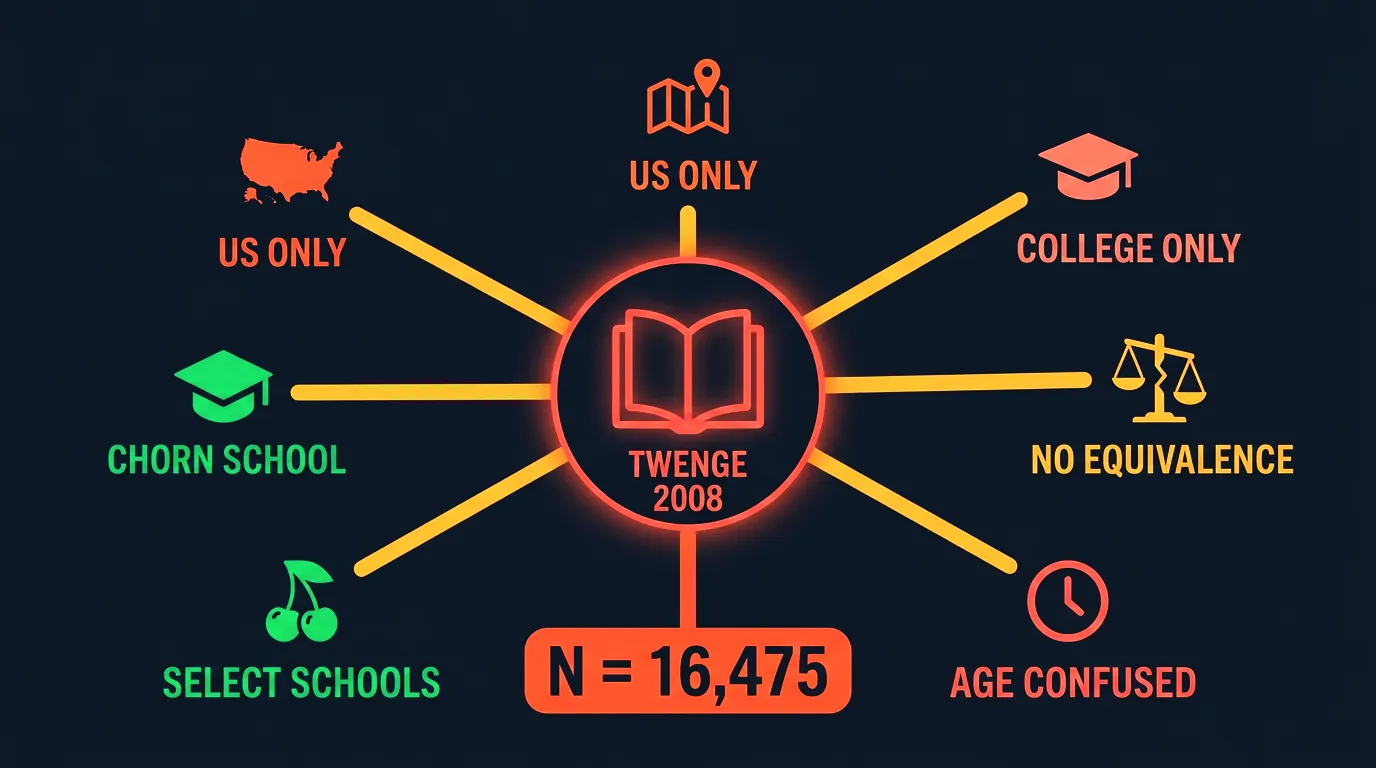
The narcissism epidemic story began in 2008. Psychologist Jean Twenge published a meta-analysis in the Journal of Personality that seemed to prove young people were becoming dangerously self-absorbed.[1]
Her data looked convincing on the surface.
- She analyzed 16,475 American college students from 1979 to 2006
- Narcissistic Personality Inventory scores increased by d = 0.33 standard deviations
- In 1982, about 19% of students scored above the NPI midpoint. By 2009, that jumped to 30%
The media loved it. Time magazine called millennials the “Me Me Me Generation.” Books with titles like The Narcissism Epidemic flew off shelves. Parents wrung their hands about participation trophies. An entire cultural narrative was born from a single study.
But the study had serious problems that the headlines ignored.
- It only looked at American college students, not the general population
- It never tested whether NPI questions were interpreted the same way across decades
- It confused age effects with generational effects. Young people have always scored higher on narcissism
- The samples came from a handful of select universities, not representative populations
Recommended read: Mistakes Were Made (but Not by Me) by Carol Tavris and Elliot Aronson - how confirmation bias makes us see evidence for what we already believe.
The narcissism epidemic was not discovered. It was constructed from cherry-picked data that confirmed what people already suspected about “kids these days.” And it took nearly two decades of better research to tear it down.
What 546,225 People Actually Show
In 2025, researchers at the University of Vienna published the definitive answer. Sandra Oberleiter and colleagues conducted a precision-weighted cross-temporal meta-analysis of NPI scores.[2] The scale of this study dwarfed everything that came before it.
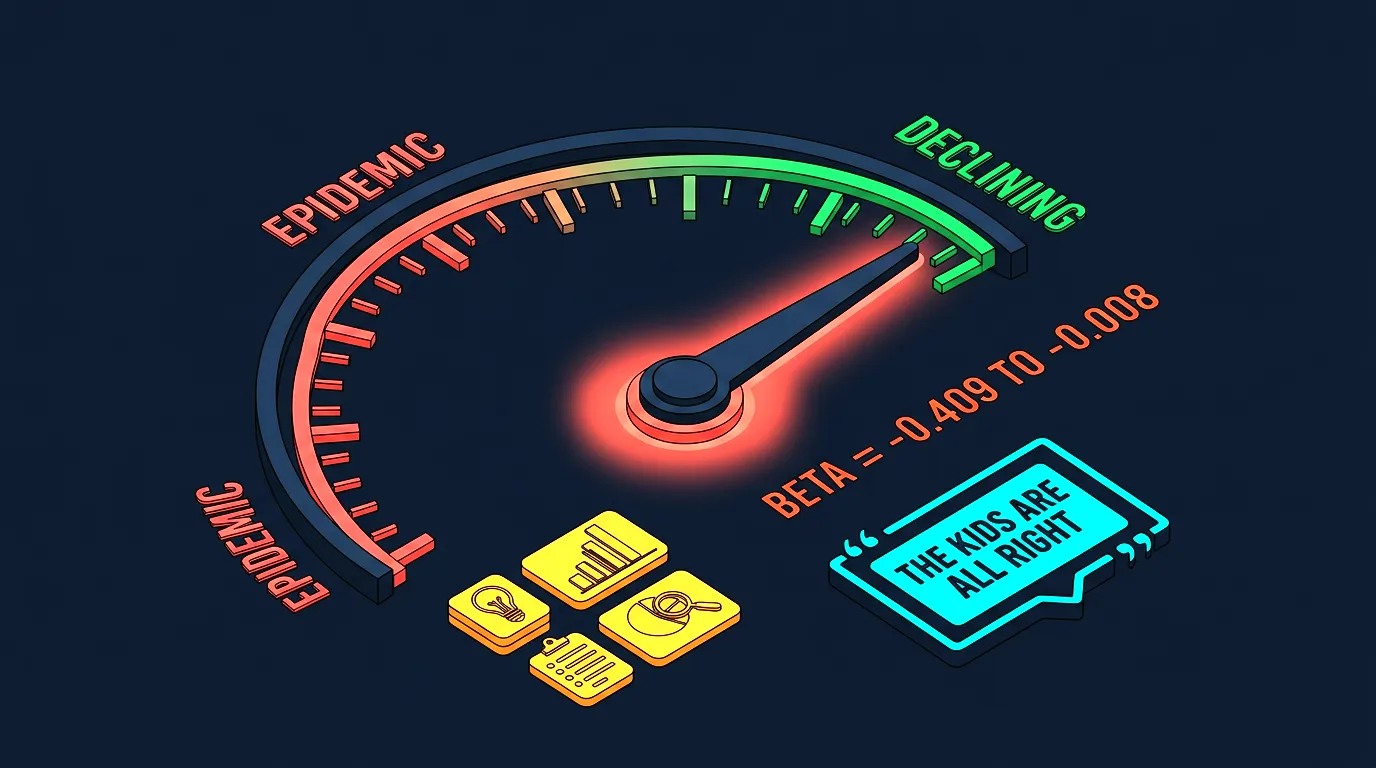
- 546,225 participants across 1,621 independent samples
- 1,105 published and unpublished studies spanning 41 years
- 55 countries represented
- Data collected from 1982 to 2023
The results were unambiguous. Every analysis pointed in the same direction.
- Beta coefficients ranged from -0.409 to -0.008. All negative. All indicating decline.
- Narcissism scores were mostly stable during the 1980s and 1990s
- From approximately 2000 onward, scores showed negative slopes. They went down.
The narcissism epidemic did not happen in the 1980s. It did not happen in the 2000s. It did not happen at all. At any point during the past four decades.
This confirmed what a 2017 study from UC Berkeley, UC Davis, and the University of Illinois had already found. Researchers analyzed 60,225 college students across three decades and found a decline of d = -0.27 in overall narcissism.[3] Entitlement dropped. Vanity dropped. Leadership narcissism dropped.
“Today’s college students are less narcissistic than their predecessors. There may have never been an epidemic of narcissism.” - Brent Roberts, University of Illinois
| Study | Year | Sample Size | Finding |
|---|---|---|---|
| Twenge et al. (the epidemic claim) | 2008 | 16,475 | d = +0.33 increase |
| Trzesniewski & Donnellan[4] | 2010 | 477,380 | No meaningful change |
| Wetzel et al. | 2017 | 60,225 | d = -0.27 decline |
| Oberleiter et al. (definitive) | 2025 | 546,225 | Continuous decline |
One study of 16,475 people said narcissism was rising. Four studies totaling over 1.1 million people said it was not. The evidence is overwhelming.
The Countries You Would Never Guess
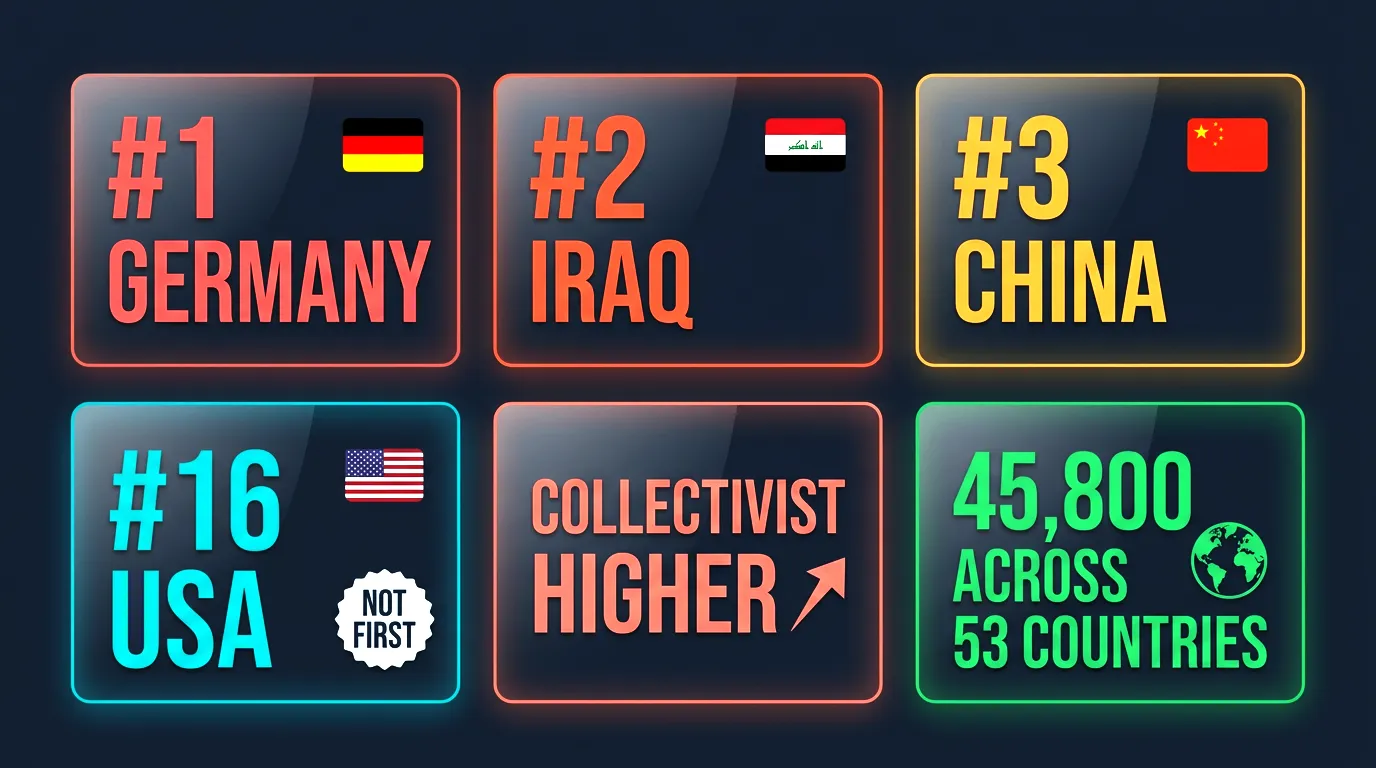
If narcissism is not an American epidemic, where does it actually show up most? A 2025 study from Michigan State University decided to find out. Researchers surveyed 45,800 people across 53 countries using the Narcissistic Admiration and Rivalry Questionnaire.[5]
The results shattered assumptions.
- Most narcissistic countries: Germany, Iraq, China, Nepal, South Korea
- Least narcissistic countries: Serbia, Ireland, United Kingdom, Netherlands, Denmark
- The United States ranked 16th. Not first. Not even top ten.
The biggest surprise was the cultural pattern. Everyone assumed narcissism was a product of Western individualism. The stereotype is that American selfie culture breeds self-obsession. But the data showed the opposite.
Collectivist cultures reported higher narcissism than individualist ones. Countries with strong group identity, where the self is supposedly subordinated to the collective, actually produced higher narcissism scores. And wealthier nations with higher GDP showed elevated narcissistic admiration regardless of cultural orientation.
“Being young nearly everywhere involves focusing on yourself and thinking you’re better than you are. But life can be a humbling experience, and it seems to humble people in a similar way across cultures.” - William Chopik, Michigan State University
A separate 2021 study confirmed this cross-cultural pattern. Participants from Asia and Africa reported higher levels of grandiose narcissism than participants from the US, Europe, and Australia.[6] The “American narcissism” narrative was wrong on every level.
A 2024 meta-analysis of 37,247 people across 51 longitudinal studies added another critical piece.[7] Narcissism does not rise with generations. It declines across the lifespan. From age 8 to age 77, narcissism consistently drops. What Twenge mistook for a generational epidemic was actually a cognitive bias sabotaging her conclusions. Young people have always been more self-focused. Then they grow up.
Recommended read: You Are Not So Smart by David McRaney - why your brain is wired to see patterns and trends that do not actually exist.
Why Everyone Thinks Narcissism Is Everywhere
If narcissism is not actually rising, why does it feel like it is?
The answer is what researchers call the showroom effect. Social media does not create narcissists. It gives existing narcissistic behavior a megaphone. Algorithms reward self-promotion, bold claims, and attention-grabbing content. The narcissists who have always existed are now louder, more visible, and algorithmically amplified.
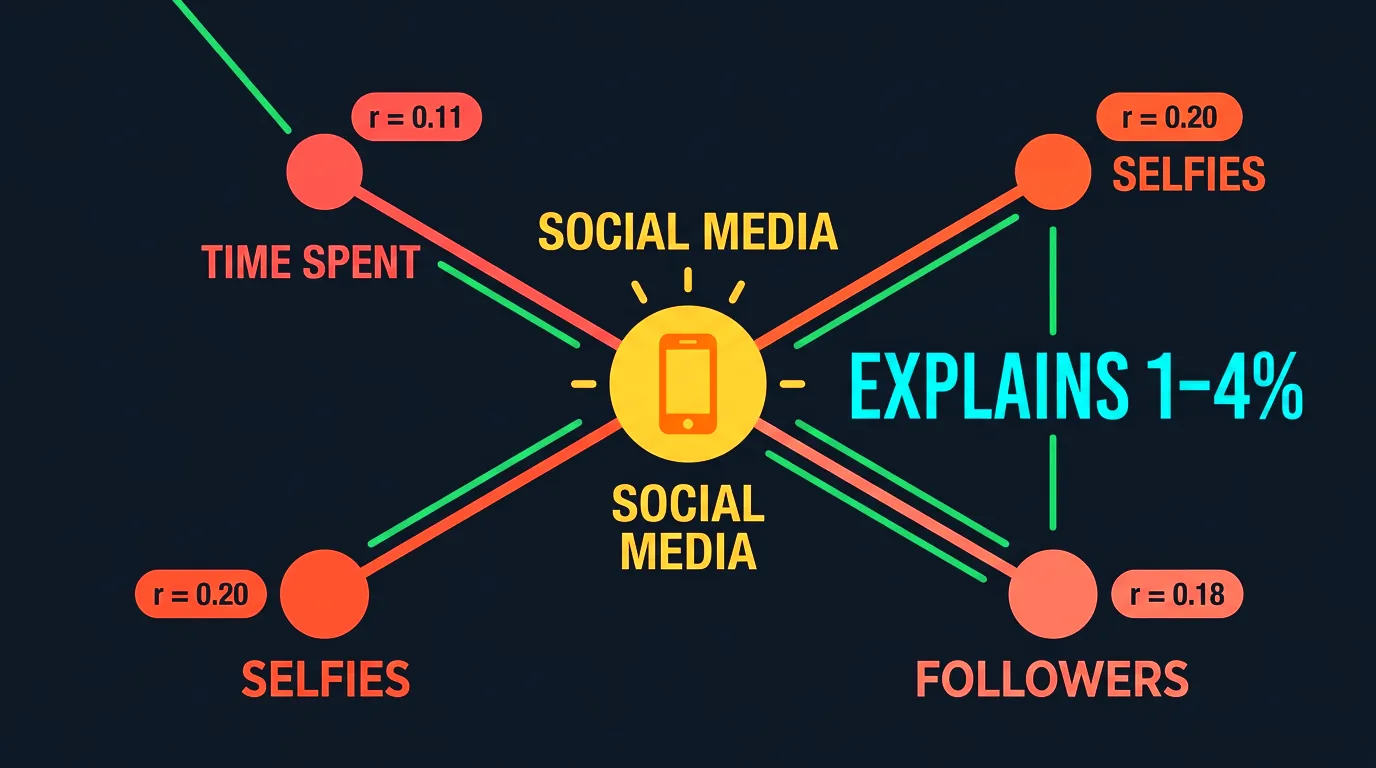
A 2018 meta-analysis of 13,430 people measured the actual correlation between social media use and narcissism.[8]
- Time spent on social media: r = 0.11
- Posting selfies: r = 0.20
- Number of followers: r = 0.18
These correlations are statistically significant but tiny. They explain about 1-4% of the variance. Social media use accounts for almost none of the differences in narcissism between people.
Then there is the overdiagnosis problem. More than half of the 100 most-viewed TikToks under mental health hashtags contained misleading or overgeneralized claims.[9] People watch a 60-second video listing “5 signs your partner is a narcissist” and suddenly see narcissism everywhere. Online mentions of the word “narcissist” are skyrocketing. Diagnosable narcissistic personality disorder is not.
The clinical data is clear. NPD prevalence sits at about 6.2% of the population.[10] It is higher in young adults (9.4% for ages 20-29) and drops with age (3.2% for ages 65+). A 2025 Lancet Psychiatry review of 139,373 people across 28 countries found no indication of a societal spike in personality disorders of any kind.[11]
- We are not seeing more narcissism
- We are seeing more narcissism content
- The two are not the same thing
The irony is striking. If social media truly produced narcissism, we would expect heightened confidence among young people. Instead, youth mental health surveys show rising vulnerability, social comparison anxiety, and deflated self-image. The opposite of narcissism. People are not becoming more narcissistic. They are becoming more exposed to narcissistic content.
Recommended read: Tribal by Michael Morris - how cultural forces shape personality and behavior in ways we rarely recognize.
What This Actually Means for You
Every time you call someone a narcissist based on a social media checklist, you are participating in a cultural narrative that the data does not support. That does not mean narcissism is not real. It does not mean narcissistic abuse does not happen. It means the epidemic framing is wrong, and it is causing real harm.
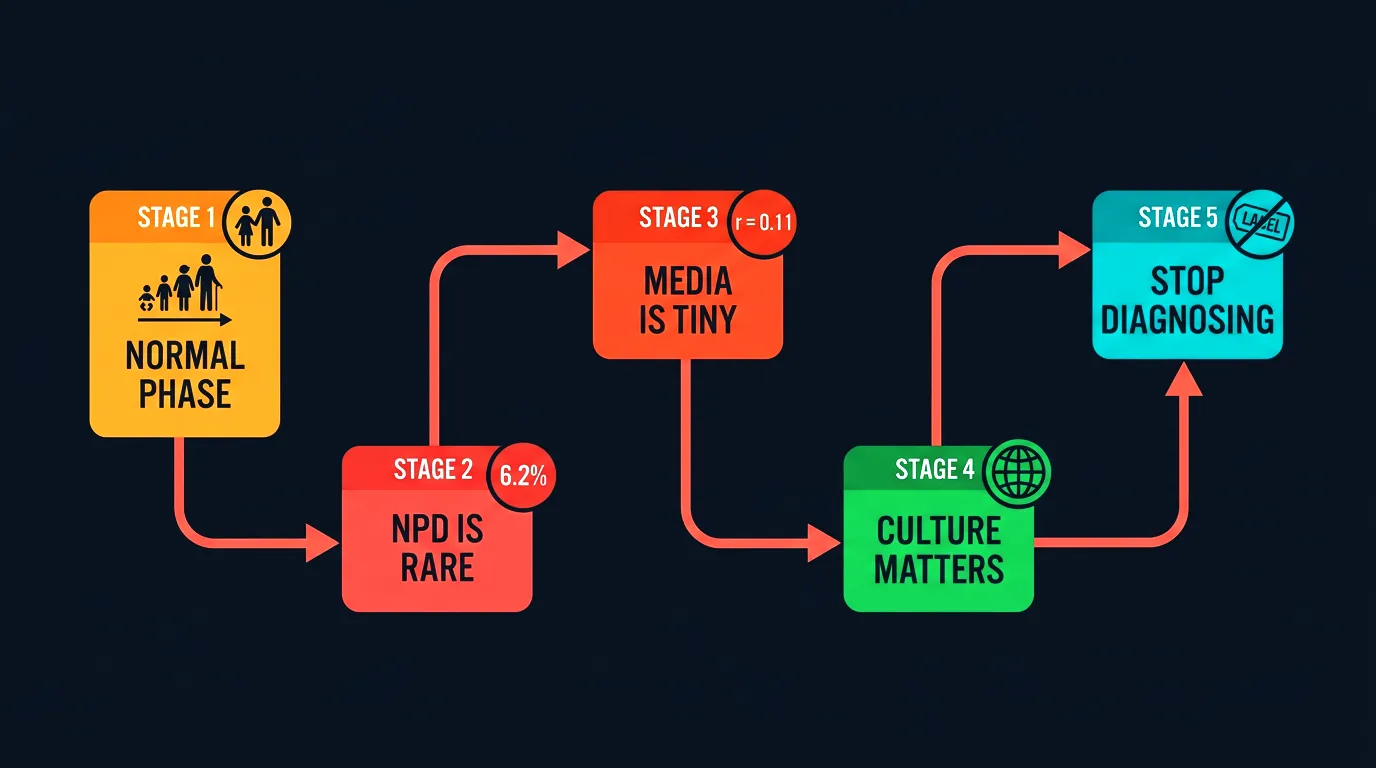
Here is what the research actually tells us.
- Narcissism is a normal developmental phase. Young people are self-focused. They grow out of it. This has been true for thousands of years. Aristotle complained about it.
- Clinical NPD is rare and stable. About 6% of the population, with no evidence of increase.
- Social media amplifies, not creates. The correlation is tiny (r = 0.11-0.20). Deleting Instagram will not cure a personality disorder.
- Culture matters more than you think. The most narcissistic countries are not the ones Western media obsesses over.
- Armchair diagnosis does real damage. When everyone is a “narcissist,” the word loses its clinical meaning and people with actual NPD get dismissed.
The next time you see a headline about the narcissism epidemic, remember this. Over 1.1 million data points from people who hold their beliefs just as stubbornly as you hold yours say it is not happening. The kids are all right. They always were.
The real question is not why young people are supposedly so narcissistic. It is why we were so eager to believe they were.
Recommended read: Hope for Cynics by Jamil Zaki - the science of why humans are actually kinder and more cooperative than we give them credit for.
Sources
The Study That Started It All
1. Egos Inflating Over Time: The Original NPI Meta-Analysis (Journal of Personality, 2008)
What 546,225 People Actually Show
3. The Narcissism Epidemic Is Dead; Long Live the Narcissism Epidemic (Psychological Science, 2017)
4. Rethinking Generation Me: Cohort Effects 1976-2006 (Perspectives on Psychological Science, 2010)
The Countries You Would Never Guess
5. Cultural Moderation of Demographic Differences in Narcissism (Self and Identity, 2026)
6. Narcissism Across Five World Regions (Personality and Individual Differences, 2021)
7. Development of Narcissism Across the Life Span (Psychological Bulletin, 2024)
Why Everyone Thinks Narcissism Is Everywhere
8. Narcissism and Social Media Use: A Meta-Analytic Review (Psychology of Popular Media Culture, 2018)
9. The Myth of the Narcissistic Generation (Psychology Today, 2026)
11. Global Epidemiology of Personality Disorder (Lancet Psychiatry, 2025)