
You’ve been there. You meet someone who seems perfect. Charming, a little mysterious, maybe a bit hard to read. The chemistry is electric. But then they pull away. Just a little. And instead of walking away, you lean in harder.
They go quiet. You send another text. They cancel plans. You make excuses for them. They say something cold. You replay it a hundred times trying to figure out what you did wrong.
This isn’t a fluke. It’s a pattern. And it has a name. Psychologists call it the anxious-avoidant trap. It’s one of the most common and most painful dynamics in romantic relationships. And the science behind it explains why you keep ending up here.
The Science of How You Love
In the 1950s, researchers started watching babies. Specifically, they watched what happened when a mother left the room and came back. It was called the strange situation test, and it revealed something that shapes your love life to this day.[1]
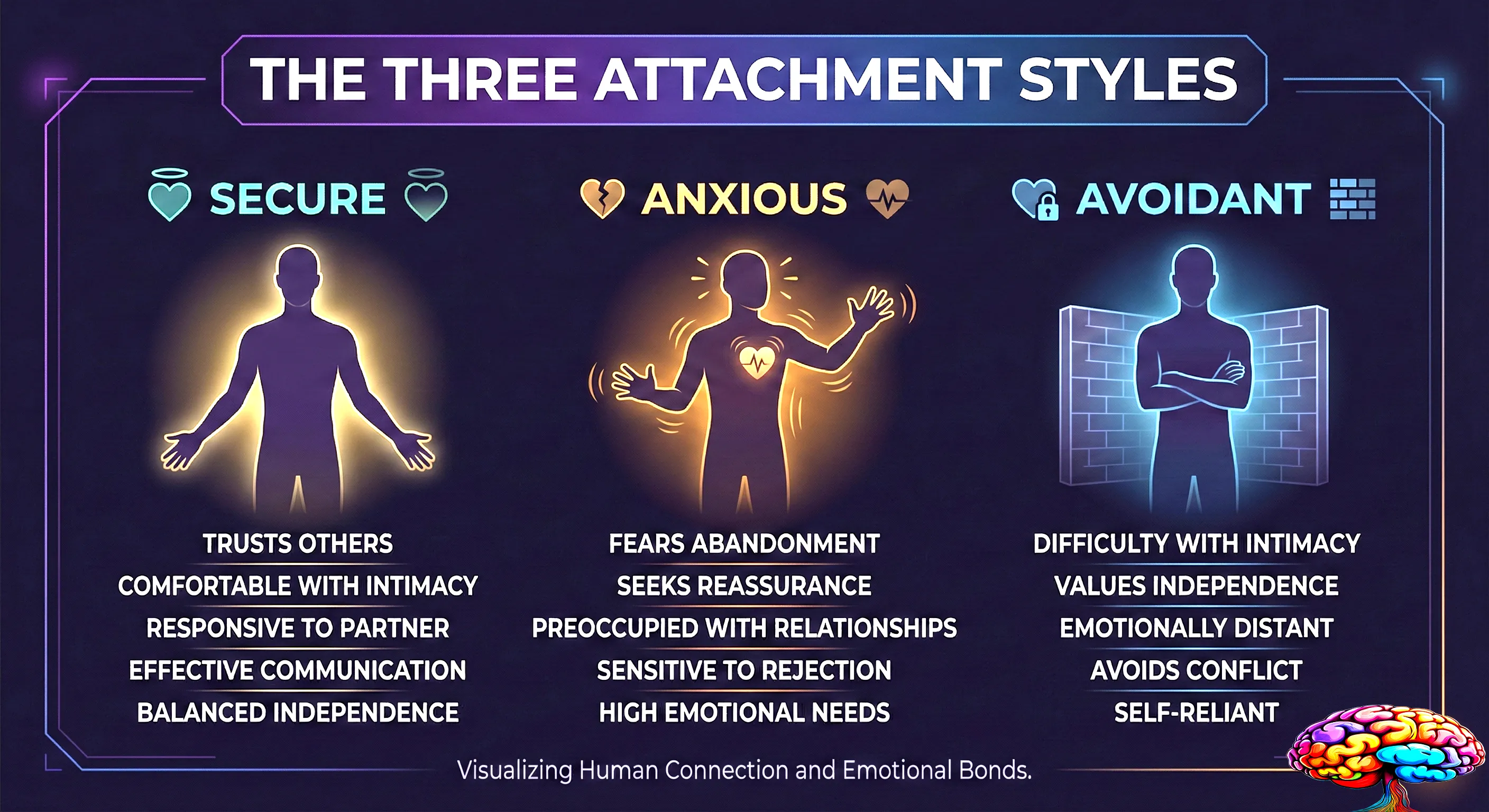
Psychiatrist Amir Levine and psychologist Rachel Heller describe the attachment styles that emerged from this research. Each one shows up in how you handle closeness, conflict, and vulnerability as an adult.
What the Babies Did
- Secure baby: Gets upset when mom leaves. Happy when she returns. Calms down quickly and goes back to playing
- Anxious baby: Gets extremely distressed when mom leaves. When she returns, the baby is happy but also angry. Pushes mom away, then clings again. Takes much longer to calm down
- Avoidant baby: Acts like nothing happened when mom leaves. Ignores her when she comes back. Seems fine on the surface. But researchers measured their heart rates and cortisol levels. Inside, they were just as stressed as the crying babies
That last point is critical. Avoidant people aren’t calm. They just learned to hide it.
A 2025 Latent Profile Analysis of attachment identified four distinct profiles across a large sample.[2] The breakdown challenges the simple three-style model:
| Attachment Profile | Percentage | Characteristics |
|---|---|---|
| Secure | ~54% | Low anxiety, low avoidance, low disorganization |
| Anxious with disorganized features | ~28% | High anxiety, moderate disorganization, low avoidance |
| Avoidant | ~10% | High avoidance, low anxiety, low disorganization |
| Generalized insecure | ~8% | High anxiety, high avoidance, high disorganization |
These aren’t personality flaws. They’re survival strategies your nervous system developed in childhood. And they follow you into every relationship you enter. They even shape the one-sided bonds you form with influencers and celebrities.
Research also shows that attachment anxiety and avoidance can severely decrease well-being by raising psychological rigidity, lowering resilience, and lowering expressed awareness.[3] The damage isn’t just emotional. It’s measurable.
Recommended read: Attached by Amir Levine and Rachel Heller. The essential guide to understanding your attachment style and how it shapes your romantic relationships.
Why Opposites Attract, and Why It Hurts
Here’s the cruel math. Secure people tend to pair off with other secure people and stay in those relationships. That takes them off the market. What’s left? A dating pool with a disproportionate number of anxious and avoidant people. They find each other over and over.
But it’s not just statistics. The anxious-avoidant pairing feels exciting to both sides.
What the Anxious Person Experiences
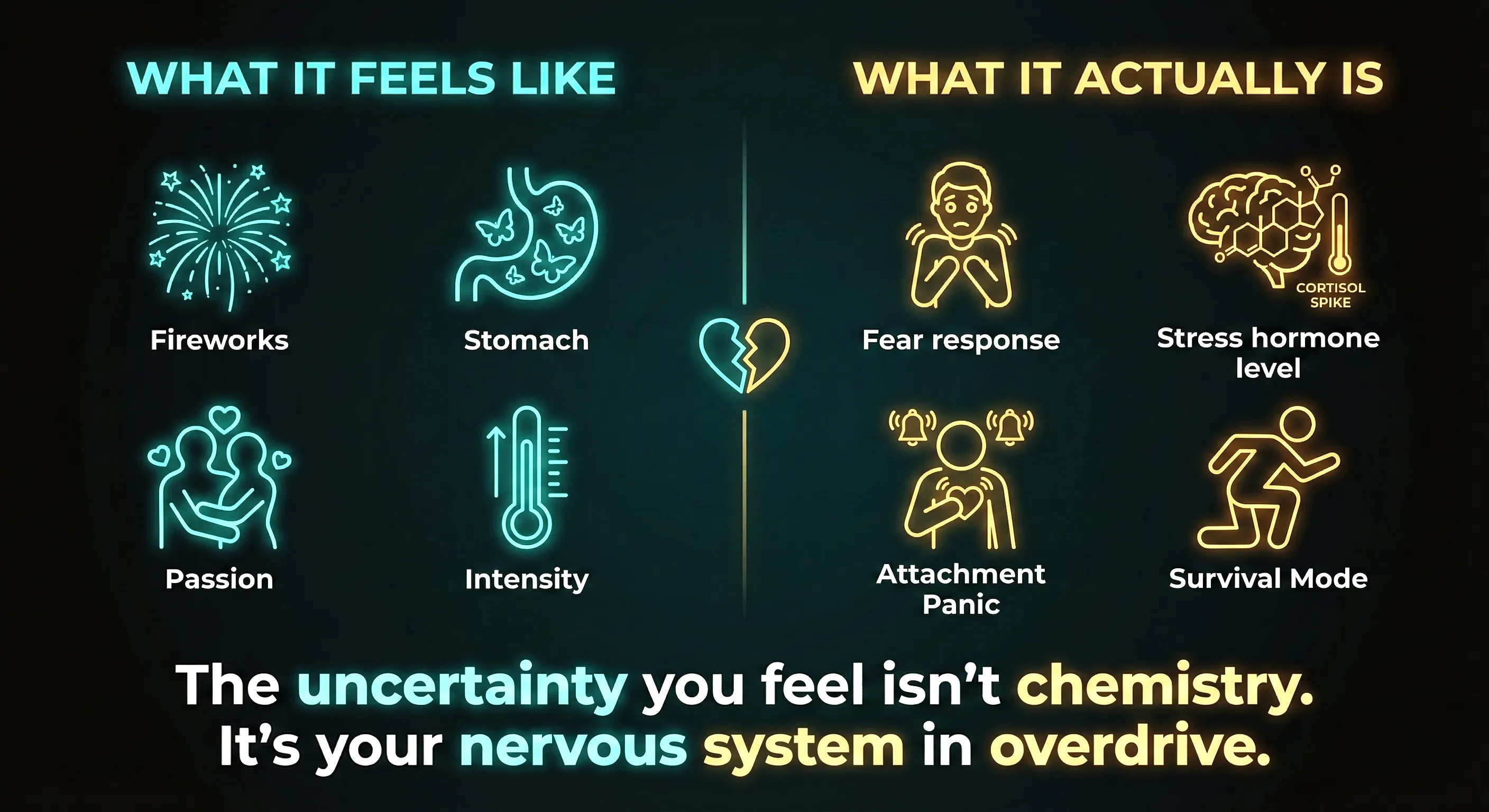
The avoidant partner’s mixed signals trigger the anxious person’s attachment system. The uncertainty feels like passion. Their brain can’t tell the difference between “I’m excited” and “I’m terrified of losing this person.”
Levine and Heller found that anxious partners often use sex as a barometer. They seek physical closeness as proof that the relationship is okay. When the avoidant partner pulls back physically, it confirms the anxious person’s worst fear.
What the Avoidant Person Experiences
Avoidant people need connection too. They just can’t tolerate too much of it. An anxious partner provides a steady stream of emotional energy and validation without the avoidant person having to generate it themselves. The anxious partner does all the emotional work.
But the closer the anxious partner gets, the more suffocated the avoidant person feels. So they deploy what researchers call deactivating strategies. Some of these overlap with dark psychology tactics used in broader manipulation:
- Focusing on a partner’s flaws instead of their strengths
- Fantasizing about an ex (the “phantom ex”) or an idealized future partner
- Pulling away emotionally or physically after moments of closeness
- Avoiding saying “I love you” or making future plans
- Keeping secrets or shutting down conversations about feelings
- Reducing sex to a bare minimum or stripping it of intimacy
Canadian researchers Audrey Brassard and Yvan Lussier found something striking. Avoidant people had less sex with their partners overall. But they had even less sex when their partner had an anxious attachment style.[4] The more the anxious partner wanted physical closeness, the more the avoidant partner withdrew from it.
It Shows Up at Work Too
A 2025 study on attachment in the workplace revealed that the anxious-avoidant dynamic extends beyond romance.[5] Individuals higher in attachment avoidance were less likely to form friendships at work, and this directly impacted their job performance. Anxiously attached individuals showed a particularly self-sabotaging pattern. They actively attempted to form workplace friendships but simultaneously dissolved these relationships. The push-pull dynamic doesn’t stay in your love life. It follows you everywhere.
Life Inside the Inner Circle
Here’s where the real damage happens. Levine and Heller describe something called the inner circle. It’s the small group of people closest to you. Your partner, your kids, your parents. When someone enters your inner circle, you treat them differently than everyone else.
For secure people, the inner circle is treated like royalty. Your well-being comes first. You’re confided in. Your opinion matters most. Closeness is rewarded with more closeness.
For anxious-avoidant couples, the inner circle becomes a war zone.
When You Become “the Enemy”
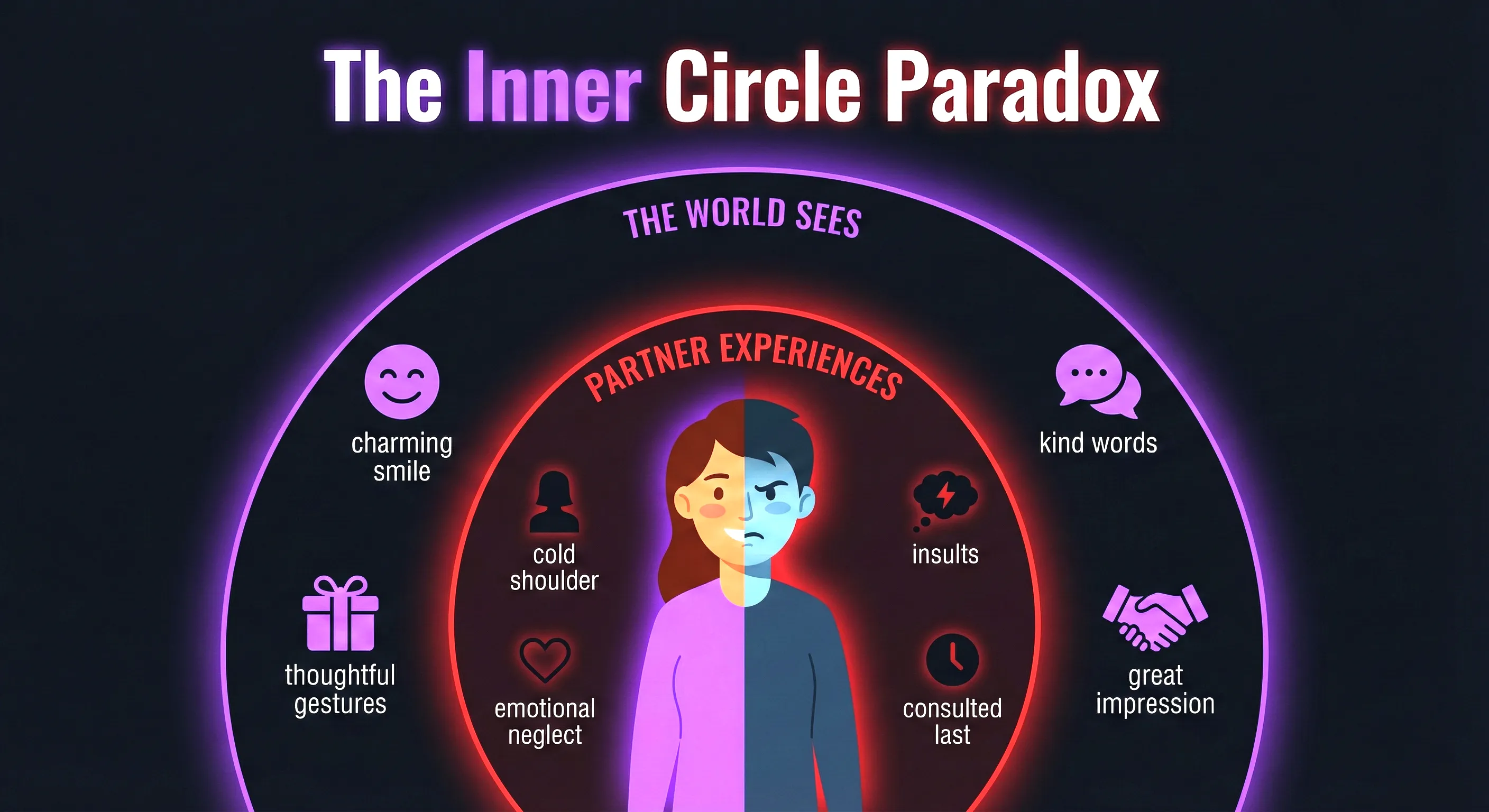
Levine and Heller lay out a devastating pattern. Once the anxious partner enters the avoidant person’s inner circle, something shifts. The avoidant partner doesn’t treat them better. They treat them worse. Not in spite of being close. Because of it.
The avoidant partner shows their best self to the outside world. They’re charming, kind, and considerate with friends, coworkers, and strangers. But at home, with the person closest to them, the walls go up. This public-private split can look a lot like the behavior of a covert narcissist.
Signs you’ve become the enemy in your own relationship:
- You’re ashamed to tell friends how your partner really treats you
- People tell you how sweet your partner is, and you’re surprised
- Your partner consults others about important decisions but not you
- You’re the person most likely to be insulted or put down by your mate
- Your emotional and physical health are low on their priority list
- In an emergency, you’re not sure they’d drop everything for you
Many people in this situation think all relationships work this way. They assume other couples fight just as much behind closed doors. But the research says otherwise. Secure people, who make up over 50% of the population, treat their inner circle better than anyone else. Not worse.
Recommended read: Hold Me Tight by Sue Johnson. A couples therapist reveals the seven conversations that can transform your relationship by rewiring your attachment bond.
Why It’s So Hard to Leave
If the relationship is this painful, why don’t people just walk away? Because your brain won’t let you.
The Rebound Effect
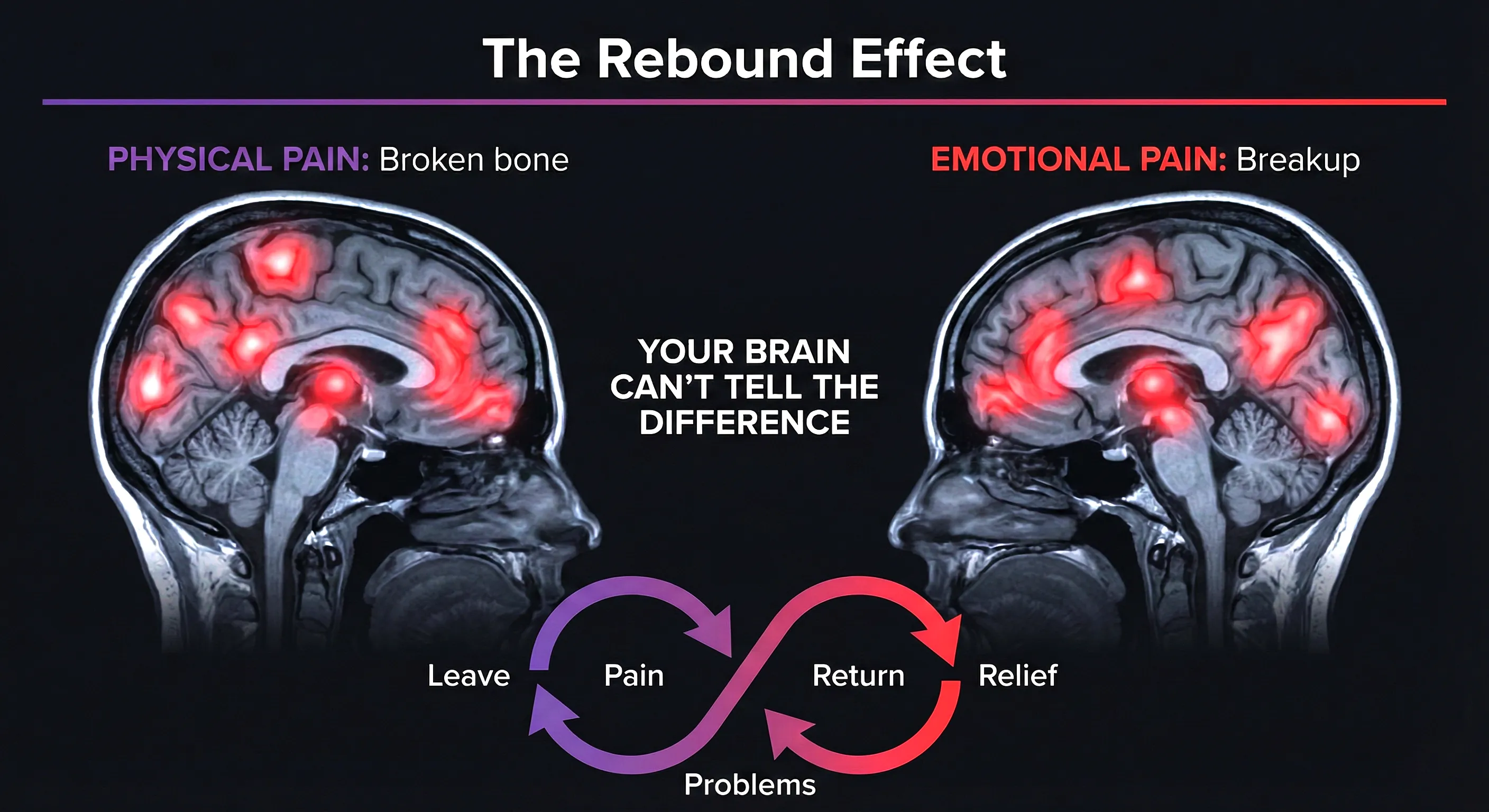
Levine and Heller explain what they call the rebound effect. Your attachment system evolved to keep you bonded to other people. When that bond is threatened, your brain creates intense pain to push you back.
Studies have found that the same areas of the brain that activate when you break a bone also activate when you go through a breakup.[6] Your emotional brain processes the departure of an attachment figure the same way it processes physical injury.
So even when you rationally know the relationship is bad, your emotional brain screams to go back. The pain of staying feels awful. But the pain of leaving feels worse. This is why so many people can’t leave emotionally manipulative relationships, even when they see the damage clearly.
- You understand logically that you should leave
- Your emotional brain isn’t ready to sever the bond
- The attachment system creates unbearable pain when you’re alone
- Brief separations trigger a “rebound” back to the partner
- Each return reinforces the cycle and makes it harder to break
Your Brain on Attachment
A groundbreaking 2025 neuroscience study found that individual attachment profiles can now be inferred from EEG brain data.[7] Researchers were able to categorize people into attachment styles using brainwave patterns alone, providing an objective alternative to traditional self-report questionnaires. This confirms what attachment researchers have argued for decades. These patterns aren’t just feelings or habits. They’re wired into how your brain processes social information.
The anxious brain shows heightened reactivity to social cues. The avoidant brain shows suppressed emotional processing. Both patterns are measurable, automatic, and operating below conscious awareness. That’s why willpower alone rarely breaks the cycle.
The Lonesome Traveler Myth
Avoidant people often romanticize independence. Levine and Heller use the story of Chris McCandless from Into the Wild to illustrate this. McCandless left his ordinary life behind to live alone in the Alaskan wilderness. He turned down every offer of help and human connection along the way.
He told people he didn’t need anyone. That he could handle anything on his own. But alone in the wilderness, facing death, he wrote one final journal entry: “Happiness only real when shared.”
Recommended read: Wired for Love by Stan Tatkin. A couples therapist explains how your brain’s attachment wiring drives conflict and shows you how to create a secure, lasting bond.
How to Break the Cycle
Knowing your attachment style is the first step. But awareness alone doesn’t fix the pattern. Here’s what the research says actually works.
-
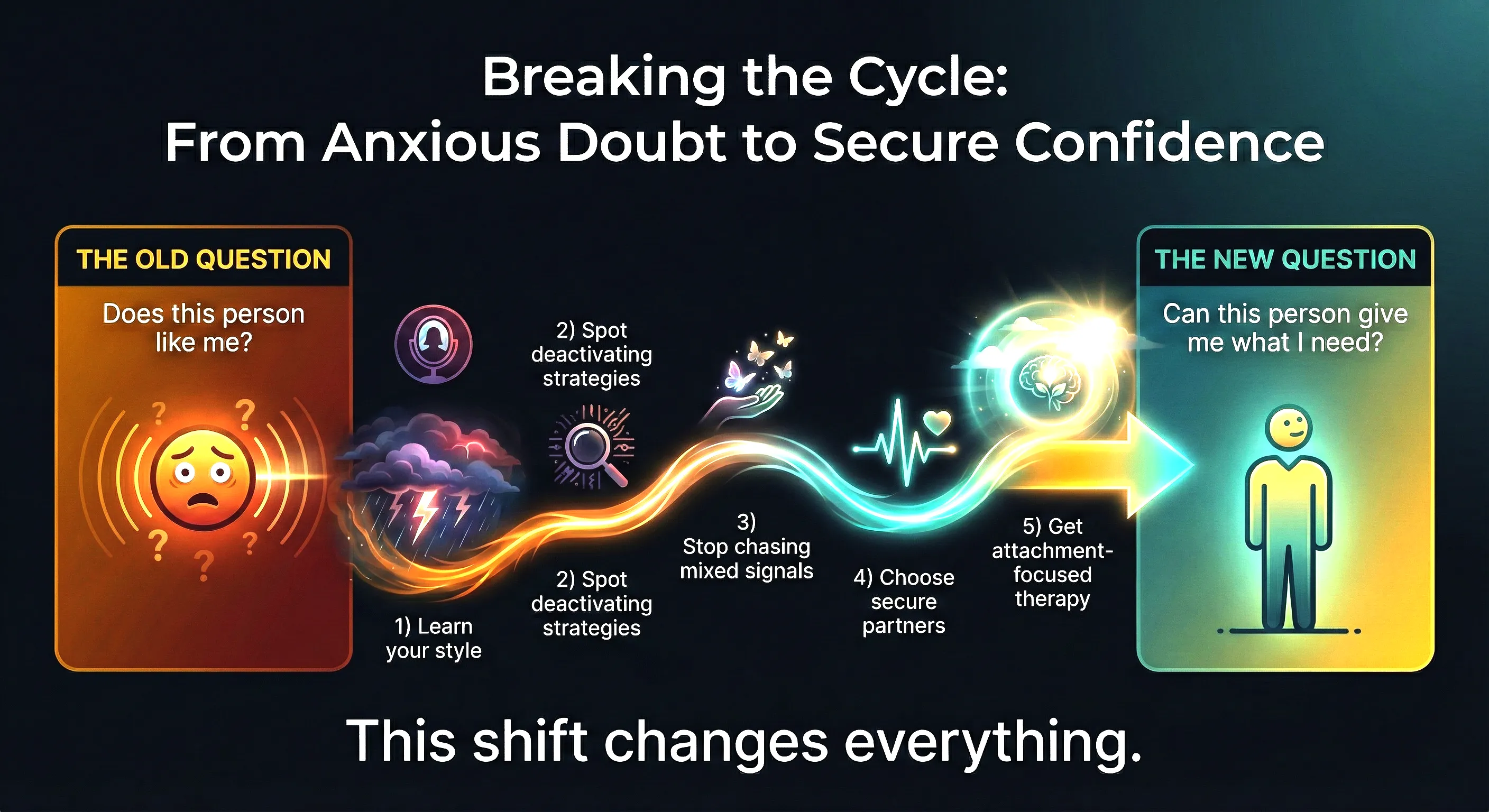
Learn your attachment style and own it. Stop asking “Does this person like me?” and start asking “Is this person capable of giving me what I need?” Levine and Heller say this shift changes everything. Dating becomes about choices, not chasing.
-
Watch for deactivating strategies. If you’re avoidant, notice when you’re finding fault with your partner, pulling away after closeness, or fantasizing about someone else. These aren’t signs the relationship is wrong. They’re your attachment system trying to create distance.
-
Stop chasing mixed signals. If you’re anxious, the uncertainty you feel isn’t passion. It’s your attachment system in overdrive. A secure partner won’t make you feel like you’re constantly guessing. If the relationship feels like a rollercoaster, that’s not chemistry. That’s anxiety.
-
Seek secure partners. Secure people won’t trigger the same intensity. That might feel “boring” at first. But boring is actually your nervous system relaxing for the first time. Secure people respond to your needs consistently, communicate clearly, and don’t play games with intimacy.
-
Get therapy focused on attachment. A therapist who understands attachment patterns can help you recognize cycles you can’t see from inside them. For couples, Emotionally Focused Therapy (EFT) was built specifically to rewire attachment bonds. Research on emotional regulation and attachment confirms that anxious attachment is a key predictor of difficulties in emotion regulation.[8] Therapy addresses the root, not just the symptoms.
The anxious-avoidant trap works because it exploits your wiring. The anxious partner’s need for closeness activates the avoidant partner’s need for space. The avoidant partner’s distance activates the anxious partner’s fear of abandonment. Round and round it goes.
But here’s what the research makes clear. Your attachment style isn’t your destiny. It’s a starting point. People can and do move toward secure attachment. It takes genuine emotional self-awareness, the right partner, and often professional help. But the cycle can break.
“It really isn’t about me at all. She just doesn’t feel comfortable with too much closeness.” That realization, Levine and Heller write, is the moment everything changes.
Recommended read: Supercommunicators by Charles Duhigg. Reveals the hidden science behind meaningful human connection and how the best communicators build trust and understanding.
The hardest part isn’t learning this. It’s admitting it applies to you. But if you read this and felt a knot in your stomach, that’s your answer. Trust it.
Sources
The Science of How You Love
1. Mary Ainsworth and the Strange Situation Technique (Simply Psychology)
Why Opposites Attract, and Why It Hurts
Why It’s So Hard to Leave
6. Social Rejection Shares Somatosensory Representations with Physical Pain (PNAS, 2011)